How to Clean Air Conditioner Drain Line in 5 Easy Steps
To clean your air conditioner drain line, first turn off power at the thermostat and breaker. Make sure it’s really off by checking with a multimeter.
Next, find the drain line and pan. Take a good look to see if there are any clogs or standing water.
Use a wet/dry vacuum to suck out any debris you find. After that, flush the line with distilled white vinegar to help dissolve buildup.
Finally, put everything back together and turn the power back on. Keep an eye out for leaks or any water collecting where it shouldn’t be.
Follow these steps carefully to keep your system running smoothly and avoid problems down the road.
Turn Off Power to Your AC Unit
Before you begin cleaning your air conditioner drain line, make sure to turn off the power to your AC unit at both the thermostat and the circuit breaker. This step is really important for safety because it prevents the unit from accidentally turning on while you’re working.
After you switch off the power, use a multimeter to double-check that the power is actually off before you start cleaning. Cutting off the power also helps protect your system from potential water backflow damage during the cleaning process.
Make turning off the power a regular part of your maintenance routine to keep your AC unit running smoothly and efficiently. Skipping this step can lead to injury or damage to your equipment, which would undo all your hard work maintaining peak performance.
Locate the AC Drain Line and Inspect the Drain Pan
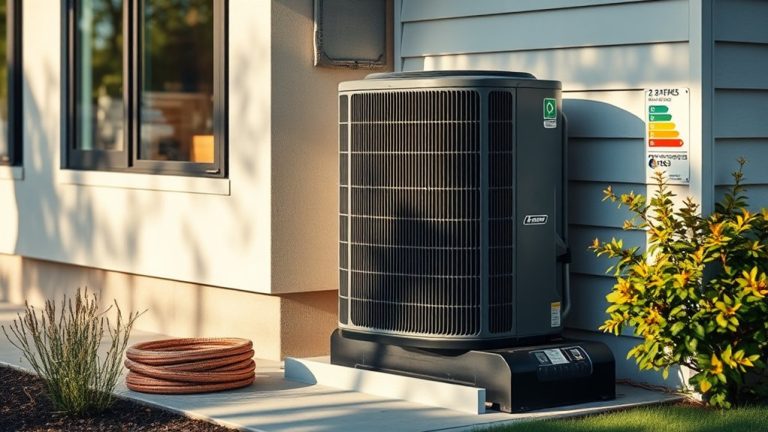
After confirming the power is off, locate the AC drain line. It usually runs from the indoor unit to the outdoor unit and is often a PVC pipe near the outdoor equipment.
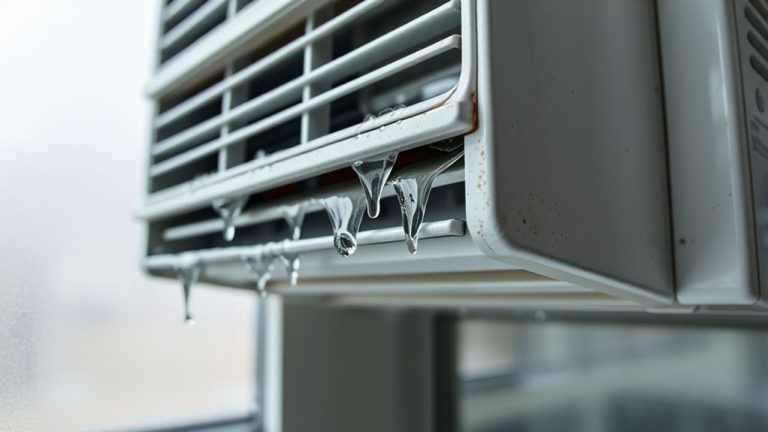
Next, find the drain pan positioned beneath the indoor unit. Carefully inspect the drain pan for standing water, which is a clear sign of a clog in the AC drain line.
Locate the drain pan beneath the indoor unit and check for standing water, indicating a possible clog.
Look for the access point, typically a T-shaped vent tee near the indoor unit. This lets you check the line for blockages during maintenance.
Regularly inspecting the drain pan for mold, algae, or debris helps prevent clogs and keeps your system running efficiently.
If you notice standing water in the drain pan, take care of it right away to avoid water damage and ensure your AC system works properly.
Clear AC Drain Line Blockages With a Vacuum or Tools
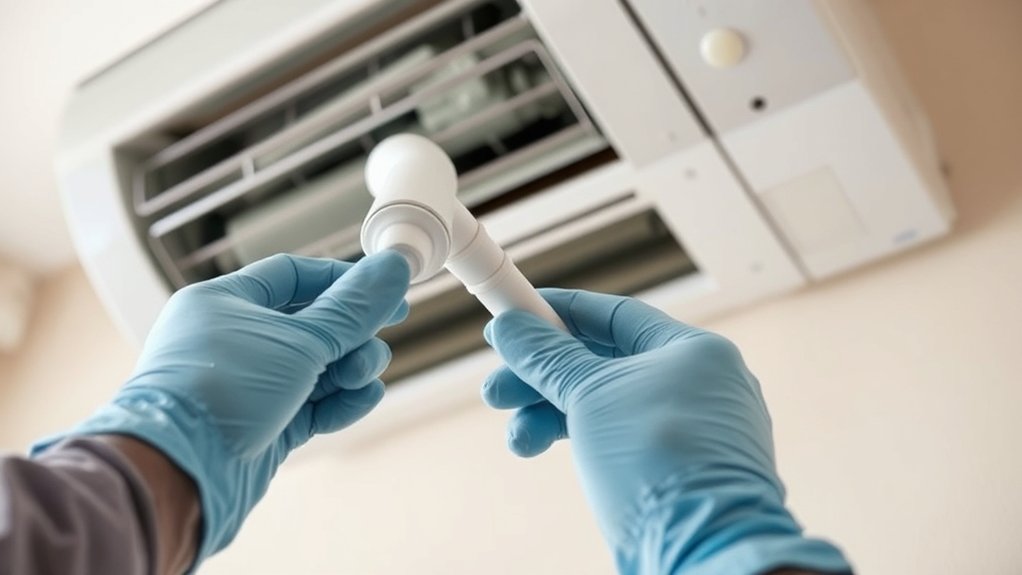
Although you’ve already inspected the drain line access point and the drain pan, you’ll need to power off the AC unit at both the thermostat and breaker before using a wet/dry vacuum to clear blockages.
To effectively clean a clogged AC drain line, follow these steps:
- Attach the wet/dry vacuum to the outdoor condensate drain line end to suction out debris causing the clog.
- Inspect the access point for visible debris and remove it manually if present.
- After vacuuming, flush the line with distilled vinegar mixed with water to help prevent buildup.
Regularly maintaining the condensate drain line helps avoid water damage and guarantees efficient drainage.
Using this method keeps the AC drain line clear and operational.
It’s a simple routine that really pays off in the long run. So, make sure to check it now and then!
Flush the Drain Line to Remove Buildup
Start by turning off your air conditioner at both the thermostat and the breaker to confirm safety while working on the drain line.
Locate the condensate drain line access, usually a T-shaped vent near the indoor unit.
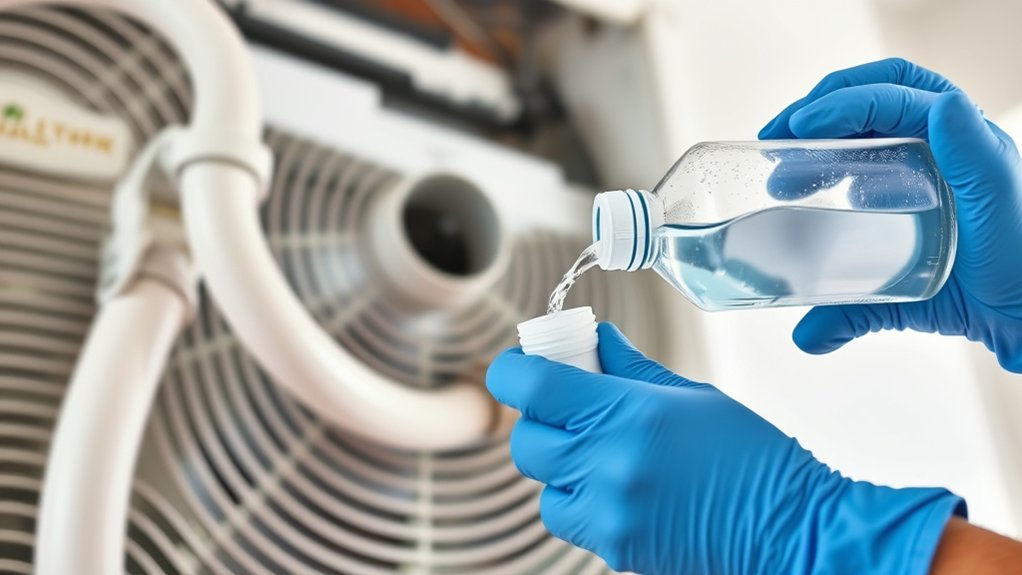
Pour ¼ cup of distilled white vinegar into the AC drain line to remove buildup and inhibit mold growth.
Use ¼ cup of distilled white vinegar to clean the AC drain line and prevent mold buildup.
Let it sit for 30 minutes. Then, flush the drain line with several cups of clean water to clear debris and guarantee proper flow.
For persistent clogs, use a wet/dry vacuum at the outdoor end.
This flushing step is essential for maintaining your HVAC system’s efficiency and preventing a clogged drain line.
Reassemble AC Drain Line Components and Test the System

Two key steps follow cleaning the drain line: reassembling its components and testing the system.
First, carefully reassemble the AC drain line components by securely reattaching any caps or covers to the access points, guaranteeing a proper seal.
Next, restore power to the system by switching on the breaker and setting the thermostat to your desired temperature. Before powering up, check the drain pan for residual water and confirm it’s dry to prevent overflow.
To test and monitor the system effectively, start by powering on the AC and watching for any leaks or water buildup.
Keep an eye on how the system performs for several minutes.
It’s also a good idea to schedule regular maintenance every few months. This helps prevent future clogs and keeps your AC running efficiently.
Following these steps guarantees your AC drain line stays clean and functional.
Frequently Asked Questions
How Often Should I Clean My Air Conditioner Drain Line?
You should perform drain line maintenance every 1 to 3 months.
It’s a good idea to increase how often you clean during peak humidity seasons for the best seasonal care.
Try using simple DIY solutions like distilled vinegar and tools you probably already have, such as a wet/dry vacuum.
These help prevent clogging, which can cause water damage and hurt your air quality.
Keep an eye out for signs of clogging like slow drainage or water leaks.
Combining these simple steps with annual professional services will help keep your system running smoothly and save you from costly repairs.
Can Mold Grow Inside the AC Drain Line?
Mold can definitely grow inside your AC drain line, like unwelcome shadows feeding on moisture.
To prevent this, focus on mold prevention through regular drain maintenance and effective moisture control. Use cleaning techniques such as flushing with vinegar during seasonal checks to improve HVAC efficiency and air quality.
Ignoring this invites health risks.
You can try DIY solutions, but professional services guarantee thorough cleaning and protect your home’s environment from hidden mold threats.
What Causes Frequent Clogging in AC Drain Lines?
Frequent clogging causes in AC drain lines include moisture buildup leading to algae growth and dirt accumulation.
Poor installation, such as incorrect pipe pitch, makes drainage worse. Temperature changes and condensation create the perfect conditions for blockages.
Neglecting filter maintenance lets debris get in and cause problems. To prevent this, make sure you do regular inspections.
You can also try simple DIY fixes like vinegar flushes.
Staying on top of these things helps keep your drainage clear and efficient. It also saves you from expensive repairs down the line.
Is It Safe to Use Chemical Cleaners in the Drain Line?
You should avoid harsh chemical cleaners because they can cause problems like corrosion and harmful fumes. Instead, think about using enzyme cleaners or other gentle chemical alternatives. These options break down clogs safely without damaging your system.
Natural solutions like vinegar are also great for effective, eco-friendly maintenance. Just make sure to follow safety tips, like checking your AC manual before trying anything yourself.
Doing regular DIY maintenance can really help keep your drain line working well.
Also, don’t buy into common myths about how often you need to clean your drain line. Understanding the right cleaning frequency and proper care will keep your drain line clear and running smoothly.
Can a Clogged Drain Line Damage My Air Conditioner?
Think of a clogged drain line as a blocked artery; it disrupts your AC’s flow, causing symptoms like water leaks and reduced HVAC efficiency.
When the drain line is blocked, water can’t escape properly, which creates all sorts of problems for your system.
Neglecting drain maintenance leads to higher repair costs and worsened air quality. It’s one of those things that can sneak up on you if you don’t stay on top of it.
You can use DIY solutions for seasonal checks, but don’t skip professional services for thorough inspections. A pro can catch issues that might slip past a quick home check.
Implement preventive measures regularly to avoid damage and keep your system running smoothly.
Trust me, a little maintenance goes a long way in saving you headaches down the road.
Conclusion
By following these five precise steps, you’ll keep your AC drain line clear and prevent water damage. For example, a homeowner in Phoenix avoided costly repairs by regularly flushing their drain line, stopping clogs before they caused overflow.
Remember, turning off the power first guarantees safety. Clear blockages carefully, flush thoroughly, then reassemble and test.
This routine maintenance extends your unit’s life and maintains efficient cooling. It saves you time and money in the long run.