How to Clean Your Wall Air Conditioner in 5 Easy Steps
To clean your wall air conditioner, first unplug it and remove the filter to prevent electric shock. Vacuum the filter using a brush attachment, wash it with warm soapy water, and let it dry completely.
Next, gently brush dust from the cooling fins and coils without bending them. Wipe the grill, exterior, and louvers with a damp cloth and mild detergent.
Finally, clean the drip tray by removing, scrubbing, rinsing, and drying it before reassembling. Follow these steps carefully to maintain peak performance and avoid damage. This way, you’ll keep your unit running efficiently over time.
Unplug Your Wall AC and Remove the Filter
Begin by unplugging your wall air conditioner to eliminate any risk of electric shock during cleaning.
Locate the filter, usually positioned behind the front cover, and carefully remove it following the manufacturer’s instructions. Check the filter closely for tears or dust that might block airflow.
Use a vacuum cleaner with a brush attachment to get rid of loose dust and debris from the filter surface before washing. This first step helps keep the airflow smooth and the system running efficiently.
After vacuuming, get ready to clean the filter with warm soapy water to remove any dirt stuck deep inside.
Make sure the filter dries completely before you put it back in. Any leftover moisture can lead to mold growth, which isn’t good for air quality or how well your unit works.
Taking these simple steps protects both your air conditioner and the air you breathe indoors.
Vacuum, Wash, and Fully Dry Your Wall AC Filter
Unplug your wall air conditioner and remove the front panel to safely access the filter.
Start by using a vacuum cleaner with a brush attachment to gently remove dust and debris from the filter’s surface.
Next, wash the filter thoroughly in warm soapy water to get rid of any remaining dirt. If the filter is really dirty, you might want to think about replacing it to keep your AC running efficiently.
Rinse the filter well under warm water to wash away all the soap. Then, let it dry completely in a well-ventilated area before putting it back in. Making sure the filter is fully dry is key to preventing mold and keeping the air quality good.
Once the filter is dry, reinstall it into your wall-mounted air conditioner.
Finally, plug the unit back in, and you’re all set!
Gently Brush Dust Off Cooling Fins and Coils
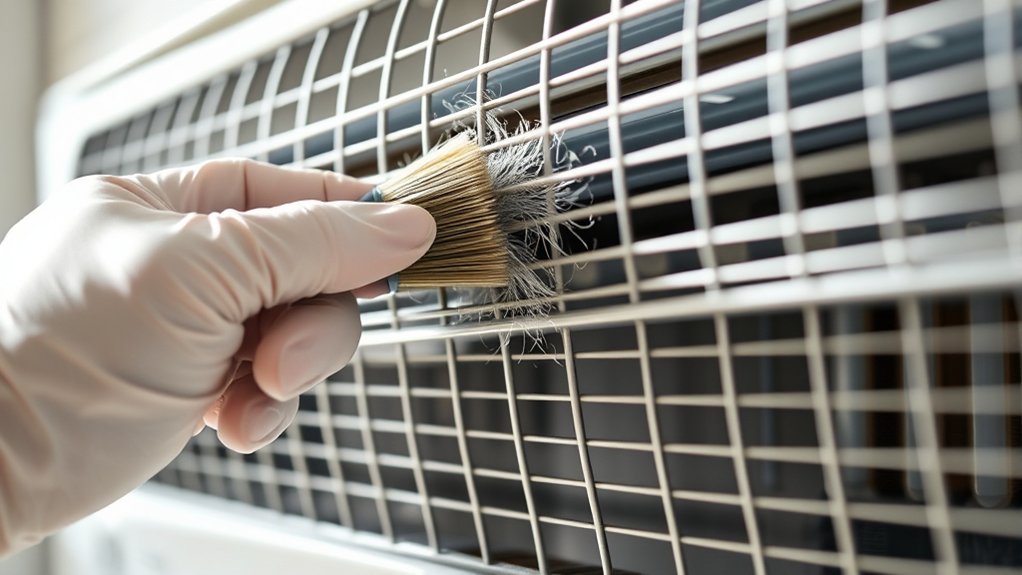
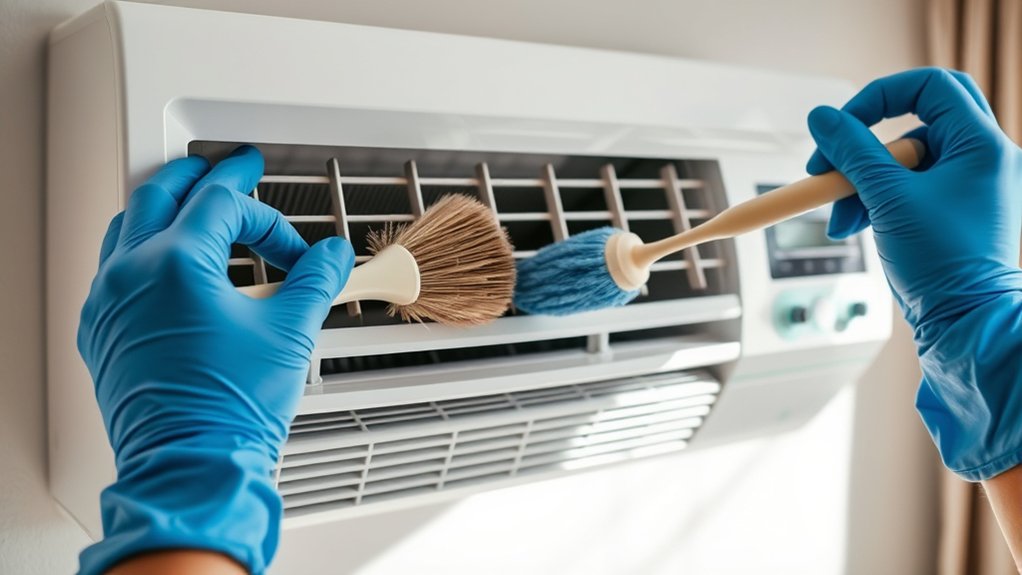
Use a soft-bristle brush to carefully remove dust from the cooling fins and coils, always brushing in the direction of the fins to prevent bending. Gently clean these components to dust off the fins and avoid damaging the delicate structure.
Regular maintenance through quarterly cleaning helps improve cooling efficiency and energy efficiency, reducing electricity costs. While cleaning, inspect the coils for dust and debris buildup or damage, as dirty coils impair performance.
Quarterly cleaning boosts cooling and energy efficiency while preventing coil damage and reducing electricity costs.
Use a soft brush with controlled pressure to maintain ideal airflow and heat exchange.
- Lightly sweep dust and debris off the fins
- Examine coil surfaces for dirt accumulation
- Avoid applying force that could bend fins
Consistent cleaning and inspection guarantee your wall AC operates efficiently and lasts longer.
Clean the Grill, Exterior, and Louvers of Your Wall AC
Before cleaning the grill, exterior, and louvers of your wall air conditioner, make sure the unit is unplugged to prevent electrical hazards.
Start by wiping the grill and exterior of your wall-mounted AC unit with a damp cloth dipped in mild detergent. This helps remove dust and grime effectively without damaging the surfaces.
For the louvers, use a soft brush or cloth to gently eliminate dust, taking care to preserve their delicate structure. Regular cleaning of these parts is important to maintain good airflow. That way, your AC cools better and lasts longer.
After cleaning, double-check that all parts are completely dry. This helps prevent moisture buildup, which can lead to mold growth.
Following these simple steps will keep your wall AC running smoothly and hygienically.
Clean the Drip Tray Before Reassembling the Unit
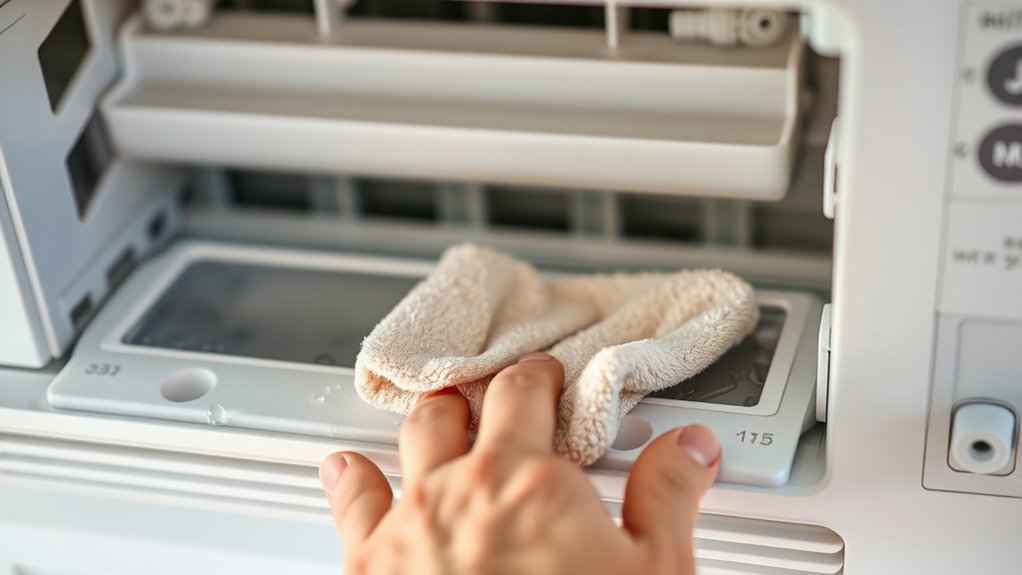
Remove the drip tray from your wall air conditioner to address accumulated moisture and debris. This tray collects excess moisture that can foster mold growth and cause unpleasant odors.
To clean the drip tray effectively, discard all water and debris first. Then, use warm soapy water to scrub the tray thoroughly, making sure no residue remains. Rinse well to get rid of any soap traces.
Start by removing water and debris, then scrub with warm soapy water and rinse thoroughly.
Keeping the drip tray clean helps maintain good airflow and prevents blockages that can reduce system efficiency. Before putting the unit back together, make sure the tray is completely dry so you don’t bring moisture back inside.
Think of the process like this:
- Dispose of stagnant water and debris carefully
- Scrub every corner of the tray with a brush
- Rinse and air-dry the tray fully for the best results
Frequently Asked Questions
How Often Should I Clean My Wall Air Conditioner?
You should clean your wall air conditioner filters every 1-6 weeks depending on how often you use it, whether you have pets, or if allergies are a concern. This helps keep your unit running efficiently and saves energy.
Try to follow a seasonal cleaning schedule to keep things on track. It’s easy to miss deep internal cleaning, but that’s important too.
You can use DIY cleaning solutions and the right equipment to get the job done. However, it’s also a good idea to consider professional maintenance once a year.
Keep an eye out for signs that your filters are dirty. Cleaning them on time not only improves air quality but also helps prevent your unit from working harder than it needs to, saving you money in the long run.
What Type of Vacuum Is Best for Cleaning Filters?
For filter maintenance, a canister vacuum with adjustable suction power is best. It balances strong cleaning with gentle filter care.
HEPA vacuums outperform standard ones by capturing fine allergens, which is ideal if you have sensitivities.
Bagged models reduce dust release, while bagless ones offer more convenience.
Use brush attachments to avoid damaging the filters. Also, consider noise level and portability based on your space.
Prices vary quite a bit, so it’s good to weigh features against your budget.
And remember, regular filter cleaning is key to keeping your vacuum performing at its best.
Can I Use Bleach to Disinfect the Filter?
You shouldn’t use bleach to disinfect the filter because it can affect air quality and might damage the filter. Instead, try using eco-friendly cleaners or diluted hydrogen peroxide to prevent mold.
Make sure you follow the recommended cleaning schedule and use DIY solutions that keep safety in mind, like ensuring proper ventilation.
It’s also important to regularly check and replace your filters according to the guidelines.
This helps keep your system running efficiently and avoids any harmful residues that bleach might leave behind.
How Do I Prevent Mold Growth Inside the Unit?
To guarantee effective mold prevention inside your unit, focus on filter maintenance by cleaning or replacing filters regularly.
Control humidity within 30-50% using dehumidifiers or ventilation for ideal air circulation. Manage condensation by checking drainage systems routinely.
Use cleaning solutions designed for mold inhibition and consider installing UV lights to kill spores.
It’s a good idea to conduct seasonal checks and regular inspections.
Also, try to avoid keeping too many indoor plants near the unit to minimize mold risk.
What Should I Do if My AC Leaks Water?
Think of your AC like a garden hose. If it’s kinked or clogged, water won’t flow properly and that can cause damage.
For water leaks, start by checking the drain line and condensate pump for blockages.
Also, replace dirty filters to improve airflow and prevent refrigerant issues. Regular AC maintenance and system inspections help control humidity and avoid water damage.
If the leaks keep happening, it’s a good idea to get professional help for a precise fix. Don’t wait too long, or the damage could get worse!
Conclusion
By following these five precise steps, you’ll have your wall air conditioner running as clean and efficient as the day it was installed, almost like it’s brand new! Don’t underestimate the impact of regular maintenance. A spotless filter, dust-free coils, and a clean drip tray can dramatically improve performance and extend your unit’s lifespan.
Taking these small, methodical actions guarantees your AC works flawlessly. It saves you from costly repairs and keeps your space cool and comfortable. You’ll be glad you put in the effort!