How to Get Rid of an Air Conditioner in 3 Simple Steps
To get rid of an air conditioner safely, first unplug it and identify hazardous materials like refrigerants and e-waste. Make sure you wear gloves and eye protection while doing this. Safety first!
Next, contact certified HVAC professionals or authorized recyclers. They’ll handle refrigerant removal and electronic components responsibly, so you don’t have to worry about any harmful impact.
Finally, schedule transport or pickup for the unit. Keep it clean and hold onto all the disposal documentation. Following these steps protects you and the environment. If you want, explore further for detailed guidance on compliance and eco-friendly practices.
Identify Hazardous Materials and Prepare Your Air Conditioner
Before you begin disposing of your air conditioner, you need to identify and safely manage hazardous materials it contains. First, unplug the unit and move it to a well-ventilated area.
Air conditioners contain refrigerants such as HCFCs and HFCs, which are classified as hazardous waste. These must be handled only by a certified technician to prevent environmental harm.
Avoid any internal electrical work because components like capacitors can retain dangerous voltage.
Also, electronics and batteries within the unit are considered e-waste and require proper disposal according to local regulations.
Always wear gloves and eye protection during preparation to minimize exposure risks.
Locate Certified Disposal and Recycling Services for Your Air Conditioner
When disposing of your air conditioner, locating certified disposal and recycling services is essential to guarantee safe handling of refrigerants and compliance with environmental regulations.
Follow these steps to ascertain responsible disposal:
First, contact certified HVAC professionals for expert refrigerant removal and guidance to authorized recycling facilities. These experts know the ins and outs of safe disposal and can help you avoid any legal headaches.
Next, search for local appliance recyclers and hazardous waste disposal centers listed on municipal websites or through local utility recycling programs. This way, you can find options nearby that meet environmental standards.
You can also utilize junk removal services like 1-800-GOT-JUNK? that specialize in environmentally friendly practices and appliance recycling. They make the process easy and eco-conscious.
Finally, verify that the chosen recycling facilities adhere to strict environmental standards for refrigerant recovery and component recycling. This ensures your air conditioner is handled responsibly from start to finish.
Plan Safe Transport and Schedule Pickup for Your Air Conditioner
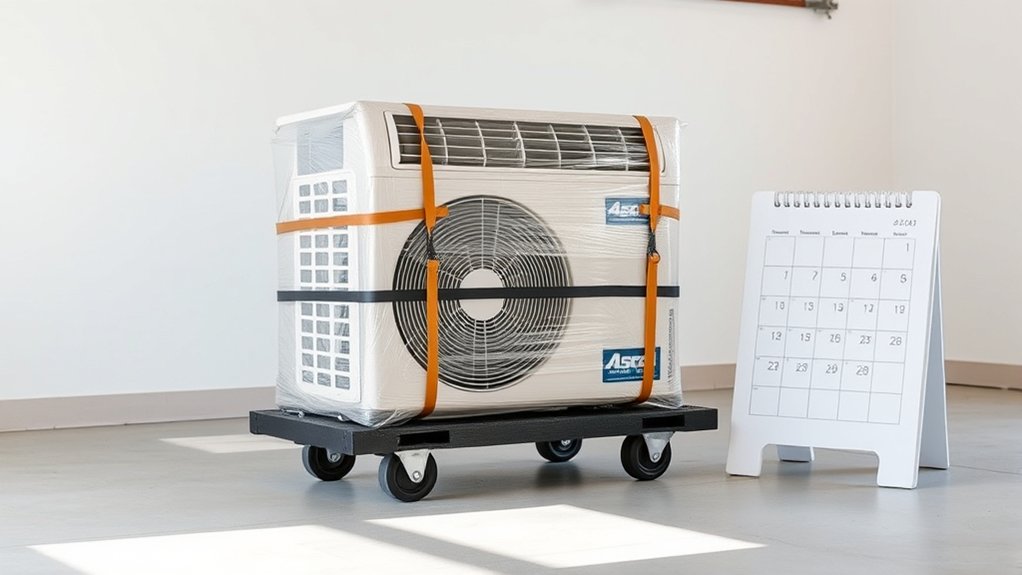
After selecting a certified disposal or recycling service, the next step is to get your air conditioner ready for transport and schedule its pickup.
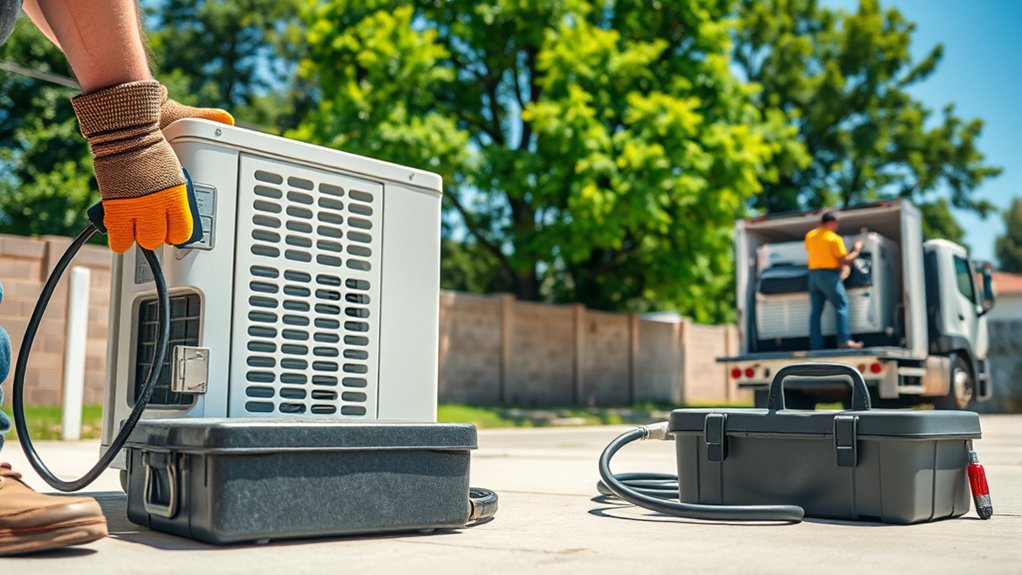
First, unplug the unit and give it a good clean to prevent any leaks or contamination while it’s being moved. It’s a smart idea to wear protective gear like gloves and eye protection to keep yourself safe from sharp edges or electrical parts.
Unplug and clean your unit carefully, wearing gloves and eye protection to avoid sharp edges and electrical hazards.
Once that’s done, reach out to your city’s local waste authority or use professional pickup services such as LoadUp or 1-800-GOT-JUNK? to arrange a pickup.
When you’re ready, position the unit with the back facing the street so it’s easy to access for removal.
Make sure to confirm the pickup date and hold onto any documentation showing the refrigerant has been removed. This helps you stay compliant with hazardous materials rules.
With a bit of planning, you’ll ensure your air conditioner disposal is safe, legal, and follows all local waste guidelines.
Frequently Asked Questions
Can I Sell My Old Air Conditioner Instead of Disposing of It?
Yes, you can sell your old air conditioner by exploring various selling options. Start with a value assessment considering how its condition impacts the price and keep local regulations in mind.
Try using online marketplaces to reach potential buyers. Make sure your listing is effective and highlights the seasonal demand for air conditioners.
Be upfront about the unit’s condition to help with negotiations. If shipping is involved, factor in those costs and details.
Also, choose secure payment methods to protect yourself. This way, you can get the best return while staying compliant and keeping your buyer happy.
How Do I Safely Remove an Air Conditioner From a Window?
To safely remove a window air conditioner, first unplug it and gather removal tools like screwdrivers. Support the unit’s weight carefully to guarantee window safety.
Follow installation tips in your manual, considering the air conditioner type.
Drain water to prevent spills, then clean and inspect for maintenance guidelines. It’s a good idea to explore energy efficiency and replacement options if you’re thinking about upgrading.
For seasonal storage or disposal, make sure to follow proper disposal protocols to handle refrigerants responsibly.
Taking these steps will help you remove your unit safely and keep everything in good shape.
Are There Any Tax Rebates for Recycling Air Conditioners?
You can access tax credits and government rebates by participating in approved recycling programs when upgrading appliances.
Studies show energy-efficient appliance upgrades reduce environmental impact by up to 30%. Local incentives often complement these financial benefits, promoting sustainable practices while ensuring compliance with disposal regulations.
Check your area’s programs to maximize savings.
Leveraging these opportunities not only supports energy efficiency but also provides tangible financial benefits when disposing of old air conditioners responsibly.
It’s definitely worth looking into to make the most out of your upgrade.
What Should I Do if My Air Conditioner Leaks Refrigerant?
If your air conditioner leaks refrigerant, the first thing you should do is turn off the unit right away to stay safe.
It’s best not to try fixing it yourself because handling refrigerants really needs professional skills and equipment.
You’ll want to call a certified technician to check for leaks and recover the refrigerant properly. This helps protect the environment and makes sure everything is done by the book.
The technician will also look at your options for repairs to get your system running efficiently again.
Keeping up with regular maintenance can help prevent leaks from happening in the future.
Don’t forget to keep a record of everything for your warranty and any regulations. This way, you’ll help ensure your air conditioner stays safe and works well for the long haul.
How Often Should Air Conditioners Be Replaced or Upgraded?
You should replace your air conditioner every 10 to 15 years, considering its lifespan and evolving energy efficiency standards.
Keep an eye out for signs that replacement might be needed, like rising energy bills or inconsistent cooling. It’s a good idea to weigh the cost of replacement against ongoing maintenance.
Upgrading your unit can bring benefits like improved efficiency and a smaller environmental impact.
How often you use your AC and the brand’s reliability also play a role in when you should consider an upgrade.
Always make sure to prioritize professional installation. This helps maximize your system’s performance and ensures you’re following the latest regulations.
Conclusion
Getting rid of your air conditioner is like dismantling a complex puzzle. Each step demands care and precision.
First, pinpoint hazardous components to avoid hidden risks. Next, connect with certified disposal services that act as trusted custodians of eco-friendly recycling. Finally, plan a safe transport route and schedule pickup to guarantee a seamless handoff.
Following these steps ensures your AC’s exit is as efficient and responsible as its operation. It’s really about being careful and thoughtful every step of the way.