How to Remove Musty Smell From Your Air Conditioner
To remove musty smells from your air conditioner, start by replacing dirty air filters every 1 to 3 months. It’s best to use HEPA or antimicrobial options if you can. These help keep the air cleaner and reduce odors.
Next, clean the evaporator coils using a vinegar-water solution or a professional coil cleaner. This will get rid of any mold buildup that might be causing that musty smell.
Don’t forget to regularly flush and inspect the condensate drain line. This prevents clogs and stagnant water, which are common culprits for bad smells.
Controlling indoor humidity is also important because it helps stop mildew from growing. Keeping your AC well-maintained is really the key to keeping it fresh and odor-free.
And if you want to go the extra mile, there are further steps you can take to improve long-term air quality and how well your system performs.
Common Causes of Musty Odors in Air Conditioners
When you notice a musty smell coming from your air conditioner, it’s often due to mold and mildew thriving in damp areas within the unit or ductwork. This growth typically results from excess moisture, which can accumulate when the condensate drain line becomes clogged, causing water to pool inside the system.
Also, a dirty air filter traps dust and allergens, creating an ideal environment for microbial growth.
Dirty coils collect dust and moisture too, which encourages mold development even more.
Contaminated ductwork can spread mold spores throughout your home, making the musty smell worse whenever your AC runs.
Knowing these common causes helps you spot problem areas early and deal with moisture buildup before it leads to persistent odors or poor indoor air quality.
Quick Fixes to Remove Musty Smell From Your AC
You should start by replacing your air filter every 1 to 3 months. This helps keep dust and allergens from causing musty odors.
Then, clean the evaporator coils using a professional-grade cleaner to get rid of moisture and debris buildup. These simple steps keep the airflow steady and cut down on the stuff that makes those unpleasant smells develop.
Air Filter Replacement
Replace your air filter every one to three months to prevent dust, allergens, and mold spores from accumulating and causing musty odors in your air conditioner. A dirty air filter restricts airflow, promoting moisture retention that encourages mold or mildew growth inside the system.
For effective air filter replacement, choose high-efficiency particulate air (HEPA) filters to trap finer contaminants that contribute to unpleasant smells. Regular cleaning and inspection of the filter help detect clogs early, maintaining ideal airflow and system performance.
Consistent air filter maintenance greatly improves indoor air quality by ensuring your AC circulates fresh air efficiently.
To avoid musty smells, mark your calendar for timely filter replacements and incorporate this task into your routine HVAC upkeep to reduce the risk of mold or mildew buildup.
Evaporator Coil Cleaning
Inspecting and cleaning the evaporator coils regularly prevents mold and mildew buildup that causes musty odors in your AC system.
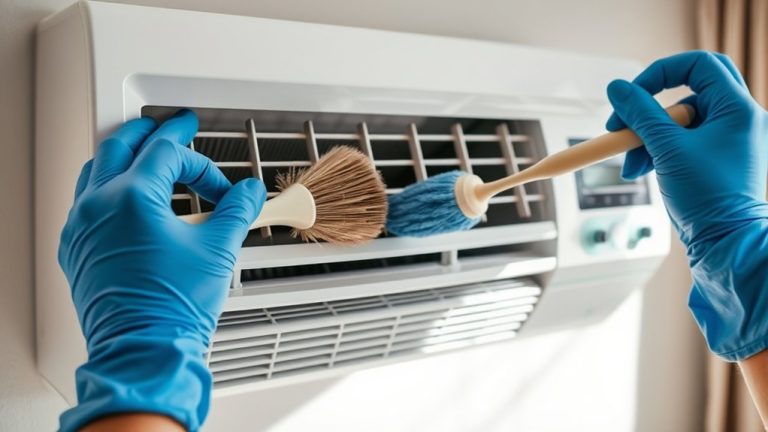
To keep your AC clean, use a professional-grade coil cleaner designed to dissolve dust, grime, and biofilm that trap moisture and promote mold growth. When you need deeper cleaning, go for a foaming coil cleaner, but make sure to follow all the manufacturer’s instructions to avoid any damage.
It’s also a good idea to keep an eye on indoor humidity levels. High moisture speeds up mold growth on the coils, which you definitely want to avoid.
Scheduling annual evaporator coil cleanings, especially before the cooling season hits, helps ensure maximum airflow and system efficiency.
By keeping your evaporator coils clean and controlling humidity, you’ll reduce that musty smell and help your air conditioner last longer.
It’s a simple step that makes a big difference in your AC’s performance and your home’s comfort.
Check and Replace Air Filters to Improve Air Quality
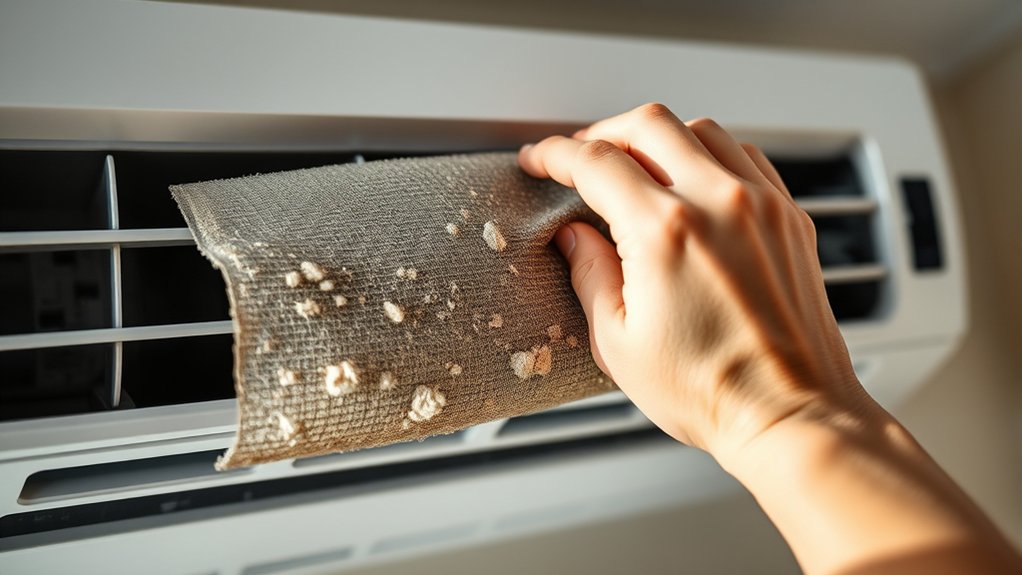
You should check your AC’s air filters every 1 to 3 months and replace them when you notice reduced airflow or visible dirt buildup.
It’s important to choose the right filter too—something like a properly sized HEPA filter works great because it captures particles efficiently and helps prevent moisture buildup.
Importance Of Regular Replacement
Although it may seem like a small task, regularly changing your air filters every 1 to 3 months plays a critical role in maintaining indoor air quality and preventing musty odors.
Regularly replacing air filters reduces dust, allergens, and mold spores that contribute to unpleasant smells. Clean filters improve airflow, which minimizes moisture buildup and inhibits mold and mildew growth within your air conditioning system.
This process guarantees your AC operates at peak performance, reducing strain and potential breakdowns. Neglecting timely replacements can increase the risk of musty odors as trapped contaminants accumulate.
To maintain system efficiency and air quality, keep a log of filter changes. Consistent attention to this simple maintenance step safeguards your indoor environment and prolongs the longevity of your HVAC unit.
It really makes a difference in how comfortable and fresh your home feels.
Choosing The Right Filter
Maintaining clean air filters is only part of the solution; selecting the right type of filter directly impacts your air conditioner’s ability to reduce musty odors and improve air quality. You should choose filters compatible with your unit’s specifications to guarantee a proper fit, preventing air leaks that compromise efficiency.
HEPA filters are highly effective, capturing smaller particles and greatly enhancing clean air circulation. Also, consider filters with activated charcoal or antimicrobial treatments to inhibit mold growth and neutralize odors.
Always replace your air filter promptly when it appears dirty or clogged, as a dirty filter restricts airflow and makes musty smells worse. Regularly checking and replacing the filter every 1 to 3 months optimizes performance.
Doing this helps maintain a healthier environment and prolongs your air conditioner’s lifespan. It’s a simple step that makes a big difference in how well your system works and how fresh your indoor air feels.
Signs Filter Needs Changing
When air filters become visibly dirty or show signs of discoloration, it’s a clear indication that they need replacing to maintain proper airflow and prevent musty odors. You should change the filter every 1 to 3 months, depending on usage and environment.
A clogged filter restricts airflow, increasing humidity and promoting mold growth, which are common causes of musty odor. Make sure to inspect filters regularly and clean or replace them promptly.
Using high-efficiency filters with activated carbon or antimicrobial properties can help reduce odors by trapping bacteria and mold particles.
If you notice persistent musty smells even after changing the filter, it might mean there’s an underlying issue that needs checking by an HVAC technician.
Keeping a strict filter replacement schedule guarantees peak air quality and stops your air conditioner from developing unpleasant odors. It really pays off to stay on top of it!
Clean Evaporator Coils to Eliminate Musty Smells
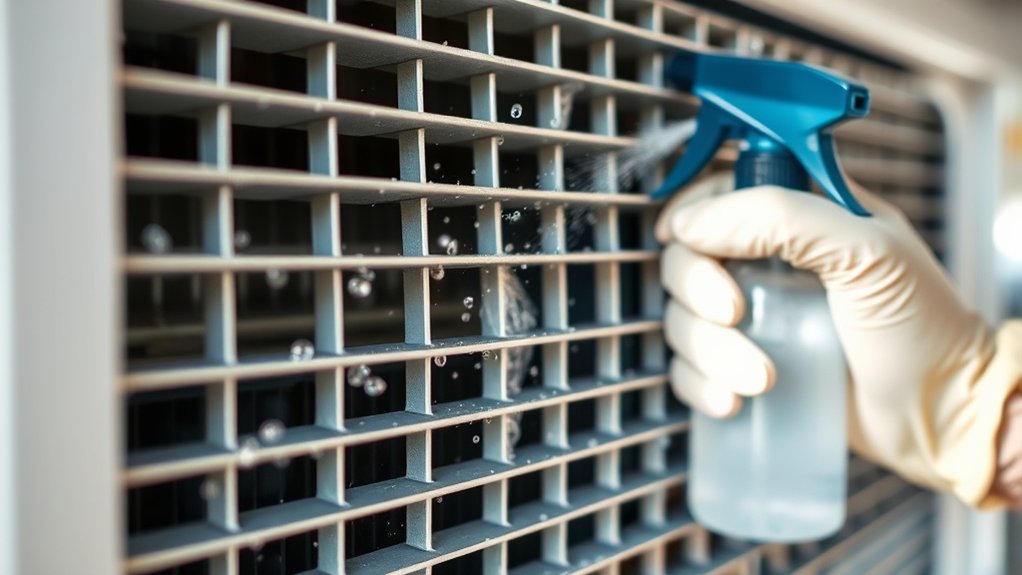
Clean the evaporator coils regularly to prevent moisture buildup that fosters mold and mildew growth. These are the main sources of musty odors in your air conditioner.
To clean evaporator coils effectively, use a professional-grade coil cleaner designed to dissolve dust, grime, and microbial buildup without damaging the delicate fins. Apply the coil cleaner thoroughly and allow it to penetrate before rinsing completely to remove all residues. Leaving residues behind can contribute to musty smells.
Use a professional coil cleaner to remove buildup gently, ensuring no residue remains to prevent musty odors.
Perform this cleaning at least once a year, with extra attention during peak cooling seasons to maintain ideal airflow and control odors.
While cleaning, inspect the condensate drain for clogs. Blockages can cause water to accumulate, which worsens mold and mildew growth on the coils and makes musty odors worse.
Clear Condensate Drain Line to Prevent Mildew Buildup
You should check the condensate drain line every month to catch any blockages early.
These blockages can cause water to build up and lead to mildew growth.
To keep things clear, flush the line with a mix of half water and half vinegar.
This helps get rid of mold and debris effectively.
If you find the line is clogged, try using a wet/dry vacuum.
It can help restore proper drainage and stop those musty odors from developing.
Identifying Drain Line Blockages
Several common issues can cause drain line blockages in your air conditioner, leading to water pooling and creating ideal conditions for mildew growth. You should regularly inspect the condensate drain line for clogs, as debris accumulation often causes blockages that impede proper drainage.
When the drain line is blocked, stagnant water collects in the drain pan, fostering mildew and producing unpleasant odors. Identifying these blockages early is vital to maintaining a clean system and preventing musty smells. Look for slow drainage, water leaks, or dampness near the unit.
Furthermore, make sure the drain pan remains free of debris. Detecting these signs promptly allows you to address the root cause before mildew buildup worsens and odors intensify.
Keeping an eye on these things can save you from bigger headaches down the road.
Cleaning Methods and Tips
Regularly flushing the condensate drain line with a solution of equal parts water and vinegar effectively removes clogs and disinfects the system.
This helps prevent mold and mildew buildup. It’s an essential step to eliminate that musty smell caused by stagnant water and mold growth.
To keep your AC unit smelling fresh, here’s what you can do:
- Inspect and clear the condensate drain line and pan to guarantee unobstructed water flow.
- Flush the drain line monthly with the water-vinegar solution to prevent buildup.
- Schedule professional maintenance periodically to conduct thorough cleaning and detect hidden issues.
Following these simple steps will help maintain a clean, odor-free system.
It’s easier than you might think!
Use Vinegar and Natural Cleaners to Remove Musty Odors
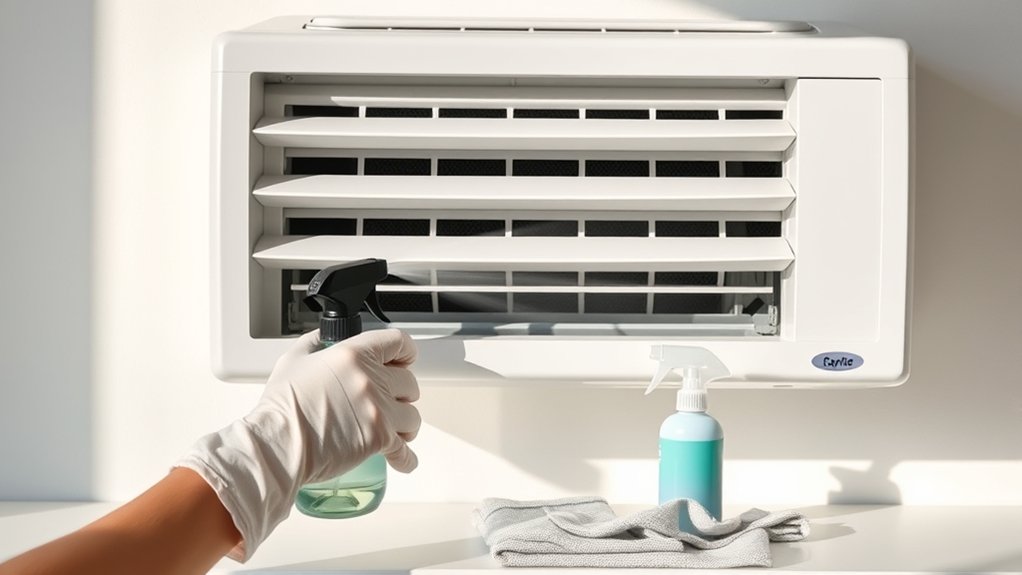
Mix equal parts vinegar and water to create a natural cleaner that effectively neutralizes musty odors in your air conditioner. Vinegar’s acidity breaks down mold and mildew on evaporator coils, eliminating odor sources and improving airflow.
Spray this solution directly onto coils and interior surfaces, allowing it to sit for several minutes before wiping clean.
Apply the mixture to coils and surfaces, let it sit briefly, then wipe away for a fresh, clean result.
Regularly flushing the condensate drain line with the vinegar mixture prevents stagnant water buildup, which is a common cause of musty smells.
You can also place a diluted vinegar solution in the air filter compartment for a few hours. It absorbs and neutralizes odors without damaging the filter.
If you’re dealing with persistent musty odors, try combining vinegar with baking soda. This boosts the deodorizing effect by absorbing moisture and further neutralizing smells.
These natural cleaners guarantee efficient, chemical-free odor control.
Clean Your AC Ductwork Safely and Effectively
Inspecting and cleaning your AC ductwork every 3 to 5 years helps eliminate dust, mold, and allergens that cause musty odors. Proper cleaning of your HVAC ductwork is vital to maintain air quality and prevent mold growth.
Follow these steps for safe and effective ductwork maintenance:
- Turn off the HVAC system and use a vacuum with a HEPA filter to remove dust and debris from the ducts.
- Apply a non-toxic cleaner designed for HVAC systems to disinfect surfaces and inhibit mold development.
- Seal any leaks in the ductwork to stop moisture ingress, which promotes mold growth.
For thorough cleaning, consider hiring a professional who uses specialized equipment like rotary brushes and high-powered vacuums. They can guarantee mold and contaminants are fully removed.
Control Indoor Humidity to Stop Musty Smells From Returning
After cleaning your ductwork, managing indoor humidity becomes the next vital step to prevent musty odors from returning. You need to control indoor humidity levels between 30% and 50%, as this range inhibits mold and mildew growth responsible for musty smells.
Use a dehumidifier alongside your AC unit to effectively remove excess moisture from the air. This is important for preventing musty odors.
Moreover, regularly inspecting and cleaning condensate drain lines is essential. Blockages cause water buildup that fosters mold development.
Setting your air conditioner to “dry” mode during humid periods further reduces moisture without overcooling.
By consistently controlling indoor humidity and maintaining the condensate drain, you’ll greatly reduce the chances of musty smells recurring in your air conditioning system.
It’s all about staying on top of these simple steps to keep your space fresh and odor-free.
Maintain Your AC Regularly to Keep It Smell-Free
Keep your air conditioner running efficiently and odor-free by maintaining it regularly. Neglecting maintenance often causes AC smells because of mold and mildew growth. To prevent this, follow these steps:
- Filter Regularly: Change air filters every 1 to 3 months to stop dust from building up. Dust can promote those musty odors you want to avoid.
- Clean Evaporator Coils: Make sure to schedule an annual cleaning of evaporator coils. Dirt and biofilm can stick around and harbor mold, which leads to smells.
- Ensure Proper Drainage: Check and clear the condensate drain line regularly. This prevents water buildup that can encourage mold and mildew growth.
Keeping up with these tasks means less moisture and fewer airborne contaminants in your AC system. That way, you’ll drastically reduce musty smells and enjoy better indoor air quality.
When to Call a Professional for Persistent Musty Odors
How do you know when the musty smell coming from your air conditioner requires professional attention? If the odor sticks around even after regular maintenance and some DIY cleaning, it’s probably time to call an HVAC professional to take a closer look at your system.
A persistent musty smell usually means there’s mold growing somewhere inside the ductwork or evaporator coils—places that are tough to see or clean on your own.
And if the smell comes back quickly after you clean, it’s a sign that moisture or contamination is still there, needing an expert’s diagnosis.
An HVAC pro can do a thorough cleaning that gets rid of mold and mildew for good.
Plus, if you notice your air conditioner isn’t cooling as well or if you hear strange noises along with the smell, don’t wait.
Getting a professional evaluation quickly can help prevent more damage and make sure your system runs safe and smooth.
Frequently Asked Questions
Can Musty Smells Indicate a Health Risk From My AC?
Yes, musty smells from your AC can indicate a health risk due to mold growth. Poor ventilation and high humidity levels create ideal conditions for mold, which compromises air quality and can trigger respiratory issues.
You should address these odors promptly by improving ventilation and controlling humidity levels.
Regular maintenance practices, including cleaning and inspecting your system, help prevent mold buildup and reduce associated health risks. This way, you ensure safer indoor air for you and your family.
Don’t wait too long to tackle these issues—it’s better to be proactive when it comes to your health.
How Often Should I Replace My Air Conditioner’s Filters?
You should replace your air conditioner’s filters every 1 to 3 months because who doesn’t love playing hide-and-seek with dust bunnies?
For ideal filter maintenance, adjust how often you change your filter if you have pets or smokers in the house, or during high dust seasons.
Regular seasonal filter checks help keep your HVAC system in good shape, boost airflow, and greatly improve air quality.
Don’t let a clogged filter sabotage your system’s efficiency or your breathing comfort!
Are There Specific Air Conditioner Brands Less Prone to Musty Odors?
Yes, certain brands like Trane and Carrier excel in filter quality and humidity control, which helps reduce musty odors.
Lennox offers advanced energy efficiency and airflow management, making it easier to keep your space comfortable.
Mitsubishi Electric focuses on dehumidification technology, which is a big plus for preventing moisture issues.
Goodman’s design simplifies condenser maintenance, helping prevent moisture buildup.
But honestly, no matter what brand you choose, it’s super important to keep up with airflow issues.
Scheduling regular filter replacements and coil cleanings is key to keeping your system odor-free and running smoothly.
Can Pets Contribute to Musty Smells in the AC System?
Imagine pet dander swirling like dust motes inside your AC, settling into filters and ducts. Yes, pets can contribute to musty smells by causing moisture accumulation, which breeds mold.
You need consistent filter maintenance to prevent clogged airflow, which worsens humidity and odors.
Regular HVAC cleaning removes trapped fur and dander, ensuring your system breathes freely.
Does Using Essential Oils Help Mask or Remove Musty AC Odors?
Essential oils help with scent diffusion but don’t provide true odor elimination for musty AC smells.
While natural remedies like tea tree or eucalyptus oils can improve air quality by masking odors and offering mild antifungal effects, they don’t address mold or moisture buildup causing the smell.
You should use essential oils alongside regular cleaning and maintenance to effectively manage musty odors and maintain ideal air quality in your AC system.
It’s really about combining these approaches to get the best results. Just relying on oils alone won’t fix the root problem.
Conclusion
By tackling musty odors in your AC like a skilled technician, you’ll breathe fresher air and extend your unit’s lifespan. Regularly replacing filters, cleaning coils, and clearing drain lines act as the essential gears in this system, preventing mildew and mold buildup.
Controlling indoor humidity and maintaining your unit guarantees that musty smells don’t sneak back in. When odors persist, don’t hesitate to call a professional. Sometimes, the root cause lies deeper than surface fixes can reach.