Why Does My Air Conditioner Keep Turning off and On?
Your air conditioner keeps turning off and on because it’s short cycling. This often happens due to issues like a faulty thermostat that misreads temperatures or dirty air filters that restrict airflow.
It can also be caused by refrigerant leaks reducing cooling efficiency or an oversized unit that cools too quickly. Electrical problems and dirty condenser coils can strain the system and lead to the same behavior.
These frequent cycles use more energy and wear out components faster. Understanding the causes helps you fix the problem and prevent further damage.
What Is AC Short Cycling and Why It Matters
When your air conditioner frequently turns on and off before reaching the set temperature, it’s experiencing short cycling. This condition can raise your energy bills and wear out components prematurely.
AC short cycling often happens because the unit is oversized and cools the space too quickly. That causes the system to shut down before completing a full cycle.
Dirty air filters can also restrict airflow, making the system work harder and cycle more often.
Plus, a refrigerant leak reduces cooling efficiency, which makes the unit cycle more to maintain the temperature. These problems not only make your space less comfortable but also speed up wear on your system’s parts.
That can lead to costly repairs down the road.
Fixing these issues quickly helps keep your AC running at its best. It also improves energy efficiency and extends the lifespan of your air conditioner.
Why a Faulty Thermostat Causes AC Short Cycling
Short cycling often signals underlying issues beyond just mechanical faults, and one common culprit is a faulty thermostat. When your thermostat misreads indoor temperatures, it commands the AC unit to turn on and off prematurely. This causes short cycling.
A malfunctioning thermostat may need recalibration or replacement to restore accurate temperature sensing and proper communication with the system. Regular maintenance and professional evaluation help prevent unnecessary wear and keep your home comfortable.
| Issue | Effect on AC Unit |
|---|---|
| Misreading Temperature | Triggers premature cycling, increasing wear |
| Malfunctioning Sensors | Causes erratic on/off commands |
| Lack of Maintenance | Allows faults to persist, worsening short cycling |
Fixing thermostat faults is key to stopping short cycling and making your AC unit last longer.
How Proper Thermostat Placement Prevents AC Short Cycling
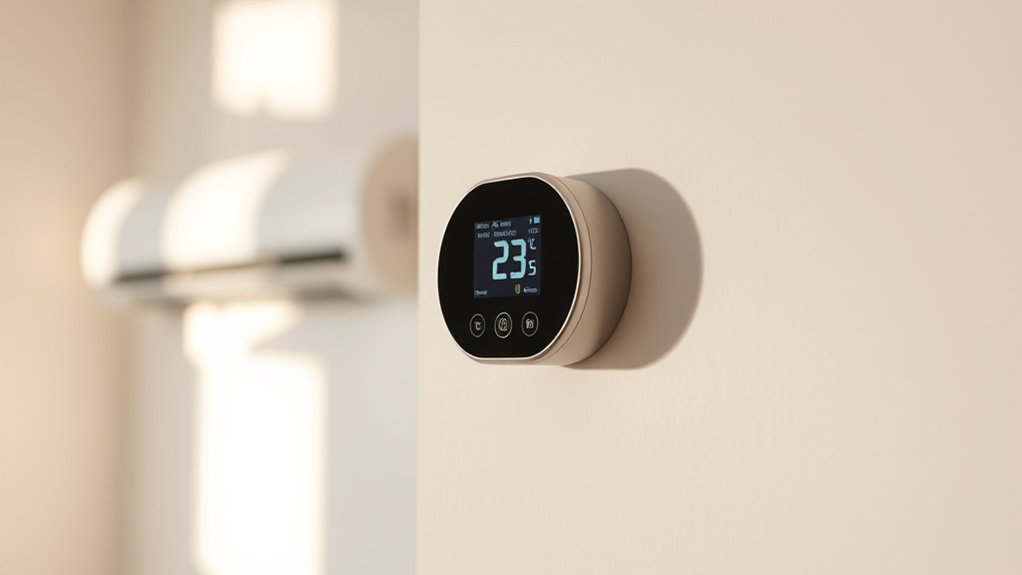
Because thermostat placement directly affects temperature accuracy, you need to position it centrally within your home to prevent AC short cycling.
Proper thermostat placement guarantees accurate sensing of the ambient temperature, avoiding false readings caused by drafts, direct sunlight, or proximity to air vents.
Placing the thermostat near windows or vents can cause it to detect cooler or warmer air inaccurately, triggering the system to cycle on and off prematurely.
Also, avoid obstructing the thermostat with furniture or décor, which impedes airflow and compromises measurement precision.
Regular maintenance, including calibration, is essential to maintain sensor accuracy and prevent short cycling.
How Dirty Air Filters Cause AC Short Cycling
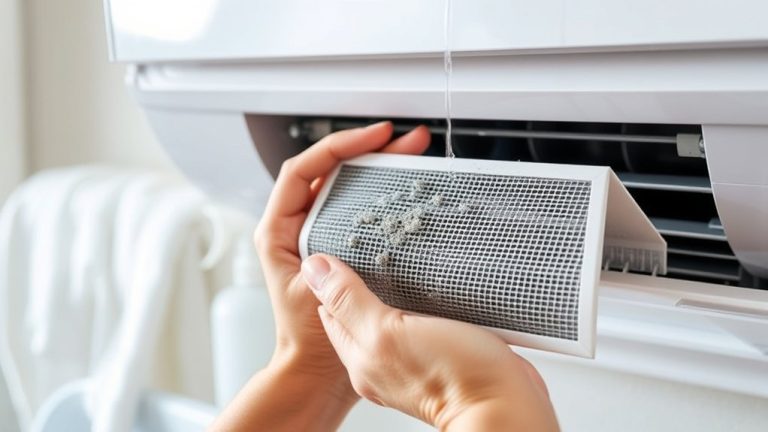
When your air filter gets dirty, it blocks the airflow, making your AC work harder than it should. This extra effort can cause the system to overheat.
On top of that, when the airflow is reduced, the evaporator coils might actually freeze up.
And here’s the kicker—when that happens, your AC starts turning on and off more often than normal, something called short cycling. It’s annoying and can really wear out your system faster.
Restricted Airflow Effects
If your air conditioner frequently cycles on and off, dirty air filters could be the culprit by restricting airflow and causing the evaporator coil to freeze. Restricted airflow forces your AC unit to work harder, increasing energy consumption and risking compressor overheating.
This strain triggers safety shutoffs, which leads to short cycling. Regular AC maintenance, including replacing or cleaning dirty air filters every month, prevents these issues and helps your system run more efficiently.
| Effect | Explanation |
|---|---|
| Restricted airflow | Clogged filters block air, reducing system performance |
| Evaporator coil freezing | Insufficient airflow cools coil excessively, causing ice |
| Increased energy use | AC works harder to compensate, raising power consumption |
| Compressor overheating | Pressure imbalances from clogged filters trigger shutdowns |
| Indoor air quality decline | Dirt buildup worsens air quality, affecting comfort |
Frozen Coil Problems
Although dirty air filters may seem like a minor maintenance issue, they considerably restrict airflow to your AC unit, which can cause the evaporator coils to freeze.
When airflow is insufficient, the cold refrigerant in the evaporator coil causes moisture to accumulate and freeze, leading to frozen coils. This ice buildup disrupts heat exchange, causing your thermostat to misread temperatures.
As a result, your AC short cycles, turning off and on frequently to compensate for incorrect temperature readings. These frequent cycles reduce cooling efficiency and strain your system.
To prevent frozen coils and short cycling, regularly inspect and replace or clean your air filters.
Maintaining proper airflow through clean filters is essential for ideal AC performance and longevity. It helps minimize the risk of frozen coils and ensures consistent operation without premature shutdowns.
Keeping up with this simple task can save you from bigger problems down the line.
Why Dirty Condenser Coils Lead to Short Cycling
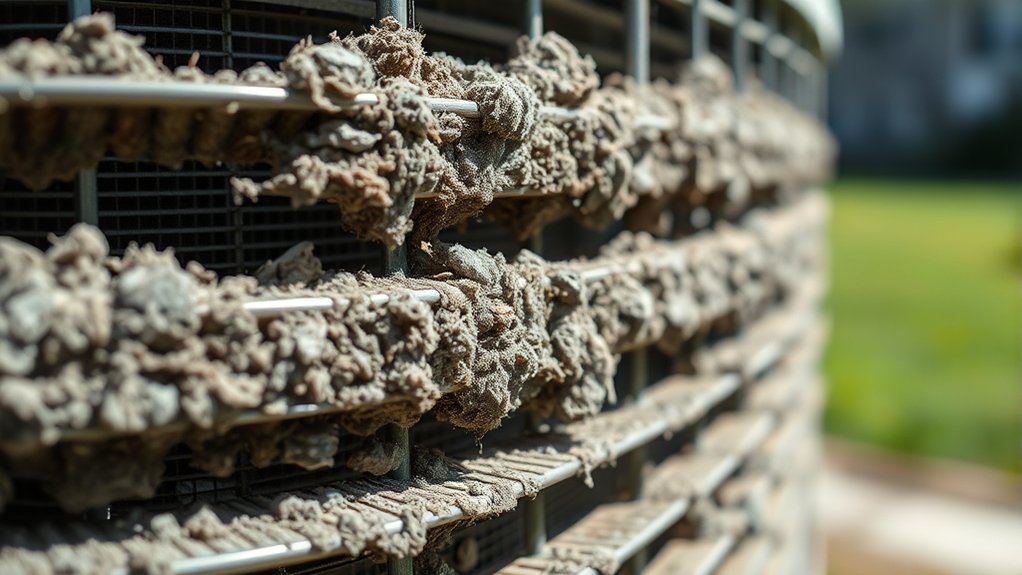
Because dirty condenser coils impair heat exchange, your air conditioner risks overheating and triggering safety shutdowns.
Dirty condenser coils accumulate dirt and debris, reducing the cooling system’s efficiency and forcing the compressor to work harder. This strain causes the unit to short cycle, frequently turning off and on to prevent damage.
Short cycling not only wastes energy but also increases wear on the compressor, potentially leading to premature failure.
To maintain peak performance and avoid costly repair services, you need regular cleaning of the condenser coils. Neglecting this maintenance escalates the risk of severe issues, including complete system breakdowns.
Keeping the coils clean guarantees efficient heat dissipation, stabilizes the cooling cycle, and extends the overall lifespan of your air conditioning system.
It’s a simple step that really pays off in the long run. So, don’t skip it!
How Refrigerant Leaks Trigger AC Short Cycling
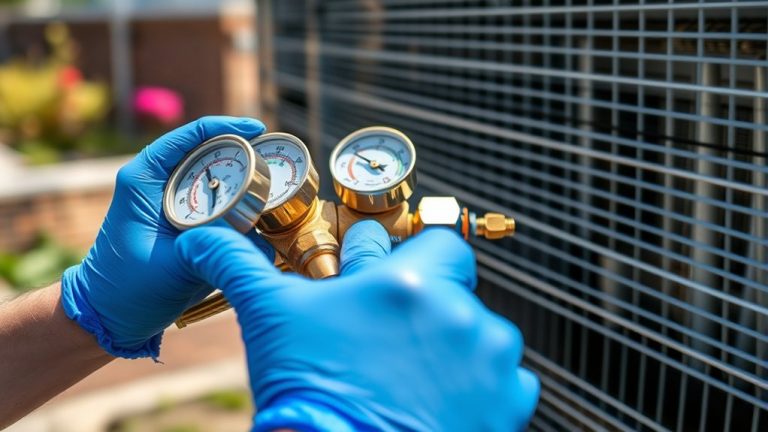
When your air conditioner develops a refrigerant leak, it loses the ability to cool efficiently. This forces the system to cycle on and off frequently to maintain the set temperature. Low refrigerant levels disrupt the cooling process, causing the AC system to short cycle as it struggles to reach desired temperatures.
This frequent cycling helps protect the compressor from overheating. But it also reduces overall efficiency and increases wear on the system.
| Issue | Effect on AC System | Result |
|---|---|---|
| Refrigerant Leak | Reduced cooling capacity | Short cycling |
| Low Refrigerant | Compressor overheating risk | System shutdown |
| Ignored Leak | Increased compressor strain | Costly repairs |
Keeping an eye on refrigerant levels and fixing leaks quickly ensures your AC runs smoothly. It also helps prevent short cycling and the problems that come with it.
What Compressor Problems Mean for AC Performance
Refrigerant leaks not only reduce cooling efficiency but also place significant strain on the compressor, often leading to performance issues.
Compressor problems directly impact AC performance by causing short cycling, which means your unit frequently turns on and off. This cycle stresses the system and lowers efficiency.
Low refrigerant levels impair compressor function, reducing cooling capacity and triggering safety shutdowns.
Low refrigerant levels hinder compressor efficiency, decrease cooling power, and can cause safety shutdowns.
Even if refrigerant levels are adequate, a failing compressor forces the system to work harder, raising energy costs and repair needs.
You should watch for these signs of compressor problems:
- Frequent short cycling disrupting consistent cooling
- Overheating causing safety switch activation
- Reduced cooling despite normal refrigerant levels
- Increased energy consumption and operational noise
Promptly addressing these issues helps maintain peak AC performance and extends your unit’s lifespan.
Electrical Problems That Trigger AC Short Cycling
You should check the wiring and connections carefully because loose or damaged components can cause inconsistent power flow and trigger short cycling.
Also, faulty capacitors can disrupt the electrical supply, which stops the AC from running smoothly.
Wiring And Connections
Although electrical components often operate silently in the background, damaged wiring or loose connections can disrupt the consistent power supply your AC unit needs.
This disruption can cause frequent short cycling. Wiring problems create electrical issues that prevent stable operation, forcing the system to shut off and restart repeatedly.
Addressing these issues promptly is critical to avoid further damage.
Key wiring and connection factors affecting short cycling include:
- Loose or corroded wiring causing intermittent power loss
- Damaged insulation leading to electrical shorts
- Malfunctioning relay switches disrupting current flow
- Overheating connections triggering safety shutdowns
Regular professional inspections help identify and repair these faults.
That way, your AC maintains a stable electrical connection and reliable performance without unnecessary cycling.
Faulty Capacitors Impact
When a capacitor fails, it disrupts the electrical energy storage that’s vital for your air conditioner’s compressor to start and run smoothly.
Faulty capacitors cause inconsistent power delivery, which often leads to short cycling. This means the AC turns off and on repeatedly.
This happens because the compressor struggles to keep running, sometimes overheating and triggering safety shutdowns to prevent damage.
You might notice your system failing to start or running erratically due to capacitor wear.
Regular maintenance helps detect capacitor issues early, reducing the risk of sudden failures.
For accurate diagnosis and replacement, it’s best to rely on a professional HVAC technician.
Prompt air conditioning repair focused on capacitors not only restores proper function but also boosts your system’s efficiency and longevity.
How an Oversized AC Unit Increases Short Cycling
Because an oversized AC unit cools a space too quickly, it often shuts off before removing adequate humidity. This causes frequent on/off cycles known as short cycling. This rapid cycling stresses your system and reduces efficiency.
An oversized AC cools too fast, causing short cycling that stresses your system and lowers efficiency.
An HVAC technician emphasizes the importance of proper cooling capacity to avoid these issues. When your unit is oversized, you can expect increased wear on the compressor, which risks premature failure. You might also notice uneven cooling, leaving some rooms warmer than others.
On top of that, oversized units lead to higher energy consumption and utility bills. They also reduce humidity removal, which impacts your comfort at home.
A qualified HVAC technician calculates the right cooling capacity based on your home’s size and insulation. Choosing the correct unit size minimizes short cycling, prolongs system life, and keeps your home consistently comfortable.
When to Call a Professional for AC Short Cycling Help
If your AC keeps turning on and off frequently, that’s a pretty clear sign something’s up.
It’s a good idea to call in a professional to diagnose the issue—maybe it’s a faulty thermostat or even a refrigerant leak.
Having a technician take a look ensures you get an accurate assessment, which can save you from higher energy bills and potential damage to your system.
Plus, they can check if your unit is the right size for your space and tackle any electrical or compressor problems.
All of this helps keep your AC running safely and efficiently, so you stay comfortable without any headaches.
Signs You Need
How can you tell that your air conditioner’s short cycling requires professional attention? If your unit frequently turns off and on, it may indicate underlying problems like a malfunctioning thermostat or dirty air filters restricting airflow and causing overheating.
Ignoring these signs can damage your system. So, it’s important to pay attention early.
Look for these indicators:
- Ice buildup on coils or inconsistent cooling, signaling possible refrigerant leaks
- Rapid cycling due to an oversized AC unit, needing a sizing assessment
- Electrical issues such as flickering lights or unusual noises, suggesting wiring problems
- Lack of maintenance for over a year combined with short cycling
If you notice any of these, call a professional promptly to prevent further damage and guarantee your air conditioner operates efficiently.
It’s better to be safe than sorry!
Professional Diagnostic Benefits
When your air conditioner starts short cycling, calling a professional technician guarantees a precise diagnosis of the root causes such as thermostat errors, refrigerant leaks, or electrical faults.
Professional inspections enable experts to diagnose these issues accurately, preventing trial-and-error repairs. They also identify airflow restrictions caused by dirty filters or coils, common triggers for premature shutdowns.
Using specialized tools, technicians assess system size and performance to confirm your AC matches your home’s cooling demands. Addressing short cycling promptly through professional diagnostics protects critical components like the compressor from damage caused by frequent cycling.
Additionally, investing in expert maintenance improves energy efficiency, lowering electricity costs while extending your unit’s lifespan.
When you notice irregular cycling, a professional inspection is essential to maintain peak system function. It really pays off to catch these issues early.
Frequently Asked Questions
Can Weather Conditions Cause My AC to Short Cycle?
Yes, weather conditions can cause your AC to short cycle. Extreme outdoor temperature changes force your system to work harder, while high humidity levels can freeze evaporator coils, creating airflow issues.
These factors disrupt normal operation, prompting frequent on-off cycles.
On top of that, sudden shifts may confuse thermostat settings, causing it to misread indoor conditions.
Maintaining proper airflow and adjusting thermostat settings can help prevent short cycling linked to weather fluctuations.
It’s all about keeping things balanced so your AC doesn’t get overwhelmed.
Does Short Cycling Increase My Electricity Bill?
Yes, short cycling causes a significant drop in your AC’s energy efficiency, which leads to higher electricity bills.
Every time your system starts up, it demands a power surge. This adds to your costs over time.
This frequent on-off pattern also puts stress on your system and can reduce its lifespan.
On top of that, it may lead to long-term issues like costly repairs.
To keep your AC running smoothly and save money, you should tackle problems like oversized units, airflow issues, or thermostat malfunctions as soon as you notice them.
How Often Should I Replace My AC Thermostat?
You should replace your AC thermostat every 5 to 7 years, considering the average thermostat lifespan. Watch for signs replacement is needed, like inaccurate temperature or frequent short cycling.
Digital thermostats offer more precise control and easier calibration than analog models. Regular thermostat calibration helps maintain accuracy, but if you keep having issues, it’s probably time to upgrade.
Choosing a modern digital thermostat can improve efficiency and even help extend your system’s life. It’s a smart move for keeping things running smoothly.
Can Poor Insulation Contribute to AC Short Cycling?
Yes, poor insulation can cause AC short cycling. When your insulation types aren’t effective, air leaks occur, causing temperature fluctuations inside your home.
These fluctuations mislead your thermostat, prompting the AC to turn on and off frequently.
Improving insulation and sealing air leaks enhances energy efficiency by maintaining stable temperatures. This reduces unnecessary compressor starts.
Are There Temporary Fixes for AC Short Cycling Before Repairs?
Feeling trapped in a cycle of discomfort? You can ease AC short cycling temporarily by adjusting thermostat settings to avoid rapid on-off triggers.
Replace dirty filters to improve airflow issues, which often cause short cycling.
While checking refrigerant levels requires a professional, maintaining clean filters and proper thermostat placement buys you time.
These steps won’t fix the root problem but can reduce stress on your system until repairs happen.
Conclusion
Isn’t it frustrating when your AC keeps turning off and on? Understanding short cycling is key to fixing it. Faulty thermostats, dirty filters, clogged condenser coils, compressor issues, electrical faults, or even an oversized unit can all cause this problem.
Proper maintenance and correct thermostat placement help prevent it. If you’ve checked these and still face issues, don’t hesitate to call a professional. Keeping your AC running smoothly means better comfort and efficiency.