What Does E8 Mean on an Air Conditioner and How to Fix It
The E8 code on your air conditioner signals a temperature sensor fault or communication error, often caused by a faulty sensor, wiring issues, or control board glitches.
To fix it, start by unplugging the unit and checking the power supply, air filter, and outdoor unit for blockages. Inspect sensor connections and control board integrity.
After a thorough reset, the error may clear. If problems persist, professional help is advised. Below, you’ll find detailed troubleshooting steps and prevention tips.
What the E8 Error Code Means on Your Air Conditioner
The E8 error code on your air conditioner signals that the control board has detected an abnormal condition, usually related to temperature sensors or communication faults. This code primarily acts as a diagnostic alert rather than indicating immediate hardware failure. It helps prevent further damage by stopping the unit’s operation when irregularities arise.
The E8 error code warns of control board issues, often linked to temperature sensors or communication faults.
The E8 error code often points to a faulty temperature sensor, wiring issues, or control board malfunctions. Environmental factors like moisture or extreme temperatures can also trigger this error.
To address the E8 error code, inspect the temperature sensor and its wiring for damage or disconnection. Moreover, verify power connections are secure.
Resetting the unit after these checks often resolves the issue and restores normal function. It’s a good idea to double-check everything before calling a technician, as sometimes a simple reset does the trick.
Common Sensor and Power Issues Causing the E8 Error
Understanding the root causes behind the E8 error code helps you pinpoint whether sensor faults or power issues are at play. A faulty temperature sensor often causes this error by sending inaccurate readings, which disrupt system operation.
Be sure to check for loose or damaged wiring connections since these can interrupt communication between the sensor and control board.
Also, anomalies in the power supply, like voltage fluctuations or poor electrical connections, can cause the control board to misinterpret sensor data and trigger the E8 code.
Environmental factors such as excessive heat or moisture might degrade the temperature sensor’s performance over time.
It’s a good idea to regularly inspect and clean air filters and sensor components. This prevents airflow restrictions and sensor contamination, which helps minimize the chances of errors.
Taking care of these sensor and power supply issues quickly ensures your air conditioner runs reliably without E8 interruptions.
Safety Precautions Before Troubleshooting the E8 Error
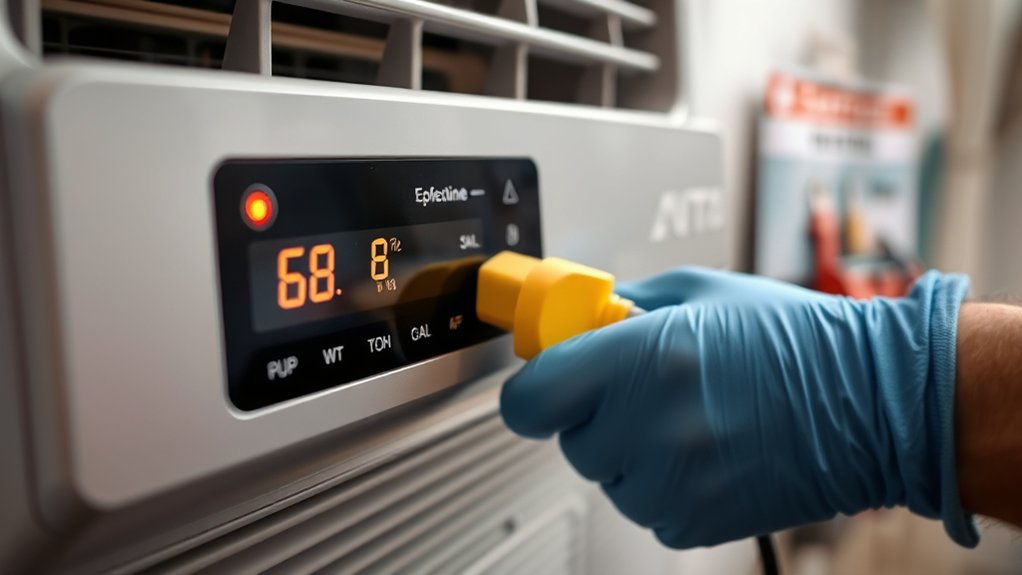
Before you start troubleshooting the E8 error, make sure to power off and unplug the air conditioner. This helps eliminate any electrical risks.
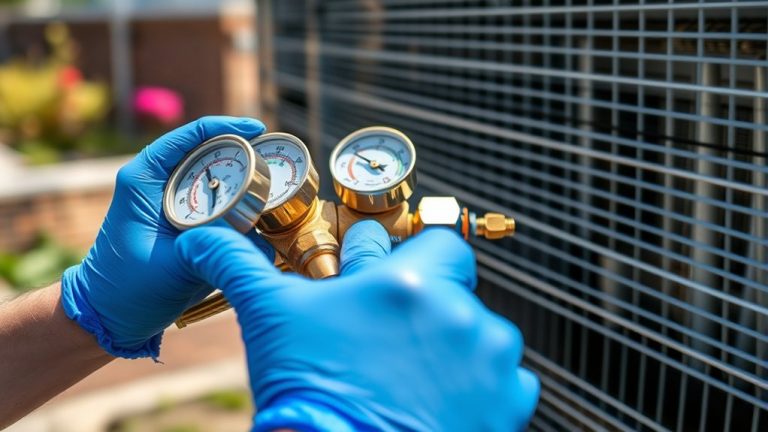
Also, be sure to wear insulated gloves when handling internal components. Taking these precautions will keep you safe and prevent any damage to the unit while you’re inspecting it.
Power Off Procedures
When you start troubleshooting the E8 error on your air conditioner, make certain you turn off power at both the thermostat and circuit breaker to fully disconnect electricity. This step is vital to protect the control board and other electronic components from damage and to guarantee your safety.
Follow these power off procedures carefully:
Wait several minutes after powering down to allow internal electronics to discharge completely. Confirm the air conditioner is fully off before accessing the control board or any wiring.
Verify the work area is well-lit and free of clutter to maintain focus during inspection.
Strictly adhering to these steps minimizes electrical hazards and prevents further system faults while you diagnose the E8 error. Taking these precautions really helps you stay safe and keeps your AC from getting more damaged.
Personal Safety Gear
Since electrical components inside your air conditioner can retain charge even after the power is off, you should always wear insulated work gloves and safety goggles before starting any troubleshooting.
Personal safety gear is essential to prevent electrical shock and protect your eyes from debris when accessing internal parts.
Insulated work gloves shield you from accidental contact with live wires and sharp components, while safety goggles guard against dust or particles released during inspection.
Always make sure the unit is completely powered off and unplugged before you begin. Work in a well-lit, organized space to maintain focus and reduce the risk of accidents.
Also, allow the air conditioner to cool down before handling components to avoid burns.
Proper use of personal safety gear safeguards you throughout the E8 error troubleshooting process.
It’s always better to be safe than sorry!
Check Power Supply for the E8 Error
Although the E8 error can stem from various causes, checking the power supply is a critical first step you shouldn’t overlook. Start by ensuring the air conditioner is securely plugged into a functioning outlet, as loose connections can cause power disruptions triggering the error.
Next, inspect the circuit breaker to confirm it hasn’t tripped, which would interrupt the power supply to the unit.
Check the circuit breaker to ensure it hasn’t tripped and cut power to your air conditioner.
Finally, use a multimeter to measure the outlet voltage—ideally around 120V—to verify stable power.
Verify the outlet connection and stability. Check if the circuit breaker is active and untripped. Measure voltage with a multimeter for correct levels.
If you detect irregularities, contact a licensed electrician to safely diagnose and fix the power supply issues. It’s better to be safe when dealing with electrical problems!
Check Air Filter and Outdoor Unit for E8 Blockages
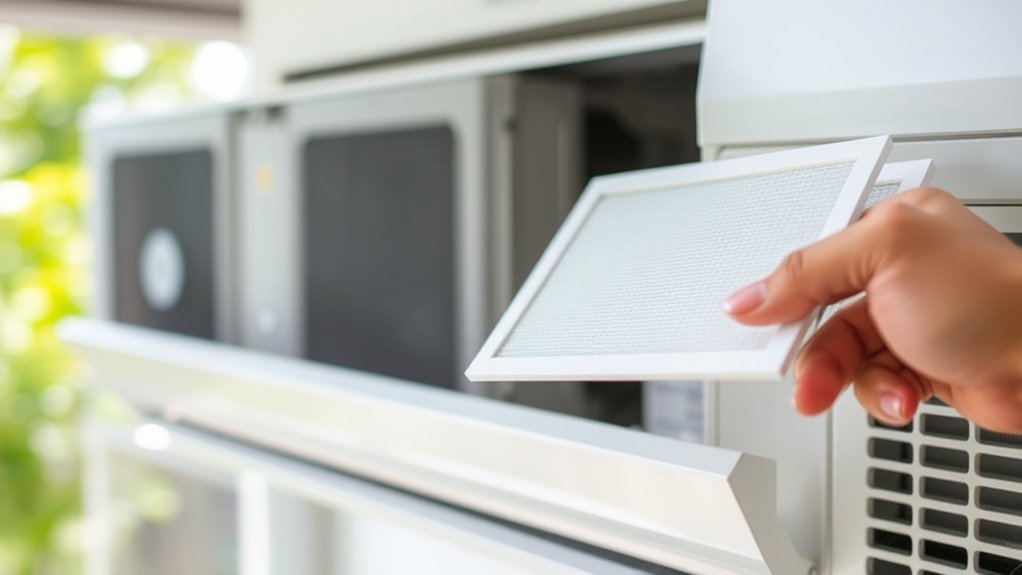
After confirming your power supply is stable and uninterrupted, turn your attention to the air filter and outdoor unit.
Start by inspecting the air filter for dust and debris. A clogged filter restricts airflow, causing overheating that triggers the E8 error. Clean or replace the filter regularly to maintain peak air conditioner control.
Next, examine the outdoor unit for blockages such as leaves, dirt, or other obstructions that impede airflow. Make sure the unit is placed in a well-ventilated area and shield it from direct sunlight to prevent excessive heat buildup.
Furthermore, clean the evaporator coils to avoid dirt buildup. This can interfere with accurate temperature sensor readings and further contribute to the E8 fault.
These steps help maintain proper airflow and sensor function, reducing the likelihood of E8 errors.
How to Inspect and Test the Temperature Sensor
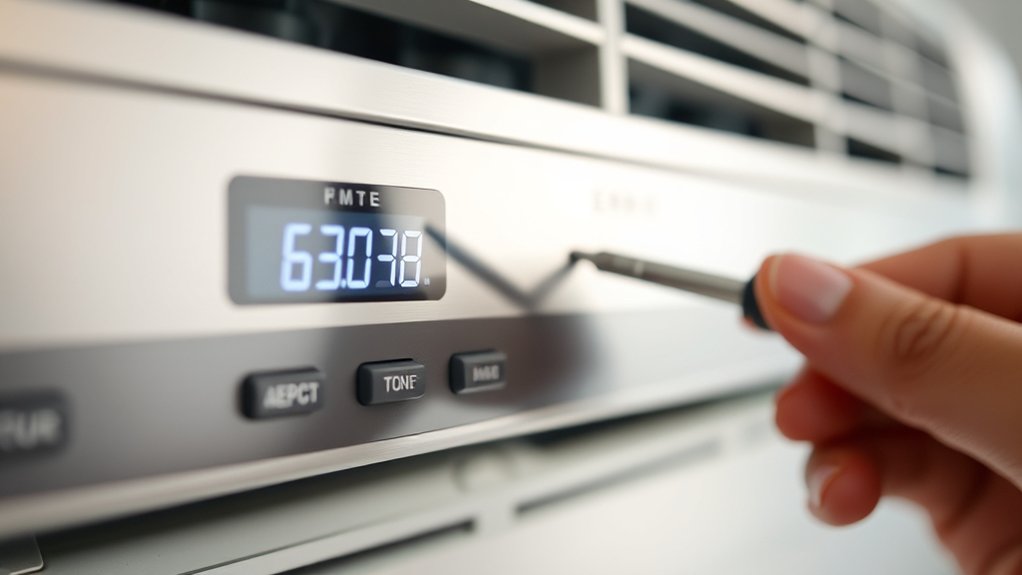
When inspecting the temperature sensor, also known as the thermistor, start by powering off and unplugging your air conditioner to guarantee safety.
Locate the sensor near the evaporator coil, then follow these troubleshooting tips for accurate diagnosis.
Visually check the temperature sensor and wiring for damage, corrosion, or fraying. Gently clean the sensor with a soft cloth to remove dust or debris that might skew readings.
Use a multimeter to measure the sensor’s resistance; compare results with the manufacturer’s specifications.
If the resistance falls outside the specified range or you find physical damage, replacing the temperature sensor is necessary.
This precise approach guarantees you accurately identify faults causing the E8 error and maintain peak unit performance.
Examine the Control Board and Electrical Connections
Start by thoroughly inspecting the control board for any visible signs of damage, such as burnt components or loose connections. These issues can cause the E8 error code by misinterpreting sensor data.
Next, make sure all wiring connections are secure and free from corrosion. This helps maintain proper electrical conductivity.
Use a multimeter to verify voltage levels at the control board. Confirm they align with manufacturer specifications, typically around 120V.
Refer to the wiring schematic to check that connector placements are accurate. If the control board shows signs of malfunction, consider replacing it to prevent recurring E8 errors.
| Step | Action |
|---|---|
| Inspect Control Board | Check for burnt components, loose wiring |
| Verify Wiring Connections | Secure and corrosion-free |
| Test Voltage | Use multimeter, confirm ~120V |
Reset Your Air Conditioner to Clear the E8 Error
To clear the E8 error, begin by turning off your air conditioner at both the thermostat and the circuit breaker.
This makes sure all power is completely disconnected.
Then, wait for at least five minutes to let any leftover electrical charge dissipate.
After that, restore the power and keep an eye on the display to see if the error clears or comes back.
Power Cycle Procedure
Power cycling your air conditioner involves a few straightforward steps that can effectively clear the E8 error code. This error often relates to issues with the temperature sensor, and resetting the system helps recalibrate its function.
To power cycle your unit, start by turning off the air conditioner at the thermostat and switch off the circuit breaker to fully disconnect power. Wait 5-10 minutes to guarantee the internal electronics, including the temperature sensor, reset completely.
Next, restore power by turning the circuit breaker on, then set the thermostat to your desired temperature.
Keep an eye on the startup to make sure the E8 code doesn’t come back. If it does, you might need a professional to take a closer look since it could be more than just a simple reset.
Reset Timing Guidelines
After completing the power cycle procedure, pay close attention to the timing of your reset process. To clear the E8 error, make sure the unit remains off for at least five minutes. This allows complete power discharge.
Once the reset timing is met, restore power by switching the circuit breaker on first, then turn the thermostat control to the “on” position. Monitor the air conditioner closely during startup to confirm the E8 code doesn’t reappear.
If the error persists, it may indicate a malfunction in the temperature sensor or control board, requiring further technical inspection.
Always refer to your manufacturer’s manual for model-specific reset timing instructions. This helps guarantee proper operation and avoids recurring errors linked to temperature sensor faults.
When to Call a Professional for E8 Error Repair
Even if you’ve tried resetting your air conditioner multiple times, the E8 error code may still show up. This usually means there’s a problem that goes beyond simple troubleshooting. At this point, it’s really important to call in experienced technicians who can accurately figure out what’s wrong and fix it.
You should definitely seek professional help when you spot damaged parts like the temperature sensor or control board that might need replacing. Also, if you’re not familiar with electrical systems or feel uneasy about doing repairs yourself, it’s best to leave it to the pros. This helps avoid any safety risks.
Another good reason to call a professional is if the issue is complicated, such as wiring problems that come and go or communication errors that basic checks just can’t find. Licensed technicians have advanced diagnostic tools and follow the manufacturer’s guidelines. This means repairs are safe, effective, and can even help your unit last longer.
Don’t wait too long to get professional help. Acting quickly can prevent more damage and get your air conditioner back to working at its best.
Preventing the E8 Error From Recurring
To prevent the E8 error from recurring, you need to maintain your air conditioner proactively by addressing key factors that contribute to this issue.
Start by regularly cleaning or replacing air filters to guarantee proper airflow and prevent overheating. Schedule annual professional maintenance to inspect the temperature sensor, control boards, and wiring for wear or damage.
Keep the outdoor unit clear of debris and obstructions to sustain peak cooling performance and reduce system strain. Monitor voltage levels closely, making sure they stay within the manufacturer’s recommended range to avoid electrical faults.
Finally, control environmental factors by preventing moisture intrusion and maintaining a dry, clean operating environment. This helps prevent sensor malfunctions and assures your system runs reliably without triggering the E8 error.
Taking these steps might seem like a lot, but they really make a difference in keeping your AC running smoothly. It’s all about staying ahead so you don’t have to deal with the error again.
Frequently Asked Questions
Can the E8 Error Cause Permanent Damage to My Air Conditioner?
Yes, the E8 error can cause permanent damage if you ignore it. This error code signals abnormal conditions that stress your air conditioner’s components, especially the compressor.
To avoid costly repairs or replacements, you should perform preventive maintenance and address error codes promptly.
Regularly monitoring your system and fixing issues quickly prevents overheating and excessive wear. This helps ensure your unit runs efficiently and lasts longer without irreversible damage.
Does the E8 Error Affect Both Cooling and Heating Modes?
Imagine your air conditioner’s error codes as warning lights on a dashboard. The E8 error affects both cooling and heating modes because it signals a faulty temperature sensor, which disrupts accurate readings.
This confusion stops your system from regulating temperature properly.
You can try troubleshooting by checking the sensor wiring or replacing the thermistor. Doing this can restore full function and make sure your system switches seamlessly between heating and cooling.
That way, you won’t have to deal with further interruptions.
Will a Temporary E8 Error Reset Itself Without Intervention?
Yes, some error codes like E8 can reset themselves without intervention after a brief system reset or power cycle.
You might notice the unit resumes normal operation once environmental factors stabilize.
However, if the error persists beyond automatic resets, it signals a deeper problem needing professional inspection.
To prevent recurring issues, you should perform regular maintenance and monitor the system’s performance after any reset to determine if further troubleshooting is necessary.
Are Certain Air Conditioner Brands More Prone to the E8 Error?
Picture a top-tier brand with cutting-edge sensors versus an older, less reliable model; you’ll notice error frequency varies considerably.
You’ll find that brands with better reliability and advanced tech face the E8 error more due to complex electronics, while cheaper models suffer from design flaws causing frequent faults.
To minimize issues, you should choose brands known for strong customer support and maintain your unit regularly.
This means making sure firmware updates and sensor checks happen often to keep error frequency low.
Can Extreme Weather Conditions Trigger the E8 Error?
Yes, extreme weather conditions can trigger the E8 error on your air conditioner. Weather impacts like high humidity, temperature fluctuations, and excessive heat often cause sensor inaccuracies and abnormal voltage levels. These issues act as error triggers.
To prevent this, you should monitor airflow and guarantee sensors and wiring stay clean and dry. It’s also important to protect your unit from dust and moisture.
Regular maintenance helps your system handle harsh environments effectively.
Doing these things can reduce how often the E8 error happens. Keeping an eye on your AC and giving it a little TLC goes a long way in tough weather.
Conclusion
Dealing with the E8 error on your air conditioner can be frustrating, but you’re not out of the woods yet. By checking the power supply, cleaning filters, and inspecting connections, you can often fix the issue yourself.
If the problem persists, don’t hesitate to call a professional. Staying proactive with maintenance will keep your system running smoothly and help you avoid this headache down the road.
Remember, a stitch in time saves nine!