Why Is My Air Conditioner Blowing Hot Air and How Can I Fix It?
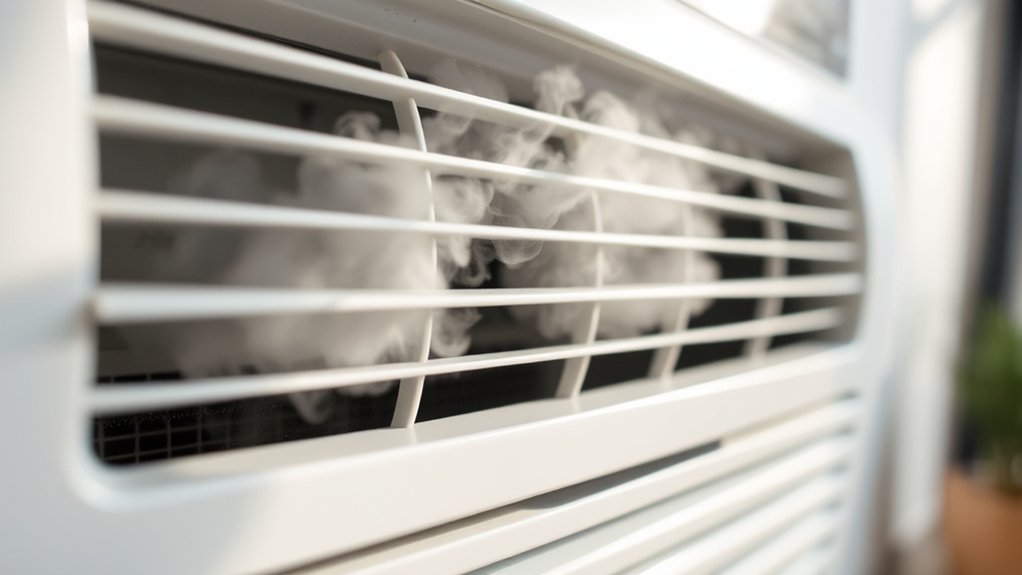
If your air conditioner is blowing hot air, start by checking your thermostat settings to verify it’s on “Cool” mode and set below room temperature. Replace any dirty air filters to improve airflow and inspect for clogged drain lines.
Low refrigerant or compressor problems might also be causes, and those usually require professional repair. Clearing debris around the outdoor unit helps maintain efficiency.
Understanding these basics can help you troubleshoot effectively and keep your system running smoothly. It’s all about taking a few simple steps before calling in the pros!
Top Reasons Your AC Is Blowing Hot Air
When your air conditioner starts blowing hot air, it usually means something is messing with the cooling process. One common cause is dirty air filters. Clogged filters block airflow, making your AC work harder and less efficiently.
Another big issue is refrigerant leaks. Low refrigerant levels mean your system can’t absorb heat properly, so it ends up blowing warm air.
Also, sometimes the thermostat is to blame. If it’s set wrong or the batteries are dead, your AC might blow warm air even if everything else is fine.
Catching these problems early can save you from bigger damage and keep your AC running smoothly. Regular maintenance, like changing filters and checking refrigerant, is the best way to avoid these issues and get your AC back to cooling properly.
Quick Fixes: Check Your Thermostat Settings
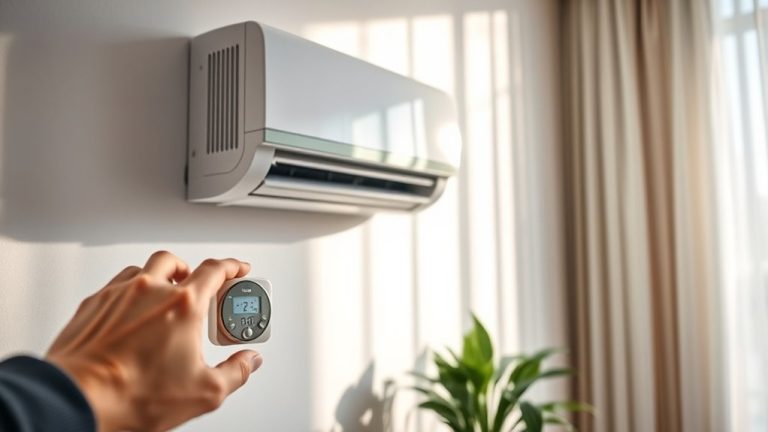
If your air conditioner is blowing hot air, start by verifying your thermostat settings to rule out simple user errors. Incorrect thermostat settings often cause this issue, so it’s critical to check your thermostat thoroughly.
Make sure the thermostat is set to “Cool” mode and the temperature is below the current room temperature to activate cooling. If your thermostat uses batteries, replace them, as dead batteries can disrupt thermostat settings and cause the AC blowing hot air.
Confirm the fan setting is on “Auto” rather than “On,” which helps maintain efficient cooling.
If problems persist after you check your thermostat, consult the manual for advanced troubleshooting. Proper thermostat settings are the first step to restoring your AC’s cooling function.
Replace Dirty Air Filters to Restore Cooling
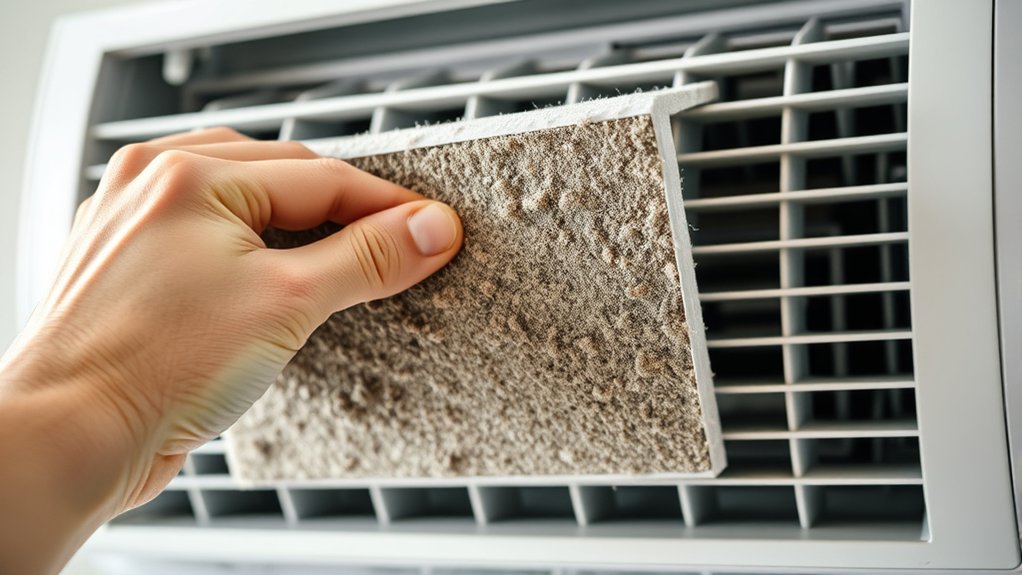
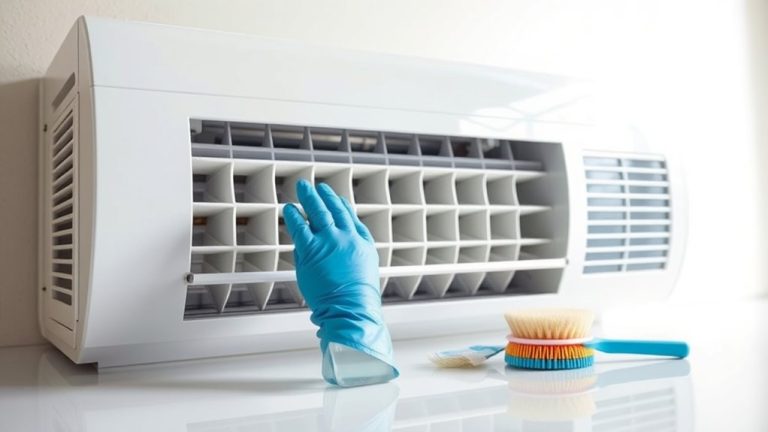
You should check your air filter every month to see if dust has built up. When that happens, it can block airflow and make your cooling less effective.
It’s a good idea to swap out the filter every 1 to 3 months, depending on how often you use your AC and the quality of the air around you.
Keeping your filters clean helps your AC run smoothly and brings back that cool, refreshing air you want.
Identifying Dirty Filters
Three key indicators can help you identify dirty air filters that compromise your air conditioner’s cooling performance. Recognizing these signs early guarantees you maintain proper airflow and indoor air quality while preventing system strain.
First, if you notice weaker airflow from vents even though the AC is running, a dirty air filter is probably restricting air passage.
Next, take a look at the filter itself. A thick layer of dust and debris means it’s clogged and needs to be replaced.
Also, if you’re experiencing increased dust, allergens, or unpleasant odors indoors, it’s often a sign that your filter isn’t effectively trapping pollutants anymore.
By addressing these issues and replacing dirty air filters promptly, you can restore your AC’s peak cooling efficiency.
Plus, you’ll protect your system from risks like overheating.
Filter Replacement Frequency
Although air filters may seem like a minor component, replacing them every 1 to 3 months is crucial for maintaining your air conditioner’s airflow and cooling efficiency. The correct filter replacement frequency depends on usage and filter type, but neglecting this can lead to a dirty air filter that obstructs airflow.
Reduced airflow forces your AC to work harder, which can cause it to blow hot air and increase wear on critical parts like the blower motor and compressor.
By regularly checking and replacing your air filter, you guarantee peak cooling performance, reduce energy consumption, and extend your system’s lifespan.
Maintaining the proper filter replacement frequency is a straightforward, effective solution to prevent airflow restrictions and keep your air conditioner running efficiently.
It’s an easy step that really makes a difference in how well your AC works.
Clear Clogged Condensate Drain Lines
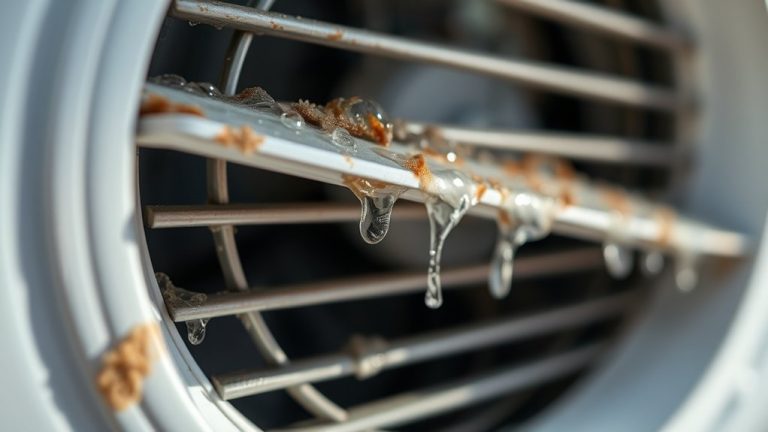
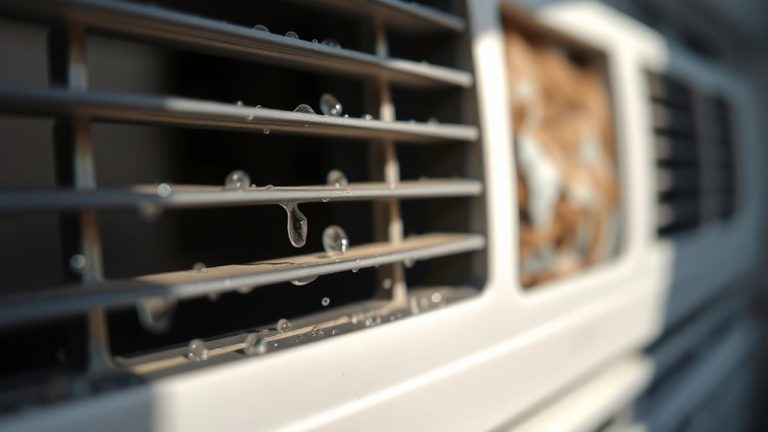
One common cause of an air conditioner blowing hot air is a clogged condensate drain line. This leads to water buildup and triggers the float switch to shut down the system.
To fix this, start with a regular inspection of the drain pan and lines. This helps spot leaks or blockages early.
Next, use a wet vacuum to clear any clogs in the condensate drain lines. This restores proper water flow and prevents shutoffs.
Finally, consider installing a condensate pump if your system frequently clogs. It helps manage water removal effectively.
Follow these steps:
- Perform regular inspection of the drain pan and lines.
- Clear blockages using a wet vacuum.
- Install a condensate pump for systems prone to clogging.
This approach guarantees peak performance and prevents system shutdowns.
How to Spot and Fix Refrigerant Leaks
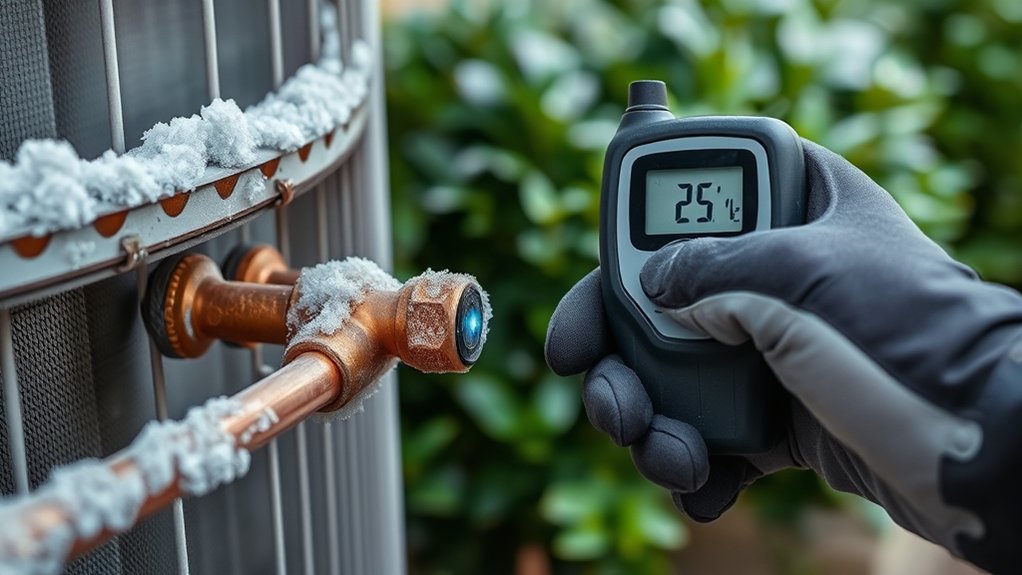
You can usually spot refrigerant leaks by listening for a hissing sound or noticing ice buildup on the coils and lines.
Another good tip is to check the connections for oil stains because those often point to leaks.
To get a more precise idea, you can use soap bubbles or electronic detectors—they really help pinpoint where the leak is.
And if you think you’ve found a leak, it’s important to turn off the unit right away.
Then, call a qualified technician to handle the repair safely.
Signs Of Refrigerant Leak
How can you tell if your air conditioner has a refrigerant leak? Identifying one early prevents further damage and restores cooling efficiency. Look for these key signs:
- Ice buildup on evaporator coils or refrigerant lines indicates escaping gas lowering refrigerant levels.
- Hissing or bubbling noises from the unit signal refrigerant escaping under pressure.
- Warm air blowing despite cooling settings suggests insufficient refrigerant to absorb heat.
Also, check for oil stains around refrigerant lines because escaping refrigerant often carries oil with it.
If you notice any of these symptoms, turn off your AC right away and contact a professional technician.
Handling refrigerants requires specialized tools and expertise to detect, repair, and recharge the system safely.
This way, your AC functions effectively without risking further leaks or damage.
Leak Detection Methods
Although refrigerant leaks can be subtle, detecting them early is essential to maintaining your air conditioner’s efficiency and preventing costly damage.
Start leak detection by visually inspecting refrigerant lines and connections for oil stains or moisture. These are common signs of a refrigerant leak.
Listen for hissing or bubbling noises near these areas, as they often indicate escaping gas. A temperature probe can help by comparing the temperature difference across the evaporator lines. Significant drops in temperature suggest leaks.
Applying a soap and water solution to joints can reveal leaks through bubble formation. For more accurate results, use electronic refrigerant leak detectors to sense escaping gases.
Ultimately, schedule a professional inspection to confirm your findings and perform safe, effective repairs. This way, your system runs efficiently without further refrigerant loss.
Fixing AC Compressor Problems
Three key steps can help you address AC compressor problems that cause your unit to blow hot air. The AC compressor is essential for cycling refrigerant. If it fails, the system can’t maintain proper pressure, which results in warm air output.
Here’s how to fix it:
Here’s how to fix it with simple checks and professional help for lasting cool air.
- Check Refrigerant Levels: Low refrigerant can strain the compressor. Use gauges to verify levels and recharge if needed. This helps ensure the system operates efficiently.
- Inspect Electrical Connections: Confirm the compressor is receiving power and that the thermostat triggers cooling appropriately. Faulty wiring or settings can prevent the compressor from engaging.
- Seek Professional Diagnosis: Compressor repairs or replacements are complex and costly, usually ranging from $150 to $600. A certified technician can accurately diagnose mechanical or electrical failures and recommend the best solution.
Following these steps helps restore proper function and cool air output. If you’re unsure about any part of the process, it’s always a good idea to call a pro.
Cleaning and Maintaining Your Outdoor AC Unit
Inspect your outdoor AC unit regularly to prevent debris buildup that can block airflow and reduce cooling efficiency. Clear leaves, dirt, and other debris from the unit’s surface to keep it running at its best.
Make sure to clean the condenser coils at least once a year. Use a foaming coil cleaner and rinse with a garden hose to ensure effective heat transfer.
Trim plants and foliage around the unit, keeping at least two feet of clearance. This helps promote unrestricted airflow and better performance.
Also, check the drainage system from time to time to avoid clogs. Water buildup can cause damage if left unchecked.
For thorough maintenance, it’s a good idea to schedule annual professional inspections. They can make sure all parts are working well and catch minor issues before they turn into bigger problems.
Keeping up with regular cleaning and maintenance is key for efficient cooling and making your system last longer.
How Your AC Cools Your Home
Your AC cools your home by circulating refrigerant through a closed system. This refrigerant absorbs heat from inside your house and then releases it outside.
There are a few key parts that make this happen—like the compressor, condenser, expansion valve, and evaporator. They all work together to move heat efficiently.
Meanwhile, the blower fan pushes the cooled air around your rooms.
Getting how this airflow and heat exchange works can really help you figure out why your AC might be blowing hot air sometimes.
Refrigerant Cycle Basics
Although the process may seem complex, understanding the refrigerant cycle is key to knowing how your air conditioner cools your home efficiently. The refrigerant cycle relies on the compressor and evaporator coils working in tandem to transfer heat and cool your indoor air.
Here’s how it works:
- The compressor pumps refrigerant, converting it from a low-pressure gas to a high-pressure, high-temperature gas.
- This gas moves through condenser coils, releasing heat outside and turning into a low-pressure liquid.
- The liquid refrigerant expands, cools, and passes through the evaporator coils where it absorbs indoor heat, cooling the air before returning to the compressor.
Mastering this cycle helps you diagnose why your AC might blow hot air and guides effective fixes.
Understanding this can save you time and money when troubleshooting or calling a professional.
Key Cooling Components
Because each component plays a specific role, understanding how the compressor, condenser, expansion valve, evaporator, and blower fan work together is crucial to diagnosing why your AC might be blowing hot air.
The compressor pumps refrigerant gas, increasing its pressure and temperature before sending it to the condenser coils. There, it releases heat and condenses into liquid.
The expansion valve then lowers the refrigerant’s pressure, allowing it to evaporate inside the evaporator coils. Here, the refrigerant absorbs heat from indoor air, cooling it.
The blower fan circulates this cooled air through your home. If any component malfunctions, such as a faulty compressor or a blocked evaporator coil, the refrigerant cycle breaks down and causes your AC to blow warm air.
Checking these key components guarantees you can pinpoint and fix cooling issues effectively.
Airflow and Heat Exchange
After understanding how the key components work together to move refrigerant and cool air, it’s important to look at how airflow and heat exchange directly affect your AC’s performance.
Your air conditioner’s ability to cool depends on efficient heat exchange, which needs uninterrupted airflow.
Here’s what you need to know:
- Airflow moves warm indoor air across evaporator coils where refrigerant absorbs heat. This cools the air before the blower fan circulates it around your space.
- Dirty filters restrict airflow. That causes inadequate heat exchange and forces your AC to blow warm air instead of cool.
- Blocked vents or damaged ductwork also get in the way of airflow, reducing how well heat is removed from your home.
Make sure to clean or replace dirty filters regularly.
Also, keep vents clear to maintain good airflow and effective heat exchange. This helps prevent those annoying hot air problems.
When to Call a Professional for AC Repair
Whenever your air conditioner blows warm air despite correct thermostat settings and basic troubleshooting, you should call a professional HVAC technician for a detailed diagnosis.
Persistent warm air, unusual noises, visible ice on refrigerant lines, or frequent circuit breaker trips indicate issues requiring expert assessment.
A professional HVAC technician can accurately diagnose the problem, especially refrigerant leaks. These need specialized tools and expertise for safe repair and recharging.
Electrical faults or compressor malfunctions also require expert intervention to avoid safety hazards and costly damage.
Trying to fix complex repairs yourself can make things worse. Prompt professional service guarantees efficient restoration of cooling performance, safeguards system components, and extends your AC unit’s lifespan.
Don’t wait to contact a technician when these critical signs arise—you’ll keep your system running safely and smoothly.
Tips to Prevent Your AC From Blowing Hot Air Again
To prevent your AC from blowing hot air again, you should prioritize regular maintenance and proper system care. Addressing key components proactively guarantees efficient cooling and system longevity.
Follow these steps:
- Regularly replace air filters every 1-3 months to maintain ideal airflow and prevent overheating.
- Schedule annual professional maintenance to inspect refrigerant levels, clean coils, and verify overall system functionality.
- Keep the outdoor unit clear of debris, such as leaves and dirt, to enhance heat exchange and avoid airflow obstruction.
Also, keep an eye on your thermostat settings and periodically clear the condensate drain line to prevent shutdowns.
These simple measures can really help minimize the risk of hot air issues and keep your AC running smoothly.
Frequently Asked Questions
Can a Dirty Blower Motor Cause My AC to Blow Hot Air?
Yes, a dirty blower motor can cause your AC to blow hot air. Common symptoms include reduced airflow and uneven cooling.
To fix this, follow blower maintenance tips like regular inspections and using proper cleaning techniques such as vacuuming dust and wiping debris off motor components.
If cleaning doesn’t restore performance, deeper mechanical or electrical issues might exist. These would require a professional assessment to prevent further damage and guarantee efficient cooling.
It’s always better to catch problems early!
Does Low Voltage Affect My Air Conditioner’s Cooling Performance?
Yes, low voltage affects your air conditioner’s cooling performance. It reduces refrigerant levels efficiency, disrupts capacitor issues, and weakens electrical connections.
When voltage dips below the required range, your compressor struggles to start and run properly. This causes inadequate cooling and frequent cycling.
To fix this, check voltage with a multimeter, inspect wiring, and verify your electrical system supports your AC’s power needs.
It’s a good idea to consult a pro to prevent costly damage and restore peak function.
How Do Power Outages Impact My AC Unit’s Operation?
Power outages disrupt your AC’s operation by causing system resets and interrupting the cooling cycle. When the power comes back on, electrical surges can damage sensitive components like the compressor. This can reduce efficiency or even cause the unit to fail.
To protect your AC, make sure to check your thermostat settings right after an outage. This helps you verify that the cooling is working properly.
Installing a surge protector is also a smart move. It helps prevent damage from power fluctuations and keeps your AC’s electrical parts safe.
Can Thermostat Placement Affect My Ac’s Ability to Cool?
Absolutely, thermostat placement can make or break your AC’s cooling power. It’s like putting a thermometer inside a volcano!
Improper location impacts temperature sensitivity and skews thermostat calibration, causing your unit to run inefficiently.
To fix this, mount your thermostat on an interior wall about 5 feet high, away from direct sunlight or heat sources.
This precise placement guarantees accurate temperature readings and peak cooling performance. Plus, it saves energy and money.
Are Window AC Units More Prone to Blowing Hot Air Than Central Systems?
Yes, window AC units are more prone to blowing hot air than central systems because they’ve a smaller cooling capacity and are exposed to outdoor elements.
To keep your window unit running efficiently, regular maintenance is key. Make sure to clean the filters often and check the refrigerant levels.
Common problems like clogged filters, refrigerant leaks, and poor insulation can cause your unit to blow warm air.
Conclusion
When your AC starts blowing warm air, it’s signaling a need for attention. By routinely checking settings, replacing filters, and maintaining components, you can keep your system running efficiently.
Minor issues like clogged drains or low refrigerant can often be resolved with simple fixes. But don’t hesitate to seek expert help when needed.
Addressing these subtle warnings early guarantees your comfort isn’t just restored but sustained. It also helps prevent bigger disruptions down the line.