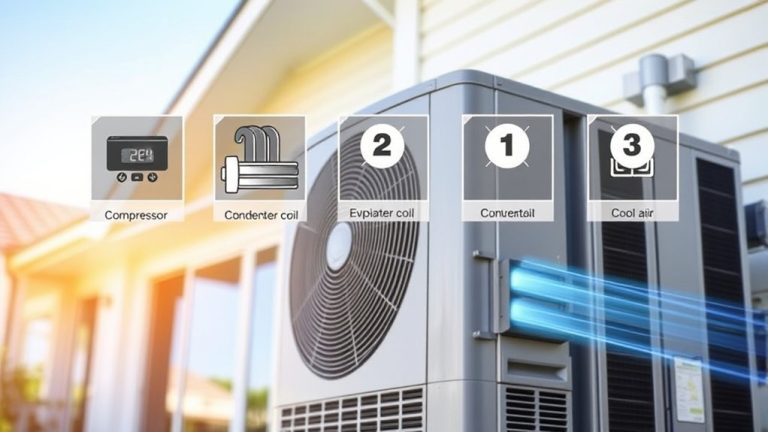
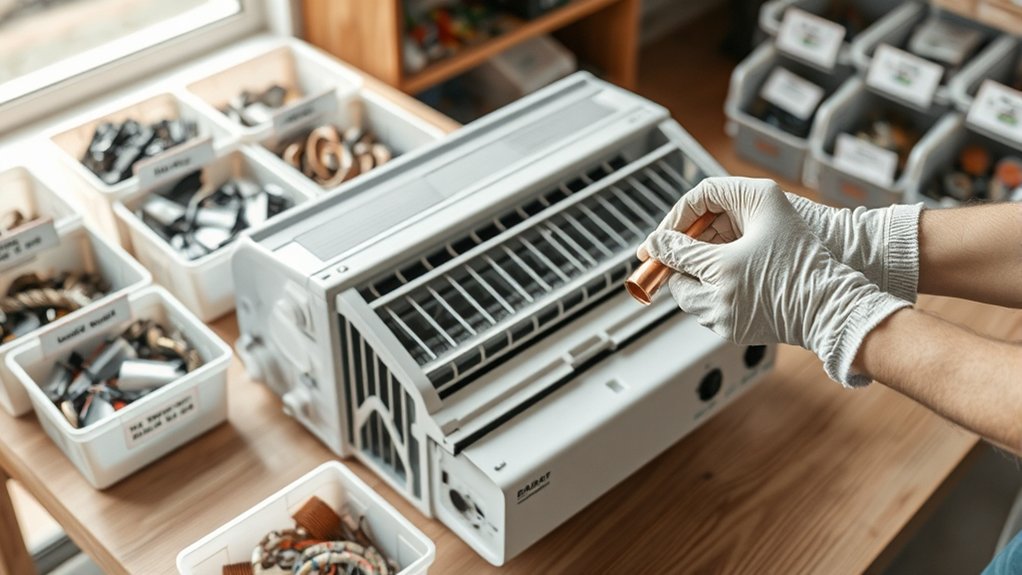
How to Recycle an Air Conditioner in 5 Easy Steps
To recycle your air conditioner in five easy steps, first unplug it and drain any water while wearing protective gear. Next, hire a certified technician to safely remove refrigerants and hazardous parts.
Then, separate metals, plastics, and electronics for proper disposal. After that, locate a certified recycling center that follows environmental regulations and offers possible incentives.
Finally, transport the unit carefully, keeping it upright and protected. Following these steps guarantees safety and compliance. Explore further to get the full process.
Unplug and Prepare Your Air Conditioner Safely
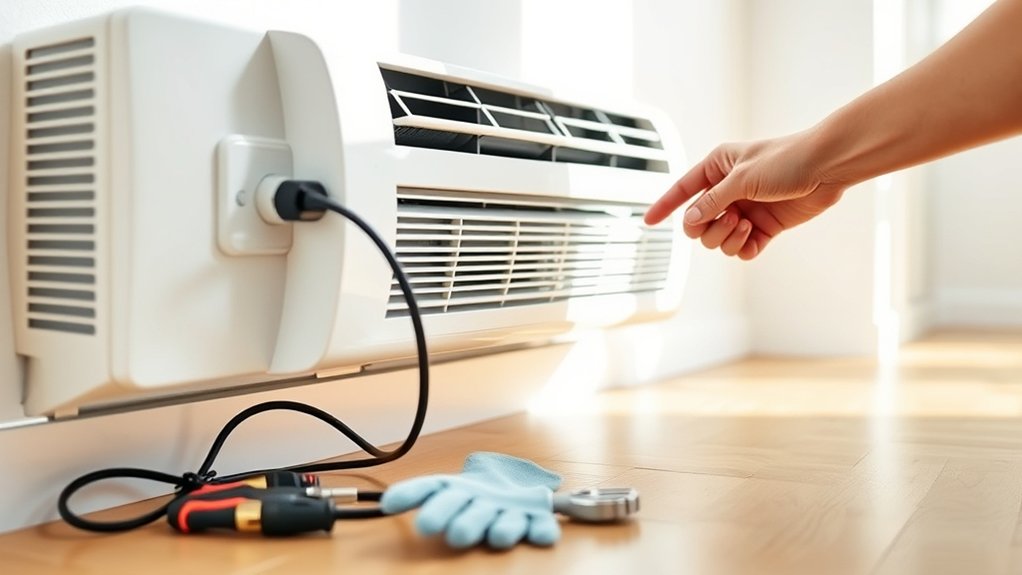
Start by unplugging your air conditioner and switching off the circuit breaker to guarantee your safety before handling the unit.
To prepare your air conditioner safely, work in a well-ventilated area and wear gloves and eye protection to protect yourself from hazardous materials.
Drain the condensate reservoir thoroughly, especially for portable units, to prevent leaks during transport.
Remove filters, drain pans, and any external accessories to comply with local recycling guidelines and simplify handling.
Secure any loose parts carefully to avoid damage or accidental refrigerant leaks.
By following these steps, you’ll prepare your air conditioner properly, making it safer and easier for recycling centers to process.
Proper preparation ensures safer handling and smoother processing at recycling centers.
Remember, careful preparation minimizes risks and supports proper disposal under local recycling regulations.
Taking these simple precautions goes a long way in keeping everyone safe and making the recycling process smoother.
Safely Remove Hazardous Air Conditioner Parts
Because air conditioners contain hazardous components, you should never attempt to remove refrigerants or electrical parts yourself. Always hire a certified HVAC technician to safely remove and handle refrigerants. Improper handling can release harmful chemicals and violate environmental laws.
To protect yourself and the environment, follow these key steps:
- Let the technician safely recover refrigerants, making sure there’s no release into the atmosphere.
- Remove any small batteries and electronic parts separately. Be sure to follow local regulations for e-waste disposal.
- Wear protective gear to avoid injury from sharp edges and hazardous materials while handling components.
Taking these precautions helps keep everyone safe and ensures the job is done right.
Separate Air Conditioner Materials for Recycling
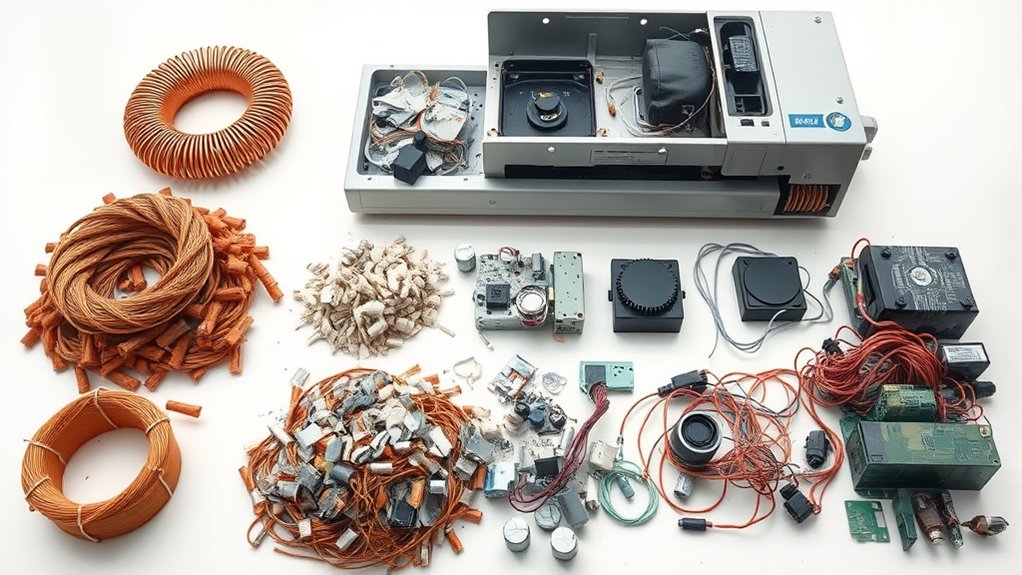
Although air conditioners contain multiple materials, you’ll need to separate metals, electronics, plastics, and insulation carefully to guarantee proper recycling.
Start by confirming a certified HVAC technician has safely removed all refrigerants to comply with environmental regulations.
Next, separate metals and plastics. Metals like copper, aluminum, and steel can be recycled efficiently, while plastics and insulation require proper disposal through local waste management.
Electronic components such as motors and circuit boards should be handled as e-waste and taken to designated recycling facilities to prevent contamination.
Proper separation not only supports Air Conditioner Recycling but also validates compliance with environmental standards.
Find Certified Air Conditioner Recycling Centers
Where can you take your old air conditioner to guarantee it’s recycled responsibly? To find certified air conditioner recycling centers, start with the EPA’s Responsible Appliance Disposal program. It lists recycling facilities trained in proper handling and disposal of refrigerants.
Make sure the center complies with the Clean Air Act regulations for refrigerant recovery.
First, contact your local utility to learn about financial incentives or bounty programs for recycling through certified centers. It’s a great way to save some money while doing the right thing.
Next, check if the recycling facility charges fees for refrigerant recovery or disposal services before dropping off your unit. You don’t want any surprises when you get there.
Always ask for a recovery certificate or documentation confirming proper refrigerant handling. This helps guarantee environmental safety and gives you peace of mind.
Following these steps helps you recycle your air conditioner safely. Plus, you support regulatory compliance and reduce environmental impact. It’s a win-win!
Transport Your Air Conditioner Safely to Recycling
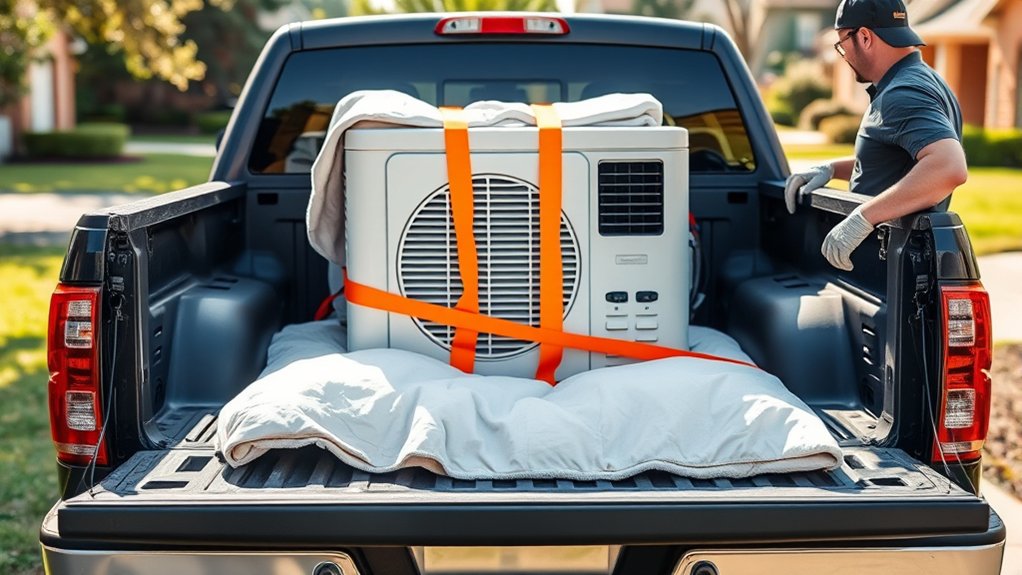
Before transporting your air conditioner, make sure a certified technician has safely removed the refrigerant. This step is important to prevent leaks and protect the environment.
Next, disconnect the unit from all power sources. Then, drain any condensate reservoirs and clean the exterior. These actions help you comply with local recycling regulations.
When you’re ready to transport the air conditioner, keep it upright. This avoids spills of refrigerant or oils, which can be harmful.
Also, wear protective gear like gloves and eye protection. This keeps you safe while handling the unit.
It’s a good idea to contact your chosen recycling facility beforehand. Confirm their specific transport requirements and prepare any necessary paperwork for refrigerant recovery.
Frequently Asked Questions
Can I Recycle a Window Air Conditioner and a Central Unit the Same Way?
You can’t recycle a window unit and a central unit the same way because local regulations differ.
Window unit recycling often allows drop-off at recycling centers, focusing on material recovery.
Central unit recycling requires professional handling due to hazardous materials like refrigerants, ensuring proper disposal.
For better environmental impact and energy efficiency, avoid DIY alternatives.
Check local rules and consider utility programs to offset costs while protecting the environment.
It’s always a good idea to follow guidelines to keep things safe and eco-friendly.
Are There Any Costs Associated With Recycling an Air Conditioner?
You might be surprised to learn that recycling costs can vary widely. Disposal fees often depend on local regulations and whether professional services are needed to handle hazardous materials like refrigerants.
While DIY methods might save money, they aren’t always safe or legal.
Luckily, incentive programs and energy credits can help offset some of those expenses.
Don’t forget to check your unit’s salvage value and explore utility rebates. Both can greatly reduce your environmental impact and out-of-pocket costs.
How Do I Know if My Refrigerant Removal Was Done Correctly?
You’ll know your refrigerant removal was done correctly when the technician follows certification standards, ensuring refrigerant safety and proper disposal according to environmental regulations.
Confirm they provide technician verification and a recovery certificate.
Also, check for leak detection results and that the system guidelines were met, with no residual pressure in the lines.
This guarantees eco-friendly practices, compliant recycling processes, and appropriate handling of refrigerant types.
In the end, this protects the environment effectively and gives you peace of mind that the job was done right.
What Happens to the Recycled Materials After Processing?
You won’t believe how recycled materials transform after processing. They fuel sustainable practices worldwide!
Metals like copper go through metal recovery, which boosts energy efficiency because it uses less power than mining new materials.
Plastics get recycled too, which helps cut down landfill waste drastically. Recycling facilities also handle e-waste, making sure community programs raise awareness about environmental impact.
This whole cycle maximizes resource use and turns waste into valuable assets.
Can I Recycle Parts From an Old Air Conditioner for DIY Projects?
Yes, you can recycle parts from an old air conditioner for DIY projects.
Try copper wire extraction or compressor repurposing for mechanical uses. Use the fan motor for creative projects, and turn the metal frame into crafting materials.
Air filter reuse works great for cleaning, while plastic case recycling offers lightweight containers.
Salvage circuit boards and upcycle the thermostat carefully. Don’t forget drain pan uses and insulation materials for home repairs, they’re all useful!
Conclusion
Recycling your air conditioner is easier than you think and makes a big difference. Did you know that over 90% of an air conditioner’s materials can be recycled? By unplugging it safely, removing hazardous parts, sorting materials, and finding certified centers, you’re preventing harmful chemicals from polluting the environment.
Follow these simple steps, and you’ll not only reduce waste but also help conserve valuable resources. It’s a small effort with a huge impact.