What Does CF Mean on Your Air Conditioner?
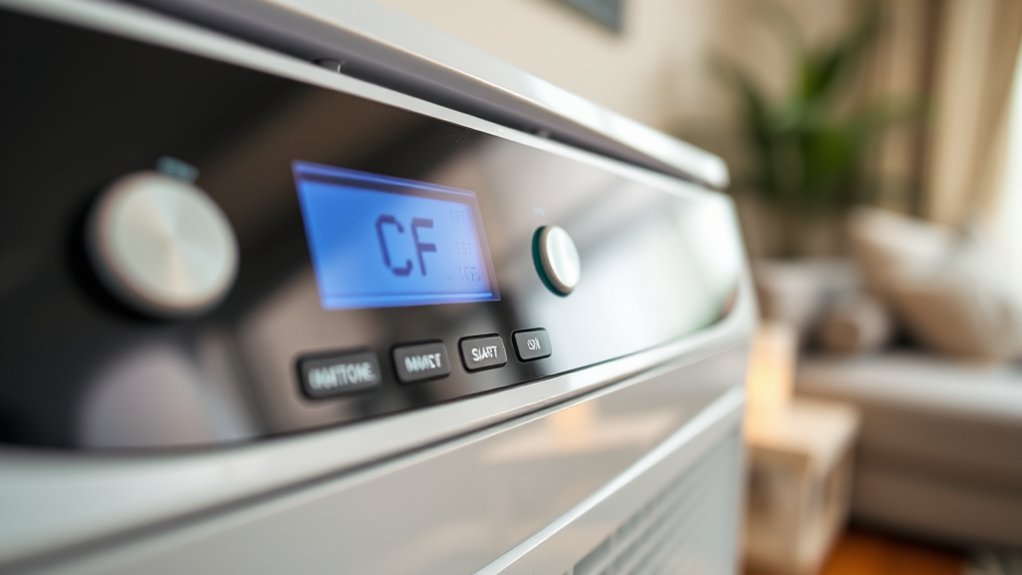
When your air conditioner shows the CF code, it often means your air filter needs cleaning to maintain airflow and efficiency. In heating mode, CF signals the anti-cold air feature activating to prevent cold drafts by delaying fan operation until the air warms. Cleaning or replacing the filter usually clears the code, but persistent CF may indicate control or sensor issues.
If this happens, knowing how to reset and troubleshoot can help restore proper function.
Understanding the CF Code: Filter vs. Heating Mode Meanings
Although the CF code on your air conditioner most commonly signals that the air filter needs cleaning, its meaning can vary depending on the unit and operating mode.
Typically, the CF code prompts you to clean the air filter to maintain peak performance and energy efficiency.
The CF code usually signals it’s time to clean your air filter for optimal efficiency and performance.
In some Friedrich models, however, the CF code also indicates setup mode, which requires no immediate action on your part.
If the CF code sticks around after you’ve cleaned the filter, it might mean there’s a problem like a malfunctioning control board or a faulty filter sensor.
Cleaning your filter every 30 days can help stop the CF code from showing up and keep your system running efficiently.
Knowing these differences makes sure you respond the right way when the CF code pops up on your unit.
Why Does the CF Code Appear During Heating Mode?
When your air conditioner displays the CF code during heating mode, it signals that the system’s anti-cold air feature is active to prevent cold air from blowing into your space. This code indicates a temporary stabilization phase before normal operation.
Here’s why the CF code appears:
The system blocks cold air output to maintain comfort. It allows internal components to reach the ideal heating temperature. The CF code isn’t an error, so no immediate action is needed. Adjusting the thermostat by a few degrees can shorten this phase.
You’ll notice the CF code disappears once the air temperature is adequate, typically within minutes.
Understanding this helps you recognize that the CF code during heating mode is a protective, functional signal rather than a malfunction. So, no worries when you see it—it’s just your AC doing its job!
How the Anti-Cold Air Feature Affects Your AC
Understanding why the CF code appears during heating mode leads directly to recognizing how the anti-cold air feature impacts your AC’s operation. This feature prevents cold air from blowing prematurely by delaying fan activation until the heat exchanger reaches a safe temperature. This ensures both comfort and system efficiency.
| Aspect | Effect | User Impact |
|---|---|---|
| CF code active | Anti-cold air feature enabled | Temporary heating delay |
| Fan operation | Delayed until warm air ready | Avoids cold air drafts |
| Temperature control | Maintains steady warmth | Enhanced comfort |
| Thermostat settings | Higher setting speeds response | Reduces CF code duration |
| System feedback | CF code displayed until stable | Informs user of process |
This precise control balances user comfort with efficient heating. It’s a smart way your AC keeps things cozy without rushing the heat.
How Cleaning the Air Filter Resolves the CF Code
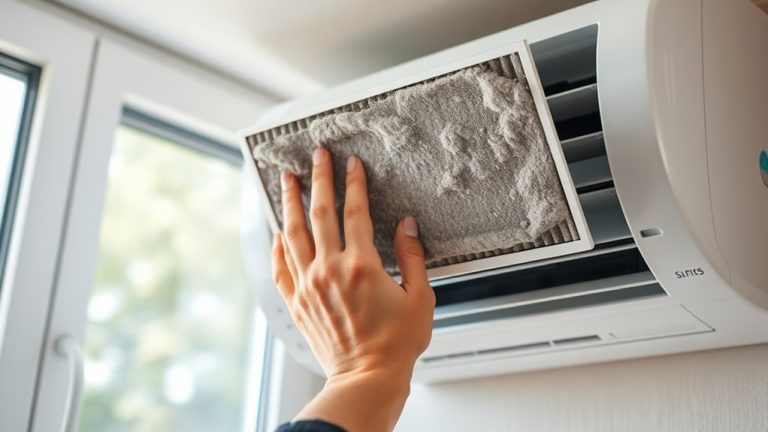
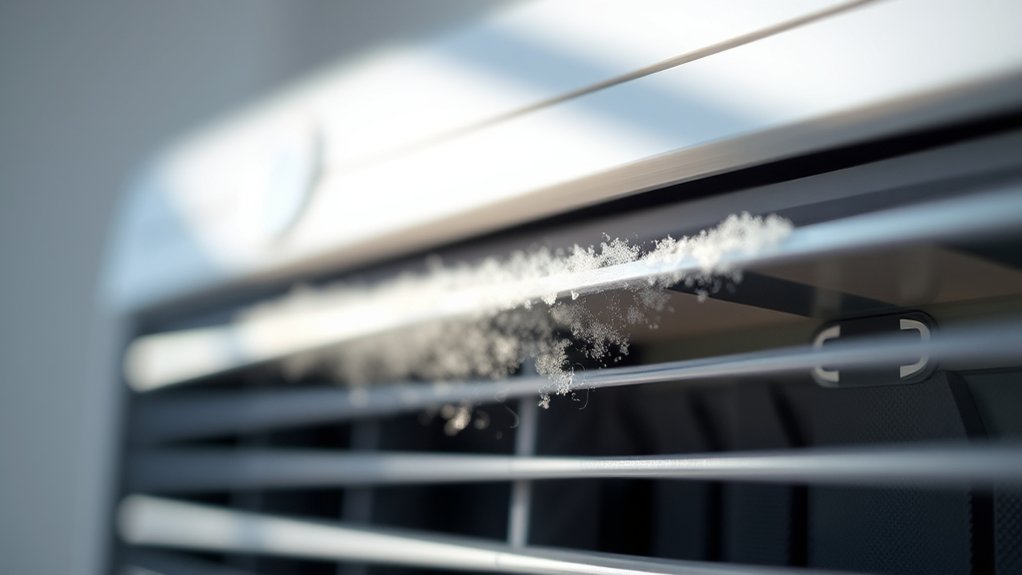
Regularly cleaning your air conditioner’s filter is essential for resolving the CF code. This code signals restricted airflow caused by dirt buildup.
Regular filter cleaning is key to fixing the CF code, which indicates airflow restrictions from dirt buildup.
When the filter clogs, the system’s efficiency drops, which triggers this alert.
To clean the filter properly and address the CF code, follow these steps:
- Remove the air filter carefully from the unit.
- Use a soft brush or vacuum to eliminate loose debris.
- Soak the filter in a mild detergent solution, then rinse thoroughly.
- Allow the filter to dry completely before reinstalling.
How to Reset and Clear the CF Code on Your AC
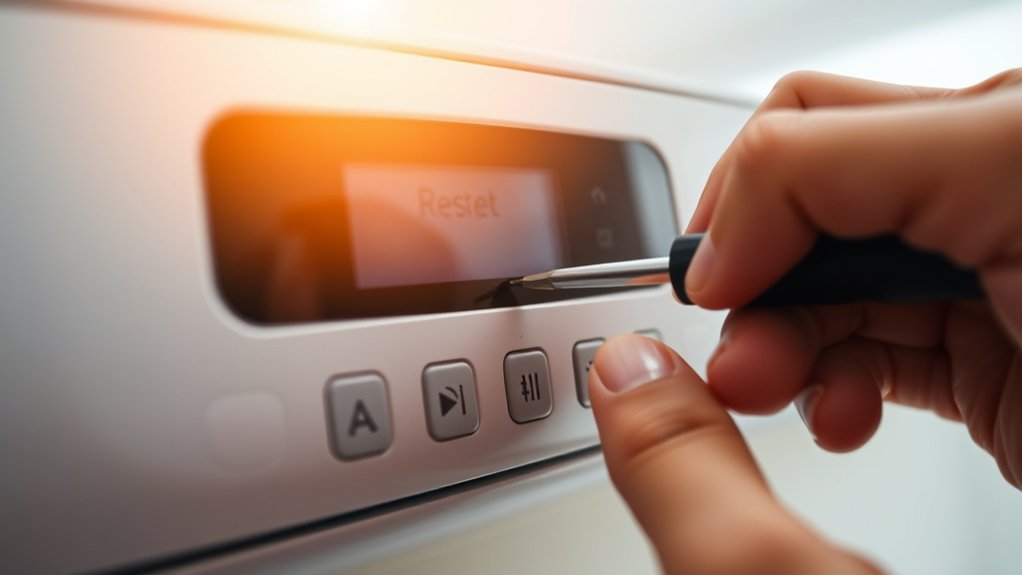
After cleaning and reinstalling the air filter to address the CF code, you’ll need to reset the system to clear the error indication.
Start by power cycling the unit. Unplug it for 30 seconds to 2 minutes. This often clears temporary error codes.
Next, use your remote control to navigate to the “Filter Reset” option in the settings menu. Select “Set” and confirm to clear the CF code from the display.
If the CF code remains after these steps, inspect the filter sensor for dirt or damage. A faulty sensor can trigger persistent error codes.
Always consult your air conditioner’s user manual for model-specific reset instructions. This will guarantee proper maintenance and peak performance when handling the CF code.
How to Adjust Temperature Settings to Prevent CF Code
To prevent the CF code, start by gradually lowering the temperature so your AC can reach the desired level more efficiently.
It’s a good idea to set your thermostat to a moderate temperature—this helps reduce strain on the system.
Also, keep an eye on how the fan is operating.
You can adjust the fan speed to keep things comfortable without overloading the unit.
Little tweaks like these can make a big difference!
Lower Temperature Gradually
When you lower the temperature setting gradually by a few degrees, you help your air conditioner stabilize more efficiently and reduce the chance of triggering the CF code.
Adjusting the temperature too quickly forces the system to work harder and can cause the CF error because of sudden cold airflow.
To effectively lower the temperature gradually, follow these steps:
- Decrease the temperature setting by 2-3 degrees at a time.
- Allow the air conditioner to run for at least 15 minutes after each adjustment.
- Monitor the system’s response to make sure it cools steadily without erratic behavior.
- Stop adjusting once you reach a comfortable temperature that matches your needs.
Optimize Heating Threshold
Although adjusting your air conditioner’s temperature settings may seem straightforward, fine-tuning the heating threshold plays an essential role in preventing the CF code. By fine-tuning the thermostat, you help the system operate within its ideal range, which reduces the chance of triggering anti-cold air features linked to the CF code.
Small temperature adjustments enable quicker responses to heating demands and improve overall efficiency.
| Adjustment Step | Effect on CF Code Prevention |
|---|---|
| Lower temperature slightly | Enhances heating efficiency |
| Set thermostat comfortably | Avoids unnecessary anti-cold air triggers |
| Monitor settings regularly | Maintains system stability |
| Fine-tune gradually | Reduces CF code occurrences |
Consistent fine-tuning guarantees your air conditioner circulates warm air efficiently without activating the CF code. It’s all about keeping things balanced and responsive so your system works smoothly.
Monitor Fan Operation
Fine-tuning your air conditioner’s temperature settings doesn’t stop at adjusting the thermostat; monitoring fan operation plays a significant role in preventing the CF code. Proper fan management optimizes airflow, reducing the system’s strain and avoiding filter maintenance alerts.
To effectively monitor fan operation on your AC unit, follow these steps:
- Lower the temperature setting slightly to help the AC unit reach desired levels quickly.
- Adjust fan speed to improve airflow and system efficiency.
- Regularly check temperature settings to prevent prolonged operation that triggers the CF code.
- Make minor temperature tweaks based on current conditions to minimize CF code frequency.
Keeping an eye on the fan might seem small, but it really makes a difference. Just a little attention here can save you from unnecessary alerts and keep your system running smoothly.
Managing the CF Code via Remote and App
Since the CF code signals a filter issue, you can manage it effectively using your air conditioner’s remote or Friedrich’s app.
After cleaning the filter, select the “Filter Reset” option on the remote to clear the CF code. You can also cycle through fan speed settings to see if the CF status changes. This helps determine if the filter needs more attention.
After cleaning, use the remote’s Filter Reset and fan speeds to ensure the CF code clears properly.
Friedrich’s app offers diagnostics and real-time notifications for maintenance alerts, including the CF code. This lets you stay on top of things and manage your air conditioner proactively.
If the CF code remains after resetting, try power cycling the unit using the remote to clear any temporary faults.
Using both the remote and the app gives you precise control and monitoring. That way, you can address filter-related issues quickly and keep your air conditioner running at its best.
What to Do If the CF Code Persists After Troubleshooting
If the CF code keeps showing up after you’ve cleaned the filter and power cycled the unit, it likely points to a deeper issue such as a faulty control board or a malfunctioning filter sensor that needs professional inspection.
To address persistent CF code errors, follow these steps:
- Inspect all internal electrical connections and plugs for damage or looseness.
- Use Friedrich’s app for advanced diagnostics to identify underlying problems.
- Attempt a system reset via remote button combinations or a reset switch on the power cord.
- Document error codes and symptoms thoroughly to assist a technician’s diagnosis.
If these actions don’t resolve the CF code, contact a qualified HVAC professional for a detailed evaluation and repair.
It’s best not to ignore it because the issue might get worse or cause other problems down the line. Getting an expert involved will help ensure your system runs smoothly again.
How Regular Maintenance Prevents the CF Code and Extends AC Life
You should clean your air filter every 30 days to keep dirt from building up. This helps prevent the CF code from showing up and keeps the airflow running smoothly.
Also, make sure the filter is installed correctly and that the unit stays free of debris. Doing this lowers the chances of error codes popping up and puts less strain on your system.
On top of that, scheduling regular professional maintenance is a smart move. It helps catch sensor issues early on and ensures your AC keeps running reliably over time.
Taking these simple steps can really extend the life of your air conditioner.
Filter Cleaning Importance
Although air conditioners are designed to run continuously, forgetting to clean the filters every 30 days can lead to the CF error code. A clogged filter blocks airflow, making your system work harder and possibly overheat.
To keep your AC running smoothly, you should clean the filter monthly to ensure unrestricted airflow. Replace filters if they’re damaged or extremely dirty. Also, keep an eye on your energy use for signs the filter might be blocked.
Regularly inspecting your filters helps prevent long-term strain on your system. Keeping the filter clean can boost cooling efficiency by up to 15%, lower energy bills, and cut down unnecessary wear and tear.
This proactive care reduces the chances of seeing the CF code, protects your unit from damage, and helps your air conditioner last longer.
Scheduled Maintenance Benefits
A well-structured scheduled maintenance plan plays an essential role in preventing the CF error code and extending the lifespan of your air conditioner. By sticking to scheduled inspections, you catch issues early on, like dirty sensors or worn components that might cause the CF code because of electrical faults.
Regular cleaning of air filters every 30 days keeps airflow efficient, which reduces strain on the system and helps maintain cooling capacity.
Plus, keeping the unit and the area around it free from debris stops airflow blockages that can hurt performance.
Consistent upkeep also boosts energy efficiency, which means lower utility bills and fewer chances of errors.
In the end, scheduled inspections don’t just prevent the CF code—they keep your air conditioner running at its best and help it last longer through regular, proactive care.
When to Call a Professional for CF Code Issues
When the CF code continues to display after you’ve cleaned the air filter and restarted the unit, it’s time to call a professional for further diagnosis. Persistent CF code issues can signal deeper problems requiring expert attention.
You should contact a technician if the CF code remains after power cycling and filter cleaning. Also, if the air conditioner operates inefficiently or fails to cool properly, that’s a sign something’s wrong.
If you notice additional symptoms like unusual noises or inconsistent airflow, don’t ignore them. Documented error codes and symptoms that indicate sensor or control board malfunctions are another reason to get professional help.
A professional can accurately diagnose and address the complex issues behind the CF code, preventing further damage. Acting promptly guarantees your system’s reliability and efficiency.
Frequently Asked Questions
Can the CF Code Damage My Air Conditioner if Ignored?
Yes, ignoring the CF code can damage your air conditioner. The code signals filter issues that restrict airflow, forcing your unit to overwork and accelerating wear on components like the motor and compressor.
Poor maintenance practices allow dirt buildup, increasing the risk of overheating or system shutdown.
To protect your AC and guarantee peak performance, you need to prioritize regular maintenance practices, including timely filter cleaning and inspections.
This helps prevent costly repairs and extends your unit’s lifespan.
Does the CF Code Affect Energy Consumption Significantly?
You can see up to a 20% drop in energy efficiency if you ignore the CF code. It signals that your filter needs cleaning.
A clogged filter restricts airflow, forcing your unit to work harder and consume more energy.
By addressing the CF code promptly, you maintain ideal airflow and preserve your air conditioner’s energy efficiency.
This helps prevent higher electricity bills and ensures your system runs smoothly over time.
Is the CF Code Related to Outdoor Weather Conditions?
Yes, the CF code relates indirectly to weather impact. While it doesn’t directly signal outdoor conditions, factors like high pollen, dust, extreme temperatures, and humidity affect your filter’s cleanliness.
These weather impacts cause your air conditioner’s filter to clog faster, triggering the CF code.
By monitoring local weather patterns, you can anticipate when to clean or replace filters. This helps ensure ideal airflow and prevents frequent CF code alerts.
It’s a simple way to stay ahead and keep your system running smoothly.
Can Smartphone Notifications Alert Me About the CF Code?
Yes, smartphone notifications can alert you about the CF code through Smart Alerts.
By connecting your air conditioner to the manufacturer’s app, you receive real-time updates when the CF code appears, indicating a filter issue.
These Smart Alerts help you stay proactive with maintenance, prompting timely filter cleaning or replacement.
You can also customize alert settings for immediate notifications.
This way, you’ll address the problem quickly and keep your system running at its best.
Are There Specific AC Brands More Prone to the CF Code?
Yes, certain AC brands show the CF code more frequently, which can impact their brand reliability.
Friedrich units commonly display CF codes because of filter or control board alerts.
LG and Daikin also use CF for filter reminders, which mostly reflect routine maintenance needs rather than actual faults.
Samsung sometimes triggers CF codes due to sensor or installation issues.
So, it’s a good idea to keep these tendencies in mind when you’re evaluating brand reliability.
Planning regular upkeep can really help minimize how often the CF code pops up.
Conclusion
The CF code on your air conditioner acts like a warning light on a dashboard, signaling the need for filter cleaning or heating mode attention. By regularly maintaining your AC, including cleaning filters and resetting the code via remote or app, you guarantee peak performance and prevent system strain.
If the code persists, don’t hesitate to call a professional. Staying proactive keeps your AC running efficiently and extends its lifespan.