How to Tell if a Heat Pump Is an Air Conditioner
You can tell if your system is a heat pump or an air conditioner by checking the outdoor unit and thermostat. Look for labels like “HP” or features such as a reversing valve, which is unique to heat pumps. Your thermostat may show Emergency Heat or Aux Heat settings if it’s a heat pump.
Also, observe if the outdoor unit runs during heating mode. That’s a clear sign it’s not just an AC. Keep exploring to get full clarity on your system’s details.
Identify If Your System Is a Heat Pump or AC
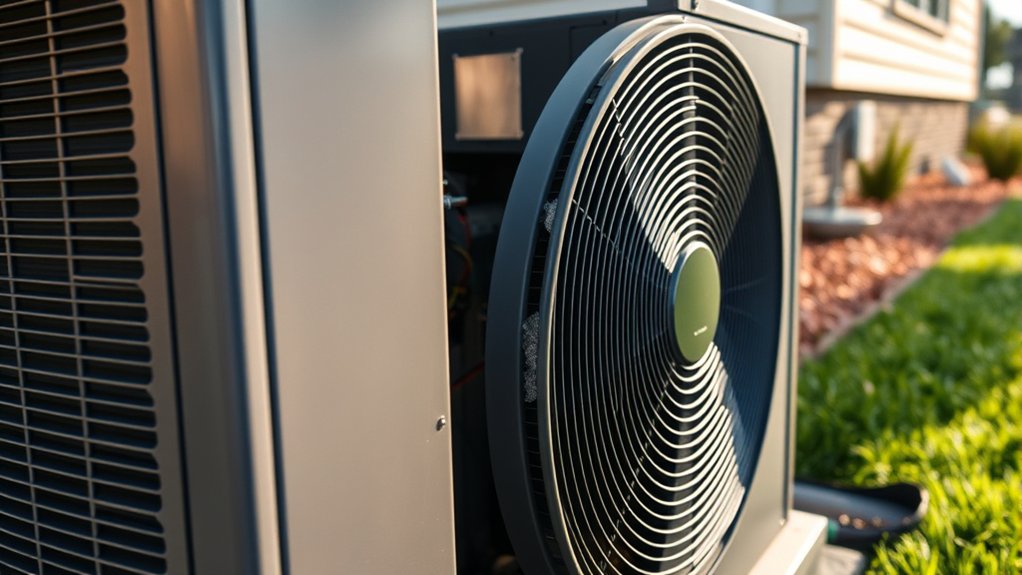
How can you quickly determine whether your system is a heat pump or a traditional air conditioner? Start by inspecting the outdoor unit for a label indicating “heat pump” or the abbreviation “HP.” If you see one, it’s a good sign you have a heat pump.
Another key identifier is the reversing valve inside the outdoor unit. This component lets the system switch between heating and cooling modes and is only found in heat pumps.
The reversing valve enables switching between heating and cooling, a feature unique to heat pumps.
You can also check the system’s efficiency ratings. Heat pumps usually have higher Seasonal Energy Efficiency Ratio (SEER) and Heating Seasonal Performance Factor (HSPF) values compared to standard air conditioners.
The Emergency Heat Setting on the thermostat usually means you have a heat pump, but don’t rely on this alone for identification.
Watching the outdoor unit during heating mode can also help. A heat pump actively pulls heat from outside when it’s heating your home.
Check the Thermostat for Emergency Heat Settings
After confirming features like the reversing valve or system labels, the thermostat offers another reliable way to determine if your system is a heat pump.
Heat pump thermostats typically include Emergency Heat or Aux Heat settings, which standard air conditioner thermostats lack.
These settings let you manually activate a backup heating source when the heat pump can’t provide sufficient warmth.
Digital thermostats may show abbreviations such as EM, EMER, or EMERGENCY Heat, signaling the presence of a heat pump.
If your thermostat only has basic Heat and Cool settings without Emergency Heat options, it’s likely controlling an air conditioner.
Checking these thermostat settings helps you clearly identify your system type and guarantees effective operation tailored to your heat pump or air conditioner.
Watch Outdoor Unit in Heating and Cooling Modes
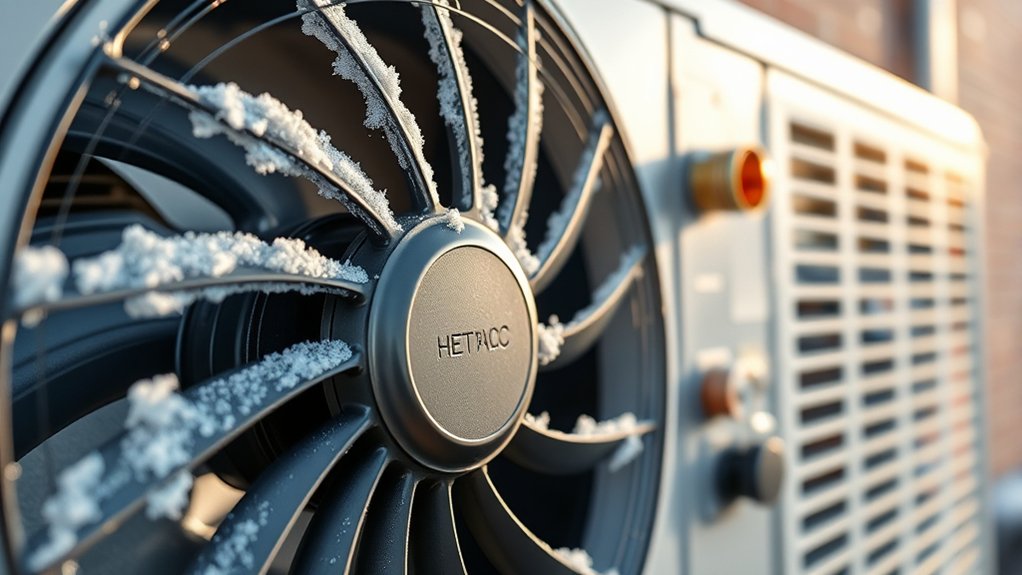
To figure out if your system is a heat pump or just a regular air conditioner, keep an eye on the outdoor unit while you switch between cooling and heating modes.
If the outdoor unit kicks on during heating mode, that’s a good sign you have a heat pump with a reversing valve.
On the other hand, if it stays quiet when you switch to heat, then you’re probably dealing with a standard air conditioner.
Outdoor Unit Activation
Although both heat pumps and air conditioners activate the outdoor unit during cooling mode, you can tell a heat pump apart by watching how the unit works in heating mode.
When you switch to heating mode, a heat pump turns on the outdoor unit to pull heat from the outside air.
On the other hand, an air conditioner’s outdoor unit stays off during heating because it only cools.
So, if you see the outdoor unit running and warm air coming from the vents in heating mode, that means you have a heat pump.
But if the outdoor unit doesn’t turn on in heating mode, then you’re dealing with an air conditioner.
Keeping an eye on the outdoor unit during both heating and cooling modes is an easy and clear way to figure out which system you have.
Heat Mode Operation
Monitoring the outdoor unit during heating and cooling modes provides a clear way to tell if your system is a heat pump or an air conditioner.
Set your thermostat to Heat mode and watch what the outdoor unit does.
If the outdoor unit runs while warm air flows from your vents, you’ve got a heat pump. Traditional air conditioners don’t run in heating mode, so that’s a good clue.
Heat pumps pull heat from outside air, even when it’s cold. They use a reversing valve to switch the refrigerant flow between heating and cooling cycles.
This valve is in the outdoor unit and lets the system efficiently move warmth indoors.
Read Manufacturer Labels for Heat Pump Indicators
A manufacturer label on the outdoor unit provides critical clues to identify whether your system is a heat pump or a traditional air conditioner.
Start by examining the manufacturer labels for terms like “heat pump” or the abbreviation “HP” within the model number. These identifiers are often displayed clearly on the data plate or sticker.
Check the EnergyGuide labels on the unit. Heat pumps usually feature higher Heating Seasonal Performance Factor (HSPF) ratings.
Also, inspect the outdoor unit for a reversing valve, a mechanical component unique to heat pumps that enables switching between heating and cooling modes.
If the labels are faded or unclear, record the model number and search it online to confirm the system type.
These manufacturer labels are your most reliable source for distinguishing a heat pump from a standard air conditioner.
It’s worth taking a moment to look closely because this info is usually right there.
What EnergyGuide Labels Tell You About Efficiency
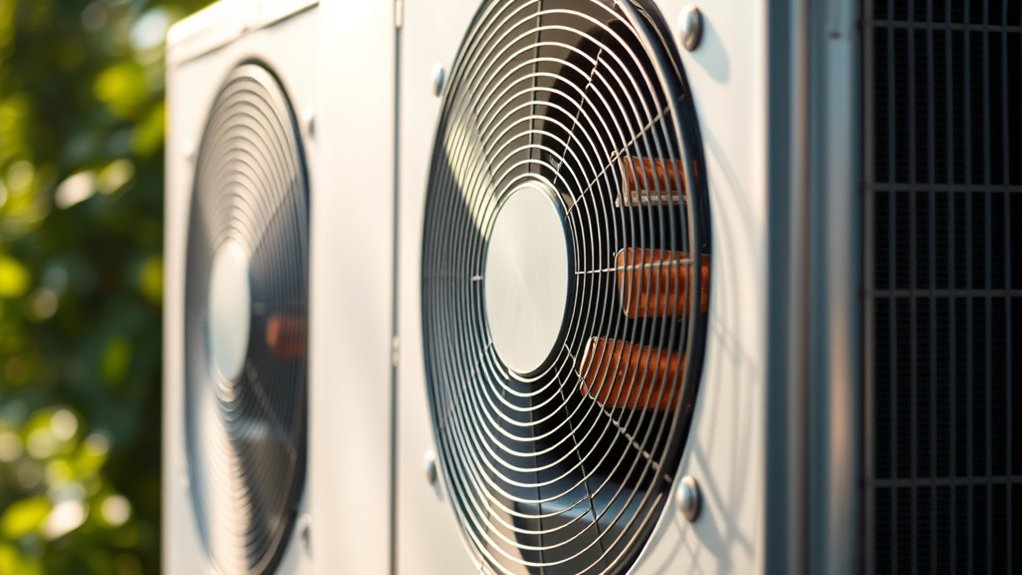
Once you’ve identified your system through manufacturer labels, examining the EnergyGuide label offers additional insight into its efficiency and function.
The bright yellow EnergyGuide label displays key efficiency metrics like Seasonal Energy Efficiency Ratio (SEER) and Heating Seasonal Performance Factor (HSPF).
SEER indicates cooling efficiency. Higher values mean better energy performance. Since heat pumps provide both heating and cooling, they generally have high SEER ratings like air conditioners but also feature an HSPF rating, which measures heating efficiency.
Air conditioners don’t have an HSPF rating because they don’t provide heating.
Spot the Reversing Valve on the Outdoor Unit
Locating the reversing valve on your outdoor unit provides a definitive way to distinguish a heat pump from a standard air conditioner. This valve is a brass component with three fittings on one side, unique to heat pumps.
To spot it, first turn off your heating and cooling system, then inspect the outdoor unit carefully.
The reversing valve controls the flow of refrigerant, enabling the heat pump to switch between heating and cooling modes by reversing refrigerant flow. Unlike a traditional air conditioning unit, which only cools, the heat pump’s reversing valve allows it to absorb heat from outside air during colder months.
Identifying this valve confirms your system is a heat pump, not just a conventional air conditioning unit.
Using Auxiliary and Emergency Heat Settings
You can tell if you have a heat pump by looking for auxiliary and emergency heat settings on your thermostat.
The Aux Heat kicks in to provide extra warmth when it gets really cold outside.
On the other hand, Emergency Heat switches completely to a backup heating system, bypassing the heat pump altogether.
These options usually don’t show up on regular air conditioner thermostats, so they’re a good way to spot a heat pump.
Identifying Emergency Heat
Anyone examining a thermostat can identify a heat pump by looking for an “Emergency Heat” or “Aux Heat” setting, which standard air conditioner thermostats don’t have.
Emergency Heat on the thermostat signals a backup heating mode that bypasses the heat pump’s outdoor unit and activates the auxiliary heat source inside the HVAC system. This feature kicks in when the heat pump malfunctions or struggles to keep your home warm during really cold weather.
Auxiliary heat helps the heat pump by providing extra warmth, but Emergency Heat specifically overrides the heat pump to rely only on the backup heater.
Digital thermostats often display “EM” or “EMERGENCY” to show this mode, confirming you have a heat pump instead of a regular air conditioner.
Knowing these settings makes it easier to maintain and troubleshoot your heat pump when needed.
Using Aux Heat Features
Understanding how auxiliary and emergency heat settings function allows you to maximize your heat pump’s performance during cold weather.
Auxiliary heat activates automatically when outdoor temperatures drop, supplementing your heat pump to maintain indoor warmth efficiently. This feature enhances system efficiency by reducing the heat pump’s workload during extreme cold.
Emergency heat, labeled as “EM,” bypasses the heat pump entirely and engages a backup heating source to provide warmth during heat pump malfunctions.
Your heat pump’s thermostat settings uniquely include both auxiliary and emergency heat options, which sets it apart from standard air conditioner thermostats. By correctly using these settings, you ensure reliable heating while avoiding unnecessary energy consumption.
Mastering auxiliary heat functions helps your heat pump run at its best and keeps your home comfortable when temperatures plunge.
It’s a smart way to stay warm without wasting energy. So, take a little time to get familiar with these settings—they really make a difference when it’s cold outside.
Thermostat Settings Explained
How do the auxiliary and emergency heat settings on a heat pump thermostat function, and why are they significant?
Thermostat settings like Aux Heat and Emergency Heat are unique to heat pumps within your HVAC unit. This signals that you’re not dealing with a standard air conditioner.
Aux Heat activates automatically when outdoor temperatures drop too low for the heat pump to keep indoor air warm efficiently. It provides supplemental warmth to help maintain comfort.
Emergency Heat, often displayed as “EM” or “EMER” on digital thermostats, manually engages the backup heating source and disables the heat pump. This is essential during extreme cold or if the system malfunctions.
Knowing how these settings work helps you optimize energy use and keep your indoor environment comfortable all year round.
It also highlights how your heat pump operates differently from traditional cooling systems.
Heat Pump vs AC: Airflow and Temperature Differences
Although both heat pumps and air conditioners circulate air to regulate indoor temperature, their airflow characteristics and temperature outputs differ markedly. When you set your heat pump to heating mode, the outdoor unit extracts heat from outside air, delivering warm air through your vents.
In contrast, an air conditioner only cools by removing heat from indoor air, never producing warm air.
| Feature | Heat Pump | Air Conditioner |
|---|---|---|
| Airflow in Heat | Warm air via outdoor unit heating | No warm air, cooling only |
| Airflow in Cool | Cool air, reversible function | Cool air, single function |
| Temperature Output | Warm or cool air depending on mode | Cool air only |
This dual capability makes heat pumps versatile for year-round climate control. It’s pretty handy when you want both heating and cooling without needing separate systems.
How Dual Fuel Systems Affect Heat Pump Identification
When a heat pump is paired with a gas furnace in a dual fuel system, distinguishing between the two heating sources becomes more complex.
To identify the heat pump and its role within this HVAC setup, consider these points:
First, examine the outdoor unit. It often looks like a heat pump but may switch off heating at very low temperatures.
Inspect the outdoor unit; it resembles a heat pump but may stop heating in extreme cold.
Also, check the thermostat for auxiliary heat settings, which indicate a secondary heat source.
Keep in mind that the heat pump handles heating until outdoor temperatures drop.
Then, the furnace kicks in to take over. This way, the dual fuel system optimizes efficiency by alternating between the heat pump and furnace based on conditions.
When to Call a Professional for System Confirmation
If you’ve checked your thermostat and outdoor unit but still can’t determine whether your system is a heat pump or an air conditioner, it’s best to call a professional HVAC technician. Consulting an expert guarantees accurate identification. This is especially important when the system is a heat pump with complex features like reversing valves or auxiliary heat.
An HVAC company can diagnose issues, clarify AC or heat functionality, and advise on heat pump needs. Don’t hesitate to reach out if you’re unsure about your system’s operation.
| Scenario | Action | Reason |
|---|---|---|
| Unclear thermostat settings | Call technician | Confirm system type |
| Outdoor unit lacks clarity | Professional inspection | Identify heat pump components |
| Insufficient heating/cooling | Expert diagnosis | Guarantee proper function |
| Emergency heat active | Consult HVAC company | Clarify system operations |
| General uncertainty | Contact professional | Avoid misdiagnosis |
Frequently Asked Questions
Can a Heat Pump Work Efficiently in Extremely Cold Climates?
You can rely on heat pump efficiency in extremely cold climates, but you’ll face winter operation challenges as temperatures drop below freezing.
Cold climate performance improves with advanced models designed for lower temps, and the defrost cycle plays an essential role in maintaining function.
You might need supplemental heating options to support warmth during severe cold, which affects energy consumption comparison with traditional systems.
Understanding these factors guarantees peak heating year-round.
How Often Should Heat Pump Filters Be Replaced or Cleaned?
You might think heat pump filters are immortal, but you should replace or clean them every 1 to 3 months.
Depending on filter types and maintenance frequency, clogged filters hurt performance and raise energy costs. Watch for filter indicators like visible dirt or reduced airflow.
Use proper cleaning methods or swap filters to maintain efficiency.
Here’s a pro tip for homeowners: check your filters monthly during heavy use seasons.
And always follow your manual’s guidelines for the best results.
What Maintenance Is Required to Keep a Heat Pump Running Smoothly?
You should perform routine inspections focusing on refrigerant levels, coil cleaning, and airflow checks to keep your heat pump running smoothly.
Regular thermostat calibration guarantees accurate temperature control, while ductwork maintenance prevents leaks and improves efficiency. Staying on top of these tasks helps maintain peak performance and extends your system’s lifespan.
Don’t forget to clear debris around the outdoor unit to support proper airflow and prevent overheating.
It’s a simple step that can make a big difference in how well your heat pump works. Keeping things clean and checked regularly really pays off in the long run.
Are There Specific Brands Known for Better Heat Pump Performance?
You’ll find brand comparisons highlight Trane and Carrier for top performance ratings and energy efficiency, ideal if you want reliability.
Lennox scores high in noise reduction, good for quiet homes.
Goodman offers lower installation costs but solid warranty options, fitting tighter budgets.
Mitsubishi Electric excels in mini-split systems with excellent efficiency.
Always weigh customer reviews to balance upfront costs with long-term savings and service quality for your heat pump choice.
Can a Heat Pump Be Integrated With Smart Home Systems?
Yes, you can integrate a heat pump with smart home systems, enhancing energy savings by up to 30%.
Smart thermostats offer remote access and an intuitive user interface, letting you monitor and control your system from anywhere. However, watch for compatibility issues with your existing setup.
Automation benefits like scheduling and geofencing optimize efficiency, reducing costs while boosting comfort.
Just make sure your heat pump supports Wi-Fi or compatible smart devices for seamless integration.
It’s a smart way to keep your home comfortable and energy-efficient.
Conclusion
Determining if your system is a heat pump or just an air conditioner isn’t always obvious, but it’s essential for proper use and maintenance. Even if you think it’s only an AC, checking the thermostat for emergency heat can reveal its true function.
You can also watch the outdoor unit during heating mode to see what it’s doing. If you’re unsure, reading manufacturer labels can help clarify things.
Or, you can always consult a professional. This way, you won’t misidentify your system and can avoid inefficient operation and higher energy bills.