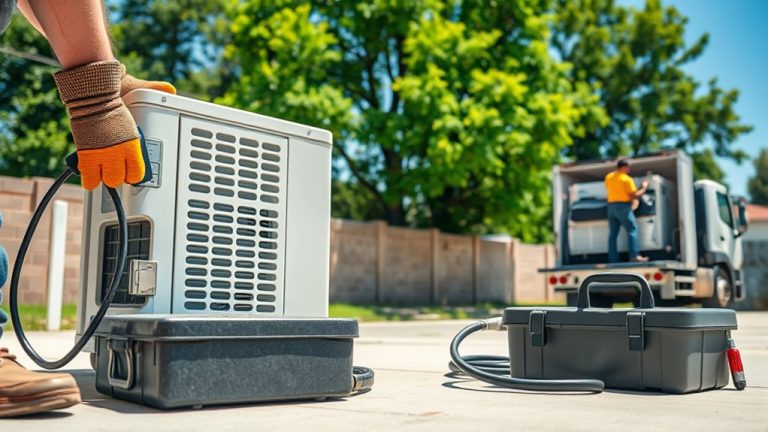
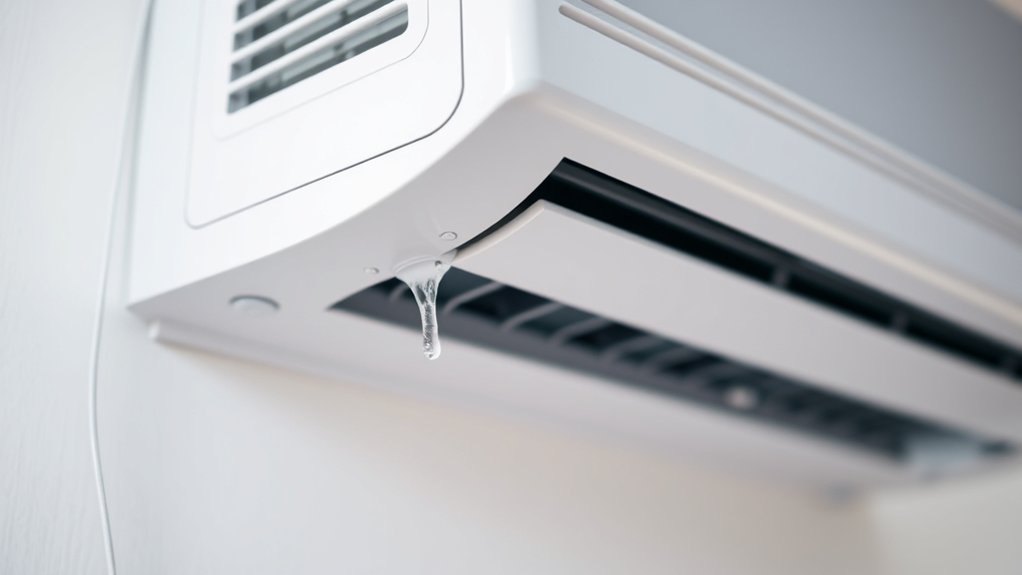
Why Does a Split Air Conditioner Leak Water?
Your split air conditioner leaks water mainly because its condensation drainage system is compromised. Clogged drain lines from debris or dust block water flow, causing overflow. Dirty air filters restrict airflow, freezing the evaporator coil and leading to excess condensation.
Improper installation angles and damaged drain pans can disrupt proper drainage. Low refrigerant levels also cause freezing and leaks. Identifying these issues quickly helps maintain efficiency and prevent damage.
Want to know more? Keep reading to understand each cause and how you can fix it.
How Your Mini-Split Handles Condensation
When warm, humid air passes over your mini-split’s cold evaporator coil, it causes condensation that your system must handle efficiently. This moisture collects in a drain pan beneath the coil, preventing water from dripping inside your space.
Your mini-split AC relies on a properly designed drain line to channel this condensate away from the indoor unit. Proper drainage guarantees that the accumulated water doesn’t pool or leak, which could cause damage or reduce system performance.
A well-designed drain line prevents water buildup, protecting your mini-split from damage and ensuring peak performance.
High humidity increases the volume of condensate, so maintaining clear air filters and a clean drain line is critical. Regular inspection and cleaning help your mini-split manage condensation effectively.
This ensures reliable operation and prevents moisture-related issues within the unit itself. Taking these steps keeps your system running smoothly and your space comfortable.
Why a Clogged Drain Line Causes Mini-Split Water Leaks
If the drain line in your mini-split system becomes clogged, it blocks the proper removal of condensate, causing water to back up into the indoor unit. This clogged condensate accumulates in the drain pan, leading to leaks inside air ducts. Debris, dust, and dirt commonly cause drain line blockages.
If you ignore the problem, water damage can extend beyond the unit, affecting walls and floors, and promoting mold growth. So, regular inspection and cleaning of the drain line are really important. It helps keep your mini-split working efficiently and prevents leaks.
| Cause | Effect | Resulting Issue |
|---|---|---|
| Debris buildup | Clogged drain line | Condensate backup |
| Dust accumulation | Blocked water flow | Water pooling |
| Dirt obstruction | Drain pan overflow | Water leaks |
| Ignored clog | Extended water damage | Mold and structural harm |
| Lack of cleaning | Reduced efficiency | Mini-split malfunction |
How to Unclog Your Mini-Split Drain Line
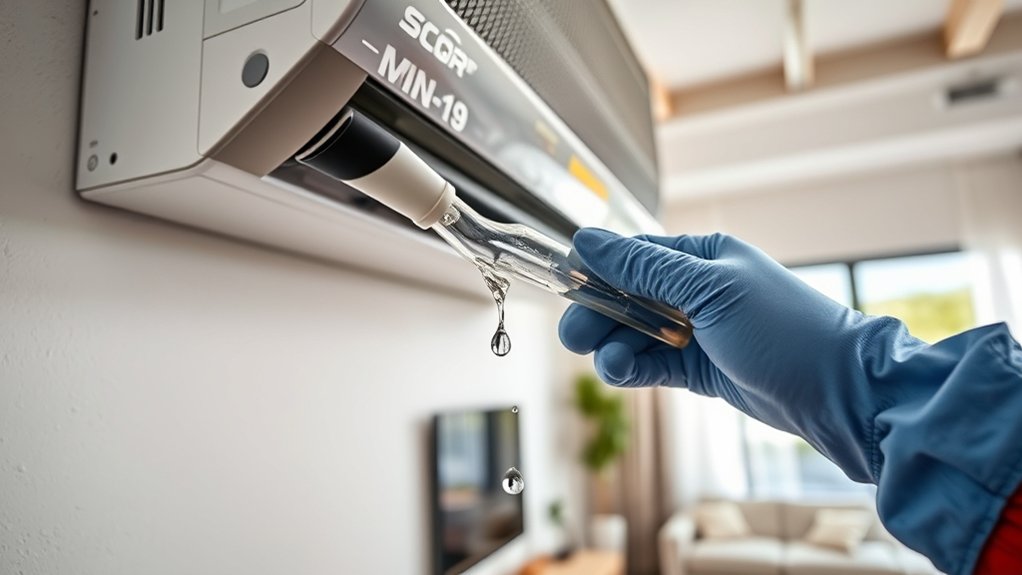
First, find the drain line outlet outside your mini-split unit and take a look to see if there’s anything visibly blocking it.
If you spot some debris, grab a wet/dry vacuum and use it at the outlet to suck out whatever’s causing the clog.
If it’s still not draining properly, don’t worry.
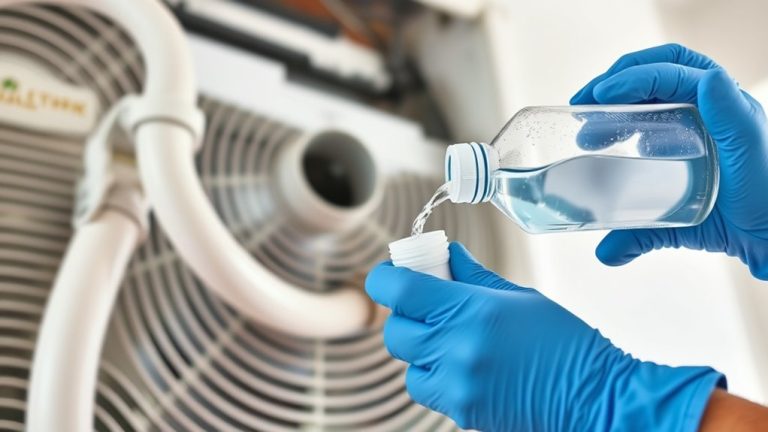
Try pouring a mixture of vinegar and water into the line—that’ll help break down any leftover buildup that’s stubbornly hanging on.
Identifying Drain Line Blockages
Because a clogged drain line can cause water to back up and leak from your mini-split’s indoor unit, identifying and clearing blockages is essential for maintaining system performance.
Start by inspecting the condensate line for visible debris, algae growth, or signs of ice formation, which often indicate a blocked drain.
Dirt and dust accumulation can also restrict water flow, causing leakage. Use a flashlight to check the drain’s interior and look for damp spots or water pooling around the indoor unit.
If your mini-split air conditioning system shows water leakage, the condensate line is a primary suspect.
Furthermore, assess the drain line for cracks or damage, as these can also impair drainage.
Timely identification prevents water damage and guarantees your system operates efficiently.
Step-by-Step Drain Cleaning
One effective method to unclog your mini-split drain line involves a series of precise steps to restore proper condensate flow.
First, locate the condensate drain line extending from the indoor unit to the exterior. Attach a wet/dry vacuum to the drain line’s end to remove debris causing the clogged drain.
Next, pour a vinegar-and-water solution into the drain line and let it sit for 30 minutes to dissolve buildup. After that, flush the line with water to clear any leftover deposits.
Don’t forget to inspect and clean the drain pan and air filter regularly. Blockages there can make drainage issues worse.
If your mini-split unit sits lower than the drain line, think about installing a condensate pump. This will help keep water flowing smoothly and prevent future clogs.
How Dirty Air Filters Cause Mini-Split Water Leaks
When your mini-split’s air filters get clogged with dirt and debris, they restrict airflow through the system. This restriction causes the evaporator coil to become cold enough to freeze. Once the frozen evaporator thaws, excess condensation forms and causes the mini-split system to leak water.
Neglecting filter maintenance reduces efficiency and risks further damage.
| Issue | Effect |
|---|---|
| Dirty air filter | Restricted airflow |
| Frozen evaporator coil | Ice formation, then water leakage |
| Neglected cleaning | Reduced efficiency and system damage |
To prevent leaks, clean or replace air filters every two weeks. This guarantees proper airflow, prevents frozen evaporators, and maintains energy efficiency.
Proper filter care prolongs your mini-split system’s lifespan and prevents water leaks. Taking these simple steps really pays off!
How a Damaged Drain Pan Causes Mini-Split Leaks
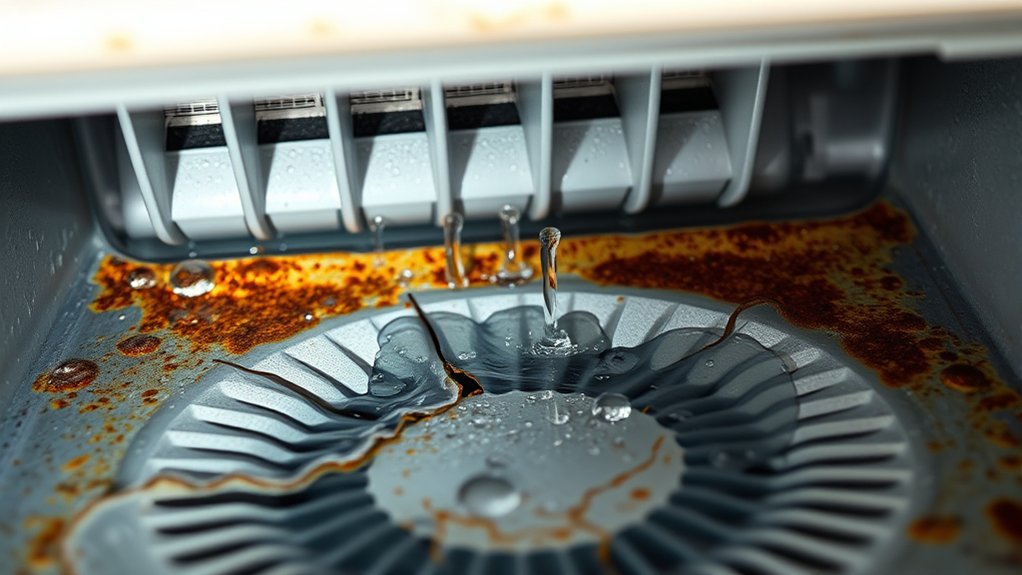
Although the drain pan plays an essential role in collecting condensate from your mini-split’s evaporator coil, rust or cracks can compromise its integrity and cause water to leak indoors.
The damaged drain pan fails to direct condensate properly to the drain line, leading to water pooling inside the unit or on surrounding surfaces.
A damaged drain pan causes improper condensate flow, resulting in water pooling inside or around the unit.
Over time, wear and exposure to moisture accelerate deterioration, increasing the risk of water leakage that can damage walls and floors.
During a maintenance visit, technicians inspect the drain pan for signs of corrosion or damage and recommend repairs or replacement to restore proper drainage.
It’s important to address a damaged drain pan promptly. This helps keep your mini-split running efficiently and prevents costly water damage inside your home.
How a Frozen Evaporator Coil Causes Water Leaks
If restricted airflow prevents warm air from reaching the evaporator coil, it can freeze and cause water leaks once the ice melts.
Frozen coils develop when things like dirty air filters or blocked vents limit airflow in the indoor unit.
As the ice on the coil thaws, excess water builds up and can overflow the drain pan. This results in your AC leaking water inside your home.
While low refrigerant also plays a role in coil freezing, that’s a topic for another time.
You’ll notice reduced cooling efficiency and ice buildup on the coil when frozen coils form.
To prevent this, keep airflow steady by regularly cleaning filters and making sure vents aren’t blocked.
Taking care of frozen evaporator coils right away is key to avoiding water damage and keeping your system running at its best.
How Low Refrigerant Levels Cause Mini-Split Leaks
Since low refrigerant levels compromise your mini-split system’s ability to absorb heat efficiently, the evaporator coil can freeze due to insufficient cooling. When this ice melts, excess condensation may overflow the drain pan, causing your mini-split to leak water.
Low refrigerant levels often indicate a leaking refrigerant issue that demands prompt attention. You might notice some signs like hissing sounds near the indoor unit signaling refrigerant escape.
Ice forming on evaporator coils can happen because of insufficient cooling. You may also see increased room humidity as the system struggles to dehumidify, and reduced energy efficiency which leads to higher utility bills.
It’s important to address leaking refrigerant promptly to restore peak cooling and prevent water leaks. Since handling refrigerants requires specialized skills, it’s best to hire a certified technician to diagnose and repair the issue safely.
How Improper Installation Affects Mini-Split Drainage
If you install your mini-split unit with the wrong mounting angle, the condensate won’t drain properly and can end up pooling inside the system, which might cause leaks.
When the indoor unit isn’t level, it messes with the drainage flow and could make water overflow instead of reaching the drain pan like it should.
That’s why having a professional handle the installation is so important — they make sure the unit is tilted just right and the drain lines are secure, which helps prevent these common water leakage problems.
Effects Of Incorrect Mounting
Although mini-split systems offer efficient cooling, incorrect mounting can seriously mess up their drainage function. When you install or mount your ductless AC indoor units the wrong way, water drainage gets affected, which leads to leaks and potential damage.
Here are some key effects of incorrect mounting:
- Indoor units that aren’t leveled stop condensate water from flowing into the drain pan, causing overflow.
- Misaligned drain lines can get blocked or disconnected, making leakage even worse.
- Poor mounting also disrupts airflow, which reduces drainage efficiency and ups the chance of drips.
- Water pooling happens when units tilt the wrong way, and that can damage your walls or ceilings.
To avoid water leaks, make sure your mini-split indoor units are perfectly mounted and aligned when you install them. Proper mounting is super important for effective water drainage and keeping your system running smoothly.
Drainage Problems From Tilt
Incorrect mounting not only misaligns indoor units but often causes them to tilt, which directly disrupts the natural flow of condensate. When your mini-split is tilted, the drain pan can’t collect water efficiently, causing drainage to fail. This leads to water pooling and eventually leaks that damage walls or floors.
Improper installation angles or inadequate slope toward the drain line worsen these issues, preventing proper condensate flow. As a result, condensation builds up, increasing humidity and heightening the risk of water leaks.
To avoid these drainage problems, ensuring your unit is level and properly sloped during installation is critical. Without this, your mini-split’s drainage system won’t function as designed, making leaks more likely and compromising your system’s performance and longevity.
Professional Installation Importance
When you hire a professional to install your mini-split system, you guarantee precise leveling and proper alignment critical for effective condensate drainage.
Improper installation often leads to drainage issues that cause water leaks and damage.
Professional installation guarantees correct unit leveling to prevent condensate pooling and overflow. It also ensures proper drain line alignment to avoid clogs and backflow.
Plus, accurate refrigerant levels help reduce coil freezing and leaks.
You also get ideal indoor-outdoor unit positioning for efficient drainage and system performance.
Skipping professional installation risks misalignments, tilted units, and blocked drain paths. These problems can seriously compromise drainage in mini-split systems.
By relying on experts, you protect your system’s integrity and extend its lifespan.
It also minimizes the chance of costly water damage caused by drainage failures.
How High Humidity Causes Mini-Split Water Leaks
Because high humidity increases the moisture content in indoor air, your mini-split’s evaporator coil collects more condensation than usual. When warm, humid air contacts the cold evaporator coil, moisture forms rapidly, often exceeding the drain pan’s capacity.
This excess condensation must be efficiently removed; otherwise, it accumulates and can overflow, causing leaking from the unit.
Also, high humidity can overwhelm the condensate drain line, leading to clogs that prevent proper drainage. Mini-split systems are designed to manage typical humidity levels, but when indoor humidity surpasses 60%, their capacity to handle condensation diminishes, increasing leak risks.
When to Call a Pro for Mini-Split Water Leaks
Managing indoor humidity helps reduce the risk of water leaking from your mini-split, but some issues need a pro’s touch. You should call an HVAC technician when you notice signs that go beyond routine maintenance.
Watch for these indicators:
- Persistent water pooling near the outdoor unit, which could mean drainage problems
- Unusual sounds or ice buildup on evaporator coils, possibly a refrigerant leak
- High indoor humidity even when the system is running, pointing to a clogged filter or faulty drain line
Also, regular professional maintenance can help catch and prevent leaks early.
Usually, there’s a diagnostic fee around $67, but it’s often waived if you approve repairs on-site.
Getting help quickly ensures your mini-split runs smoothly and avoids costly water damage.
Frequently Asked Questions
Can Using a Dehumidifier Prevent Mini-Split Water Leaks?
Yes, using a dehumidifier effectively reduces humidity levels in indoor air, which directly improves moisture control around your mini-split system.
By maintaining ideal humidity between 30-50%, a dehumidifier prevents excess condensation on evaporator coils, minimizing water buildup and leaks.
This moisture control enhances the mini-split’s efficiency and protects its drainage system.
So, incorporating a dehumidifier is a precise, technical solution to prevent mini-split water leaks in humid environments.
It really helps keep things running smoothly and dry.
Does the Size of the Mini-Split Unit Affect Leakage Risk?
Think of your mini-split like a tailored suit. If it’s too big or small, it just won’t fit right.
Mini split sizing directly affects leakage risk. An oversized unit causes short cycling, while an undersized one overworks and freezes coils.
Installation errors, incorrect refrigerant levels, and drainage issues only make these problems worse.
Proper sizing guarantees balanced operation and reduces excess condensation and water leaks.
How Often Should I Schedule Professional Maintenance for My Mini-Split?
You should schedule professional maintenance for your mini-split at least once a year to keep it running at peak efficiency. A thorough seasonal inspection helps catch any issues early on. This is usually done with a maintenance checklist that covers refrigerant levels, drain lines, and filters.
If you live in a humid climate, it’s a good idea to get your system serviced twice a year. Regular visits also give you helpful troubleshooting tips. This way, your system runs smoothly and you can avoid costly repairs.
Don’t skip these essential check-ups if you want top performance from your mini-split. They really make a difference in the long run.
Can Incorrect Thermostat Settings Cause Water Leaks in Mini-Splits?
You’ll notice improper thermostat calibration causing uneven cooling, increased humidity levels, and airflow issues.
When you set your mini-split thermostat too low or too high, it disrupts the balance, leading to coil freezing or excessive condensation.
Installation errors can make things worse by restricting drainage and airflow, which increases the chances of leaks.
So, it’s really important to keep your thermostat settings accurate.
Are Certain Mini-Split Brands More Prone to Water Leakage?
Yes, certain mini-split brands are more prone to water leakage because of differences in brand reliability and drainage design.
Brands that have poor installation quality and subpar drainage systems often run into clogging and overflow problems.
Checking user reviews is a good way to find out which brands handle moisture well.
You’ll want to focus on brands known for solid drainage design and clear installation guidelines.
That way, you can lower the chances of leaks happening.
Conclusion
So, your mini-split is playing indoor waterfall again. Congratulations! Before you start building an ark, check that clogged drain line or dirty filter.
Maybe the drain pan’s throwing a tantrum, or low refrigerant’s causing leaks. If installation looks like a DIY disaster, humidity’s high, or you’re out of options, it’s time to call a pro.
Remember, your mini-split isn’t a fountain; it’s a precision machine. Treat it like one.