Why Is My Air Conditioner Dripping Water and How Do I Fix It?
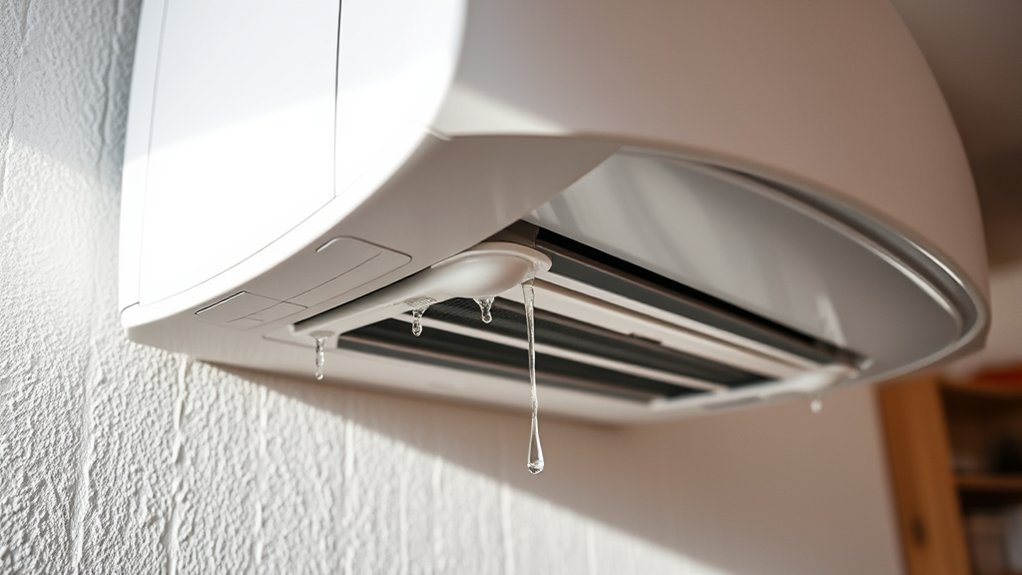
Your air conditioner drips water mainly because of blocked drain lines, frozen evaporator coils, or damaged drain pans disrupting normal condensation drainage. You can fix it by clearing clogged drains, cleaning or replacing dirty filters, checking refrigerant levels, and inspecting the drain pan for cracks.
Ensuring proper airflow and addressing humidity also help prevent leaks. If these steps don’t stop the dripping, consider professional help to avoid further damage. More detailed solutions can guide you through maintenance and repairs.
Why Is My Air Conditioner Dripping Water?
Why is your air conditioner dripping water? This happens because warm air cools over the evaporator coils, causing moisture to condense and collect in the drain pan.
Normally, this water flows outside through the condensate drain line. However, water leaks occur if the condensate drain line is clogged, preventing proper drainage.
Water leaks happen when a clogged condensate drain line blocks proper drainage.
A frozen evaporator coil, often caused by a dirty air filter restricting airflow, can also lead to excessive dripping as melting ice results in overflow.
Low refrigerant levels can worsen coil freezing, increasing water leaks.
To prevent these issues, consistent AC maintenance is essential. Cleaning the drain line and replacing dirty air filters regularly will help maintain proper airflow and avoid water leaks caused by frozen coils or blockages.
How Does an AC Unit Normally Handle Condensation?
When your air conditioner cools indoor air, it causes humidity to condense on the cold evaporator coils, forming water droplets. These droplets collect and drip into the drain pan positioned beneath the evaporator coils.
The drain pan’s design channels this water efficiently to the condensate drain line, which directs it safely outside, preventing leaks.
Proper airflow over the coils guarantees consistent condensation and avoids excess condensation buildup. Regular maintenance is essential to keep the drain pan and condensate drain line clear of obstructions, allowing water to flow freely.
By maintaining these components, your AC unit handles condensation effectively, minimizing the risk of water damage and performance issues due to clogs or airflow problems.
It’s simple but important to keep things running smoothly.
What Causes Excessive Water Leaks in AC Systems?
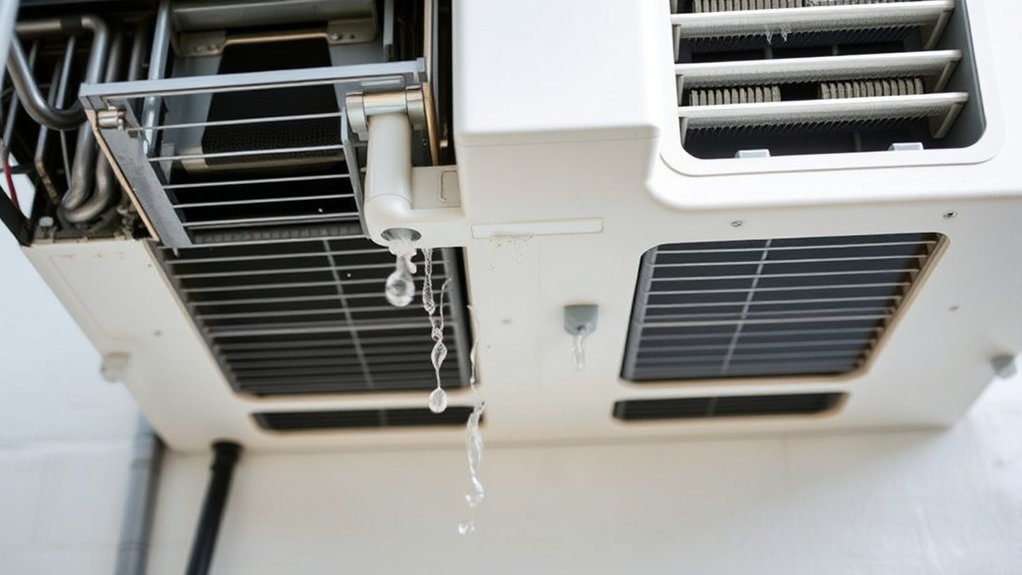
You’ll often find that clogged condensate drain lines or frozen evaporator coils cause excessive water leaks in your AC system.
It’s pretty common and usually one of the first things to check.
Improper installation and lack of routine maintenance can make these problems worse, leading to persistent drips or even overflow.
So, it’s really important to stay on top of maintenance.
By addressing these issues quickly with the right fixes, you can prevent water damage and keep your AC running efficiently.
It’s definitely worth the effort!
Common Leak Causes
Although air conditioners are designed to manage moisture effectively, several common issues can cause excessive water leaks in your system. A clogged drain line is the most frequent cause, blocking condensate flow and leading to overflow.
A dirty air filter restricts airflow, causing frozen coils that drip water as they thaw. Low refrigerant levels also reduce pressure, triggering coil freezing and subsequent leaks.
Furthermore, a damaged drain pan can’t contain condensation, allowing water to escape through cracks or rust holes. These common causes disrupt normal drainage and condensation management, resulting in leaks.
Identifying these issues promptly helps prevent water damage and system inefficiency. Understanding these factors equips you to pinpoint why your AC is dripping and take appropriate corrective actions.
Installation And Maintenance
Proper installation and regular maintenance directly impact your air conditioner’s ability to manage condensation and prevent excessive water leaks. Improper installation, such as an unlevel unit, can disrupt drainage.
Clogged condensate drain lines and dirty air filters restrict airflow, which causes frozen coils and increased condensation. Low refrigerant levels also contribute by causing coil freezing.
Damaged or rusted drain pans fail to hold water, leading to leaks.
| Issue | Cause | Effect |
|---|---|---|
| Clogged Drain Line | Dirt, algae buildup | Drain pan overflow |
| Dirty Air Filter | Restricted airflow | Frozen coils, water leakage |
| Low Refrigerant | Pressure drop | Coil freeze, condensation leak |
| Damaged Drain Pan | Rust, physical damage | Water containment failure |
Immediate Leak Remedies
When excessive water leaks occur in your air conditioning system, identifying the root cause quickly is critical to prevent damage and restore efficient operation.
Immediate leak remedies focus on addressing these common issues:
- Clogged condensate drain line: Clear blockages to restore proper drainage and prevent water backup.
- Frozen evaporator coils: Check refrigerant levels and clean air filters to stop ice formation that melts and overflows the drain pan.
- Damaged drain pan: Inspect for rust or cracks and replace if necessary to guarantee condensation collects correctly.
Also, keep in mind that high humidity levels can overwhelm the system.
Improper installation might disrupt drainage paths too. Addressing these factors promptly helps maintain your AC’s efficiency and prevents water damage.
How to Identify a Clogged Condensate Drain Line
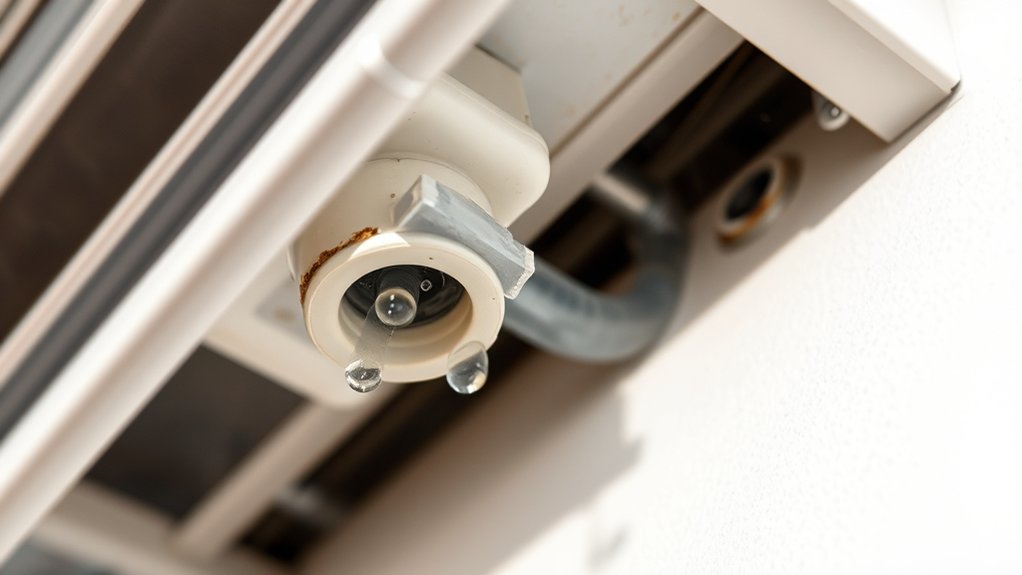
If you notice water pooling around your air conditioner or hear unusual noises from the system, you might be dealing with a clogged condensate drain line. This blockage causes water to back up and overflow from the drain pan.
To diagnose a clog, pour a small amount of water down the drain line. If it doesn’t flow freely, there’s a blockage.
Regular maintenance helps prevent this issue by clearing the drain line of dirt, algae, and debris. Scheduling professional maintenance annually and keeping the area clean minimizes risks.
| Symptom | What It Indicates |
|---|---|
| Water pooling | Drain line blockage |
| Increased indoor humidity | Water not draining properly |
| Unusual noises | Overflow or clog-related strain |
| Slow drainage | Partial clog |
| No water flow | Complete clog |
How Do Frozen Evaporator Coils Cause AC Water Leaks?
Since restricted airflow and low refrigerant levels directly affect your AC’s evaporator coils, they can cause the coils to freeze.
Frozen evaporator coils form when restricted airflow, often caused by dirty air filters or blocked ducts, reduces heat exchange. This allows condensation to freeze on the coils.
When the ice melts, it leads to water leaks inside your home. Here’s how this process unfolds:
- Ice buildup on coils blocks normal cooling, resulting in excessive moisture.
- The excess water overflows the drain pan because the condensate pump can’t handle the volume.
- Water leaks occur as melted ice escapes, potentially damaging your unit and surroundings.
Regular maintenance, including cleaning filters and ensuring proper airflow, is essential to prevent frozen coils and subsequent water leaks.
It’s a simple step that can save you a lot of hassle down the road.
How Do Dirty Air Filters Lead to AC Water Dripping?
When your air filter gets dirty, it restricts airflow. This makes the evaporator coils cool down too much and eventually freeze up.
Once the coils freeze, the ice buildup messes with the heat exchange process.
Then, when the coils thaw, you get extra condensation. That excess water has to go somewhere, so it starts dripping from your AC.
It’s a clear sign that you should clean or replace the filter soon.
Airflow Restriction Effects
Although clean air filters often go unnoticed, they play a critical role in maintaining proper airflow within your air conditioning system. When dirty air filters cause airflow restriction, several issues arise that lead to water leaks.
First, reduced airflow chills the evaporator coil excessively, causing ice buildup that melts and overflows the drain pan.
Second, clogged filters elevate indoor humidity, overwhelming the condensate drainage system.
Third, restricted airflow forces your AC to work harder, increasing freeze-thaw cycles that contribute to water dripping.
To maintain ideal airflow and prevent these problems, you should replace air filters every 60 to 90 days. It’s also a good idea to monitor filter cleanliness regularly.
Plus, make sure your condensate drainage system stays clear.
Following these steps helps you avoid water leaks and keeps your system running efficiently. It’s a simple way to protect your AC and keep things comfortable.
Coil Freezing Mechanism
A frozen evaporator coil is a common consequence of dirty air filters restricting airflow through your AC system. When airflow restrictions reduce air movement by up to 50%, the evaporator coil temperature drops excessively, leading to coil freezing. This ice buildup impairs heat exchange, causing the coil to freeze over.
Once the ice melts, excess condensation forms, overwhelming the drain pan’s capacity. If the drain pan can’t handle the water, often due to continued airflow restrictions, the excess water will drip from your unit.
Dirty air filters directly cause these airflow restrictions, reducing your AC’s efficiency and increasing the risk of coil freezing.
To prevent this, you should regularly clean or replace your air filters every 60 to 90 days. This helps ensure proper airflow and minimizes the chance of coil freezing and water leakage.
It’s a simple step that can save you from bigger problems down the line.
Increased Condensation Risks
If you don’t regularly clean or replace your air filters, restricted airflow forces your AC system to work harder. This extra effort causes the evaporator coils to freeze and then produce excessive condensation once the ice melts.
A dirty air filter messes with how your system normally works, leading to water leakage and potential damage.
To prevent water leaks, focus on these key points:
- Clogged filters reduce airflow, causing evaporator coils to ice over and drip as they thaw.
- Increased system workload raises moisture levels, overwhelming the drainage system.
- Regularly cleaning air filters every 60 to 90 days keeps airflow steady and cuts down on condensation risk.
Keeping up with filter maintenance really makes a difference in avoiding these problems.
How Does a Damaged Drain Pan or Drain Line Cause Leaks?
When the drain pan or drain line suffers damage, your air conditioner can start leaking water due to improper condensation management. A damaged drain pan with cracks or rust fails to hold condensation, causing water leaks inside the unit.
If the drain line becomes clogged with dirt, algae, or debris, it blocks proper water flow, resulting in backup and overflow. An unlevel or improperly installed drain line also disrupts drainage, leading to pooling and leaks.
Moreover, if your system includes a condensate pump that malfunctions, it won’t effectively remove water from the pan, worsening leaks. To prevent these issues, prioritize regular maintenance by inspecting and cleaning both the drain pan and drain line.
Make sure they remain clear and functional to maintain efficient condensation drainage and avoid water damage. It’s really about keeping everything running smoothly so you don’t end up with leaks that could cause bigger problems down the line.
How Do Low Refrigerant Levels Cause AC Water Leaks?
Although low refrigerant levels might seem unrelated to water leaks, they actually have a direct impact on your AC’s ability to handle condensation. When refrigerant drops, the evaporator coil pressure falls, causing it to freeze. As the ice melts, too much water builds up, which can overwhelm the drain pan. This often leads to water leaks around your unit.
Here’s how low refrigerant levels cause leaks:
- Reduced refrigerant causes the evaporator coil to freeze, messing up heat exchange.
- When the ice melts, it creates more condensation than the drain pan can handle.
- The excess water then overflows, causing visible leaks.
A refrigerant leak is a sign that your refrigerant levels are low, and if you don’t fix it, the water leaks will get worse.
How to Safely Stop Your AC From Dripping Water
Low refrigerant levels can lead to water leaking from your AC, but fixing the problem means you need to act fast to avoid more damage.
First, turn off the AC unit at the thermostat and the breaker box to stop the water from leaking.
Next, check the air filter. If it’s dirty, it can block airflow and cause the evaporator coils to freeze. When those coils thaw, they drip extra water.
You should also look at the condensate drain line for any clogs. Use a vacuum or pipe cleaner to clear out any debris.
Take a close look at the drain pan too. If it has cracks or rust, you’ll want to replace it so water collects properly.
Let the frozen evaporator coils thaw completely before turning the unit back on.
If these steps don’t fix the leak, or if you think the refrigerant might be the issue, it’s best to call a professional. That way, you avoid causing more damage to your AC.
When Should You Call a Professional for AC Water Leaks?
If your AC is leaking even after you’ve cleaned the filter and cleared the drain lines, it’s a good idea to call a professional.
They can tackle more complicated issues like refrigerant problems or drainage that just won’t stop.
A technician can also come by to do installation and safety checks, making sure your system is running smoothly and safely.
Taking action sooner rather than later helps prevent damage to your equipment and keeps your indoor air quality in good shape.
Complex Refrigerant Problems
When you notice water dripping from your air conditioner and suspect refrigerant issues, calling a professional is essential. Handling refrigerants requires specialized tools and expertise.
Complex refrigerant problems can cause leaks that aren’t easily detected but may lead to significant system damage if ignored.
A malfunctioning evaporator coil, often due to improper refrigerant levels, can produce excessive condensation. Only a trained technician can safely check refrigerant levels and perform professional repair.
You should call a professional if you observe:
- Persistent water dripping linked to suspected refrigerant leaks
- Reduced cooling efficiency indicating possible evaporator malfunction
- Signs of refrigerant loss, like hissing sounds or ice buildup on coils
Addressing these issues promptly prevents further system damage and costly repairs.
Persistent Drainage Issues
Refrigerant issues can cause water to drip from your air conditioner, but persistent drainage problems often stem from other underlying causes that require professional diagnosis.
If water consistently pools around your unit or leaks from ducts, a professional needs to inspect the drain line for blockages or damage.
Persistent leaking may also indicate a malfunctioning condensate pump, which experts can assess and repair to prevent structural damage.
Furthermore, if your air filter clogs quickly or indoor humidity rises unusually, these signs suggest airflow or condensate management issues best handled by a professional.
After basic maintenance like clearing drains and replacing filters, ongoing leaks or moisture problems warrant immediate professional intervention.
It’s important to diagnose and resolve the root cause accurately to avoid bigger issues down the road.
Installation And Safety Checks
Excessive water dripping from your air conditioner often signals a clogged condensate drain line that requires professional clearing to prevent damage.
Improper installation can also cause drainage issues, including an incorrectly positioned drain pan.
You should call a qualified technician when you suspect poor installation affecting water flow or drain pan alignment.
Also, if the condensate pump malfunctions and causes water backup, it’s time to get help.
Another reason to call a pro is if you detect refrigerant leaks or notice low refrigerant levels, since these pose safety risks.
A professional will perform proper safety checks and ensure the system complies with operational standards.
Regular maintenance by a professional helps identify hidden problems early.
This can save you from costly repairs down the line.
Frequently Asked Questions
Can Weather Conditions Affect My Ac’s Water Dripping?
Yes, weather conditions directly impact your AC’s water dripping. High humidity levels increase condensation, which puts extra stress on your condensate pump and drainage system.
Cold weather can cause ice buildup if refrigerant levels or airflow are poor. When that ice melts, it leads to excess water dripping.
Wind-driven rain might reveal insulation problems, causing leaks you wouldn’t normally notice.
Regular maintenance helps keep airflow proper and refrigerant levels in check. This prevents water buildup and keeps your AC running efficiently.
Does the Age of My AC Unit Impact Water Leakage?
Did you know most AC units last 10-15 years? Yes, the age of your AC unit directly impacts water leakage. Worn-out parts and clogged drain lines are common leakage causes in older systems.
Regular AC maintenance tips include cleaning drain pans and checking refrigerant levels.
While DIY repair techniques can help temporarily, professional service benefits guarantee thorough fixes.
Aging units also reduce energy efficiency, especially with seasonal usage effects increasing strain.
How Often Should I Inspect My Ac’s Drainage System?
You should inspect your AC’s drainage system at least once a month to catch common drainage issues early.
Regular seasonal inspections help spot signs of clogs like slow draining or water pooling. Use DIY checklists to clean the condensate drain line and remove blockages.
Also, schedule professional services annually for thorough drainage maintenance. Staying proactive prevents leaks, guarantees efficient operation, and extends your unit’s lifespan.
It’s a simple routine that saves you from bigger headaches later on.
Can Pets or Pests Cause Blockages in the AC Drain Line?
Pets and pests can clog your AC drain line just like leaves blocking a gutter.
Pet hair and pest infestations create debris that traps moisture, causing water buildup and potential damage.
To avoid this, try regularly inspecting and cleaning the drain line.
You can also remove hair and install screens as simple prevention strategies.
Staying vigilant helps keep your system running efficiently and prevents costly leaks or repairs.
It’s worth the effort to keep things flowing smoothly!
Is It Normal for My AC to Drip Water During High Humidity?
Yes, it’s normal for your AC to drip water during high humidity levels because condensation forms as the system cools moist indoor air.
Proper moisture control relies on efficient drainage to prevent condensation issues that can affect indoor comfort.
Regular system maintenance, like cleaning the condensate drain line and air filters, guarantees maximum energy efficiency and prevents leaks.
Staying proactive helps maintain your AC’s performance and keeps humidity-related water buildup under control.
Conclusion
If your air conditioner is dripping water, you’re not alone. Studies show that clogged condensate drain lines cause over 30% of AC water leaks. Addressing this issue promptly can prevent damage and inefficiency.
Regular maintenance, including inspecting drain lines and refrigerant levels, is key to avoiding leaks. If you notice persistent dripping despite basic fixes, call a professional to diagnose and resolve the problem safely and effectively. This will help ensure your system runs smoothly.