How Much Does an Air Conditioner Cost?
You’ll pay between $3,000 and $20,000 for a new air conditioner, depending on the system type, size, and efficiency. Central AC units typically cost $8,800 to $20,000, while mini-splits range from $2,000 to $10,500. Installation complexity also affects the overall cost.
Higher SEER2 ratings add to upfront expenses but save energy in the long run. Optional features like smart thermostats or air purifiers will increase the price as well.
Knowing these factors helps you make an informed choice as you explore your options further. It’s all about finding what fits your needs and budget best.
How Much Does a New Air Conditioner Cost in 2026?
How much will you pay for a new air conditioner in 2026? The New AC Unit Cost for a Central Air Conditioner typically ranges from $8,800 to $20,000.
Entry-level models start near $8,800, while premium systems can exceed $20,000. This depends on the unit type and installation complexities.
Installation costs, including ductwork modifications and location considerations, may add $3,000 to $10,000 to the total. Proper sizing is essential.
For example, a 3-ton unit usually fits a 2,000 sq. ft. home, which helps optimize cooling performance and energy use.
Energy Efficiency Ratings, measured by SEER2, impact long-term operational costs. You should aim for a minimum SEER2 rating of 13.4 in northern states and 14.3 in southern regions.
This will help ensure efficient energy consumption and lower utility bills over time.
Comparing Central AC, Mini-Splits, and Packaged Unit Prices
You’ll find that central AC systems usually cost anywhere from $3,000 to $15,000. The price really depends on the size of the unit and how complex the installation is.
On the other hand, mini-splits are a flexible option and tend to be priced between $2,000 and $10,500. They’re especially handy if your home doesn’t have existing ductwork.
Then there are packaged units, which typically fall in the $5,000 to $12,000 range. Just keep in mind that installation costs can vary a lot, depending on things like ductwork and labor needs.
Unit Type Cost Differences
Three common types of air conditioning units are central AC, ductless mini-splits, and packaged units. They differ a lot in cost because of their design and installation needs.
A central AC unit usually costs between $3,000 and $15,000, depending on size and energy efficiency ratings. Higher SEER ratings mean a higher upfront cost, but they help you save money in the long run.
Ductless mini-splits cost between $2,000 and $10,500. They’re a great option if your home doesn’t have ductwork already.
Packaged units generally fall within the same price range as central AC systems. However, the exact cost can change depending on how complex the installation is.
When thinking about the cost differences, keep an eye on efficiency ratings and system design. These factors directly affect both the purchase price and your ongoing energy bills.
Understanding these details will help you pick the right unit for your home’s cooling needs.
Installation Price Variations
Although installation costs vary widely, understanding the price differences between central AC, ductless mini-splits, and packaged units is essential for budgeting your cooling system upgrade.
Central AC installation costs typically range from $3,000 to $15,000, influenced by unit capacity and ductwork modifications. Ductless mini-split systems offer a flexible, often lower-cost alternative, especially if your home lacks existing ductwork.
Packaged units fall within a similar price range to central AC but depend heavily on installation complexity and location. Keep in mind that ductwork modifications can add $3,000 to $10,000, greatly impacting total costs.
| System Type | Installation Price Range | Key Cost Drivers |
|---|---|---|
| Central AC | $3,000 – $15,000 | Unit size, ductwork modifications |
| Ductless Mini-Split | $2,000 – $10,500 | No ductwork, flexibility |
| Packaged Unit | $3,000 – $15,000 | Installation complexity |
How Unit Size and Capacity Impact Air Conditioner Costs
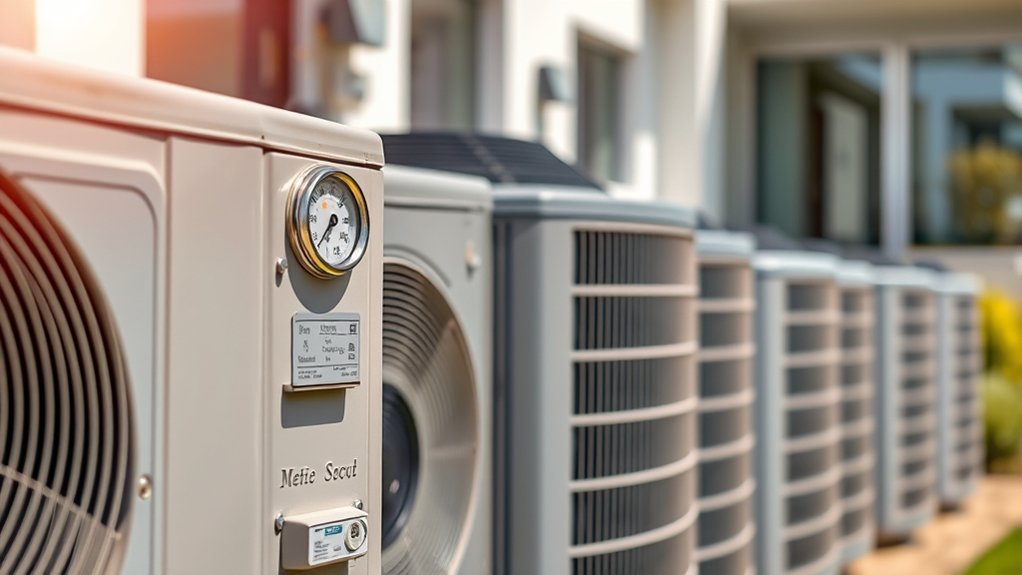
Because the size and capacity of an air conditioner directly influence both its performance and cost, selecting the right unit is crucial for efficiency and budget management.
Unit size is measured in tons, with one ton equaling 12,000 BTUs per hour. This measurement determines how effectively the system cools your space.
Unit size, measured in tons, directly impacts how efficiently your air conditioner cools your home.
Installed costs typically range from $2,500 to $3,000 per ton, so a 5-ton unit will cost considerably more than a 2-ton model. Oversized or undersized units cause inefficiencies, leading to higher energy bills and discomfort.
To avoid this, a Manual J Load Calculation assesses your home’s dimensions, insulation, and window placement to recommend an ideal unit size.
This precise sizing guarantees you balance upfront installed costs with long-term performance and comfort. It’s really about finding that sweet spot so you don’t pay more than you need to but still get great cooling all summer long.
How Energy Efficiency Ratings Affect Your Air Conditioner Price
Selecting the right unit size sets the foundation for efficient cooling, but understanding energy efficiency ratings plays a key role in determining your air conditioner’s overall cost and performance.
Energy efficiency ratings, specifically SEER2, measure how effectively a unit cools relative to energy consumption.
Models with higher SEER2 ratings, such as 16 or above, typically have higher upfront costs, often $1,000 to $3,000 more than less efficient units.
But they reduce your energy bills considerably over time. For example, a 20 SEER2 unit offers substantial savings compared to the regional minimum of 13.4.
Plus, investing in high-SEER2 units may qualify you for utility rebates that help offset initial expenses.
Ultimately, the upfront costs reflect long-term energy savings and improved performance.
How Installation Complexity Influences Total Air Conditioner Cost
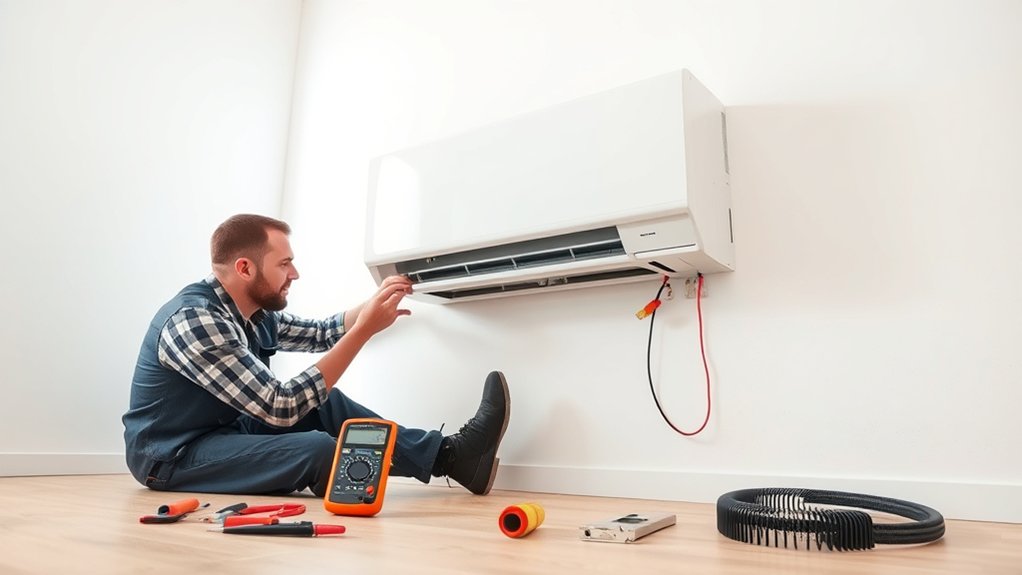
When your home’s existing ductwork, electrical systems, or installation access present challenges, the complexity of installing an air conditioner can drive up your total costs greatly.
Installation complexity directly impacts labor time and materials, increasing expenses by hundreds or even thousands of dollars.
Installation challenges increase labor and material costs, potentially adding hundreds or thousands to your total expenses.
Your HVAC contractor must account for difficult access to installation areas, such as attics or crawl spaces, which extends labor hours. They also need to consider necessary modifications to electrical systems or ductwork to comply with safety and efficiency codes.
Plus, local regulations might require additional measures to meet code compliance, adding to the project duration.
Standard installations usually take 4 to 8 hours. But more complex setups can stretch to several days, which really affects the total cost.
Knowing these factors can help you anticipate installation expenses more accurately.
How Existing Ductwork and Home Condition Affect Installation Costs
Although a new air conditioner might seem straightforward to install, the condition and configuration of your existing ductwork play a critical role in determining the final installation cost.
Damaged or inefficient ductwork often requires repairs or complete replacement, adding $3,000 to $10,000 to installation costs. Proper duct sizing is essential; undersized or oversized ducts reduce energy efficiency and increase operating expenses.
Complex duct layouts needing rerouting also elevate labor costs. Furthermore, your home must comply with local building codes, and any required ductwork upgrades can further increase expenses.
Evaluating your duct system’s condition before installation helps guarantee peak energy efficiency and accurate cost estimates. This way, you can avoid unexpected financial burdens during the air conditioner installation process.
It’s worth taking the time to check everything beforehand so the project goes smoothly and stays within budget.
What Optional Features Add to the Cost of a New Air Conditioner
When you’re upgrading your air conditioner, adding optional features like advanced efficiency technologies and smart thermostat integration can bump up the upfront cost.
But the good news is, these upgrades often lead to better savings down the road.
You might also consider enhanced air quality options, like whole-home purifiers and dehumidifiers.
Sure, they add to the price, but they make a big difference in indoor comfort.
Knowing about these extras helps you weigh the initial investment against the long-term benefits.
It’s all about finding the right balance for your needs and budget.
Advanced Efficiency Technologies
Since you want to maximize energy efficiency and indoor comfort, considering advanced features for your new air conditioner is essential. These advanced features improve performance but also affect the overall cost.
Key options include:
- Variable-Speed Compressors: They adjust cooling output based on demand, greatly enhancing energy efficiency. Expect an added cost of $1,500 to $3,000 compared to single-stage units.
- Whole-Home Air Purifiers: Integrated systems remove allergens and pathogens, improving indoor air quality for an additional $1,000 to $3,000.
- Whole-Home Dehumidifiers: These maintain balanced humidity, preventing mold growth, and typically add $1,200 to $2,500 to installation costs.
Incorporating these features raises initial expenses but delivers long-term savings through improved efficiency and comfort.
Smart Thermostat Integration
While upgrading your air conditioner, integrating a smart thermostat can add $100 to $300 to your total cost, depending on the model and features. This addition enhances energy efficiency by enabling remote control and adaptive cooling schedules based on your habits.
Smart thermostats optimize system runtime, potentially lowering monthly energy bills by 10-15%. Installation costs vary with compatibility and complexity but remain relatively modest compared to overall system expenses.
Some smart thermostats include advanced functions like learning algorithms and humidity control, which further refine temperature regulation.
Plus, utility rebates for high-efficiency systems may apply, helping to offset initial costs.
Choosing a smart thermostat improves operational precision and long-term savings, making it a valuable optional feature when considering your air conditioner’s performance and cost-effectiveness.
Enhanced Air Quality Features
Although upgrading your air conditioner mainly focuses on cooling efficiency, improving indoor air quality usually means adding extra features that can affect the overall cost.
Enhanced air quality features work with your system to boost air quality and keep your home environment healthy.
Think about these options:
- Whole-home air purifiers get rid of allergens and airborne particles. They can add anywhere from $500 to $2,500 to your bill, depending on how complex the model is.
- Whole-home dehumidifiers help control humidity, which stops mold from growing. These typically cost between $1,200 and $3,000, depending on how tricky the installation is.
- Enhanced filtration systems catch smaller pollutants. They raise costs by $300 to $1,000 but really improve the air you breathe indoors.
Choosing these air quality products makes your home healthier, but keep in mind they’ll increase your initial investment to get the best indoor air quality.
Best Time to Buy an Air Conditioner for Savings
When you shop for an air conditioner during the off-season, typically late fall or winter, you can take advantage of noticeably lower prices due to reduced demand. During this period, the average cost of units drops by 10% to 30%, making it the best time to buy an air conditioner for savings.
Seasonal discounts are common in early spring as well, when retailers clear inventory before summer. Manufacturers often offer rebates and promotions in the off-peak months, further lowering costs.
Moreover, local HVAC dealers may provide special financing or bundled deals on installation and equipment. By purchasing during these times, you can secure the best air conditioner for your needs at a considerably reduced price, avoiding the premium costs associated with peak summer demand.
Getting an Accurate, Personalized Air Conditioner Cost Estimate
You’ll get the most accurate air conditioner cost estimate when a local dealer comes to your home and does a detailed evaluation.
They’ll look at your specific cooling needs and check out your current setup. This personalized assessment helps figure out exactly what equipment, labor, and any ductwork or electrical changes might be needed.
By consulting a local expert, you’re also making sure the pricing is transparent.
Plus, they’ll take into account all the unique factors that are specific to your home. It’s definitely the best way to get a clear and reliable estimate.
In-Home Evaluation Benefits
Because every home has unique cooling requirements, an in-home evaluation lets HVAC professionals determine the exact air conditioner size and specifications needed for maximum efficiency and comfort. This process guarantees you receive personalized estimates tailored to your home’s characteristics. It helps improve energy efficiency and prevents costly mistakes.
During the evaluation, experts analyze ductwork condition, insulation quality, and home layout to optimize system performance and cost. They also review equipment, labor, and necessary modifications to provide a detailed and transparent cost breakdown.
Plus, they check eligibility for local rebates and financing options, maximizing your savings on high-efficiency units.
An in-home evaluation also verifies compliance with local codes, protecting you from future legal or financial issues. This tailored approach ensures you get a precise, efficient, and cost-effective air conditioning solution.
It’s a smart step that makes sure your investment works well for your home and budget.
Customized Home Assessments
Following an in-home evaluation, customized home assessments provide a more detailed analysis of your specific air conditioning needs and costs.
These assessments look at your home’s size, layout, insulation, window placement, and local climate to optimize energy efficiency.
Professionals perform Manual J Load Calculations to figure out the exact cooling capacity your HVAC system needs. This ensures proper sizing so you don’t end up with inefficiency or overspending.
You’ll get a detailed written quote outlining equipment, installation, and any necessary modifications. This helps keep things transparent and avoids any unexpected expenses.
Customized home assessments also take into account seasonal promotions and local rebates for high-efficiency units. This way, you can maximize the value of your investment.
Local Dealer Consultations
1. We start by assessing your existing ductwork, the size of your system, and how complex the installation might be. This helps us give you a more accurate cost estimate.
2. Then, we look into any seasonal specials or financing options that could make your investment more affordable.
It’s all about finding the best deal for you.
3. Finally, our experts guide you in picking a system that fits your climate and meets your energy efficiency needs.
We want to make sure you get the right setup for your home.
Tips for Choosing the Right Air Conditioner for Your Home
How do you select an air conditioner that perfectly suits your home’s cooling needs? Start by determining the right unit size using a Manual J Load Calculation.
Next, prioritize energy efficiency. Look for SEER2 ratings of at least 13.4 in northern states and 14.3 in southern regions.
Evaluate whether central air conditioning, ductless mini-split, or packaged units fit your home’s layout. Consider advanced features like smart thermostats and zoning systems to optimize comfort and reduce energy consumption.
Finally, research local rebates that can lower the cost of a new unit.
| System Type | Energy Efficiency (SEER2) | Ideal Usage |
|---|---|---|
| Central AC | 13.4+ (North), 14.3+ (South) | Whole-home cooling |
| Ductless Mini-split | 16+ | Zoned or room-specific applications |
| Packaged Unit | 14+ | Homes without existing ductwork |
Frequently Asked Questions
How Often Should I Schedule Air Conditioner Maintenance?
You should schedule air conditioner maintenance at least once a year, ideally performing seasonal checks in spring before cooling begins.
While DIY maintenance like cleaning filters helps, you’ll need professional servicing to inspect refrigerant levels, coils, and electrical components.
This annual routine boosts efficiency, prevents costly repairs, and extends your unit’s lifespan.
Skipping professional checks can risk warranty validity and reduce system performance, so don’t delay these essential seasonal services.
What Are Common Signs My Air Conditioner Needs Repairs?
Think of your air conditioner as a finely tuned orchestra. When it hits the wrong notes, it’s a clear signal you need repairs.
Common repair indicators include cooling issues like warm air output or short-cycling, unusual noises such as grinding or squealing, and water pooling around the unit.
Rising energy bills without increased use also serve as service signs. Spotting these early helps you keep your system efficient and avoid costly breakdowns.
Can I Finance the Cost of a New Air Conditioner?
Yes, you can finance the cost of a new air conditioner through various financing options offered by HVAC companies.
These options typically include flexible payment plans ranging from 12 to 60 months. Interest rates vary, often featuring low or promotional rates to make higher-efficiency units affordable.
Before committing, carefully review the terms, including any fees and interest charges.
This will help guarantee the payment plan fits your budget and financial goals effectively. Taking a little time to understand the details can save you from surprises down the road.
How Long Does a Typical Air Conditioner Last?
Think of your air conditioner as a finely-tuned engine that typically lasts 12 to 17 years. Its lifespan depends heavily on energy efficiency, installation costs, and seasonal performance.
If you invest in a high-efficiency model and guarantee professional installation, your unit will operate effectively across seasons. Regular maintenance further boosts longevity.
On the flip side, neglecting upkeep can degrade performance and shorten its life. That often leads to earlier, costly replacements.
Are There Any Tax Credits or Rebates for Air Conditioners?
Yes, you can get tax credits and rebates for energy-efficient air conditioners that lower your installation costs.
Federal programs, like the Inflation Reduction Act, offer up to 30% tax credits for qualifying systems. Local utilities often provide rebates between $50 and $1,500, especially during seasonal promotions.
Make sure the unit has a SEER2 rating of 16 or higher or is Energy Star-certified to maximize incentives.
Check with local dealers for region-specific offers. It’s definitely worth asking around because these deals can really help with the cost.
Conclusion
Choosing the right air conditioner is like tuning a complex instrument. Every detail, from size and efficiency to installation, shapes the final harmony of comfort and cost.
By understanding how unit types, capacity, and features influence prices, you can strike the perfect balance between upfront investment and long-term savings. Timing your purchase and getting a personalized estimate will help you navigate the technical nuances.
This way, your home stays cool without heating up your budget.