
Why Is My Car Air Conditioner Blowing Hot Air and How Can I Fix It?
Your car’s AC blows hot air because key components like low refrigerant, a faulty compressor, clogged cabin filter, or a blocked condenser disrupt cooling. Electrical issues or a clogged expansion valve can also interfere with proper function.
You can start by checking the air filter, refrigerant levels, and blower motor, and inspecting the condenser for debris. Identifying these issues quickly helps restore cool air. Exploring further will guide you through more specific diagnostics and solutions.
Top Causes of Hot Air From Your Car AC

Why is your car’s air conditioner blowing hot air instead of cooling? Several key factors could be at play.
Low refrigerant is a primary cause. When refrigerant levels drop, the system can’t absorb heat effectively.
Low refrigerant reduces the system’s ability to absorb heat, leading to ineffective cooling.
A faulty compressor may fail to circulate refrigerant properly, resulting in A/C blowing warm air.
Also, a dirty cabin air filter restricts airflow, causing warm air buildup inside your vehicle.
Check the condenser for clogs or damage. If it can’t dissipate heat, cooling efficiency drops dramatically.
Electrical issues, such as frayed wires or blown fuses, disrupt compressor function and overall system performance.
Diagnosing these issues means inspecting refrigerant levels, compressor operation, air filter condition, condenser cleanliness, and the vehicle’s electrical components.
This will help pinpoint the exact cause of your AC’s failure to cool.
How Low Refrigerant Affects Your Car’s Cooling
If your car’s A/C is blowing warm air, or you notice weak airflow, hissing sounds, or even ice buildup, these are clear signs that your refrigerant might be low.
You’ll want to have a professional check it out because they can find leaks using special methods like UV dye detection.
Once the leaks are located and fixed, they’ll recharge the system for you.
Taking care of these problems quickly helps make sure your A/C keeps cooling just the way it should.
Symptoms Of Low Refrigerant
When your car’s A/C system blows warm air, it often means the refrigerant levels are low. This messes with the system’s ability to absorb and transfer heat effectively.
You might notice weak airflow, hissing or bubbling noises, and even ice buildup on some parts. These happen because there isn’t enough refrigerant circulating through the system. Usually, small leaks in hoses, compressors, or the evaporator cause this.
If you ignore these signs, your cooling won’t work well, and your system could get strained. To fix this, you need to recharge the system as soon as possible.
| Symptom | Cause | Impact |
|---|---|---|
| A/C blowing warm air | Low refrigerant levels | Reduced cooling efficiency |
| Weak airflow | Insufficient refrigerant | Poor cabin ventilation |
| Hissing sounds | Refrigerant escaping small leaks | Potential system damage |
| Ice buildup | Refrigerant pressure imbalance | Component malfunction |
| Bubbling noises | Air in refrigerant lines | System contamination |
Leak Detection Methods
Although low refrigerant levels clearly impair your car’s cooling performance, accurately locating leaks requires specialized detection methods. You can’t rely on symptoms alone, such as ice buildup or weak airflow, to find leaks.
Leak detection methods like UV dye injection allow you to visually identify refrigerant loss points. Electronic leak detectors can sense escaping gas even in hard-to-reach areas.
Regular servicing helps catch small leaks in hoses, compressors, or evaporators before they escalate. Once you pinpoint the leaking component, repairing it’s essential.
After repairs, recharging the system with the correct refrigerant levels restores ideal cooling function. Ignoring these steps risks ongoing refrigerant loss, which leads to persistent hot air output and potential AC system damage.
Signs of a Faulty Compressor
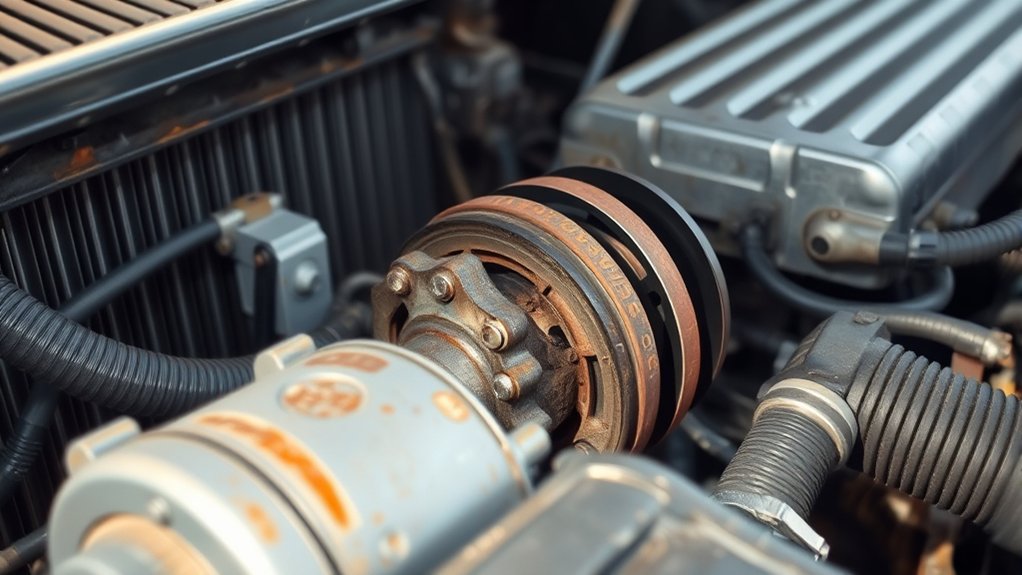
If your A/C compressor clutch doesn’t engage, the system won’t pressurize the refrigerant properly, which means your cooling won’t be up to par.
You might also notice some unusual noises—things like clunking or grinding—that often point to internal compressor damage.
Catching these signs early on can really help you diagnose compressor problems before they lead to a full system breakdown.
Compressor Clutch Issues
Since the compressor clutch controls the engagement of the compressor to regulate refrigerant flow, a faulty clutch often causes the A/C to blow warm air due to interrupted circulation. When the clutch fails to engage, the compressor won’t circulate refrigerant effectively, resulting in the A/C blowing hot air.
Compressor clutch issues commonly show up as a lack of cold air from the vents or the compressor not activating at all. You might notice the clutch components look burned or damaged if you take a close look.
Catching these issues early through regular maintenance can help prevent complete compressor failure.
If you find the A/C is blowing hot air and suspect a clutch problem, testing how the clutch operates and checking refrigerant flow can help pinpoint the issue.
Replacing a faulty clutch brings back proper compressor function and efficient cooling.
Unusual Noises and Symptoms
How can you tell when your car’s A/C compressor is failing? The compressor is responsible for circulating refrigerant, so signs of a failing compressor often include A/C blowing hot air and inconsistent A/C performance.
Listen for unusual noises like loud clunking or grinding, which indicate internal mechanical failure. If you hear hissing or bubbling, refrigerant leaks might be present. These leaks can compromise system pressure and cooling efficiency.
Another symptom is the compressor clutch failing to engage, causing the system to blow warm air despite correct settings.
Detecting these unusual noises and performance fluctuations early can prevent catastrophic mechanical failure.
Regular inspection and diagnostic testing of the compressor will help you identify these signs of a failing unit. This way, your A/C system operates efficiently and keeps your cabin comfortable.
How a Dirty Cabin Air Filter Causes Warm Air
When the cabin air filter becomes clogged with dust, pollen, and debris, it restricts airflow into your vehicle’s passenger compartment. This forces the A/C system to work harder to cool the air. A dirty cabin air filter directly reduces airflow, which hurts the A/C system’s ability to keep things cool.
Because of this restriction, you’ll notice warm air blowing from the vents. The system struggles to circulate enough cooled air to make a difference. It’s basically working overtime but not getting the job done.
To keep your A/C running at its best, you need to replace the cabin air filter regularly. Usually, that means every 12,000 to 15,000 miles. Skipping this maintenance doesn’t just make your car less comfortable—it can also put extra strain on the A/C system and cause other problems down the road.
How a Clogged Expansion Valve Affects AC Cooling
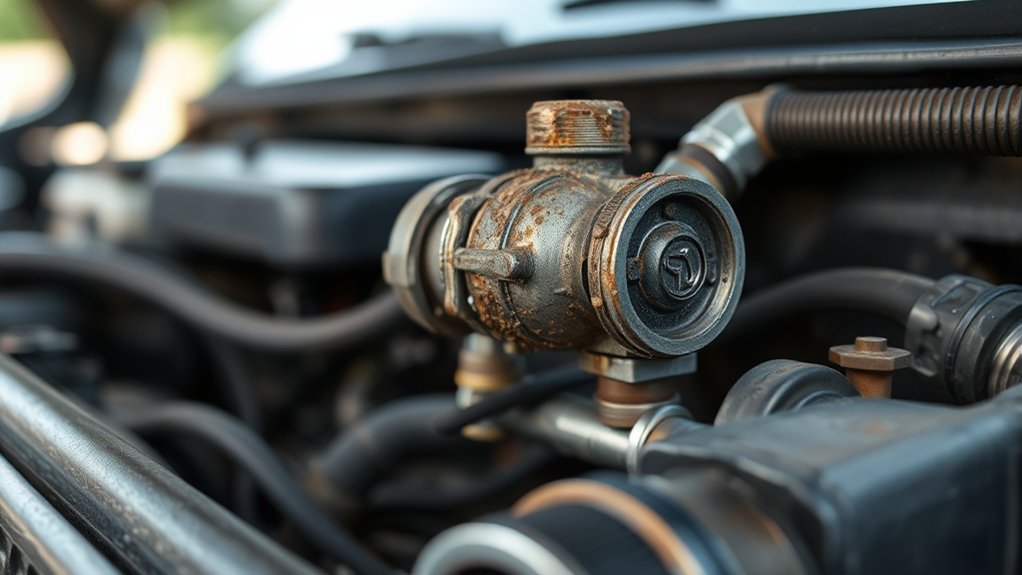
You’ll probably notice your AC blowing warm air and the airflow might feel a bit uneven if the expansion valve gets clogged. That’s because this valve controls how much refrigerant flows into the evaporator.
Keep an eye out for temperature changes that don’t quite make sense and a drop in cooling power—these are key signs the valve might be clogged.
Regular check-ups and cleaning or swapping out the valve when needed can really help keep things running smoothly and stop any damage to the compressor.
Expansion Valve Functionality
Since the expansion valve controls the refrigerant flow into the evaporator, any clogging directly disrupts the cooling cycle’s efficiency. When the expansion valve is clogged, it restricts the flow of refrigerant, causing insufficient cooling and warm air from your vents.
This restriction reduces AC performance, leading to inconsistent cabin temperatures and diminished comfort.
To maintain ideal function, you should schedule regular inspections that check for valve blockages and guarantee smooth refrigerant circulation. If your diagnostics confirm the expansion valve is clogged beyond cleaning or repair, replacing the expansion valve becomes necessary.
This replacement restores proper refrigerant flow, enabling the evaporator to absorb heat efficiently and return your car’s AC system to peak cooling performance.
It’s a straightforward fix that can make a big difference in how comfortable your ride feels.
Signs Of Valve Clogging
Although a clogged expansion valve primarily restricts refrigerant flow, you’ll often notice specific symptoms that signal this issue. Inefficient cooling and warm air blowing from your vents are key indicators.
You might also observe inconsistent cooling performance and a noticeable reduction in airflow. The restricted valve disrupts proper refrigerant circulation.
This imbalance can cause excess pressure buildup, increasing the risk of component failures within the AC system. To diagnose this, pay close attention to these signs during operation.
Regular inspections are essential to detect early clogging, preventing further damage and costly repairs. Addressing a clogged expansion valve promptly restores efficient cooling and maintains system integrity.
This way, your car’s air conditioner performs at its best.
Valve Maintenance Tips
Recognizing the impact of a clogged expansion valve on your car’s AC cooling sets the stage for effective maintenance strategies. A clogged expansion valve restricts refrigerant flow, reducing efficient cooling and causing warm air.
To maintain peak valve performance, focus on these key areas:
- Perform regular valve maintenance by inspecting the expansion valve for debris and contaminants that impede refrigerant circulation.
- Implement preventative maintenance by checking refrigerant levels and replacing clean filters to support the air conditioning system’s overall function.
- Address symptoms like inconsistent cabin temperatures promptly by cleaning or replacing the clogged expansion valve to restore efficient cooling.
Identifying Blower Motor Problems in Your Car AC
The blower motor plays a critical role in your car’s air conditioning system by forcing air through the vents and into the cabin. If you notice weak airflow, inconsistent air delivery, or no air at all, a faulty blower motor could be the culprit.
A malfunctioning blower motor can cause weak or no airflow through your car’s AC vents.
Listen for unusual noises or burning smells, which often signal electrical or mechanical issues within the blower motor assembly.
Begin your diagnosis by inspecting the blower motor resistor and checking for blown fuses that disrupt the circuit.
Clean any debris around the blower motor to prevent airflow restrictions and maintain cooling efficiency.
If these steps don’t resolve the problem, a blower motor replacement may be necessary to restore proper air conditioning performance and guarantee consistent airflow throughout your vehicle’s cabin.
How the Car AC Condenser Keeps Your Ride Cool
When your car’s AC system circulates refrigerant, the condenser cools it down after compression by releasing heat effectively. The condenser is positioned at the front of your vehicle and uses airflow generated while driving to dissipate heat. This transforms hot refrigerant into a cooler liquid state.
This process is critical for producing cold air inside your cabin.
Here’s how the condenser supports maximum cooling:
- It releases heat absorbed during compression, preventing overheating.
- It relies on unobstructed airflow; a clogged filter or debris can block heat dissipation.
- Damage or malfunction reduces cooling efficiency, causing A/C problems like warm air output.
Regular inspection and cleaning of the condenser guarantee your car’s air conditioning system maintains peak performance.
This helps prevent heat buildup and keeps your ride cool.
Electrical Problems That Make Your Car AC Blow Hot Air
If your car’s AC suddenly blows hot air, electrical problems might be the culprit behind the failure. Electrical issues like frayed wires or blown fuses can prevent the AC compressor from engaging, causing the A/C system to stop cooling and blow warm air instead.
Malfunctioning sensors also disrupt the system’s operation, leading to incorrect temperature regulation and reduced cooling efficiency. These faults interfere with signal transmission, which messes with the compressor activation.
To keep your AC working at its best, you need regular diagnostics to catch and fix electrical faults early. Checking and maintaining electrical connections ensures consistent power delivery to the compressor and sensors.
Ignoring these problems can mean the AC keeps blowing warm air for longer, which could lead to costlier repairs and even system failure.
Simple DIY Checks to Fix Your Car AC Blowing Hot Air
Start by checking your cabin air filter, since a clogged filter restricts airflow and causes warm air to blow from the vents.
Next, use a DIY gauge to measure refrigerant levels. Low or leaking refrigerant is a common cause of A/C blowing warm air.
Use a DIY gauge to check refrigerant levels, as low refrigerant often causes warm air from the A/C.
Then, inspect the blower motor by listening for weak airflow or unusual sounds, which indicate malfunction.
Furthermore, verify that the condenser isn’t clogged with debris, as this impairs heat dissipation.
Finally, check all electrical connections and fuses to confirm the compressor and fans receive proper power.
Follow this numeric checklist:
- Replace the cabin air filter if dirty.
- Test refrigerant levels with a DIY gauge.
- Inspect blower motor performance and clean the condenser.
These steps target common faults causing your car AC’s poor cooling.
When to Call a Professional for AC Repairs
Although DIY checks can resolve many common issues, you should call a professional when your car AC continues to blow warm air despite replacing the cabin air filter and inspecting the blower motor.
Skilled technicians use specialized equipment to detect refrigerant leaks and assess compressor health accurately.
If your AC is blowing warm due to hidden electrical problems, such as blown fuses or faulty sensors, professional help guarantees precise diagnostics and safe repairs.
Certified experts handle refrigerant safely during A/C repairs, preventing environmental damage and system malfunction.
Furthermore, scheduling regular maintenance checks with professionals can identify potential issues before they escalate, maintaining peak performance and reliability.
When your efforts don’t restore cool air, entrust your vehicle to skilled technicians for thorough evaluation and effective solutions.
Frequently Asked Questions
Can Using the Wrong Refrigerant Type Damage My Car’s AC System?
Yes, using the wrong refrigerant types can seriously damage your car’s AC system.
It disrupts system compatibility, causing performance issues like inadequate cooling and compressor strain. This mismatch leads to damage risks, including component wear and acid formation.
Besides harming your system, it also poses environmental impact concerns and increases cost implications due to repairs.
Always choose the correct refrigerant to guarantee peak function and avoid costly repair solutions down the line.
How Does Extreme Outside Temperature Affect My Car’s AC Performance?
Extreme outside temperature directly impacts your car’s AC performance by causing temperature fluctuations that increase refrigerant pressure and reduce cooling efficiency.
High humidity levels and intense sun exposure heat the cabin faster, which really challenges the system design and insulation quality.
Airflow restrictions make things worse by limiting heat dissipation.
To figure out what’s going on, check the refrigerant pressure and inspect how well the condenser is working.
Keeping your airflow at its best and making sure the system stays intact helps your AC handle extreme heat much better.
Does Leaving Windows Open Impact the Efficiency of the Car AC?
Yes, leaving windows open negatively impacts your car AC’s efficiency. It messes with window insulation and changes how air flows inside the cabin. This makes it harder to keep the temperature just right.
Open windows also bring in more humidity, which means your AC has to work extra hard to keep things comfortable. That lowers the cooling power and energy efficiency because your AC is fighting against outside heat and moisture.
For the best performance, keep your windows closed. Using the recirculation mode helps boost cooling and saves energy too.
Can Regular Car Maintenance Prevent Air Conditioner Issues?
Yes, regular car maintenance can prevent air conditioner issues by ensuring ideal cabin temperature control.
You should replace the air filter routinely and have refrigerant levels checked to avoid system leaks.
Also, inspect hoses for cracks and perform pressure checks to keep the compressor working well.
These diagnostics catch problems early, which helps keep your AC efficient and stops costly repairs down the road.
Consistent maintenance really safeguards your cooling system’s integrity and performance.
It’s a simple way to make sure your car stays comfortable all year long.
How Often Should I Have My Car AC System Professionally Serviced?
Think of your AC system lifespan like a clock ticking with seasonal maintenance. You should have your car’s AC professionally serviced at least once a year to catch refrigerant leaks, compressor functionality problems, and evaporator issues early.
Regular inspections also include cleaning or replacing cabin air filters, which improves airflow.
Following these common troubleshooting tips keeps your system efficient and prevents costly breakdowns.
This way, you ensure your cooling stays reliable through every heatwave.
Conclusion
When your car’s AC blows hot air, it can feel like a puzzle with missing pieces. Low refrigerant, a faulty compressor, or clogged filters all disrupt the cooling cycle.
By diagnosing these key components, you can restore the chill and get your comfort back. Simple checks often reveal what’s wrong.
But if the system keeps acting up, don’t hesitate to call a professional. Think of your AC like a finely tuned engine—precision fixes keep the cold breeze flowing smoothly.