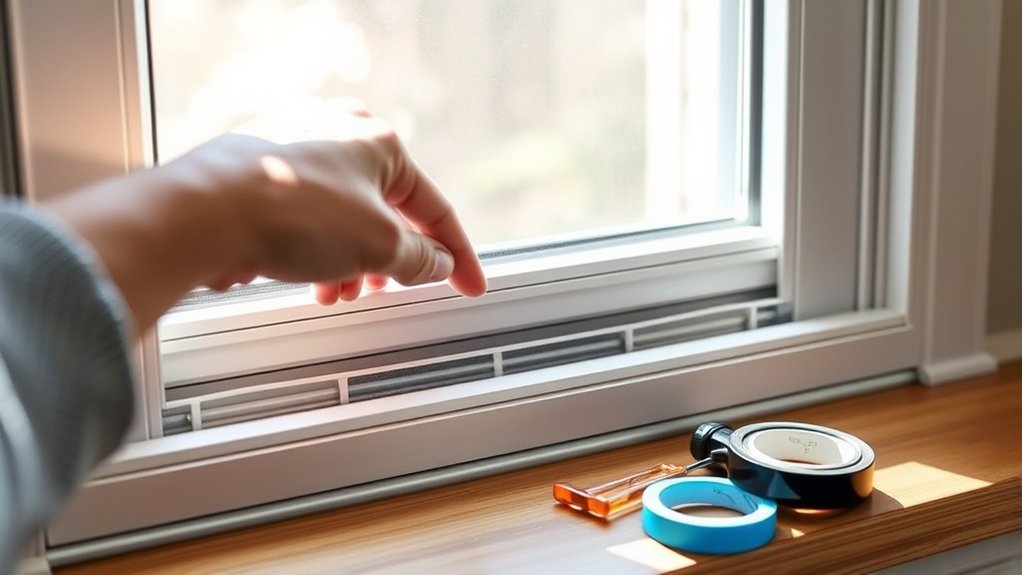
How Do You Seal a Window Air Conditioner in 5 Easy Steps?
To seal your window air conditioner in five easy steps, start by setting the unit properly in the frame. Tilt it outward for drainage and secure it tightly to prevent air leaks.
Next, clean and inspect the window area for cracks or gaps. Then, apply adhesive-backed weather stripping around the edges to block drafts.
After that, fit insulating foam into any remaining gaps. Finally, cover the unit during the off-season to keep moisture and cold air out.
Keep going to discover how each step boosts comfort and efficiency.
Set Your Window AC Properly in the Frame
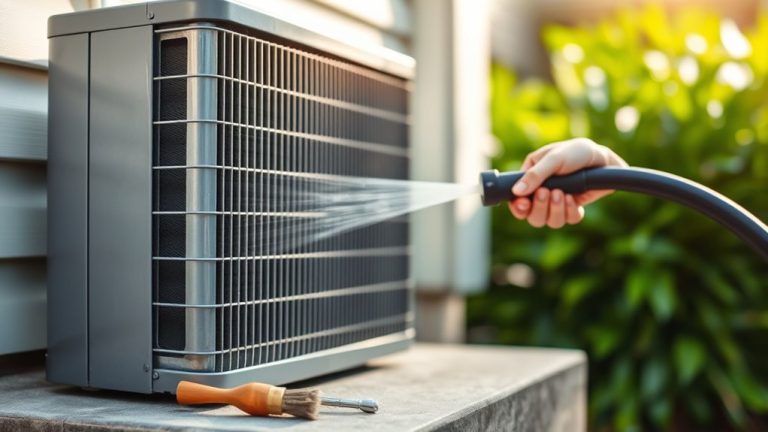
Before sealing your window air conditioner, start by carefully removing it from the frame so you can clean the foam filter and vacuum the exterior fins. This step boosts energy efficiency by guaranteeing proper airflow.
When you set the window air conditioner back in place, tilt it slightly outward to allow water drainage away from your house. Next, secure the AC unit firmly to the window frame using wood screws. This not only stabilizes the unit but also helps minimize air leaks around the edges.
Tilt your window AC outward for drainage, then secure it tightly to prevent leaks and ensure stability.
Double-check that the unit fits tightly within the frame; any gaps can reduce energy efficiency and let in unwanted drafts.
Taking these steps guarantees your window air conditioners operate effectively while keeping your space comfortable and energy costs down.
Clean and Inspect the Window Area Around Your AC
Remove your window AC unit to give the surrounding area a thorough cleaning. This helps guarantee the sealing materials will stick properly. Use a gentle, non-abrasive cleaner to get rid of dirt and grime from the window frame and AC exterior.
Next, inspect the window frame carefully for cracks or gaps that could reduce energy efficiency. Taking care of these issues now means a better seal later on.
Also, check the foam filter and vacuum the AC’s exterior fins to boost airflow and cooling performance.
Make sure the entire window area is completely dry before you apply any sealing materials. A dry, clean surface prevents mold growth and helps the sealing materials stick firmly.
This way, you get a stronger, more energy-efficient seal around your window air conditioner.
Apply Weather Stripping to Seal Gaps Around the AC
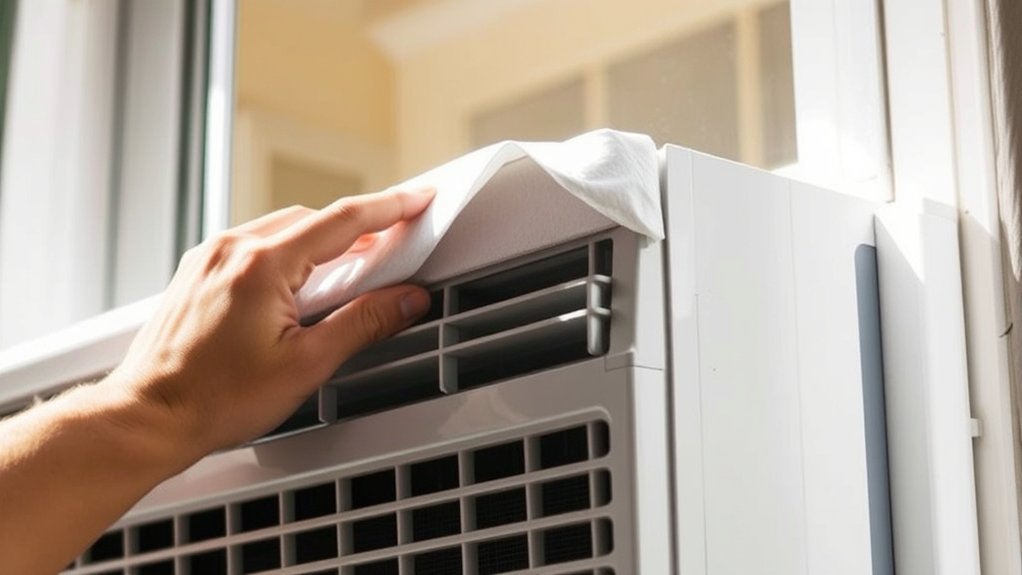
Seal the gaps around your window air conditioner by applying weather stripping, a flexible material designed to block air leaks and improve insulation.
Start by measuring the seams around the air conditioner units to make certain you cut the weather stripping to the right size. Choose adhesive-backed weather stripping for a quick, tool-free installation. Just press it firmly into place along the edges where gaps appear.
This simple step enhances insulation, preventing unwanted drafts and boosting energy efficiency, which lowers your cooling and heating costs.
Plus, well-installed weather stripping helps reduce outside noise, creating a quieter indoor environment.
Make it a habit to check and replace the weather stripping regularly to maintain peak performance throughout the year and keep your air conditioner units sealed effectively.
Apply Insulating Foam Around Window AC Edges
Enhance your window air conditioner’s efficiency by applying insulating foam around its edges to block air leaks and keep your indoor temperature steady.
First, measure the gaps around your window AC unit carefully to guarantee the foam fits snugly. Use a utility knife to cut the insulating foam to the right size, creating a tight seal that prevents drafts.
Position the foam firmly in place and secure it with adhesive or small screws to withstand weather changes. This step greatly improves energy efficiency by reducing unwanted airflow that forces your system to work harder.
Regularly inspect the foam for any signs of wear or damage, replacing it as needed to maintain peak performance and keep air leaks under control.
Doing this is a simple way to save on energy bills and keep your home more comfortable. Plus, it’s pretty easy to do yourself.
Just keep an eye on the foam every now and then to make sure it’s still doing its job well.
Cover Your AC to Prevent Off-Season Air Leaks
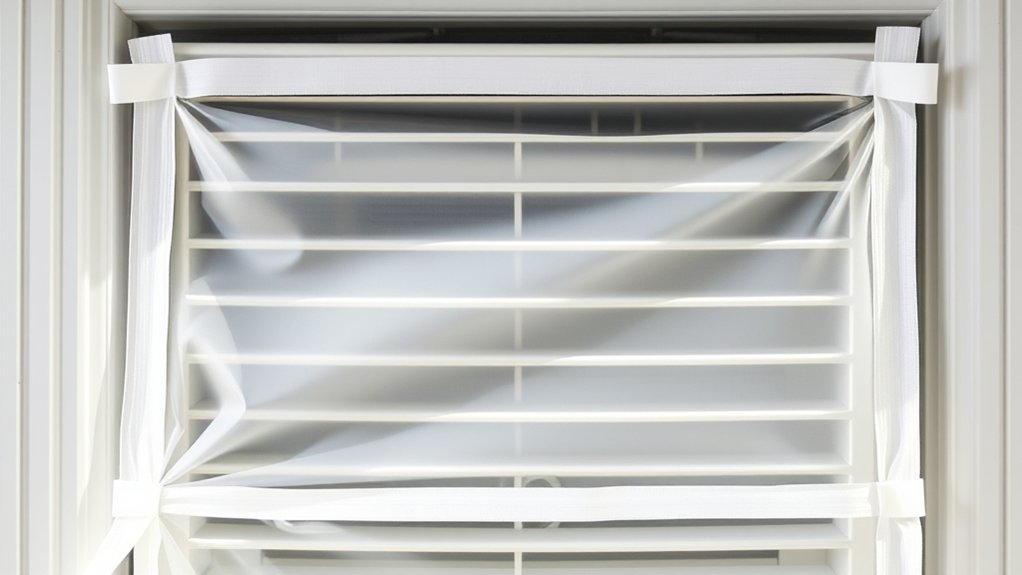
When you’re not using your window air conditioner, covering it properly helps prevent cold drafts from sneaking into your home and messing with your indoor comfort.
To cover your AC effectively, choose a custom-fit cover designed for your specific window units. This guarantees a snug fit that blocks moisture, debris, and drafts, helping prevent air leaks.
Select a custom-fit cover for your window AC to ensure a tight seal against moisture, debris, and drafts.
Using insulating materials like foam or thermal curtains can boost energy efficiency by minimizing heat loss around the unit.
Don’t forget to regularly inspect and clean the cover to keep it in good shape and maintain its sealing power.
By taking these steps, you’ll protect your AC from corrosion, extend its lifespan, and keep your home warmer and more energy-efficient during the off-season.
It’s a simple way to save money and keep your space cozy.
Frequently Asked Questions
What Type of Weather Stripping Is Best for Window Air Conditioners?
For window air conditioners, foam weather stripping types work best because they flexibly seal gaps, boosting energy efficiency.
When installing, choose self-adhesive foam for easy application and make sure the thickness doesn’t stop your window from closing properly.
Silicone strips offer durability if you want long-term performance.
It’s a good idea to check your weather stripping regularly for wear. That way, you can replace it as needed to keep drafts out and your cooling efficient throughout the season.
Can I Seal My Window AC Without Removing It Each Season?
Like a knight guarding a castle, you can protect your window AC without removing it each season. With regular seasonal maintenance, you’ll tackle air leakage by applying weatherstripping and using foam boards to fill gaps.
This DIY sealing boosts insulation efficiency and keeps drafts out. Just inspect seals often, caulk small openings, and use an insulating cover off-season.
It’s a practical way to maintain comfort without the hassle of uninstalling. Easy, right?
How Often Should I Replace the Insulating Foam Around My AC?
You should replace the insulating foam around your AC every 3-5 years, depending on its lifespan and how much weather it’s exposed to.
Keep an eye out for signs of wear like cracking or compression. Those are clear signals it’s time to swap out the foam.
Try to make it a habit to check the foam during your seasonal maintenance.
When you do replace it, use high-quality, weather-resistant foam. This helps ensure better insulation and longer-lasting results, keeping your unit energy-efficient and well protected.
Are There Any Tools Needed for Sealing a Window Air Conditioner?
You’ll definitely want a utility knife. It’s your best friend for slicing foam board or weatherstripping perfectly.
Don’t skip rope caulk either. It’s a lifesaver for plugging tiny air leaks.
For installation tips, use weatherstripping to seal edges and avoid common mistakes like leaving gaps.
Seasonal checks mean cleaning with gentle cleaners first, so everything sticks well.
These tools and maintenance advice keep your window AC sealed tight and efficient all year. You’ll notice the difference in no time!
Will Sealing My AC Help Reduce Energy Bills Significantly?
Yes, sealing your AC can lead to significant energy savings by preventing air leaks and improving insulation benefits.
When you properly seal gaps and add weatherstripping, you reduce the workload on your unit, lowering energy consumption and monthly costs.
A cost analysis shows this results in noticeable savings over time.
Plus, you’ll enjoy comfort improvement through more consistent indoor temperatures.
This makes your home more efficient and helps your AC last longer.
Conclusion
Remember, “a stitch in time saves nine.” By properly sealing your window air conditioner now, you’ll avoid drafts, save energy, and keep your home comfortable all year round.
Just set your AC securely, clean the area, apply weather stripping, use insulating foam, and cover it during the off-season. These simple steps prevent air leaks and protect your unit, making your efforts well worth it.
Take action today and enjoy a cozy, efficient home!