5 Tips to Make Your Car Air Conditioner Colder
To make your car’s AC colder, first check and recharge the refrigerant if levels are low, as this directly affects cooling. Clean the condenser fins and replace the cabin air filter regularly to maintain airflow and heat exchange efficiency.
Use the recirculation setting after expelling hot air with fresh air mode to cool recycled air faster. Park in shaded spots and use sunshades to reduce interior heat buildup.
These steps improve cooling performance, and there’s more to optimizing your system. Just keep these tips in mind, and you’ll notice a difference in no time!
Why Your Car’s AC Isn’t Cold Enough
If your car’s AC isn’t blowing cold air, it’s often due to low refrigerant levels caused by leaks. These leaks reduce airflow and result in warm air coming from the vents. To figure this out, you should check for leaks in the AC system. Even small punctures can mess with how well your AC works.
Also, take a look at the cabin air filter. When it’s clogged with dirt, it restricts airflow and makes cooling less effective.
The AC condenser, which is usually mounted in front of the radiator, can get clogged with dirt too. This messes up heat exchange and can cause your AC to blow warm air.
Finally, a failing AC compressor might cause inconsistent cooling or strange noises. That’s a sign there could be mechanical issues.
Doing regular checks on these parts helps keep your AC running great and prevents breakdowns when it’s hot outside.
Check AC Refrigerant Levels and Recharge If Needed
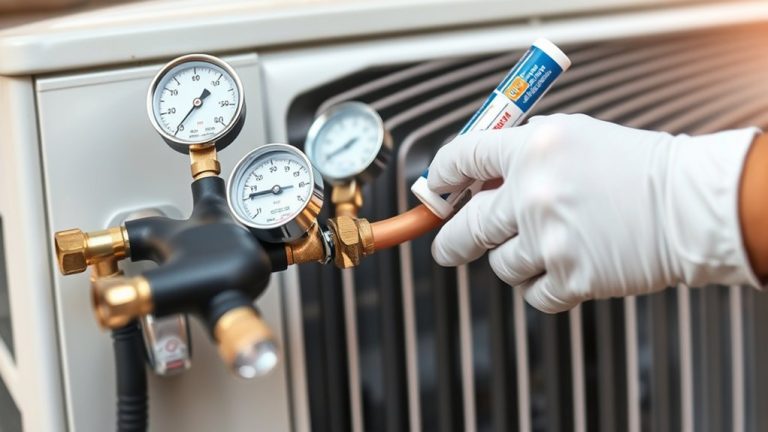
Because refrigerant levels naturally decline over time due to minor seal leaks, you should regularly check AC refrigerant levels to guarantee your car’s air conditioning system delivers cold air efficiently.
Low refrigerant levels often cause weak airflow and reduced cooling performance. When you notice the AC isn’t as cold, it’s time to recharge the system.
While DIY recharge kits offer convenience for topping off refrigerant, they don’t address underlying leaks.
Professional repair shops can accurately detect leaks and recharge your system, ensuring a functioning air conditioning system that lasts longer.
Prioritize leaks and recharge services over simple refills to prevent recurring issues.
Routine monitoring and timely recharging maintain peak cooling, helping your AC perform reliably in hot conditions.
It’s worth staying on top of these checks so you don’t get caught in the heat without cold air when you need it most.
Clean Your AC Condenser and Replace the Cabin Air Filter
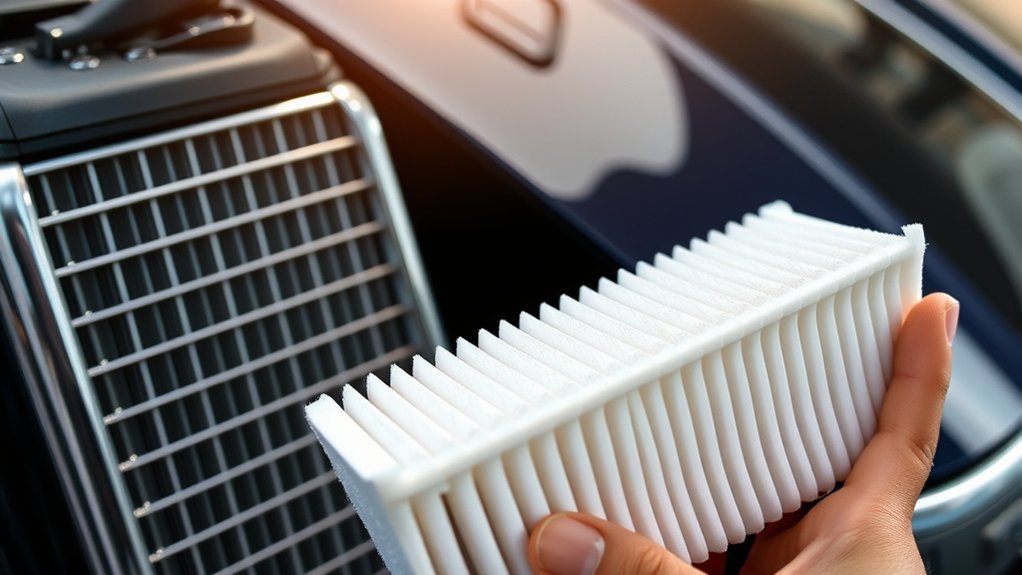
Maintain your car’s air conditioning efficiency by regularly cleaning the AC condenser and replacing the cabin air filter. Dirt and debris reduce ideal heat exchange by obstructing airflow through the condenser fins. Use compressed air or a gentle water spray to clean your AC condenser effectively.
A clogged cabin air filter restricts airflow, which decreases cooled air circulation and overall AC performance. Replace the cabin air filter every 12,000 to 15,000 miles for best results. It’s a good idea to perform regular inspections to catch any buildup or damage early.
| Component | Maintenance Action | Effect on AC System |
|---|---|---|
| AC Condenser | Clean condenser fins | Maintains ideal heat exchange |
| Cabin Air Filter | Replace regularly | Guarantees proper airflow |
| Airflow | Clear obstructions | Enhances cooled air delivery |
| Clogged Filter | Prevent | Avoids reduced AC performance |
| Inspections | Conduct frequently | Detects issues early |
Use the Recirculation Setting to Boost Cooling
After ensuring your AC condenser is clean and the cabin air filter is replaced, enhancing the airflow inside your vehicle becomes the next priority.
Start by setting your AC system to fresh air mode to expel hot air trapped inside. After a few minutes, switch to the recirculation setting to boost cooling performance.
This mode recycles already cooled air instead of drawing in warmer outside air, allowing the system to cool the cabin more efficiently. By preventing hot air from re-entering, the recirculation setting reduces the workload on the compressor and the compressed refrigerant. That helps keep your car cooler faster.
Using this setting often during hot weather improves overall comfort and shortens the time needed for your AC to reach peak cooling.
It’s a simple trick that really makes a difference when the heat is on. Give it a try next time you’re driving in the sun!
Park in Shade and Use Sunshades to Help Your Car’s AC Cool Better

Selecting a shaded parking spot can lower your car’s interior temperature by several degrees. This allows the air conditioner to cool more efficiently right from the start. When you park in shade, you reduce the initial heat load, which helps the car AC cool the refrigerant faster and keep performing at its best.
Using sunshades further decreases cabin temperatures by reflecting sunlight. This prevents the compressor from overworking. Remember, the compressor is the heart of the AC system.
This combination helps avoid strain caused by dirty or clogged components that happen when temperatures get too high.
Plus, pre-cooling your car by opening the windows before turning on the AC gets rid of trapped heat. This makes the cooling work even better.
Together, these steps boost your AC’s ability to cool effectively, extend its lifespan, and keep the cabin comfortable even on hot days.
Frequently Asked Questions
How Often Should I Service My Car’s Air Conditioning System?
You should service your car’s AC system at least once a year to check refrigerant levels, cabin air filters, and perform a compressor inspection.
Make sure the condenser is clean and do a leak detection every time you get it serviced.
If you use the AC a lot or live in extreme climates, think about servicing it every six months instead.
Running system diagnostics and temperature calibration helps keep the cooling efficiency at its best.
This way, you can avoid problems and keep your AC running smoothly and reliably.
It’s a simple step that makes a big difference in comfort and performance.
Can Using the AC Affect My Car’s Fuel Efficiency?
Yes, using the AC affects your car’s fuel efficiency because it increases fuel consumption by adding extra load to the engine.
But don’t worry, you can minimize this impact by using proper AC settings and controlling the temperature carefully.
Regular vehicle maintenance helps a lot too. Make sure to check refrigerant levels and keep the heat exchange system working efficiently.
This supports engine performance and reduces strain.
Try to adjust your driving habits as well. For example, using recirculation mode and avoiding max AC at low speeds can help you balance comfort with better fuel economy.
It’s all about finding the right balance!
Is It Safe to Use Aftermarket AC Coolants in My Car?
It’s generally risky to use aftermarket coolant options without first checking if they’re compatible with your car’s AC system. There are potential risks like system damage and voiding your warranty.
Some people do share positive experiences, but manufacturers usually recommend sticking with the original refrigerants. They do this because original refrigerants offer the best temperature control and overall performance.
Plus, it’s worth thinking about the environmental impact before you decide to switch. You should also weigh the cost-effectiveness of using aftermarket coolants.
The best advice? Always check your owner’s manual or talk to a qualified technician. This way, you can be sure you’re using something safe and effective without risking your car’s AC system.
How Can I Reduce Humidity Inside My Car While Using AC?
To reduce humidity inside your car while using AC, start with humidity control by activating recirculation mode. This limits moist outside air from coming in.
Make sure your airflow is adjusted properly by positioning the vents to direct air efficiently.
Replace your cabin filter regularly to prevent moisture buildup. Also, consider window tinting and try to park in the shade to keep temperatures down. These little steps can really help.
Finally, set your temperature settings moderately. Let the AC run briefly before it cools fully. This helps optimize moisture removal and keeps the inside comfortable.
What Are Signs of a Failing AC Compressor?
You’ll notice AC noise issues like grinding or squealing when your compressor clutch problems arise.
Temperature fluctuations and unusual vibrations signal compressor replacement signs. Check for refrigerant leaks around hoses and the compressor; these leaks often accompany condenser malfunction symptoms.
If the AC system cycles irregularly or cooling is inconsistent, it’s time to inspect the compressor.
Follow maintenance tips such as regular refrigerant checks to avoid costly failures. It’s always better to catch these problems early before they get worse.
Conclusion
If your car’s AC isn’t cooling properly, addressing refrigerant levels and maintaining a clean condenser are essential steps. Using the recirculation setting can lower cabin temperature by up to 10°F faster. Parking in shade and using sunshades also reduce heat buildup, easing the AC’s workload.
By following these practical tips, you’ll improve cooling efficiency and comfort during hot drives. This way, your car’s AC performs at its best when you need it most.