How to Do You Put Freon in an Air Conditioner in 3 Easy Steps
To put Freon in your air conditioner, first locate the low-pressure port. It’s usually a larger copper line with a blue cap. Then, turn off the system and make sure to wear safety glasses.
Next, attach the blue gauge hose to the low-pressure port and the red one to the high-pressure port. After that, turn the AC back on to let the pressures stabilize.
Finally, open the low-pressure valve slowly to add Freon. Keep an eye on the gauges closely to avoid overcharging. Stick around for more tips on keeping your system safe and running efficiently.
Locate and Prepare the Low-Pressure Freon Port on Your AC Unit
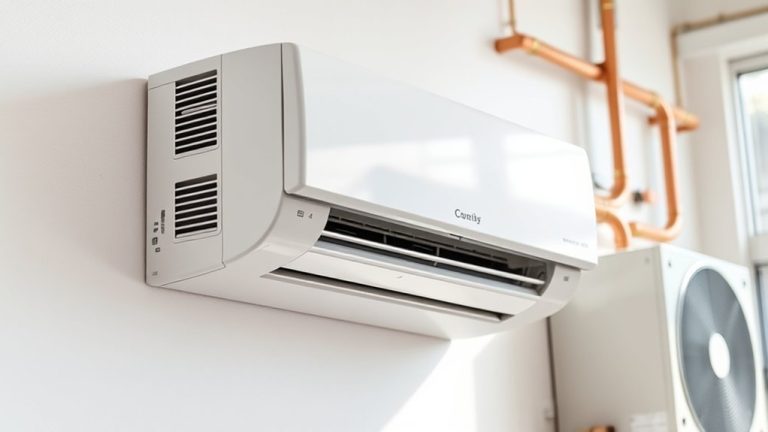
To begin, locate the low-pressure Freon port on your AC unit. It’s usually found on the larger diameter copper line between the compressor and evaporator coil, often marked with an “L” or a blue cap.
Before you proceed, turn the AC off at both the thermostat and circuit breaker to guarantee safety. Put on safety glasses to protect your eyes.
Next, clean the area around the low-pressure port with a cloth to avoid dirt contaminating the system when you remove the port cap. This port is essential for checking refrigerant levels and adding refrigerant as needed.
If you notice irregular pressure readings on your pressure gauge, it might signal necessary repairs.
When in doubt, consult an HVAC professional to handle complex issues safely and effectively.
Attach Refrigerant Gauges and Monitor Freon Pressure Safely
Start by ensuring your AC unit is completely off at both the thermostat and circuit breaker to eliminate any electrical hazards.
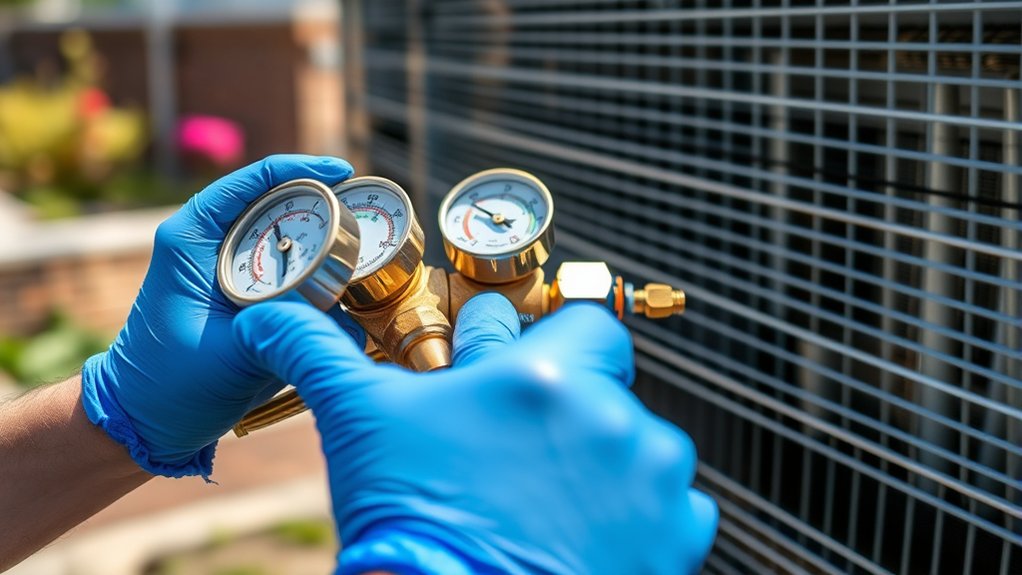
Attach refrigerant gauges carefully: connect the blue hose to the low-pressure valve and the red hose to the high-pressure valve, keeping the center valve open for refrigerant feed.
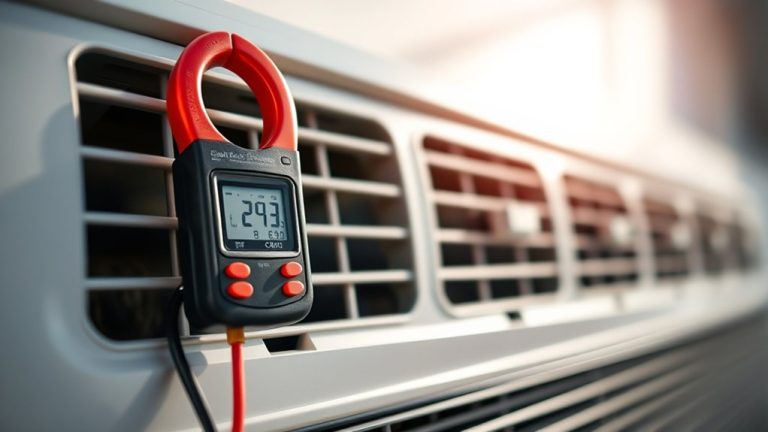
After turning the AC system back on, wait 10-15 minutes to stabilize pressure. Monitor freon pressure closely; typical low side readings range from 25-30 psi, while the high side should be between 200-250 psi, varying by refrigerant type and conditions.
These pressure readings help identify a low refrigerant level or other issues.
For safety, once done, close both valves before you disconnect gauge hoses in reverse order.
If you’re ever unsure, always consult a qualified HVAC professional for accurate diagnosis and handling.
Add Freon Gradually to Reach the Recommended Pressure Level
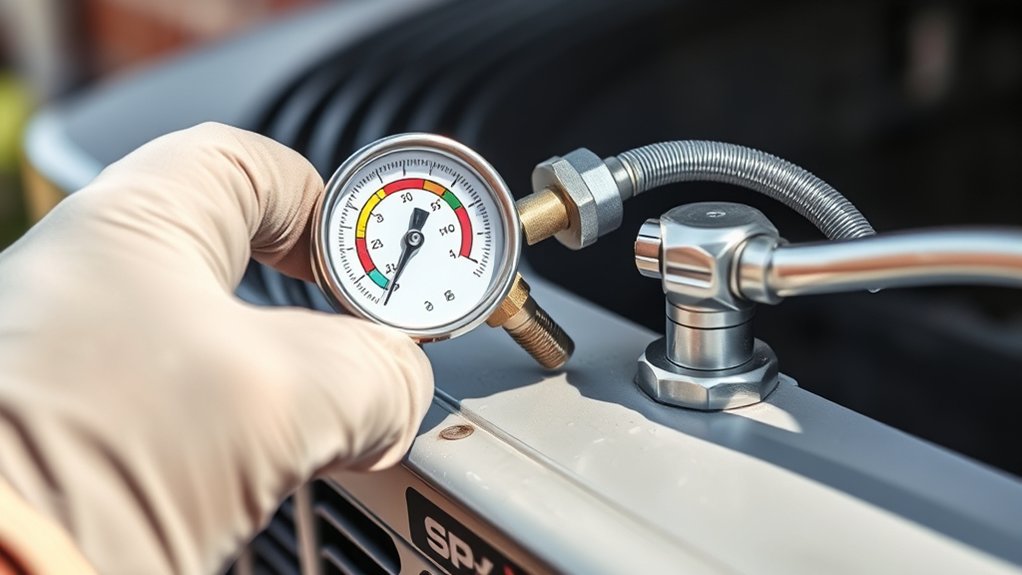
Once your gauges show stabilized pressure readings and the system is running, carefully open the low-pressure valve to introduce Freon incrementally. As the owner, follow these steps to reach the recommended pressure level precisely:
First, connect the refrigerant gauges properly: the blue hose on the low-pressure valve and the red hose on the high-pressure valve. Make sure the system has been running for 10 to 15 minutes beforehand.
Next, gradually add refrigerant by slowly opening the low-pressure valve. Keep an eye on the gauge continuously to avoid overcharging.
Aim for the target subcooling temperature indicated on the outdoor unit’s rating plate.
Once you reach that, close the valves and disconnect the hoses securely to prevent leaks.
This careful monitoring guarantees peak system performance and safety throughout the process.
Frequently Asked Questions
What Type of Freon Is Compatible With My Air Conditioner?
You’ll find your compatible Freon type by checking manufacturer recommendations on your air conditioner model’s label or manual.
Older units often require R-22, but because of the R-22 phaseout, eco-friendly alternatives like R-410A are now standard in newer models.
Always double-check refrigerant compatibility to keep your system running efficiently and to stay within HVAC regulations.
It’s best to avoid DIY refrigerant kits unless you’re confident in what you’re doing.
Using the right type helps prevent damage or warranty issues.
Plus, following some troubleshooting tips can save you time and hassle down the road.
Can I Add Freon Myself or Should I Hire a Professional?
You shouldn’t attempt a Freon refill yourself. Over 60% of DIY attempts end up with leaks or damage. Handling refrigerants needs special equipment and knowing which systems are compatible.
Plus, there are legal rules you have to follow.
Safety is a big deal here. Without the right precautions, you could get hurt or cause environmental damage. Hiring a professional means they can troubleshoot properly and avoid costly repairs.
They also handle the environmental impact responsibly.
Sure, there are DIY tips out there, but the mistakes you might make can cost way more than hiring a pro.
How Often Should I Check My Air Conditioner’s Freon Levels?
You should perform seasonal checks on your air conditioner’s Freon levels, ideally at least once a year.
Regular maintenance tips include monitoring for Freon leaks, which can cause compressor issues and reduce energy efficiency. DIY troubleshooting can help spot temperature control problems early.
Considering refrigerant options and cost factors, timely checks extend system lifespan and prevent costly repairs.
Keeping Freon at ideal levels guarantees your unit runs efficiently and maintains proper cooling performance. It’s a simple step that can save you a lot of hassle down the road.
What Are the Signs My Air Conditioner Is Low on Freon?
If your AC sounds like a jet engine and the airflow struggles like a weak whisper, you’re likely low on Freon.
Temperature fluctuations and inefficient cooling become the norm, with ice buildup glaring on coils. Strange noises and frequent cycling stress the compressor.
Humidity levels spike indoors, making the air feel uncomfortable. Watch for refrigerant leaks, like oily spots or water pooling around your unit.
And get ready for those high energy bills to start rolling in.
All these signs point to one thing—you probably need to get your Freon refilled soon.
Don’t wait too long, or it could lead to bigger problems with your air conditioner.
Is It Safe to Release Freon Into the Atmosphere?
No, it’s not safe to release Freon into the atmosphere. Freon regulations strictly prohibit venting because its chemical properties cause ozone depletion and contribute to global warming.
So, it’s really important to follow industry standards for leakage prevention and HVAC safety.
Whenever possible, use refrigerant alternatives that are less harmful. Improper release of Freon leads to serious atmospheric consequences and environmental damage.
Always rely on certified professionals to handle refrigerants. They ensure compliance and help minimize harm to the environment.
It’s better to be safe and responsible when dealing with these chemicals.
Conclusion
Now that you know how to safely locate the low-pressure port, connect your gauges, and add Freon gradually, you’re almost there. But before you finish, double-check those pressure readings carefully. Too much or too little can cause serious damage.
Ready to power up your AC and feel the cool breeze? Just one last step, and you’ll see how precise Freon charging makes all the difference in performance and efficiency.