What Is a Condenser in an Air Conditioner and How to Maintain It
An AC condenser is the outdoor unit that cools and compresses refrigerant gas into liquid. It releases indoor heat outside to keep your home comfortable.
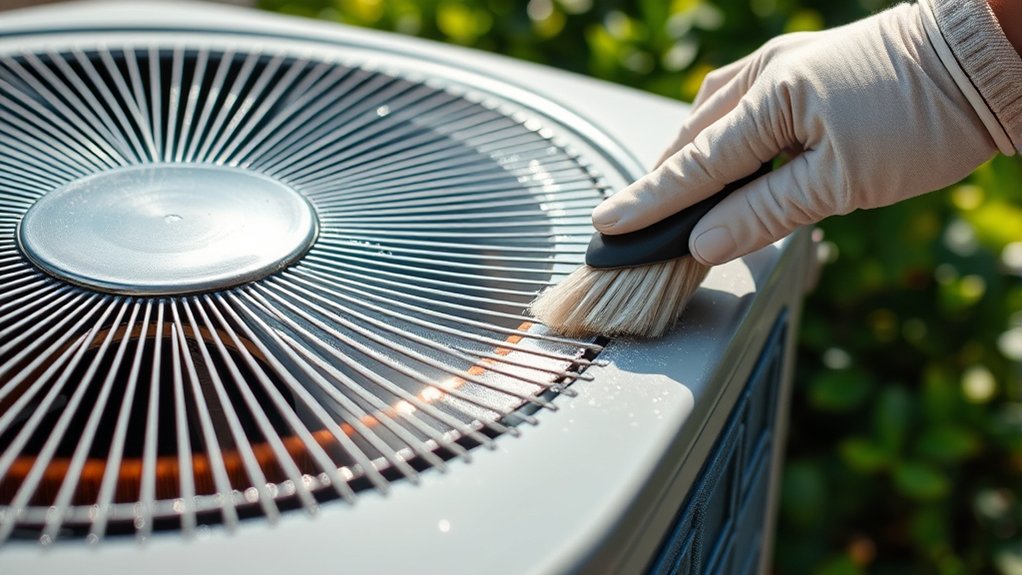
To maintain it, start by turning off the power. Then, clear any debris around the unit and clean the coils gently with a coil cleaner, not a pressure washer.
Make sure there’s good airflow by trimming nearby vegetation. Keep an eye out for warning signs like warm air, noises, or leaks because these mean it needs professional attention.
Knowing these basics helps you keep your system efficient and reliable. It’s easier than you might think!
What Is an AC Condenser and Why It Matters
The AC condenser plays an essential role in your air conditioning system by releasing the heat absorbed from indoor air to the outside environment.
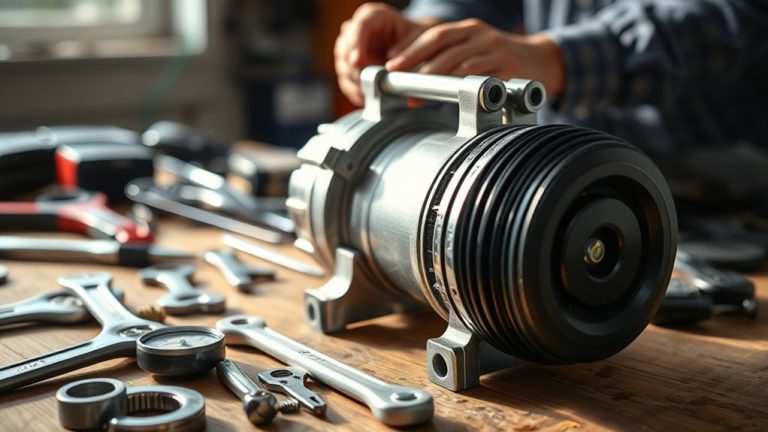
As the outdoor component, the AC condenser contains vital parts like the condenser coil, compressor, fan, and refrigerant lines, which collectively facilitate the cooling process.
It converts refrigerant gas back into liquid, enabling continuous heat transfer and efficient cooling. If your condenser isn’t working properly, it can reduce system performance, increase energy consumption, and raise utility costs.
To maintain efficiency, you need to guarantee the condenser coil is clean and airflow around the unit is unobstructed.
Recognizing early signs of failure, such as warm air from vents, unusual noises, or refrigerant leaks, helps you avoid costly repairs and extend your condenser’s lifespan.
How an AC Condenser Cools Your Home
When heated refrigerant gas reaches your AC condenser, it undergoes pressurization and cooling. It transforms back into a liquid by releasing the absorbed indoor heat into the outdoor air.
Heated refrigerant gas cools and pressurizes in the condenser, releasing indoor heat outdoors.
This heat transfer happens mainly through the condenser coils, which have a large surface area for effective heat dissipation.
Fans blow outdoor air across these coils, speeding up the cooling process and keeping the refrigerant at the right temperature. This step is really important for the closed-loop refrigeration cycle to work well. It ensures your AC keeps removing indoor heat continuously.
To keep your system running efficiently, focus on a few key things. Keep the condenser coils clean so they can transfer heat properly. Make sure the airflow from outdoor fans isn’t blocked.
And don’t forget to schedule regular maintenance. This helps prevent performance drops and keeps your energy use in check.
What’s Inside an AC Condenser Unit?
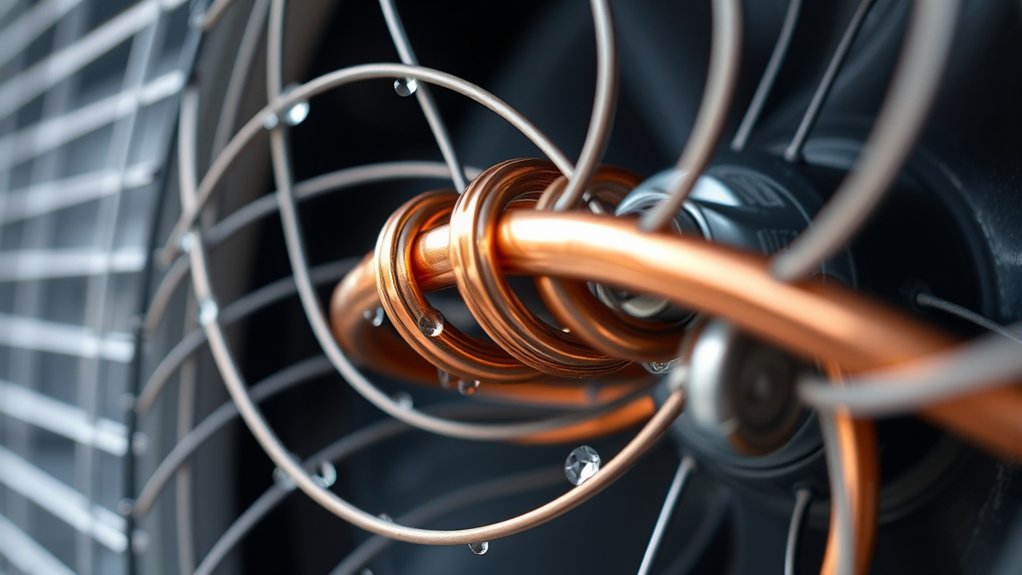
Inside the AC condenser unit, you’ll find some key components working together. There’s the compressor, the condenser coil, and the fan — all playing important roles in managing refrigerant flow and heat exchange.
The compressor’s job is to raise the refrigerant’s pressure and temperature. Once that’s done, the refrigerant moves through the coil.
Meanwhile, the fan blows air over the coil to cool it down efficiently.
Knowing what these parts do gives you a better idea of how the condenser keeps your system cooling smoothly. It’s pretty neat how everything works together to maintain performance.
Core Components Overview
Although you mightn’t see them at first glance, several critical components work together within an AC condenser unit to facilitate efficient cooling.
At the heart is the condenser coil, a network of tubes where hot refrigerant gas releases heat and condenses into a liquid.
The outdoor fan plays an essential role by blowing air over the coil, dissipating heat to the surrounding environment.
Meanwhile, the compressor raises the refrigerant’s pressure and temperature, enabling effective heat transfer within the condenser coil.
Key components include:
- Condenser coil: Facilitates heat exchange, cooling refrigerant gas.
- Outdoor fan: Enhances heat dissipation by circulating air.
- Compressor: Pressurizes refrigerant for efficient cooling.
Together, these parts maintain your AC’s cooling performance reliably.
It’s a team effort that keeps your space comfortable all summer long.
Refrigerant Flow Path
The refrigerant’s journey within the AC condenser unit begins as high-pressure gas enters from the compressor. It then flows through the condenser coil, a network designed to maximize surface area for effective heat exchange.
As outdoor air passes over these coils, the refrigerant releases its heat, causing it to cool and condense from a gas into a liquid. This refrigerant flow path is critical for transferring heat from inside your home to the outside environment.
Once condensed, the liquid refrigerant exits the condenser unit via refrigerant lines, heading toward the expansion valve. There, its pressure drops before entering the evaporator coil.
Maintaining this continuous, closed-loop refrigerant flow path guarantees your air conditioner operates efficiently by cycling the refrigerant between gas and liquid states effectively. It’s what keeps your home cool and comfortable all summer long.
Fan and Coil Roles
A key component of an AC condenser unit is the fan, which actively blows outdoor air over the condenser coils to enhance heat dissipation.
The coils, made of metal tubing, facilitate heat exchange by allowing hot refrigerant gas to release heat and condense back into a liquid. Proper airflow from the fan is essential; any obstruction reduces heat dissipation efficiency and increases energy consumption.
Together, the fan and coils operate in a closed-loop system that expels heat effectively, maintaining indoor comfort.
To keep your condenser unit running efficiently, focus on ensuring the fan is unobstructed and spins freely.
Also, cleaning the condenser coils regularly helps prevent buildup. It’s a good idea to inspect both components for damage or wear during maintenance.
Doing these things preserves heat dissipation and extends the unit’s lifespan.
Signs Your AC Condenser Needs Maintenance
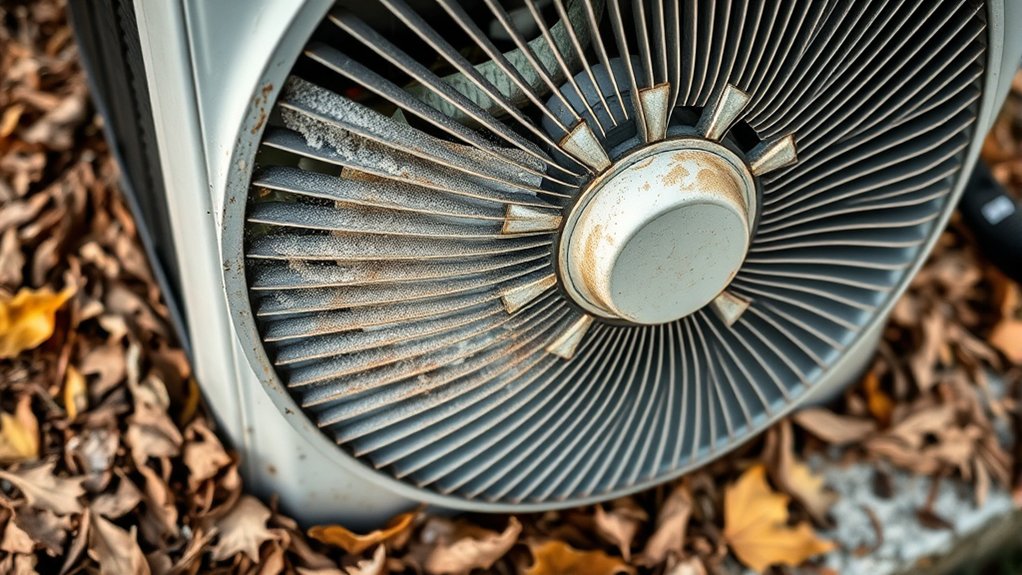
If your AC is blowing warm air or making unusual noises, it’s a good sign your condenser probably needs some maintenance.
You might also notice it cycling on and off more frequently or see a jump in your energy bills—both of which point to performance issues.
Catching these warning signs early can save you from costly repairs down the road and keeps your system running efficiently.
Warning Signs
When your AC unit blows warm air even though it’s set to cool, it usually means the condenser is failing and needs immediate maintenance. Catching these early warning signs can save you from costly repairs later on and keep your energy bills down.
The AC condenser is super important because it handles heat exchange. So, if something goes wrong with it, your whole system’s performance takes a hit.
Keep an eye out for these warning signs:
- Unusual noises like grinding or rattling from the outdoor unit. This often points to mechanical problems.
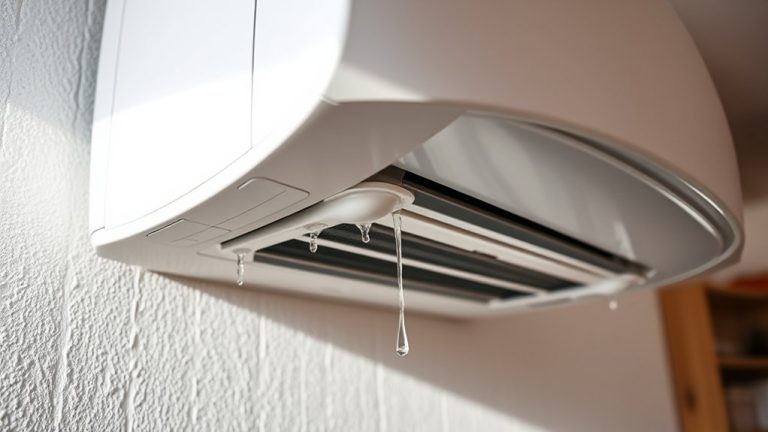
- Visible leaks or corrosion on the condenser coils. That’s a sign you might be losing refrigerant or that the coils are deteriorating.
- The AC unit turning on and off frequently. This usually means the condenser isn’t working efficiently and your energy use is going up.
If you deal with these issues quickly, you’ll make sure your AC condenser runs smoothly. That means lower energy costs and a longer life for your system.
Performance Issues
Noticing warning signs like warm air or unusual noises often means your AC condenser is already under strain.
Performance issues such as the condenser blowing warm air indicate it’s failing to release heat effectively, which compromises cooling efficiency. Mechanical problems often cause grinding or rattling sounds from the outdoor unit, signaling worn or damaged components.
If your AC cycles on and off more frequently, it suggests inefficiencies within the condenser or possible refrigerant issues.
Visible refrigerant leaks, marked by oil spots or hissing, demand immediate repair to prevent system failure. Also, rising energy bills without increased usage often point to a struggling condenser working harder to maintain performance.
Addressing these performance issues promptly guarantees your system runs efficiently and helps you avoid costly breakdowns.
Detecting Refrigerant Leaks and Other AC Condenser Problems
Although refrigerant leaks can be subtle, you can detect them by paying attention to specific signs such as warm air blowing from your vents or a hissing sound near the condenser unit. These indicators suggest your AC condenser is losing efficiency and refrigerant, which compromises cooling performance.
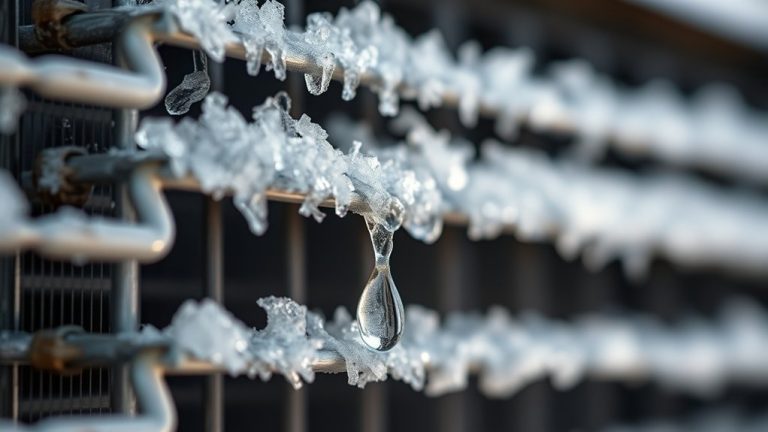
To identify issues promptly, monitor these key symptoms: unusual hissing noises around the condenser, signaling escaping refrigerant gas; warm air blowing from indoor vents despite the system running; and visible oil spots or frost accumulation on refrigerant lines indicating leaks.
Watch for hissing sounds, warm indoor air, and oil or frost on refrigerant lines to spot leaks early.
Low refrigerant levels strain the compressor, risking damage and costly repairs.
It’s a good idea to get regular professional inspections and refrigerant level checks. This helps keep your AC condenser running at its best and prevents more problems down the road.
How to Clean Your AC Condenser
Start by turning off the power to your AC condenser to guarantee safety before beginning any cleaning.
Clear away debris and vegetation around the unit to maintain proper airflow.
Next, apply a commercial coil cleaner to clean the coils, following the manufacturer’s instructions carefully.
Avoid using a high-pressure hose, as it can damage the delicate fins. Use a soft brush to gently remove dirt and debris from the condenser fins, taking care not to bend or damage them.
Ensuring the condenser is free of obstructions improves efficiency and prevents overheating.
Regular cleaning maintains ideal heat exchange and prolongs the unit’s lifespan.
Seasonal Protection and Leveling Tips for Your AC Condenser
After cleaning your AC condenser, it’s important to keep it stable and protected through the seasons to ensure it runs efficiently and lasts longer.
Seasonal maintenance means regularly checking the concrete pad to make sure it’s level. If it’s not, improper drainage can happen, which might cause damage.
Grab a carpenter’s level and add some gravel if you need to adjust it.
When fall and winter come around, use a commercial cover or plastic sheeting to protect the unit from debris and harsh weather.
It’s also a good idea to clear away any grass, weeds, or vines around the condenser. This helps maintain proper airflow and prevents anything from blocking it, which can lower efficiency.
Check and adjust condenser pad leveling to prevent damage
Cover the unit during colder months for protection
Maintain clear surroundings for peak airflow and performance
How to Know When to Call a Pro for Your AC Condenser
Anyone managing an AC condenser should recognize when professional intervention is necessary to avoid costly damage. Key signs include warm air output, unusual noises, visible refrigerant leaks, frequent cycling, and unexplained increases in energy bills.
If you notice any of these, don’t wait. Prompt professional evaluation prevents further deterioration and keeps your system running efficiently.
| Symptom | Possible Cause | Recommended Action |
|---|---|---|
| Warm air output | Failing condenser | Call a technician |
| Grinding or rattling | Mechanical issue | Professional evaluation |
| Oil spots or hissing | Refrigerant leak | Immediate service required |
| Rapid cycling | Inefficient condenser | Expert inspection |
| Increased energy bills | Reduced efficiency | Schedule professional check |
Keeping an eye on these signs helps make sure your AC condenser works at its best. This way, you protect your system’s lifespan and keep energy costs down.
Frequently Asked Questions
Can I Install an AC Condenser Myself Without Professional Help?
You technically can install an AC condenser yourself, but it’s risky.
DIY installation tips emphasize avoiding common installation mistakes like improper refrigerant handling and incorrect electrical connections. You’ll need specialized tools for installation, including refrigerant gauges and vacuum pumps.
Without professional experience, you risk voiding warranties, damaging the system, or reducing efficiency.
It’s best to hire a certified technician to guarantee safe, compliant, and efficient condenser installation. Trust me, it’s worth the peace of mind!
How Long Does an AC Condenser Typically Last Before Replacement?
An AC condenser typically lasts 10 to 15 years. Its lifespan depends on several factors like environmental conditions, how often you use it, and how well you maintain it.
Keep an eye out for signs that it might be time for a replacement. These include frequent breakdowns, reduced cooling efficiency, or visible corrosion.
To help your condenser last longer, try cleaning the coils regularly and make sure there’s proper airflow around the unit.
Also, investing in a high-quality, energy-efficient model can really make a difference in maximizing how long your condenser works well.
What Is the Average Cost to Repair an AC Condenser?
Wondering about repair costs for your AC condenser? On average, repairs range from $300 to $1,200, depending on the type of condenser and how bad the damage is.
Common fixes include things like refrigerant leaks or replacing the fan motor.
To keep costs low, try following some maintenance tips like cleaning the coils regularly and checking for leaks.
Proper upkeep doesn’t just extend your unit’s life—it also helps avoid surprise expenses.
That way, it’s easier to manage both your air conditioner’s performance and your repair budget.
Are There Energy-Efficient AC Condensers Available on the Market?
Yes, you’ll find energy-efficient AC condensers boasting high energy ratings, often exceeding SEER 20.
These units use eco-friendly options like R-410A refrigerants, which help reduce environmental impact.
To keep them running efficiently, follow maintenance tips such as cleaning coils regularly, checking refrigerant levels, and ensuring proper airflow.
Investing in these models not only lowers your energy bills but may also qualify you for tax credits.
Can Extreme Weather Damage My AC Condenser Unit?
Oh, sure, your AC condenser unit loves being battered by hail, drenched by rain, or smothered under snow! In reality, extreme weather can seriously harm it.
To defend your investment, use condenser protection tips like clearing debris and covering the unit during harsh conditions.
Understanding weather impact helps you adopt maintenance strategies that prevent overheating, corrosion, or mechanical failure.
Regular upkeep guarantees your condenser runs efficiently, saving energy and costly repairs.
It’s all about staying ahead before problems start.
Conclusion
Think of your AC condenser as the heart of your cooling system. Just like a car engine needs regular oil changes, your condenser needs routine care to run efficiently. Ignoring maintenance can reduce efficiency by up to 30%, which means higher energy bills for you.
By keeping it clean, checking for leaks, and making sure it’s level, you’ll help extend its lifespan. Plus, your home will stay comfortably cool all summer long.
If you’re ever unsure about what to do, don’t hesitate to call a pro. It’s a smart way to avoid costly repairs down the line.