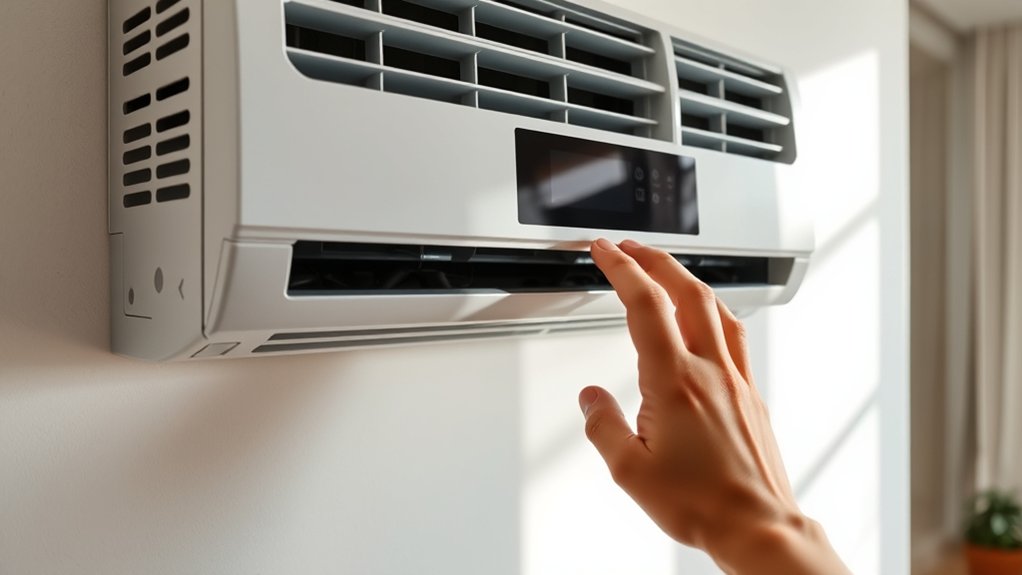
Why Won’T My Air Conditioner Turn on and How Can I Fix It?
If your air conditioner won’t turn on, first check that the thermostat is set to COOL and the temperature is below room level. Reset any tripped circuit breakers and replace dirty air filters to guarantee proper airflow.
Also, clear clogged drain lines and verify the outdoor disconnect switch is ON. It’s a good idea to inspect electrical components like capacitors for faults.
Refrigerant leaks or frozen coils can also cause issues. Going through these steps will help you identify the problem and get your AC working again efficiently.
Check Your Thermostat Settings First
Why won’t your air conditioner turn on? Often, incorrect thermostat settings are the culprit.
First, verify your thermostat is set to “COOL” mode; if it’s on “HEAT” or “OFF,” the AC unit will remain still.
Next, check the temperature setting. If it’s not lower than the current room temperature, the system won’t activate.
Inspect the thermostat screen. A blank display might mean dead batteries, which you should replace promptly.
When you adjust the temperature, listen for a click indicating the thermostat is communicating with the AC unit.
If the AC unit still doesn’t respond despite correct thermostat settings, your thermostat may be malfunctioning. In that case, consult troubleshooting guides or consider professional help to diagnose the issue accurately.
Reset Tripped Circuit Breakers and Fuses
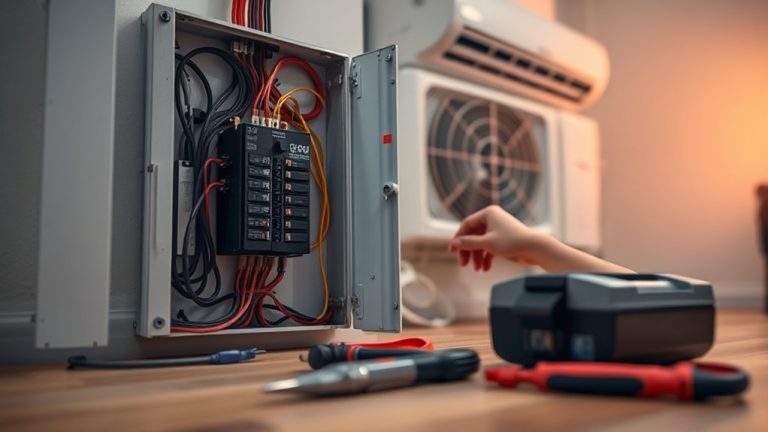
First, find your electrical panel and look for the breaker labeled for your air conditioner. Flip it all the way to OFF, then switch it back ON to reset it.
Next, check your fuse box for any blown fuses. If you find any, replace them with ones that have the exact same amperage rating.
Just make sure the power supply is completely off before you start handling any breakers or fuses. This will help you avoid any risk of electrical shock.
Identifying Tripped Breakers
One common cause of an air conditioner not turning on is a tripped circuit breaker or blown fuse disrupting power flow. To identify a tripped circuit breaker, first locate your electrical panel. Look for breakers that are in the middle position or clearly switched off.
A tripped circuit breaker usually means there’s an electrical issue caused by an overload or short circuit. To restore power, flip the affected breaker fully to the OFF position, then back to ON. If it trips again right away, this could signal a more serious electrical problem that needs professional inspection.
Regularly checking your breakers helps prevent unexpected trips and keeps your AC running smoothly. Identifying and resetting tripped breakers promptly makes sure your air conditioner gets the power it needs to work correctly.
Replacing Blown Fuses
Although resetting tripped circuit breakers often restores power to your air conditioner, blown fuses require replacement to reestablish electrical flow and protect your unit from damage.
Start by checking the circuit breaker labeled for your AC in the electrical panel and reset it if tripped.
If power isn’t restored, test the fuse with a multimeter for continuity. A blown fuse shows no continuity and must be replaced with one matching the exact amperage rating.
Always power off the system before handling electrical components.
Inspect for wear or damage regularly to prevent repeated blown fuses or circuit breaker trips.
Properly replacing a blown fuse guarantees safe, reliable operation and prevents further electrical faults in your air conditioning unit.
Replace Dirty AC Air Filters
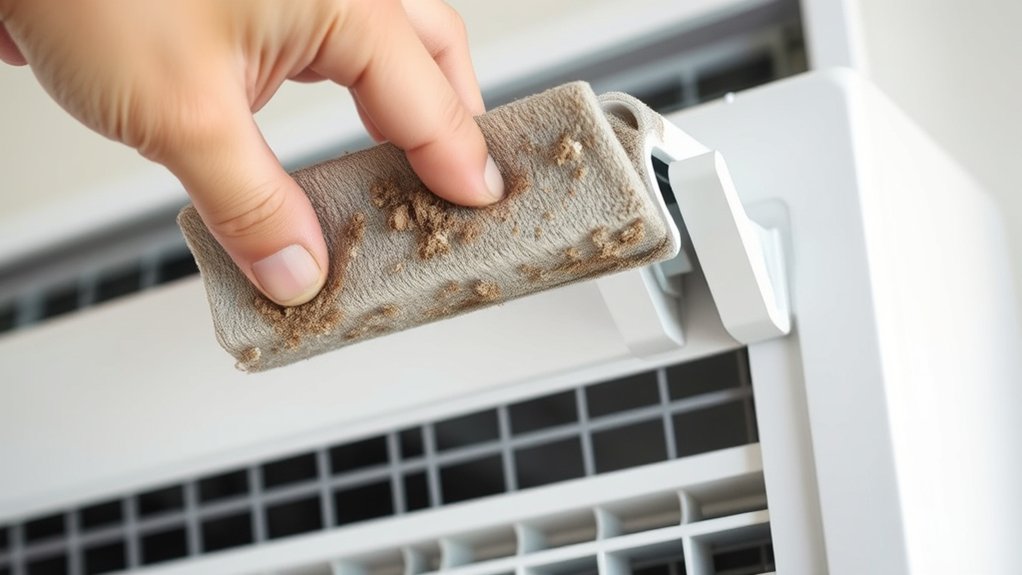
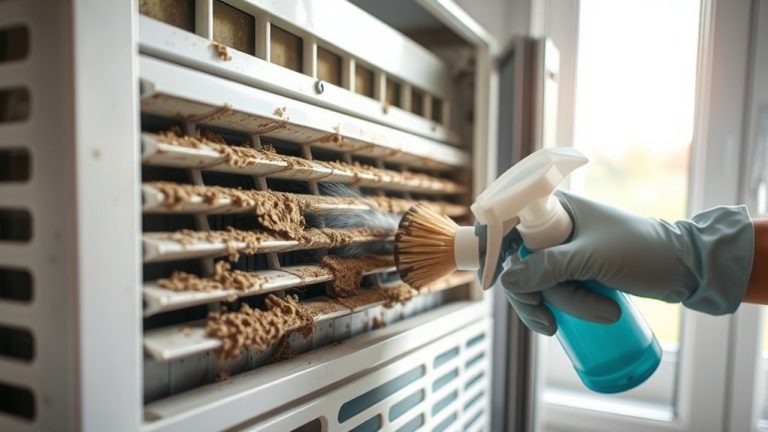
You should replace your AC air filters every 30 to 60 days to keep the airflow steady and your system running smoothly.
When filters get dirty, they block the airflow, which can cause the compressor and fan motor to overheat — and that could lead to mechanical problems.
Plus, clean filters do more than just protect your AC. They help improve the air quality inside your home and stop issues like the evaporator coil freezing up, which might even shut down your unit.
Importance Of Clean Filters
Because dirty air filters restrict airflow, they can cause your air conditioner to overheat or even fail. Maintaining clean air filters is crucial to prevent system strain, improve indoor air quality, and enhance cooling efficiency. Dirty filters reduce airflow, leading to frozen coils and compressor damage.
It’s really important to stay on top of filter maintenance. When filters get clogged, your AC has to work harder than it should. This not only wastes energy but can also shorten the life of your system.
| Issue | Cause | Solution |
|---|---|---|
| Reduced airflow | Dirty filters | Replace filters regularly |
| Overheating | Clogged filters | Clean or replace filters |
| Poor cooling | Frozen coils | Guarantee clean filters |
| High energy bills | Inefficient AC | Maintain clean filters |
| Poor indoor air quality | Dust & allergens | Use clean air filters |
Replacing dirty filters promptly guarantees peak performance and extends your AC’s lifespan while improving indoor air quality. So, don’t wait too long—keeping those filters clean really pays off!
Replacement Frequency Guidelines
Maintaining clean air filters means knowing when to replace them. Typically, you should replace dirty AC air filters every 30 to 60 days to guarantee ideal airflow and system efficiency.
If you skip this step, a clogged air filter can restrict airflow, causing the compressor and fan motor to overheat. This can lead to potential system failure.
As part of your AC troubleshooting steps, regularly check the filter condition and replace it promptly. High-efficiency filters may last longer, around 6 to 12 months, but always follow manufacturer recommendations.
Consistent filter replacement is vital for regular maintenance. It helps prevent issues like evaporator coil freezing and enhances energy efficiency.
Staying on top of this simple task can extend your air conditioner’s lifespan and reduce costly repairs.
Effects Of Clogged Filters
When air filters become clogged, they severely restrict airflow, forcing your air conditioner’s compressor and fan motor to work harder and overheat. This strain may cause the system to shut down to prevent damage.
Also, clogged air filters reduce airflow over the evaporator coil, which can freeze and diminish cooling efficiency. You’ll notice your AC struggles to maintain temperature while consuming more energy, increasing your electricity bill.
Neglecting to replace dirty air filters every 30 to 60 days also allows dust and allergens to accumulate, degrading indoor air quality.
To avoid these issues, inspect and replace clogged air filters regularly.
Maintaining clean filters guarantees ideal airflow, protects system components, and sustains energy-efficient cooling performance.
Clear Clogged AC Drain Lines and Pans
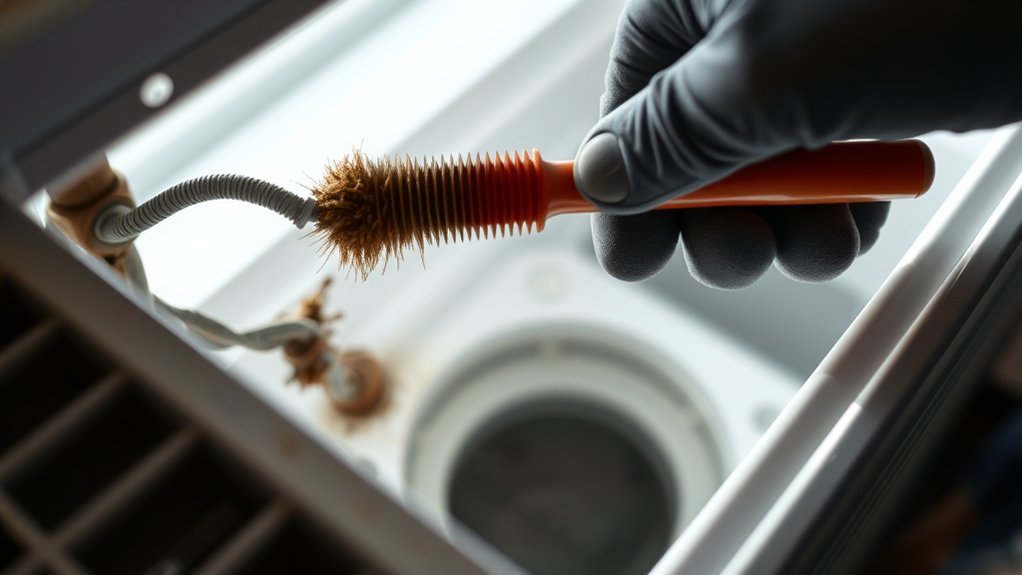
Clogged AC drain lines disrupt the proper removal of condensate, often causing water to back up and trigger safety switches that shut down your air conditioner.
To fix this, first inspect the drain line and drain pan for blockages or standing water. Use a wet/dry vacuum to clear minor clogs in the line, ensuring condensate flows freely.
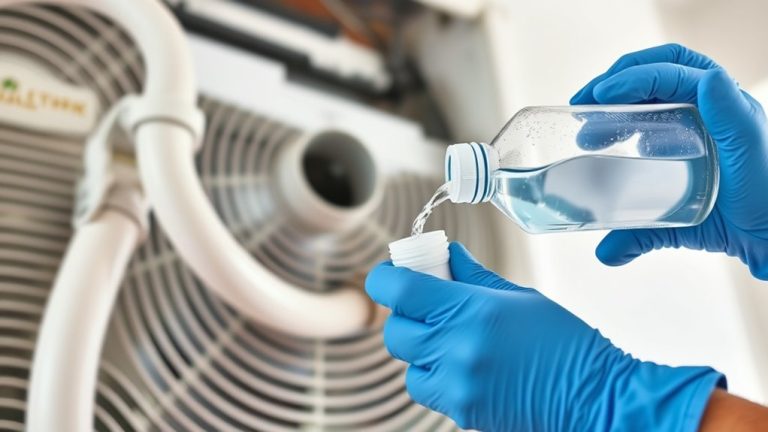
Next, flush the drain line with a bleach-and-water solution to remove algae buildup, which commonly causes blockages. Regularly cleaning the drain pan prevents overflow that activates safety switches, avoiding unexpected shutdowns.
Performing this maintenance at least once a year, especially before cooling season, helps maintain peak system function and prevent costly repairs.
Addressing clogged AC drain lines promptly safeguards your unit and keeps your air conditioner running efficiently.
Verify the AC Outdoor Disconnect Switch Is On
After ensuring your AC drain lines and pans are clear, the next step is to check the outdoor disconnect switch. This safety feature cuts power to the AC unit and must be in the “ON” position for your system to operate. If the switch is off, the AC unit won’t receive power, preventing it from turning on.
Typically located near the outdoor unit, the disconnect switch can be accidentally toggled during yard work or maintenance. Verify its status by locating and ensuring it’s firmly set to “ON.”
If you find the switch is malfunctioning or improperly installed, avoid attempting repairs yourself. Instead, contact a professional to assess and guarantee safe operation.
Confirming the outdoor disconnect switch is on is an essential troubleshooting step to restore your AC unit’s function.
Check for Capacitor or Motor Failure Symptoms
If your AC hums but won’t start, it could mean the capacitor is faulty or the motor is on its way out.
Have you noticed any unusual noises, like grinding or screeching? Those sounds usually point to mechanical problems that need fixing right away.
Also, keep an eye out for bulging capacitors or if your circuit breaker trips often.
These are signs of electrical issues that you’ll want to diagnose correctly to avoid bigger problems down the road.
Identifying Capacitor Symptoms
When your air conditioner hums or clicks without starting, it’s often a sign that the capacitor isn’t supplying the necessary electrical charge to the compressor or fan motor. Recognizing capacitor failure symptoms early can prevent further damage.
Look for these key indicators: intermittent operation, where the unit starts and stops unpredictably; excessive vibration or overheating in the outdoor unit; visual signs like bulging or leaking capacitor casing; and multimeter readings outside the specified microfarads range.
If you notice any of these symptoms, it’s essential to seek professional evaluation. A trained technician can accurately test and replace a faulty capacitor, restoring your AC’s functionality and preventing motor damage.
Don’t ignore these signs. Addressing capacitor failure promptly guarantees reliable cooling and avoids costly repairs.
Motor Failure Signs
Capacitor issues often come along with or even mimic motor failure, so it’s important to tell the difference when diagnosing an AC that won’t start. If your AC unit hums but doesn’t actually start, it could be due to motor problems or a capacitor failure.
Frequent circuit breaker trips can also point to motor overload or capacitor issues. Listen carefully for unusual noises like clicking or buzzing, since those usually mean there’s a motor or capacitor fault happening.
Temperature inconsistencies might suggest the motor is struggling to run efficiently.
| Symptom | Possible Cause |
|---|---|
| Humming without starting | Motor or capacitor fault |
| Frequent breaker trips | Motor overload or capacitor failure |
| Clicking or buzzing | Motor or capacitor issues |
Be sure to check the wiring for any damage to get a clear idea if the motor is really the problem.
Diagnosing Electrical Issues
Three key electrical components, capacitor, motor, and wiring, often cause an air conditioner to fail to start. To diagnose the issue, you need to inspect these parts carefully.
A faulty capacitor typically shows bulging or leaking, which prevents the compressor or fan motor from starting.
Listen for humming or buzzing sounds that might indicate motor electrical failure or mechanical blockage. Use a multimeter to test for continuity in the capacitor and motor. If there’s no continuity, it means replacement is necessary.
Also, check wiring for fraying or damage to avoid shorts or startup failure.
- Look for physical damage on capacitors
- Detect abnormal motor sounds
- Test continuity with a multimeter
- Inspect wiring connections for wear
These steps help you pinpoint electrical components causing the problem efficiently.
How to Spot Electrical Wiring Problems Safely
How can you safely identify electrical wiring problems in your air conditioner? First, always turn off the power at the circuit breaker to avoid electrical shock. Inspect for faulty wiring signs like frayed wires, burnt connections, or melted insulation.
Use a multimeter to test wire continuity, making sure there are no breaks or shorts. Check that all terminals are tight and free from corrosion to prevent intermittent issues. If you’re unsure about anything, it’s best to get professional help from a licensed technician who can diagnose and repair safely.
| Step | What to Look For | Tools Needed |
|---|---|---|
| Power Off | Circuit breaker switched off | None |
| Visual Inspection | Frayed, burnt, or melted wiring | Flashlight |
| Continuity Testing | Wire breaks or shorts | Multimeter |
| Terminal Check | Tightness and corrosion | Screwdriver, cleaner |
| Professional Help | If unsure or complex issues | Contact technician |
How Refrigerant Leaks Affect AC Performance
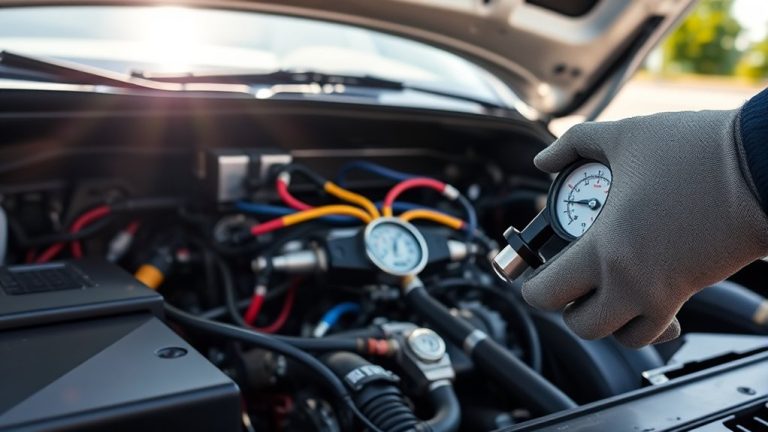
After ruling out electrical wiring issues, the next component to examine is the refrigerant system. Refrigerant leaks can seriously hurt your AC system’s performance. It makes your unit work harder and can even damage the compressor.
Here’s what you need to know:
- Reduced refrigerant levels lower cooling efficiency and cause inconsistent indoor temperatures.
- The AC system may overheat or shut down if the refrigerant drops too low.
- Early leak detection during maintenance prevents costly repairs and system failure.
- Handling refrigerant requires a licensed HVAC technician due to safety and certification requirements.
If you think you have a refrigerant leak, don’t try to fix it yourself. It’s best to call an HVAC technician right away. They can diagnose and repair the problem so your air conditioner runs smoothly and efficiently.
Inspect for Frozen Evaporator Coils
Why is your air conditioner blowing warm air and struggling to cool your space? One common cause is frozen evaporator coils caused by restricted airflow. Dirty filters or blocked vents reduce air movement. This causes the coils to freeze and hurts your cooling efficiency.
Take a moment to inspect your evaporator coils for ice buildup. If you find frozen evaporator coils, turn off the AC and let it thaw completely. To prevent this issue, regularly clean or replace air filters every 1-3 months.
| Symptom | Cause | Solution |
|---|---|---|
| Reduced airflow | Dirty filters or blocked vents | Clean or replace filters, clear vents |
| Ice on coils | Restricted airflow | Turn off AC, allow thawing |
| Warm air output | Frozen evaporator coils | Inspect coils, improve airflow |
| System shutdown | Frozen coils | Thaw coils, check filters |
| Persistent freezing | Low refrigerant or mechanical issues | Seek professional help |
When to Call a Professional for AC Repairs
If your attempts to fix frozen evaporator coils or improve airflow don’t restore your AC’s performance, it’s time to call a professional.
When your AC unit won’t turn on despite troubleshooting, a professional HVAC technician can identify underlying issues that DIY methods might miss.
You should seek expert help if you experience recurring circuit breaker trips indicating possible electrical faults.
Or if you hear unusual noises like clicking or buzzing from the unit.
Signs of refrigerant leaks, such as ice buildup or poor cooling, are also reasons to call in a pro.
Even if your AC turns on but fails to cool effectively despite normal airflow, it’s a good idea to get a professional opinion.
Addressing these problems early with a professional prevents further damage and guarantees safe, efficient operation of your system.
Don’t wait too long—contact a technician when these symptoms persist.
Frequently Asked Questions
Can a Dirty Condenser Coil Cause My AC Not to Turn On?
Yes, a dirty condenser coil can prevent your AC from turning on because it messes with airflow and causes overheating.
When the coil is clogged, the system can’t cool properly, which might trigger safety features that shut the unit down.
To fix this, make sure you inspect the coils regularly and clean them using the right methods.
For example, you can use a soft brush or a coil cleaner spray to get rid of dirt and debris.
Keeping your coils clean helps your AC run efficiently and avoids those unwanted shutdowns.
Don’t skip your annual cleaning, especially before the hot season hits, so your system stays in top shape and you don’t face costly repairs later on.
How Does a Malfunctioning Thermostat Sensor Affect AC Startup?
A malfunctioning thermostat sensor disrupts accurate temperature readings, preventing your AC from recognizing when to start. If the sensor’s miscalibrated, the thermostat won’t detect the need to cool, which can delay or even stop the startup.
You should perform thermostat calibration to restore correct readings.
And if calibration doesn’t do the trick, then replacing the sensor becomes necessary.
Making sure your sensor works precisely helps your AC respond quickly.
This keeps your cooling efficient and avoids putting extra strain on the system.
Could Pest Infestations Inside the Unit Prevent It From Turning On?
Sometimes, unexpected guests inside your unit can disrupt its function. Yes, pest infestations can prevent your air conditioner from turning on by damaging wiring or blocking airflow.
You’ll need prompt pest identification and infestation prevention measures during regular unit maintenance.
Make sure to inspect wiring and air passages for signs of nesting or chewing damage. Catching these issues early can save you a lot of trouble down the line. It helps keep your system running smoothly and efficiently.
Taking care of this now means avoiding costly repairs and downtime later. So, keep an eye out and address any pest problems as soon as you notice them. Your unit will thank you for it!
Does Low Voltage Supply Impact My Air Conditioner’s Operation?
Yes, low voltage directly causes operational issues in your air conditioner by preventing critical components like the compressor and fans from starting.
This voltage drop can trigger your unit’s safety mechanisms, stopping it from turning on.
To fix this, check your electrical supply for tripped breakers or damaged wiring and guarantee voltage stability.
Regular inspections help you catch low voltage early, protecting your air conditioner from costly damage and ensuring reliable operation.
Can a Faulty Compressor Relay Stop the AC From Powering Up?
Yes, a faulty compressor relay can stop your AC from powering up. The relay controls the electrical connections that send power to the compressor. If it fails, it interrupts the power supply, preventing the compressor from engaging.
You should test the relay with a multimeter to check for continuity. If it’s defective, replacing the relay will restore proper power flow and get your AC running again.
It’s a pretty common issue and usually an easy fix once you identify the problem.
Conclusion
If your AC won’t turn on, start by checking the thermostat and circuit breakers. Often, the fix is simple. For example, a homeowner found their unit off due to a tripped breaker after a storm.
After resetting it and replacing a dirty filter, the AC worked perfectly again. If issues like frozen coils or refrigerant leaks persist, contact a professional. Tackling these steps systematically guarantees you restore cooling efficiently and avoid costly damage.