5 Simple Steps to Clean Your Outside Air Conditioner Unit
To clean your outside AC unit, first turn off power at both the thermostat and main panel. Then disconnect the power supply to guarantee safety.
Next, clear debris within a three-foot radius around the unit. Put on gloves and gently brush the outer fins, straightening any bends.
Rinse the coils and fins with a garden hose set to jet to remove dirt. Finish by applying a coil cleaner, rinse thoroughly, and let the unit air dry fully.
Following these steps helps improve efficiency and prolongs your unit’s life. There are more details to optimize your maintenance if you want to dig deeper.
Turn Off Power to Your AC Unit
Before you begin cleaning your air conditioner, turn off the power at both the thermostat and the main electrical panel. This step is vital to guarantee your safety and prevent any accidental startup of the AC unit during maintenance.
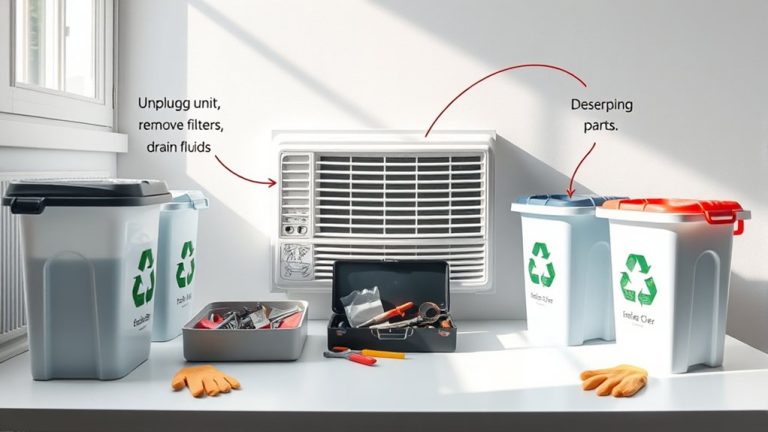
After switching off the power, verify it by checking for operational lights or sounds from the unit. Disconnecting the power supply physically helps avoid unintended activation, which can cause injury or damage.
Ensure the power is off by confirming no lights or sounds before beginning any maintenance.
If available, use a lockout/tagout procedure to secure the power source and prevent others from turning it back on while you’re working.
Finally, wait a few minutes after shutting off the power to allow all components within the AC unit to fully power down before starting your cleaning process.
Remove Debris Around the AC Unit
Clear away all leaves, grass clippings, and debris within a three-foot radius around your AC unit to keep the airflow clear and prevent overheating.
First, make sure to turn off the power at both the thermostat and the main electrical source for safety.
Check the area carefully and remove any nests or debris stuck inside the air conditioner. These block airflow and can make your unit less efficient.
It’s a good idea to keep an eye on this space after storms or heavy winds so you can clear out any new debris quickly.
Keeping this area clean not only helps your AC cool better but also puts less strain on the system.
That way, your air conditioner can last longer.
Making sure the space around your unit stays debris-free is a key maintenance step that helps it run at its best and save energy.
Wear Gloves and Brush the Outer Fins
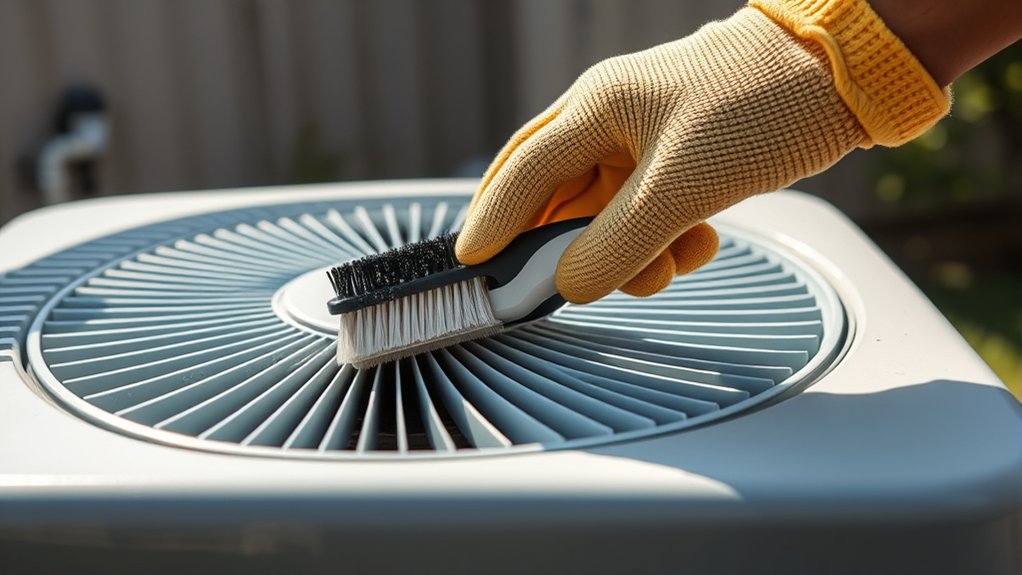
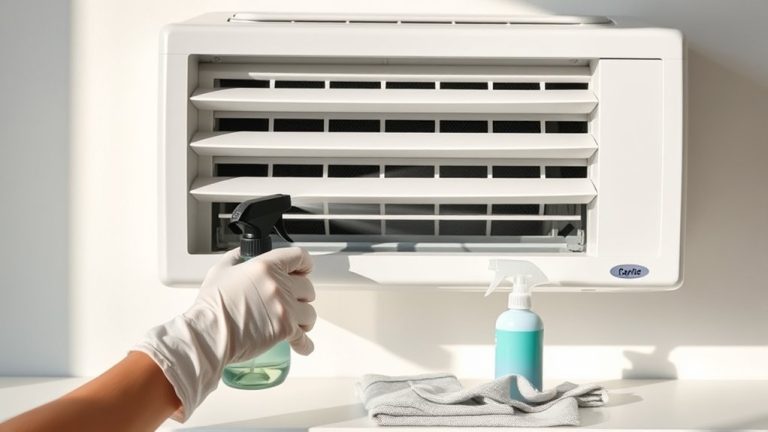
Put on gloves to protect your hands from sharp edges and debris as you clean the outer fins of your air conditioner. Use a small, soft-bristled brush to gently remove dirt, dust, and buildup from the outdoor unit’s fins. This step is crucial because clogged fins restrict airflow and reduce cooling efficiency.
After brushing, take a close look at the fins for any bends or damage. If you find any, straighten them carefully using a fin comb or a similar tool to restore ideal airflow. Keeping the fins in good shape helps your unit run smoothly.
Regularly brushing and maintaining the fins prevents overheating and mechanical breakdowns, especially during peak usage months.
Rinse the AC Unit With a Garden Hose on Jet Setting
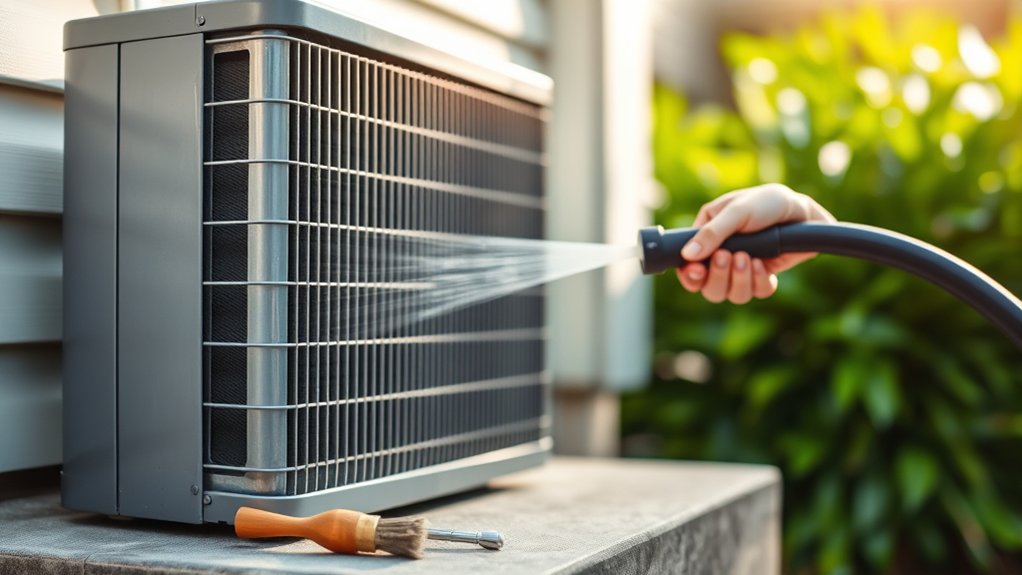
Spray the AC unit’s fins and coils with a garden hose set to the jet setting to dislodge and wash away loose dirt and debris.
Before you start, make sure the power to the unit is completely off to avoid electrical hazards. Aim the water spray from the top downward; this prevents pushing dirt deeper into the condenser coil.
The strong jet setting effectively clears the outer surfaces, restoring proper airflow through the fins and condenser coil.
Keeping the coils clean is really important for efficient heat exchange and cooling performance during hot months.
Clean coils ensure your AC cools effectively and runs efficiently during the hottest months.
Regularly rinsing your unit cuts down on dirt buildup, which can otherwise mess with how well it works and shorten its lifespan.
This simple step helps keep your system running smoothly and efficiently all season long.
Apply Coil Cleaner and Rinse, Then Let the AC Unit Air Dry
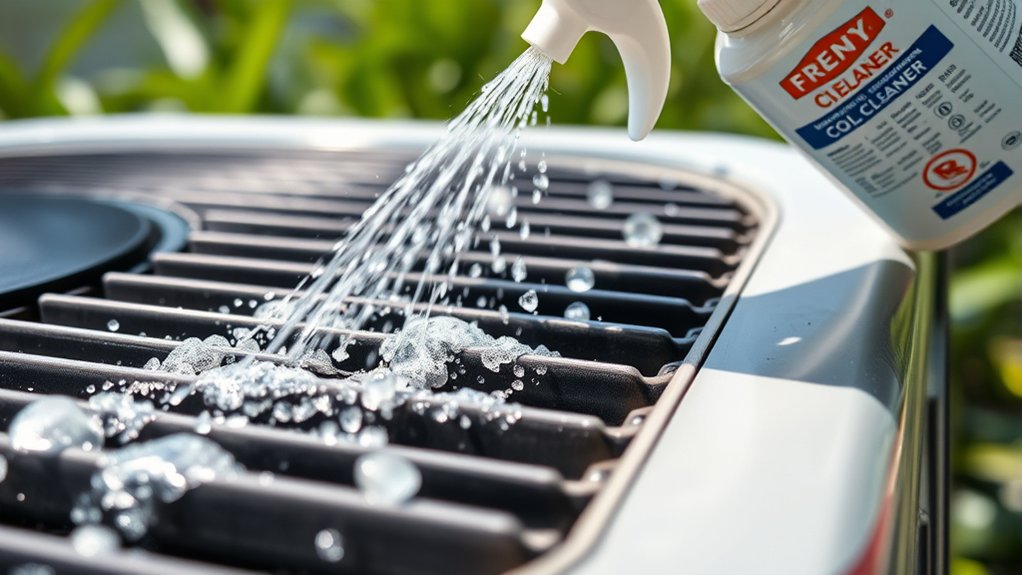
After rinsing the coil, apply a manufacturer-approved coil cleaner evenly across its surface to break down stubborn dirt and grime.
Make sure the coil cleaner covers the entire coil for maximum penetration. Let it sit for the recommended duration, usually between 5 to 10 minutes, to maximize effectiveness.
Next, rinse the coil thoroughly using a garden hose set to the “jet” setting, removing all coil cleaner residues and loosened debris.
Be thorough with the rinse to avoid any leftover chemicals that could damage the unit.
Finally, allow the AC unit to air dry completely before reassembling it.
This step prevents moisture buildup, which can lead to corrosion or mold growth. Doing this ensures your unit operates efficiently and lasts longer.
Frequently Asked Questions
How Often Should I Clean My Outside AC Unit?
You should clean your outside AC unit at least once a year as part of your maintenance schedule. This guarantees peak performance, prevents dirt buildup, and maintains the unit’s Seasonal Energy Efficiency Ratio (SEER) rating.
Sticking to this schedule helps avoid higher energy costs and costly repairs.
Regular cleaning also prolongs your system’s lifespan, keeping refrigerant pressure stable and your home comfortably cool throughout the seasons.
It’s definitely worth the effort to stay on top of it so your AC runs smoothly all year long.
Can I Use a Pressure Washer Instead of a Garden Hose?
You can use a pressure washer, but only with extreme Pressure Washer Safety in mind.
Studies show 70% of AC unit damages result from improper cleaning techniques.
Keep the washer at least 3 feet away, use a low-pressure setting, and avoid direct, forceful sprays on delicate fins. Otherwise, you risk pushing debris deeper or bending components.
Always check your unit’s manual first to guarantee you don’t void warranties or cause costly damage.
It’s better to be safe than sorry when dealing with expensive equipment!
What Type of Coil Cleaner Is Best for My Unit?
You should choose a manufacturer-approved coil cleaner specifically formulated for coil maintenance on your unit.
Opt for a biodegradable, non-toxic foam cleaner that clings to coil fins, dissolving dirt and organic buildup effectively. This type of cleaner prevents damage and helps keep things environmentally safe.
Always follow the dilution and application guidelines precisely. Doing so will help maintain your warranty and optimize your unit’s cooling performance.
Using the right cleaner guarantees thorough coil maintenance. It also helps prolong your unit’s lifespan.
How Do I Know if My AC Fins Are Too Bent to Fix?
If over 50% of your AC fins are bent, it’s usually too damaged for effective repair.
For fins maintenance, first inspect them closely. Minor bends can be straightened with a fin comb.
But if the fins are crushed or broken, that means severe damage. Bent fins restrict airflow, which reduces efficiency.
Regularly checking your fins helps prevent this problem.
If you’re unsure, it’s a good idea to consult a professional HVAC technician. They can assess whether replacement is necessary to keep your AC running at peak performance.
Should I Cover My AC Unit During Winter Months?
You don’t usually need to cover your AC unit during winter months since modern designs resist harsh weather. However, for effective winter maintenance, cover it if it’s under trees or prone to snowdrifts to prevent debris and ice buildup.
Make sure any cover allows ventilation to avoid moisture buildup, which can cause damage.
Regularly inspect the unit for blockages and clean it before winter to maintain peak performance and longevity.
It’s a good idea to keep an eye on your unit throughout the season to catch any issues early.
Taking these simple steps can help your AC last longer and work better when you need it again.
Conclusion
Now that you’ve turned off the power, removed debris, brushed the fins, rinsed the unit, and applied coil cleaner, you’ve done more than clean. You’ve optimized your AC’s performance.
Cleaning goes hand in hand with efficiency, and efficiency means your unit will last longer. By following these steps, you make sure your AC runs smoothly, saves energy, and sticks around for the long haul.
So, take these simple actions regularly. Your air conditioner will thank you with cooler, cleaner air and fewer breakdowns.