Change Your Air Conditioner Filter in 5 Easy Steps
To change your air conditioner filter, first identify the filter size and MERV rating on the label. Make sure to note the actual dimensions and the direction of airflow.
Next, choose a replacement filter that matches those specs to keep your system running efficiently. Before you start, turn off your HVAC at the thermostat or breaker.
Pull out the old filter and insert the new one with the arrows pointing toward the air handler. Finally, log the date so you can remember when to replace it next time.
Following these steps helps you take good care of your system and maintain air quality. Stick around for more helpful tips coming up!
Identify Your HVAC Air Filter Type and Size
Before purchasing a replacement, identify your HVAC air filter type and size by checking the label on your current filter for its dimensions and MERV rating.
Note the filter size printed, such as 20x25x1, but measure the actual dimensions with a tape measure to guarantee accuracy, since nominal sizes can be rounded.
Confirm the MERV rating to maintain your HVAC system’s indoor air quality standards.
Take a clear photo of the old filter for reference when shopping.
When selecting a new filter, verify compatibility by matching both dimensions and thickness precisely.
An incorrect filter size can reduce system efficiency and compromise indoor air quality.
Understanding your filter’s replacement frequency depends on this accurate identification.
This guarantees peak HVAC system performance and effective air filtration.
Choose the Right HVAC Air Filter Size and MERV Rating
When choosing the right HVAC air filter, you’ll need to match both the nominal size and the MERV rating to your system’s specifications and household requirements.
Always verify the nominal size printed on the packaging. Keep in mind the actual filter may be slightly smaller to fit properly.
Select a MERV rating that balances filtration and airflow. MERV 8 suits most homes, capturing dust and pollen.
MERV 11 or 13 are better if you want to filter allergens like pet dander or smoke.
Make sure your HVAC system supports the MERV rating you choose to avoid reduced system performance.
Replace filters every 60 to 90 days. If your household has pets or high dust levels, you might want to do it more often to keep air quality and airflow at their best.
Turn Off Your HVAC System Safely
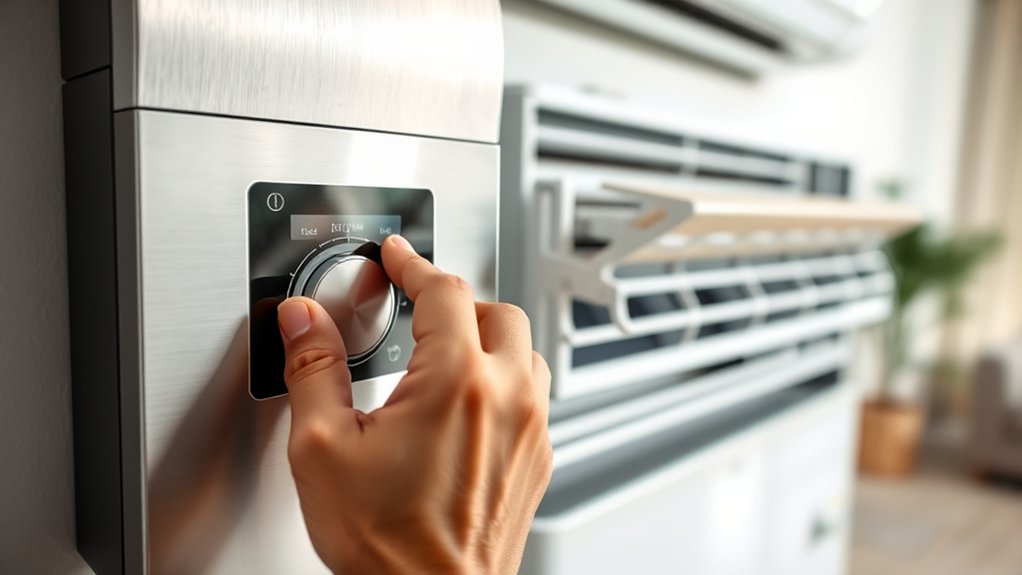
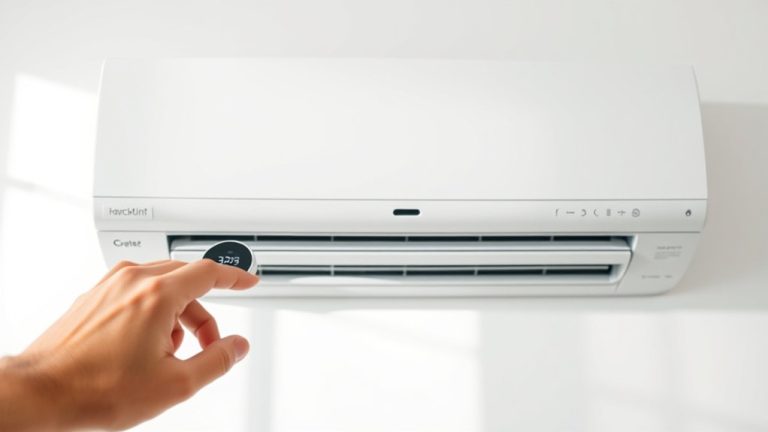
Shut off your HVAC system at the thermostat or the dedicated power switch to guarantee safety while changing the air filter. This step prevents unfiltered air from circulating through the system, which could reduce indoor air quality.
If no power cutoff switch is available, use the shut-off breaker to assure complete power disconnection.
After turning off your system at the thermostat or power cutoff switch, wait until the blower fan has fully stopped to avoid injury or damaging the filter.
Confirm the system is off by listening for any operational sounds before proceeding.
Properly turning off your HVAC system not only assures safety but also protects the filter and supports the unit’s efficiency and lifespan.
This helps maintain peak performance over time.
Remove and Replace Your HVAC Air Filter
Locate the air filter near the air handler, return vents, or behind an access panel in your basement or utility room.
Before you get started, turn off the system to prevent unfiltered air from circulating and to keep things safe.
Next, follow these steps for replacing the filter:
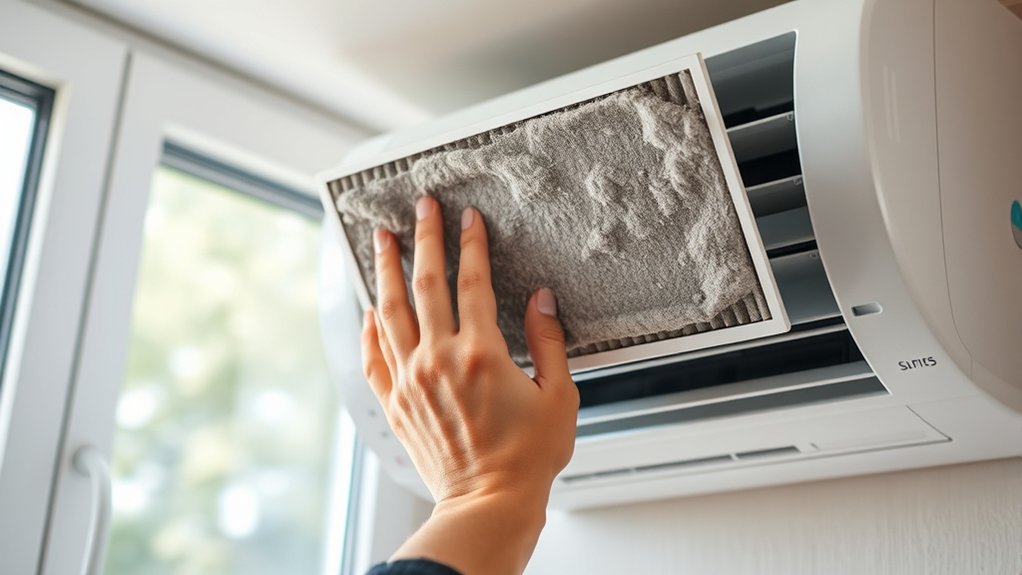
- Carefully remove the old air filter, making a note of its size and the direction of the airflow arrows.
- Insert the new filter with the airflow arrows pointing toward the HVAC system’s air handler. Make sure it fits snugly without any gaps.
- Double-check that the new filter is in good condition and seated properly within the return air vent.
Once you’re done, jot down the replacement date.
This helps you keep a regular schedule for changing the filter, which is key to maintaining good airflow and system performance.
Track Filter Changes and Schedule Replacements
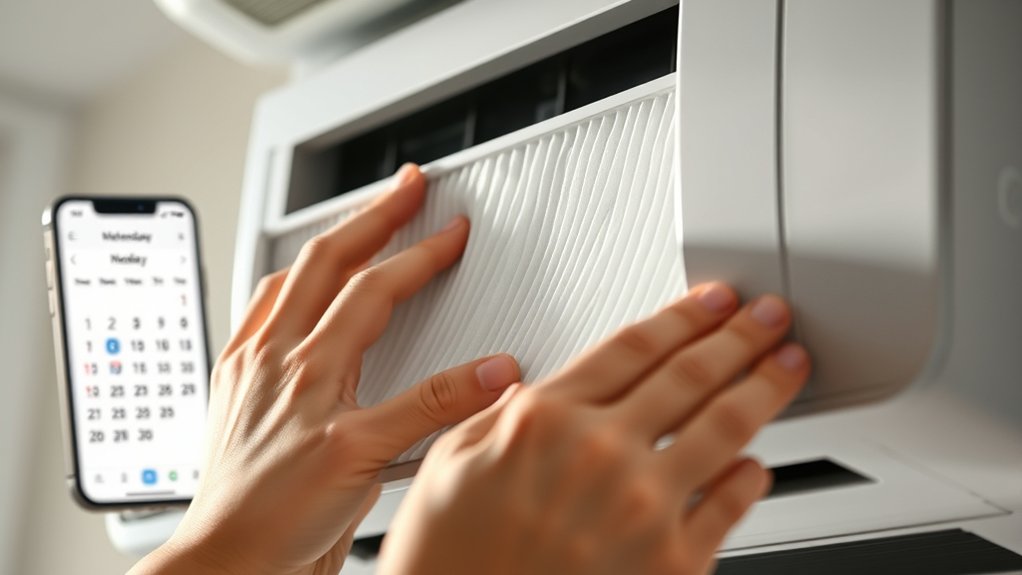
After replacing your HVAC air filter, keeping a consistent schedule for future changes helps your system run at its best and keeps your indoor air fresh.
To track your air filter changes easily, jot down the date of each change right on the filter frame with a permanent marker or write it in a dedicated log.
Make sure your log also notes the filter sizes and types. This makes buying replacements simpler and ensures they fit your system perfectly.
Setting monthly reminders on your phone or calendar to check the filter’s condition is a smart move, especially if you have pets or allergies.
Try to replace your filters every 60 to 90 days, but feel free to adjust how often based on your needs.
You might also want to consider a filter subscription service that sends replacements regularly. This way, you’ll stay on schedule without the hassle.
Following these steps helps your HVAC system work efficiently and keeps your indoor air clean and healthy.
Frequently Asked Questions
How Does a Dirty Filter Affect My Energy Bills?
A dirty filter restricts airflow, which reduces your AC’s energy efficiency and puts extra strain on the system.
This added strain lowers your cooling performance and causes your unit to run longer than it should, increasing your energy costs.
Pollutant buildup in the filter also messes with humidity control, making your unit work even harder.
So, it’s really important to keep that filter clean.
Regular maintenance, like choosing the right filter types and following simple upkeep tips, not only extends the lifespan of your system but also helps cut down your energy bills.
Don’t let a clogged filter drive up your expenses unnecessarily!
Can I Reuse My Old Air Conditioner Filter?
Sure, you can reuse your old air conditioner filter if you enjoy compromising air quality and efficiency.
Reusable filters sound eco-friendly, but most filter types need replacement every 1-3 months to avoid costly energy spikes.
DIY cleaning offers limited benefits. Proper filter maintenance tips emphasize timely replacement over myths of extended filter lifespan.
It’s better to prioritize cost savings and air quality by debunking common misconceptions.
Fresh filters outperform reused ones every time.
What Are Signs My HVAC System Needs Professional Servicing?
You’ll notice HVAC warning signs like unusual noises, such as grinding or rattling, that signal mechanical troubles.
Inconsistent temperatures and increased humidity often point to poor airflow or thermostat issues.
Frequent cycling means your system’s struggling to maintain settings.
Strange odors can indicate electrical faults or mold.
Visible dust buildup and system leaks are other red flags.
If you spot these, schedule professional servicing promptly to prevent further damage.
It’s better to catch problems early than deal with costly repairs later.
Are There Health Benefits to Changing Filters More Often?
Imagine breathing crisp, clean air as your HVAC filter traps dust accumulation and allergens reduction surges.
Changing filters more often boosts filtration efficiency, directly enhancing your indoor environment’s air quality. This supports respiratory health and asthma management by minimizing irritants.
Plus, it extends your HVAC lifespan by reducing strain.
Adapting maintenance habits with seasonal changes guarantees consistent performance. So, you’re investing in long-term wellness and system reliability simultaneously.
How Do Pets Impact the Frequency of Filter Changes?
Pets increase dander buildup, pet hair, and dust accumulation, which speeds up filter clogging and lowers your HVAC system’s efficiency.
To keep your air quality ideal and reduce allergy triggers, you’ll want to change your filters more often—usually every 20 to 30 days.
Regular pet grooming can help control indoor pollutants, but don’t forget that seasonal changes also impact how long your filters last.
So, it’s a good idea to adjust your replacement schedule as needed.
This way, your HVAC system runs smoothly and keeps the air inside your home healthier for everyone.
Conclusion
By following these five steps, you not only keep your HVAC system running efficiently but also improve your indoor air quality. That’s actually the main reason you started this task in the first place.
Changing your air conditioner filter might seem simple, but doing it correctly guarantees better airflow and energy savings. Don’t forget to keep track of when you replace it. It’s those small details that help prevent costly repairs.
So, go ahead and take action now. You’re already halfway to a fresher, healthier home!