Why Does My Car Air Conditioner Smell Like Vinegar and How Do I Fix It?
Your car’s air conditioner smells like vinegar because bacteria and mold grow on the damp evaporator coils or inside clogged drain lines. These areas trap moisture that causes the odor. A dirty cabin air filter can make this worse by holding even more bacteria.
To fix it, start by replacing the filter. Then, clear the drain line and clean the vents and evaporator. Running the fan after you turn off the AC also helps keep the system dry.
Taking these steps stops the smell from coming back and makes sure your AC works efficiently. It’s a simple way to keep your car smelling fresh and your air conditioner running smoothly.
How to Recognize Vinegar Smell From Your Car’s AC
How can you tell if the vinegar smell in your car’s AC points to a deeper issue? Focus on when the odor appears. It’s usually noticeable only when the car air conditioning is on, which often means there’s microbial growth in the evaporator or air ducts.
Pay attention to other signs like reduced airflow or increased humidity inside the cabin. These often signal that the system is contaminated.
Watch for reduced airflow or higher cabin humidity, as these often indicate AC system contamination.
Also, check the cabin air filter. A dirty filter can make the smell worse by trapping moisture and debris, which promotes bacterial growth.
Replacing this filter every year helps keep the air quality good and prevents odors from building up.
Recognizing these signs early lets you deal with potential health risks and keep your car’s AC running efficiently before things get worse.
What Causes a Vinegar Smell in Your Car’s AC
You’re probably noticing that vinegar smell because bacteria and mold have started growing inside your car’s AC system.
This tends to happen when moisture builds up, often due to clogged drain lines or the system not drying out properly after use.
The main thing to fix is the moisture and drainage problems to get rid of that sour odor for good.
Bacterial And Mold Growth
Although your car’s air conditioner is designed to circulate cool air efficiently, moisture trapped within its ducts and evaporator creates an ideal environment for bacterial and mold growth.
The evaporator coils, exposed to humidity during operation, often retain moisture that doesn’t evaporate quickly. This promotes bacterial growth.
This microbial buildup generates the characteristic vinegar-like odor you notice when running the AC. Mold colonies can also develop on damp surfaces inside the system, further intensifying the smell.
To address this, you need to clean or replace the cabin air filter regularly and sanitize the evaporator coils to disrupt microbial colonies.
Proper maintenance prevents excessive bacterial growth and mold formation. This way, your AC can deliver fresh, odor-free air consistently.
Moisture And Drain Issues
When moisture accumulates inside your car’s air conditioning system, it creates an environment ripe for mold and bacterial growth. This often causes the vinegar-like smell you detect.
The moisture buildup frequently results from clogged drain lines that trap condensation within the AC system. This trapped water allows stagnant moisture to foster odors.
Running your AC in humid conditions or using the defrost mode can further increase moisture levels, which makes the smell worse.
To fix this, have your AC system inspected regularly. That way, you can spot and clear any blockages in the drain lines.
Also, cleaning the AC drain and replacing the cabin air filter are key maintenance steps.
After you use the AC, running the fan helps dry out the system. This reduces moisture buildup and stops mold from developing—so you don’t get that vinegar-like smell.
Why a Clogged AC Drain Leads to Bad Odors
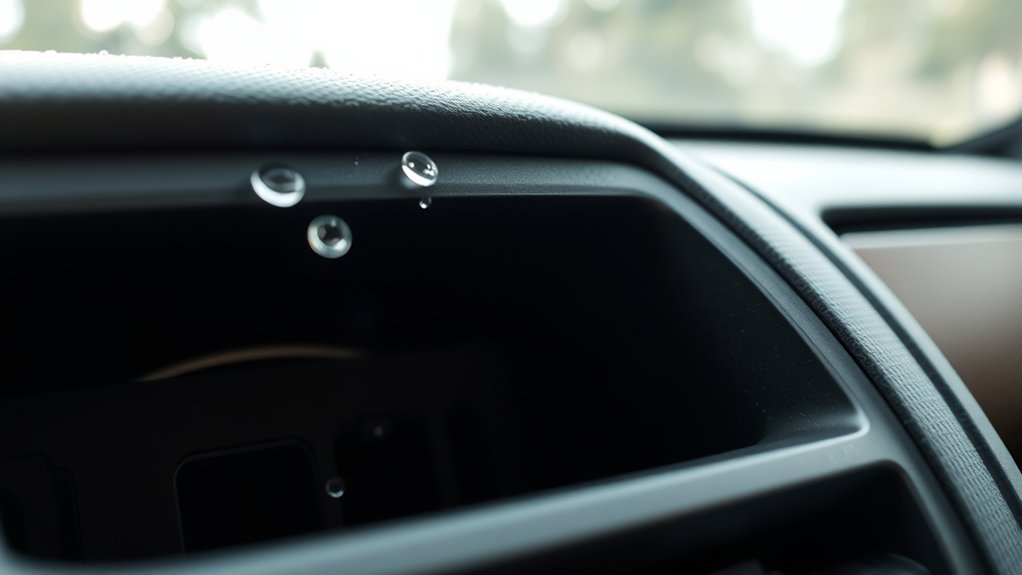
If moisture can’t exit your car’s air conditioning system because of a clogged drain, stagnant water will start to build up. This creates the perfect environment for bacteria and mold to grow.
The buildup happens in the evaporator pan, where water pools when the AC drain is blocked.
As these microorganisms multiply, they give off a distinctive vinegar smell you’ll notice when your car’s air conditioner is running. This odor comes from bacterial byproducts reacting with the trapped moisture.
Regular maintenance, like clearing the clogged AC drain, is key to preventing water buildup and keeping airflow efficient.
If you ignore the problem, the bad odors will stick around, and it could even harm your AC system.
Taking care of the clogged drain quickly stops the vinegar smell and helps your AC keep working well.
Why Mold Grows in Your Car’s AC System
You’ll find mold growing in your car’s AC system mainly because moisture builds up on the evaporator coil and drainage areas when the system is running.
This damp environment is perfect for mold to grow, especially if water gets stuck due to clogged drain lines or a dirty cabin air filter. When that happens, the water doesn’t drain properly and just sits there, making it easy for microbes to thrive.
That’s why you often notice a vinegar-like smell coming from your vents—it’s a sign that mold is growing inside your system.
Knowing this can help you figure out why that smell shows up and what you can do to stop it.
Moisture Buildup Causes
Because condensation forms as the air conditioner cools the air inside your car, moisture naturally accumulates within the evaporator and ductwork. This moisture buildup in the AC system mainly happens in the evaporator housing, where cool temperatures cause water vapor to condense.
A few things can make this worse. High humidity levels, especially during rainy or humid weather, increase condensation. Also, clogged or blocked AC drain lines stop water from draining properly, so it just sits there.
Plus, using the defrost mode often cools warm, humid air, which creates even more condensation.
All this trapped moisture makes a damp environment that encourages mold and bacteria to grow. To keep moisture under control, check that your AC drain lines are clear.
It’s also a good idea to maintain the system regularly, including cleaning or replacing the cabin air filter to help reduce excess moisture.
Microbial Growth Conditions
When moisture accumulates inside your car’s AC system, it creates an ideal environment for mold and bacteria to thrive. The AC system’s evaporator, ducts, and cabin air filter trap moisture, especially during high humidity levels or after defrosting.
This trapped moisture, combined with clogged drain lines causing stagnant water, greatly promotes microbial growth.
Mold and bacterial growth emit a distinctive vinegar-like odor, signaling contamination within the system. Understanding these microbial growth conditions is essential for effective prevention.
Regularly cleaning the evaporator and replacing the cabin air filter disrupts this environment, reducing moisture retention and controlling humidity levels inside the system.
By monitoring and maintaining these components, you can keep your AC free of mold and bacteria. This helps preserve air quality and ensures the system runs efficiently.
It’s a simple way to avoid unpleasant smells and maintain a healthy environment inside your car.
How Replacing the Cabin Air Filter Helps Stop Vinegar Smell
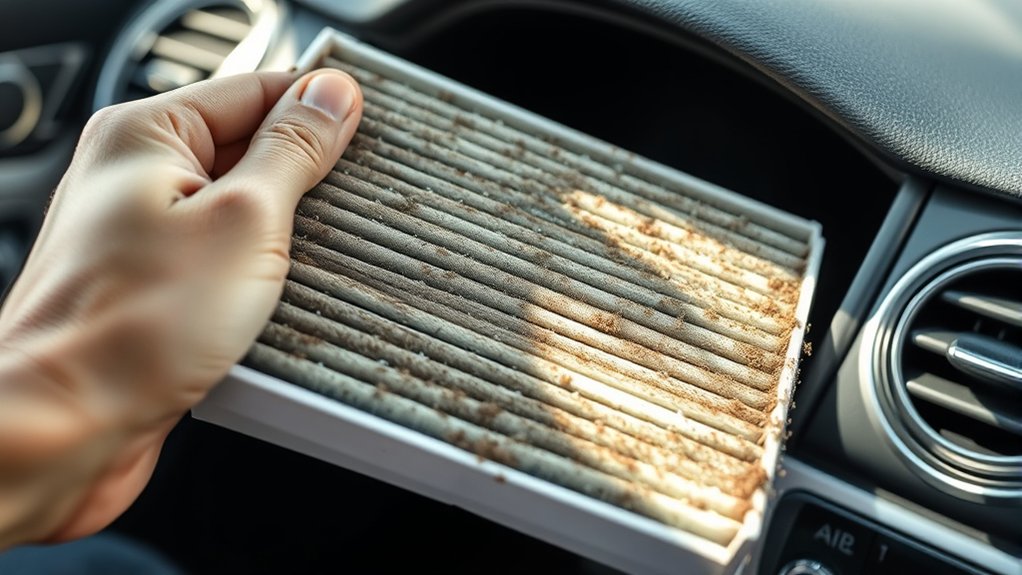
Although unpleasant vinegar smells often come from microbial growth inside your car’s air conditioning system, replacing the cabin air filter directly tackles this problem by removing trapped bacteria and mold.
A dirty cabin air filter makes the vinegar smell worse by restricting airflow and holding in moisture, which encourages microbial growth.
When you get your AC system checked, keep these benefits of replacing the cabin air filter in mind:
- It gets rid of bacteria and mold buildup that cause those vinegar odors.
- It improves airflow, helping the system dry out properly and cut down on microbial growth.
- It boosts odor absorption, especially if you use high-quality filters with activated charcoal.
Replacing your cabin air filter regularly, usually every 12,000 to 15,000 miles, helps keep your air quality at its best and stops those vinegar-like smells from coming back.
Clean Your AC Vents and Evaporator for Fresh Air
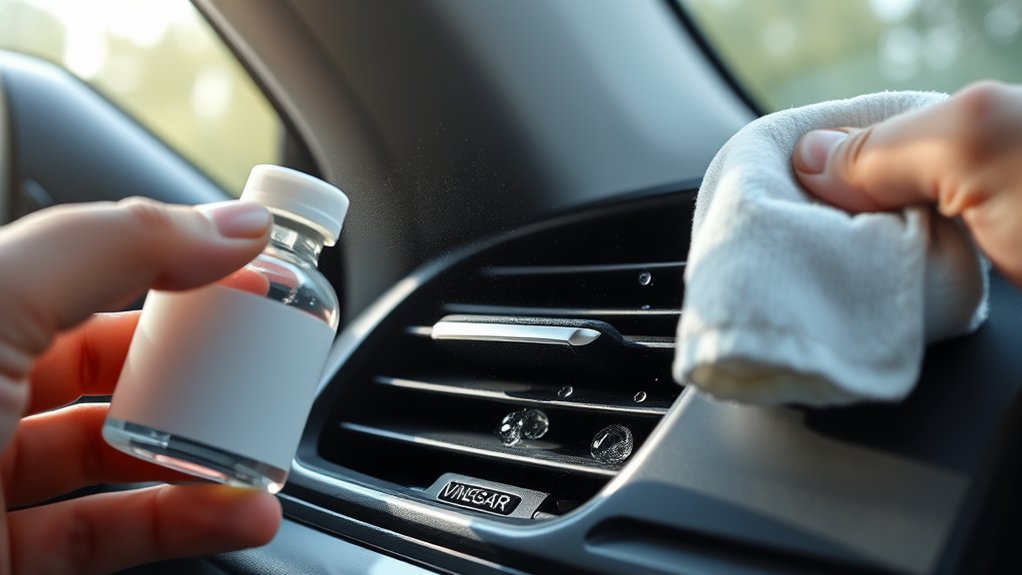
If you want to eliminate vinegar-like odors from your car’s air conditioning system, you need to clean the AC vents and evaporator regularly. Mold and bacteria build up on these parts, which causes those unpleasant smells.
Start by using disinfecting sprays along with microfiber cloths and soft brushes to clean the AC vents thoroughly. This will help remove surface contaminants.
Next, access the evaporator, which is usually behind the dashboard, and clean it carefully. This reduces microbial growth since moisture tends to collect there.
Also, make sure to inspect and clear the AC drain line to prevent water buildup that can promote mold formation.
Keeping these parts clean improves airflow and the air quality inside your vehicle. Regular cleaning combined with replacing the cabin air filter once a year will guarantee a fresh-smelling system and efficient cooling.
This way, you can minimize those vinegar-like odors effectively.
How Automotive AC Cleaners Eliminate Mold and Odors
Automotive AC cleaners target and eliminate mold and bacteria within your vehicle’s air conditioning system by delivering antimicrobial agents directly into the vents.
These agents penetrate hard-to-reach areas and neutralize unpleasant odors like vinegar.
Here’s how automotive AC cleaners work to eliminate mold and odors: They spray antimicrobial solutions into the AC vents, reaching hidden microbial growth zones.
Deodorizing properties in the cleaners neutralize odors and leave a fresh scent.
Some cleaners also protect evaporator coils, which helps maintain airflow and prevents moisture buildup that mold loves.
Tips to Keep Your Car AC Dry and Odor-Free
Keeping your car’s air conditioning system dry plays a key role in preventing mold growth and the vinegar-like odors they produce. To avoid persistent car AC smells, maintain drain lines by regularly clearing clogs that trap stagnant water, a prime environment for mold.
After using the AC, run the fan for several minutes to help evaporate residual moisture. During colder months, cycle the AC occasionally to keep the evaporator dry. Setting your HVAC system to auto mode helps balance humidity and reduce moisture buildup.
Don’t forget to check and replace the cabin air filter at least annually; this prevents bacteria and moisture accumulation that contribute to odors.
Following these steps guarantees your car’s AC stays dry, odor-free, and functions efficiently. It’s an easy way to keep your drive fresh and comfortable!
When to Call a Professional for AC Mold or Drain Issues
How do you know when your car’s AC issues require professional attention? If persistent vinegar smells linger despite your efforts, it signals mold contamination beyond the reach of basic cleaning.
Here’s when to call a professional:
1. Persistent Odors and Reduced Airflow: Lingering smells combined with weak airflow often indicate a malfunction or mold buildup that a Duct Cleaner alone can’t fix.
2. Drainage Problems: If humidity worsens the odor, your evaporator drain pan might be clogged, causing stagnant water and mold growth.
Professionals have the tools to clear these blockages and identify the root cause.
3. Refrigerant or Component Malfunctions: Handling refrigerant issues or repairing malfunctioning parts requires specialized equipment and expertise to guarantee safety and compliance.
Addressing these problems professionally prevents further damage and effectively eliminates the root cause.
How Regular AC Maintenance Prevents Vinegar Smells
If you want to prevent persistent vinegar smells from developing in your car’s AC system, regular maintenance plays a key role.
Regular AC maintenance, such as annual cabin air filter replacement, limits mold and bacterial buildup. These are the primary sources of vinegar smells.
Cleaning the AC system and components reduces moisture accumulation. Moisture is what fosters microbial growth, so keeping things dry really helps.
Also, periodic inspections of AC drain lines guarantee proper drainage. This prevents stagnant water that emits foul odors.
Running the AC in “auto” mode helps regulate humidity, which minimizes moisture-related issues.
Plus, professional HVAC servicing identifies and addresses potential problems early. This keeps the system efficient and controls odors.
By following these maintenance steps, you effectively reduce moisture accumulation and microbial proliferation.
This way, your car’s air conditioner stays smelling fresh and functioning efficiently.
Frequently Asked Questions
Can Vinegar Smell Damage My Car’s Interior Materials?
Yes, vinegar smell can cause interior material reactions, leading to corrosion and deterioration over time.
Your upholstery and dashboard plastics might absorb the odor, resulting in odor absorption effects that stain fabrics and carpets.
When you use cleaning products, be cautious.
Some disinfectants may interact negatively with sensitive materials, causing discoloration or damage.
To protect your car’s interior, maintain your AC system regularly and choose cleaning products compatible with your car’s surfaces.
Taking these steps can really help keep your car looking and smelling fresh.
Is a Vinegar Smell Harmful to My Health While Driving?
Sure, you love inhaling vinegar odor sources while driving, said no one ever.
That sour smell often signals mold or bacteria. These can degrade your air quality and cause serious health impacts.
Breathing in this contaminated air might trigger allergies, asthma, or respiratory issues, especially if you’re sensitive.
Can Other Car Fluids Cause a Vinegar-Like Odor in the AC?
Yes, other car fluids like battery acid, brake fluid, coolant, and oil can cause a vinegar-like odor in your AC.
To address this, focus on fluid leak identification during regular AC maintenance. Inspect for leaks promptly and use odor prevention strategies like cleaning the evaporator and replacing cabin filters.
Keeping fluids topped off and fixing leaks early helps maintain air quality. It also prevents those sour smells from invading your car’s interior.
Staying on top of these small issues can make a big difference in how fresh your car feels.
How Often Should I Replace the Cabin Air Filter to Avoid Smells?
You should follow the recommended cabin filter maintenance by replacing the cabin air filter every 12,000 to 15,000 miles or at least once a year.
In dusty or polluted areas, increase the filter replacement frequency to about every 6,000 miles.
Regular filter replacement helps prevent odors by eliminating trapped dirt and moisture.
For odor prevention tips, always check your vehicle’s manual for specific guidelines and inspect the filter regularly to guarantee peak air quality.
Are There Specific Car Models More Prone to Vinegar AC Odors?
Like a sponge soaking up water, some car models trap moisture in their HVAC systems more than others.
You’ll find that vehicles with less efficient drainage and older designs often face vinegar odors.
When comparing models, focus on those with advanced AC maintenance tips and odor prevention strategies, such as high-quality cabin filters and better ventilation.
Staying informed on car model comparisons helps you target the best solutions to keep your AC smelling fresh.
Conclusion
If your car’s AC smells like vinegar, it’s more than just an annoyance. It’s usually a sign of mold, clogged drains, or a dirty filter. Ignoring these issues only lets the odors multiply and turn your drive sour.
By regularly replacing filters, cleaning the system, and keeping drains clear, you can breathe fresh air again. A well-maintained AC isn’t just about comfort. It’s your car’s silent guardian against unwanted smells.
Don’t let vinegar win. Act now and keep your car smelling fresh!