How Do You Drain a Portable Air Conditioner in 3 Easy Steps?
To drain your portable air conditioner, first turn off and unplug it. Then locate the drain port, which is usually at the bottom or mid-back of the unit.
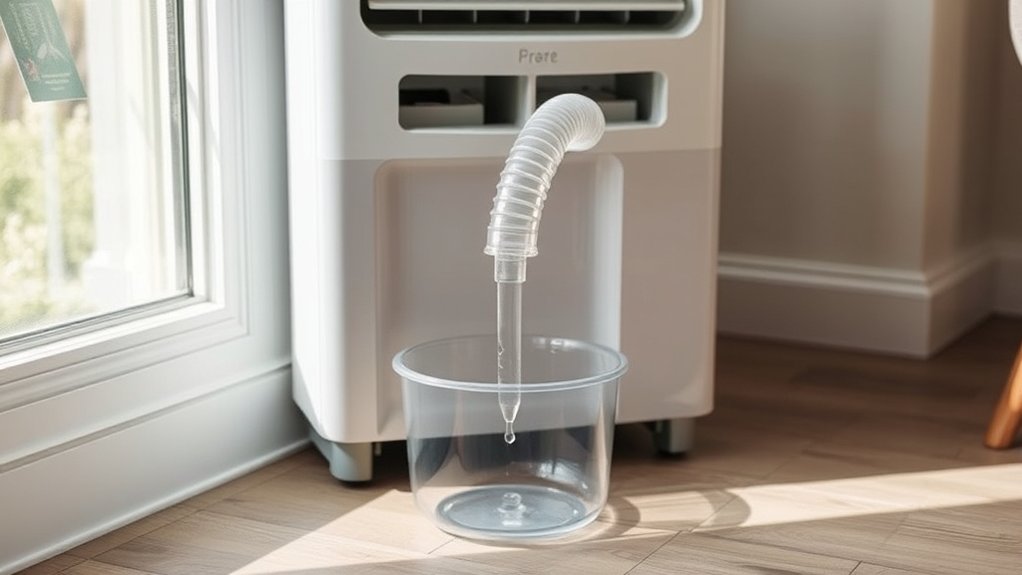
Next, securely attach the drain hose to the appropriate port. Position it so the water can flow out easily by gravity into a container or sink.
Finally, drain the water completely. Tighten the drain cap to prevent leaks and clean the drain area. Following these steps guarantees efficient drainage. You can explore further details for ideal maintenance.
Turn Off Your Portable Air Conditioner and Locate the Drain Port
Before you begin draining your portable air conditioner, always turn it off and unplug it to guarantee your safety.
Once powered down, consult your user manual to identify the exact location of the drain port. It’s usually positioned at the bottom or mid-back of the unit.
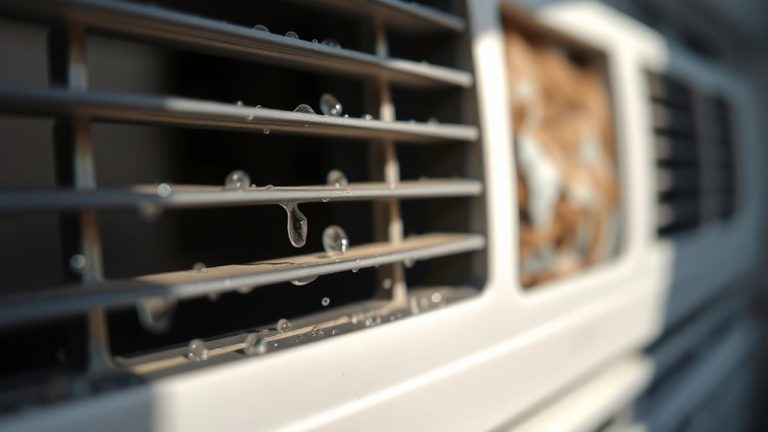
This drain port serves as the outlet for excess water during the drainage process.
Before you proceed, check the area around the drain port to make sure it’s clean and free of blockages. Blockages can slow down or stop the water from flowing properly.
Get a drip tray ready to catch any residual water when you remove the drain cap.
Following these simple steps helps ensure a safe and efficient start to draining your unit. It also minimizes the risk of water spillage during maintenance.
Attach and Position the Drain Hose for Proper Water Flow
Once you’ve located and cleared the drain port, the next step is to attach the drain hose securely. Identify whether you’ll use the lower port for manual drainage or the upper port for continuous drainage. Connect the drain hose firmly to the chosen port to guarantee a secure attachment, preventing leaks.
Next, position the hose so it directs water towards your designated drainage location, such as a sink or container. Arrange the hose to maintain a smooth, downward slope, enabling gravity to assist proper water flow. Avoid kinks or sharp bends in the hose, as these can block water passage and cause overflow.
Make sure to double-check the hose’s placement before you start draining. This will help keep the drainage process efficient and effective for your portable air conditioner.
Drain the Water, Replace the Cap, and Clean Your Portable AC
Start by turning off and unplugging your portable air conditioner to guarantee safety during the drainage process.
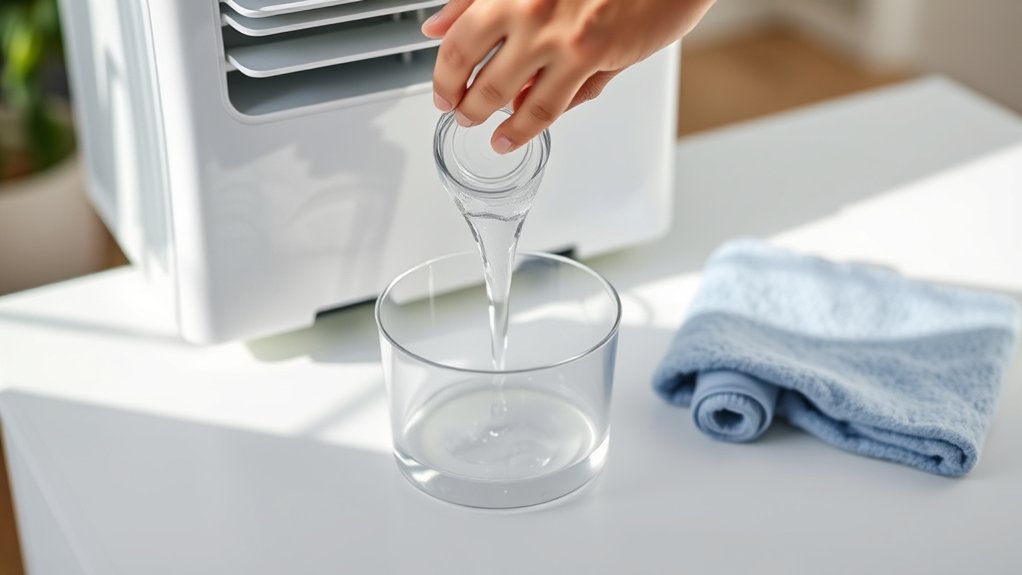
Next, verify the drain hose is properly positioned downward to facilitate gravity-assisted flow. Carefully drain the water through the hose into a suitable container or sink, monitoring until fully emptied.
Once drainage is complete, securely replace the cap on the drain port to prevent leaks and maintain the unit’s integrity.
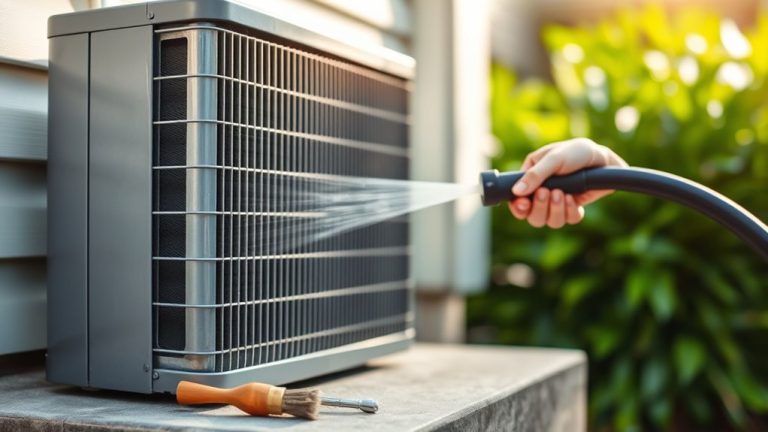
Afterward, clean your portable AC by wiping down the drain port and hose connection to remove any residue or buildup that could impede performance.
This routine helps keep your unit efficient and ready for normal operation. It also prevents water damage and extends the functional lifespan of your air conditioner.
Frequently Asked Questions
How Often Should I Drain My Portable Air Conditioner?
You should adjust your drain frequency based on water accumulation and humidity levels. In high humidity, expect to drain every few hours during cooling mode, while in dry mode, it may be less frequent.
Regularly monitor the water tank to prevent overflow.
Keep an eye out for rapid water buildup—that’s a sign you need to drain more often.
It’s also a good idea to change your draining schedule with the seasons. This way, you’ll keep your portable air conditioner running smoothly and avoid any potential damage.
Can I Use Any Type of Hose for Draining?
You can’t use just any hose for draining; selecting proper drainage hose options is essential.
Compare hose materials. Smooth PVC hoses reduce clogging better than ribbed ones.
Think about hose length carefully. Too long can hinder flow, and too short limits placement.
For DIY drainage solutions, make sure the hose fits the drain port snugly and keeps a downward angle.
Avoid narrow or kink-prone hoses. They restrict water flow and may cause overflow.
What if My Portable AC Has No Visible Drain Port?
If your portable AC has no visible drain port, first check the troubleshooting guide for alternative drain options or hidden ports.
Lots of units use self-evaporating systems, so you mightn’t need to drain it manually.
Also, look out for continuous drainage features or drainage caps that you might’ve missed.
It’s a good idea to read the user manual thoroughly for moisture control and maintenance tips.
If you’re still unsure, don’t hesitate to contact customer support.
They can help ensure proper drainage and prevent moisture buildup, keeping your AC running smoothly.
Is It Safe to Drain Water Indoors?
Yes, it’s safe to drain water indoors if you control indoor humidity and prevent water damage. Use reliable drainage methods like a securely connected hose and a large container to catch water.
Make sure to monitor the area frequently to avoid spills. Spills can harm air quality and promote mold growth.
Also, guarantee proper ventilation to maintain healthy air quality. Taking these precautions helps you manage moisture without risking damage or unhealthy indoor conditions.
How Do I Prevent Mold Buildup Inside the Unit?
To prevent mold buildup inside your unit, focus on regular maintenance to keep mold at bay. Clean the drain port and hose frequently to avoid clogs. This simple step can make a big difference.
Keep the humidity under control by maintaining consistent temperature settings and ensuring the room is properly ventilated. Also, using self-evaporating models helps reduce moisture buildup inside the unit. These actions help improve air quality by minimizing excess moisture, which stops mold from growing.
Staying methodical with upkeep is key. It not only keeps your portable air conditioner running efficiently but also ensures it stays mold-free.
Just a little regular care goes a long way!
Conclusion
Now that you’ve mastered draining your portable air conditioner, you’re practically a water-wrangling pro! With just these three precise steps: turning off and locating the drain port, attaching and positioning the hose, then draining and sealing, you prevent water from turning your space into a swamp.
Follow this method every time, and you’ll keep your AC running efficiently and your floors bone-dry, no matter how humid it gets. Drain like a pro, every time!