5 Costs to Know: How Much to Fix Your Car Air Conditioner
You’ll typically spend between $150 and $2,000 fixing your car air conditioner, depending on labor costs, vehicle make, and repair type. A simple AC recharge costs $150 to $400 but may include diagnostic fees up to $150.
Replacing the compressor runs $800 to $2,000, with labor affecting the total. Clutch or hose repairs cost $200 to $700. Acting early and combining repairs can save you money.
Keep exploring to understand where these costs come from.
How Labor and Vehicle Type Influence Car AC Repair Costs
Because labor rates and vehicle specifics directly impact repair expenses, understanding these factors helps you anticipate the cost of fixing your car’s air conditioner.
Labor costs typically range from $100 to $200 per hour, influenced by diagnostic complexity and geographic location. Urban areas often charge more.
Your vehicle make and model also affect repair costs. Luxury or newer models may require specialized parts, which can increase expenses. Minor fixes usually demand less labor and lower costs.
On the other hand, replacements of major components, like a compressor replacement, can considerably raise your AC repair bill.
Routine maintenance can prevent costly repairs. But knowing these variables lets you budget accurately.
Evaluating labor intensity alongside your vehicle’s particular needs guarantees you manage both time and expense effectively when addressing AC issues.
It’s all about staying informed so you’re not caught off guard.
Car AC Recharge Costs: What to Expect
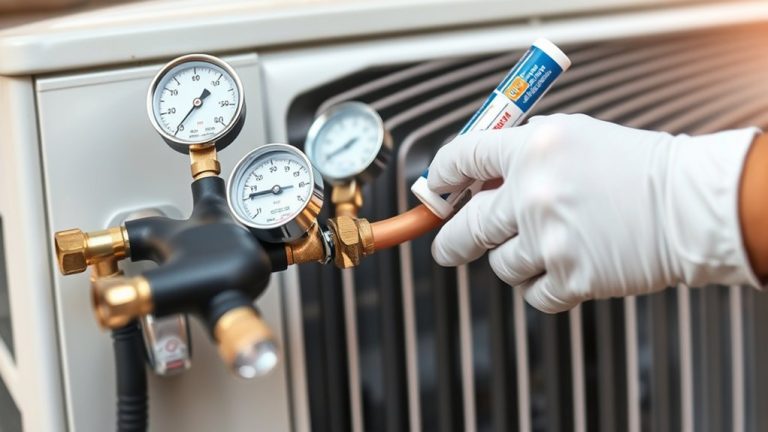
How much should you expect to pay when recharging your car’s AC system? Car AC recharge costs typically range between $150 and $400, depending on your vehicle and the repair shop.
The average cost for a professional service usually falls between $400 and $550, including refrigerant recharge and minor repairs. Before recharging, diagnostic fees of $100 to $150 often apply to identify issues accurately.
Professional AC service averages $400-$550, with diagnostics costing an additional $100-$150 before repairs.
Compressor replacement costs exceed $1,500, but recharging refrigerant is a more affordable fix.
If you want to save, DIY recharge kits provide a cost-effective alternative by eliminating labor fees.
However, professional services guarantee precise refrigerant levels and system integrity.
Understanding these factors helps you budget appropriately and decide whether to visit a repair shop or handle minor repairs yourself.
Costs to Replace the AC Compressor in Your Car
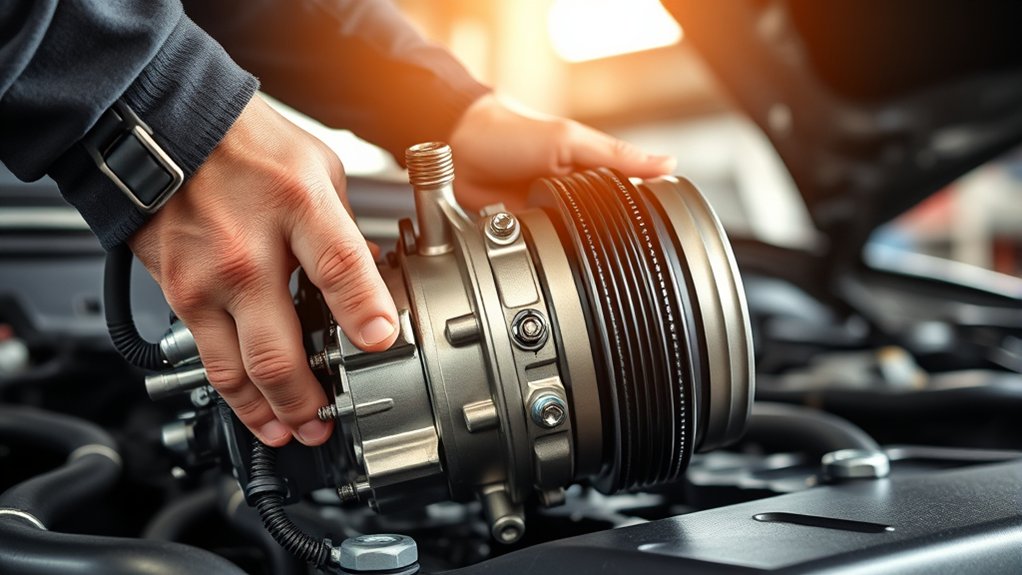
Replacing the AC compressor in your car typically costs between $800 and $2,000, depending on your vehicle model and labor rates. The AC compressor cost varies considerably, with common vehicles averaging $700 to $800.
Luxury vehicles demand higher repair costs due to specialized parts and labor.
Labor costs usually range from $100 to $200 per hour, which influences the total expense. When you replace the entire compressor, mechanics also assess refrigerant levels and check for major issues that could arise from compressor failure.
Addressing these promptly helps avoid further damage to your car air conditioning system. Since compressor failure is a critical AC repair, timely intervention minimizes overall repair costs and guarantees your car’s air conditioning functions efficiently.
How Much It Costs to Fix AC Clutches and Hoses
When was the last time you checked your car’s AC clutch and hoses for wear or damage? The AC compressor clutch replacement typically costs between $400 and $700. This price depends a lot on your vehicle’s make and model.
Replacing AC hoses usually runs from $200 to $600. It really depends on the type of hose and how tricky the installation is. Labor costs generally range from $100 to $200 per hour.
Plus, there are diagnostic fees that add $100 to $150 before any repairs get started. Ignoring problems with AC clutches or hoses can lead to bigger repair bills down the road because the damage gets worse.
| Repair Type | Repair Costs ($) | Notes |
|---|---|---|
| AC Compressor Clutch | 400 – 700 | Varies by vehicle make/model |
| AC Hoses | 200 – 600 | Depends on hose and complexity |
| Labor Costs | 100 – 200/hr | Regional & shop dependent |
| Diagnostic Fees | 100 – 150 | Charged before repairs |
Tips to Save Money on Car AC Repairs
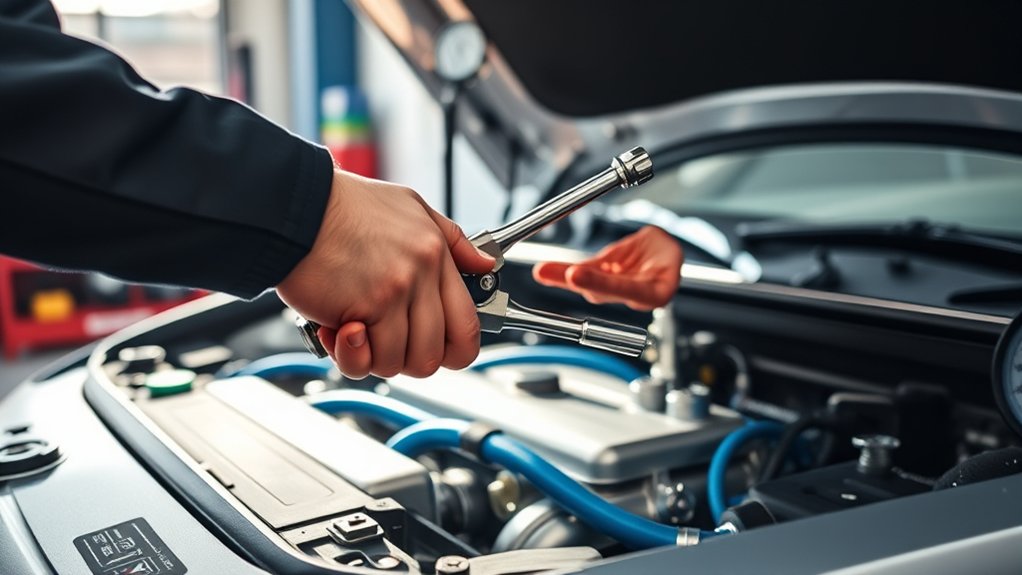
Although car AC repairs can become costly, you can significantly reduce expenses by performing regular preventive maintenance and promptly addressing minor issues. Maintenance helps identify low refrigerant levels early, which means you can use a car AC recharging kit for a cost-effective fix.
Keep an eye out for warning signs like strange noises or warm air. Acting quickly can save you a lot since fixing major problems often exceeds $1,000.
You can also save money by handling simple DIY tasks such as replacing cabin air filters or checking for leaks. This way, you reduce labor charges.
When you visit repair shops, try to combine repairs if you have multiple issues to cut down overall labor costs.
In the end, prioritizing regular maintenance and early intervention is key to managing AC repair costs efficiently.
Frequently Asked Questions
How Long Does a Typical Car AC Repair Take?
A typical car AC repair time ranges from 30 minutes to several hours, depending on system complexity and vehicle make.
The diagnostic process often takes 1-2 hours to identify common issues. This can be influenced by refrigerant types and part availability.
Technician experience also plays a role in how repairs are done and how fast they go.
Simple fixes like a refrigerant recharge usually take less time. But if you need a compressor replacement, that will take longer.
Labor costs tend to match how long the repair takes and where the parts come from.
Can a Car AC Leak Be Fixed Without Replacing Parts?
Think of your car AC like a leaky garden hose; sometimes a quick patch stops the drip. Yes, you can fix a car AC leak without replacing parts by using sealant used for temporary fixes.
Start with leak detection via DIY solutions like UV dye. A refrigerant refill might help temporarily, but system inspection and evacuation process by a pro guarantee lasting repair.
Regular maintenance tips prevent costly damage. Always seek professional advice for accurate cost estimates.
Is It Safe to Drive With a Broken Car AC?
You can drive with a broken car AC, but it definitely makes your drive less comfortable. The cabin temperature can get pretty uncomfortable, especially when the weather is extreme.
If you’re exposed to heat for too long, it might raise health risks like dehydration or heat exhaustion.
Plus, the extra strain on your engine could lower fuel efficiency and overall performance.
There are safety concerns too. You might find it harder to focus, and your windshield could fog up.
How Often Should I Service My Car’s Air Conditioner?
You should schedule air conditioner maintenance at least once a year, focusing on seasonal checks.
Regularly inspect refrigerant levels and replace cabin air filters to maintain system efficiency.
Watch for unusual noises or odor problems, as these can signal potential compressor issues that need a professional inspection.
Avoid DIY repairs on complex parts to prevent damage.
Timely service helps catch issues early, making sure your AC performs well and lasts longer.
It’s definitely worth keeping up with these simple steps to stay cool and comfortable.
Are Aftermarket AC Parts as Reliable as OEM Parts?
Aftermarket AC parts can match OEM parts in quality, but you need to weigh the benefits of aftermarket parts against the advantages of OEM ones.
Think about cost differences, how they perform, and what kind of warranties come with each option. It’s important to look at all these factors carefully before making a decision.
Installation can be a bit tricky sometimes, and reliability may vary depending on the brand and how the parts are made.
Checking out customer reviews is a smart move to see how these parts hold up over time on real vehicles.
OEM parts usually offer consistency and solid warranties, so they’re a safe bet if you want peace of mind.
On the other hand, aftermarket parts might save you some money, but you’ll want to do your homework to make sure they’re durable and compatible with your car.
Conclusion
Fixing your car’s AC is like tuning a delicate instrument. Each part, from labor to compressor, plays an essential role in the final harmony. Knowing the costs upfront helps you avoid surprises and keep cool without breaking the bank.
By understanding recharge fees, clutch repairs, and hose replacements, you can navigate repairs with precision. Armed with these insights, you’ll save money and drive comfortably, no matter how hot the road ahead gets.