5 Tips to Set Your Air Conditioner Temperature in Summer
Set your air conditioner to 78°F for ideal comfort and energy savings. Use a programmable thermostat to raise temperatures between 80°F and 85°F when you’re away. This helps reduce energy use without sacrificing coolness when you return.
Managing humidity is important too. Make sure your insulation is proper and change filters on time to keep your AC running efficiently. Ceiling fans can boost the wind-chill effect, making your space feel cooler without cranking the AC. Also, sealing leaks prevents air loss, which saves energy.
Don’t forget regular AC maintenance to keep things performing well. There are lots of practical strategies out there for smarter cooling, so keep exploring!
Recommended AC Temperatures for Comfort and Energy Savings
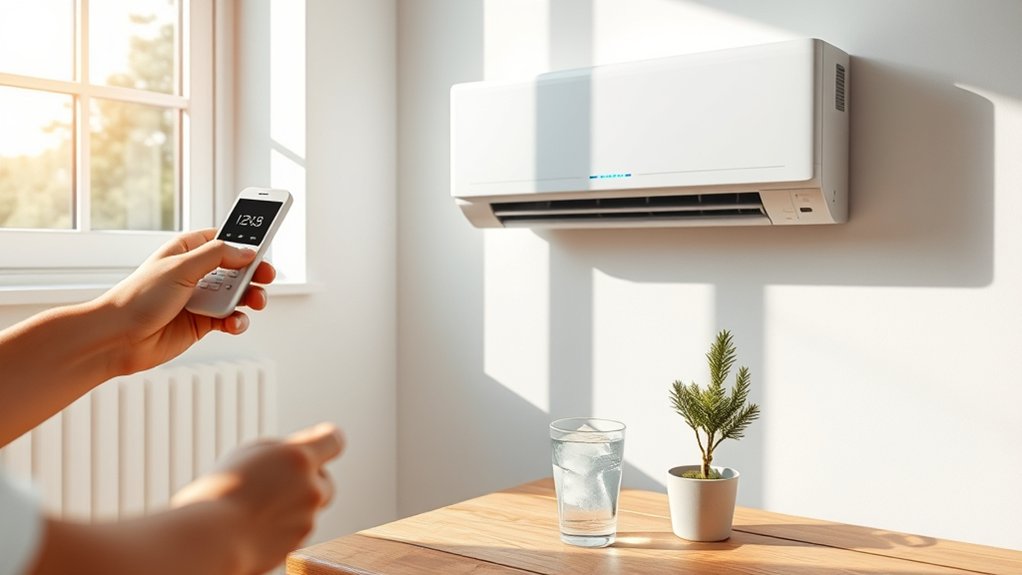
When you want to balance comfort with energy savings during the summer, setting your thermostat to 78°F while at home is ideal. This recommended setting enhances your cooling system’s efficiency without sacrificing comfort.
Using a programmable thermostat, you can adjust the AC temperature to higher levels, between 80°F and 85°F, when you’re away, preventing unnecessary energy use.
Even raising the temperature by one degree can greatly improve energy savings. Proper maintenance, including changing air filters every 1–3 months, guarantees your system operates at peak energy efficiency.
While humidity influences perceived comfort, maintaining your cooling system correctly helps it remove moisture effectively, supporting the thermostat’s performance.
Following these guidelines guarantees your AC runs efficiently, keeps your home comfortable, and reduces unnecessary energy consumption.
It’s really about small changes that make a big difference in your energy bill and comfort level. So, give it a try and see how much you can save!
How Humidity and Your Home Affect AC Cooling
Although your thermostat controls temperature, humidity plays a critical role in how cool your home feels. High humidity elevates perceived temperature, often requiring you to lower AC settings to maintain your comfort level. Your air conditioning system must be properly sized to effectively remove moisture.
If your unit is undersized, it reduces energy efficiency and increases utility costs. Poor insulation worsens indoor climate by allowing humidity buildup, which makes it harder for your AC to cool efficiently.
Direct sunlight also raises temperature and humidity, adding to your AC’s workload. Regularly replacing air filters optimizes airflow and moisture control, which boosts system performance.
Adjust AC Temperature When You’re Away to Save Energy
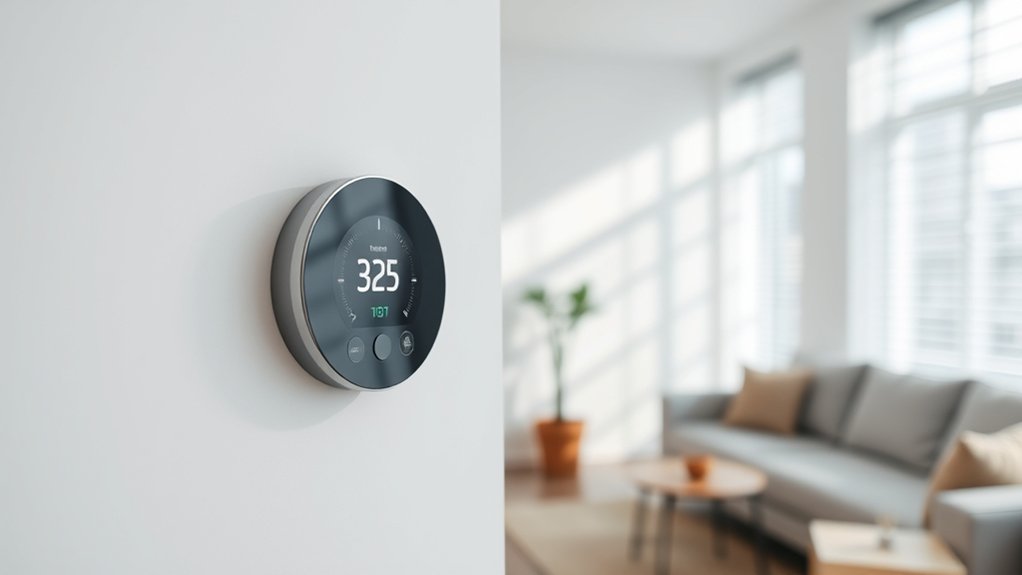
If you plan to be away from your home for several hours or more, raising your air conditioner’s temperature setting to between 80°F and 85°F can greatly reduce energy consumption.
Adjusting your thermostat settings while away uses the setback strategy, which helps save energy without compromising comfort when you return.
Using the setback strategy saves energy while ensuring comfort when you return home.
Consider these points: Every degree you raise the temperature to set reduces the workload on your HVAC system, lowering energy bills.
Smart thermostats allow remote cooling adjustments, so you maintain a comfortable temperature upon arrival without unnecessary energy use during absence.
Maintaining an ideal temperature during your absence improves your AC system’s efficiency, enabling quicker recovery to your preferred cooling level.
This approach optimizes energy use and guarantees effective cooling management.
Use Fans and AC Maintenance to Boost Cooling Efficiency
Beyond adjusting your thermostat settings while you’re away, boosting your cooling efficiency means mixing smart fan use with regular AC maintenance.
Ceiling fans create a wind-chill effect that makes the air feel up to 4°F cooler. This way, you can turn up your thermostat without losing comfort and save more energy.
Make sure to replace air filters every 1 to 3 months to keep the airflow just right.
Also, seal any leaks around windows and doors so cool air doesn’t escape. These simple steps really help keep your home comfortable.
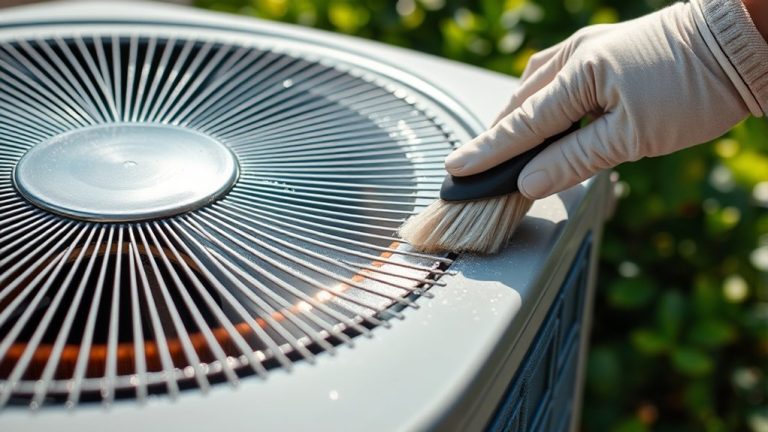
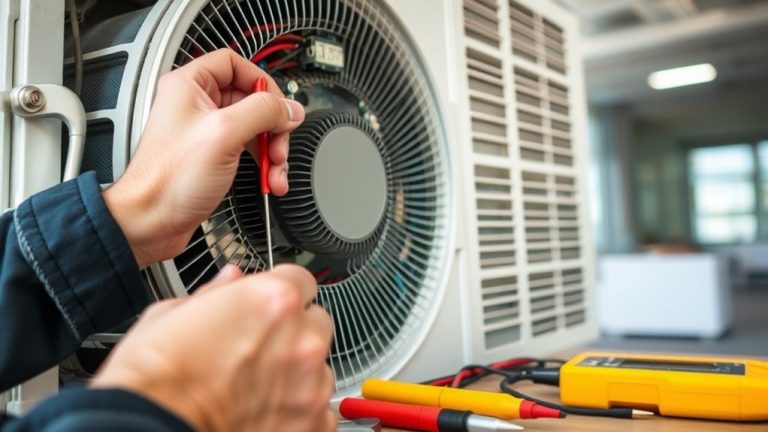
It’s a good idea to schedule annual professional AC maintenance too. This helps catch any problems early, so your system runs at its best and avoids expensive repairs.
Plus, programmable thermostats are a great tool. They adjust the cooling schedule automatically to save energy while keeping you comfy when you’re home.
By putting all these practices together, you’ll improve cooling efficiency, lower your energy use, and make your air conditioning system last longer.
It’s a win-win for your comfort and your wallet.
Avoid AC Temperature Myths That Waste Energy
While it might seem intuitive to set your AC to a lower temperature for faster cooling, doing so only extends the unit’s runtime without speeding up the process.
Efficient thermostat settings depend on understanding your home’s needs and local climate.
Avoid these common myths to optimize your air conditioner’s energy savings and comfort:
- Lower thermostat settings don’t cool your home faster; they reduce efficiency by increasing runtime.
- Turning off your AC when away can cause higher energy use upon restart. Keeping a steady temperature is actually more efficient.
- Higher humidity doesn’t require drastically lower temperatures. Controlling humidity levels is key for comfort without wasting energy.
Frequently Asked Questions
Can Setting My AC Too Low Cause Health Problems?
Yes, setting your AC too low can cause health problems.
Improper temperature regulation may lead to respiratory issues and skin irritation because of dry air. It also disrupts humidity levels, which can increase health risks and discomfort, especially for those with chronic conditions.
Extreme indoor-outdoor temperature differences can cause thermal shock, affecting your comfort and sleep quality.
Plus, keeping your home unnecessarily cold boosts energy use without any real benefits.
How Does AC Temperature Affect Indoor Air Quality?
Sure, crank your AC to Arctic levels and invite mold growth, dust accumulation, and allergens presence to your home party!
Seriously though, setting the right AC temperature controls indoor humidity and stabilizes temperature variations, which boosts ventilation quality and air circulation.
This reduces respiratory health risks and improves comfort levels. Plus, it enhances energy efficiency.
Are Smart Thermostats Worth the Investment for Summer Cooling?
Yes, smart thermostats are worth the investment for summer cooling. Their user-friendly features and programmable settings allow you to optimize temperature schedules, maximizing energy savings.
Remote access lets you adjust settings anywhere, enhancing convenience.
Although installation costs and compatibility issues exist, the environmental impact and reduced energy bills justify the expense. Just follow some simple maintenance tips to guarantee peak performance.
All in all, smart thermostats offer a precise, efficient solution for managing your cooling system. They really make staying comfortable in the summer easier and more affordable.
Does the Type of AC Unit Influence Optimal Temperature Settings?
Yes, AC unit types directly influence ideal temperature settings due to their cooling capacity and energy efficiency.
Central systems excel in humidity control at around 78°F, while window units may need lower thermostat settings for comfort in extreme heat.
Ductless mini-splits allow precise adjustments per room, improving comfort levels.
Maintenance tips and installation factors also affect performance.
You should make seasonal adjustments based on unit age and usage to maximize efficiency and comfort.
Can Closing Vents in Unused Rooms Improve Cooling Efficiency?
Imagine you close vents in your guest room to save energy, but your system struggles with increased strain.
Restricting vent airflow disrupts air circulation, causing uneven room temperature and reduced humidity control.
This imbalance raises cooling costs and lowers comfort levels.
Instead, maintain balanced airflow for ideal energy efficiency. Use ceiling fans and follow maintenance tips like seasonal adjustments.
These steps help guarantee your AC operates efficiently without added strain or discomfort.
It’s better to keep things balanced than to risk problems down the line.
Conclusion
Setting your air conditioner to 78°F when you’re home can cut energy use by up to 10%. This saves money without sacrificing comfort. It’s a simple change that makes a big difference.
Remember, humidity and home insulation also impact cooling efficiency. So, it’s a good idea to address those too. They play a role in how well your AC works.
Adjust your AC temperature when you’re away. Use fans to help circulate air and keep things cool. Also, maintain your unit regularly to keep it running smoothly.
Avoid common myths that lead to wasted energy. By following these tips, you’ll keep cool efficiently and reduce your energy bills this summer. It’s all about smart choices that add up!