Why Is My Window Air Conditioner Leaking Water?
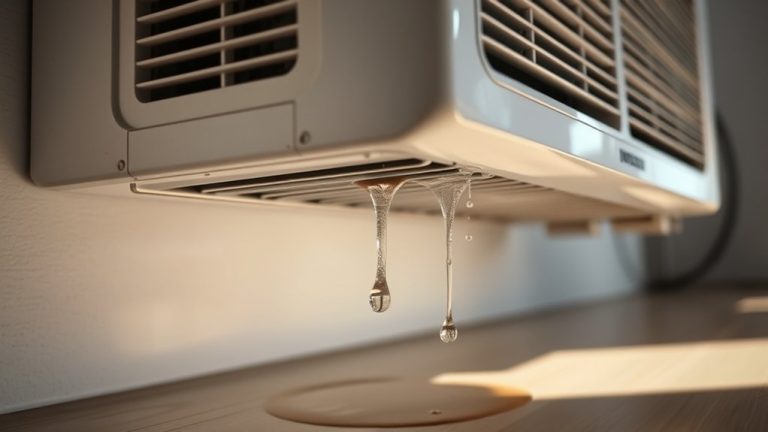
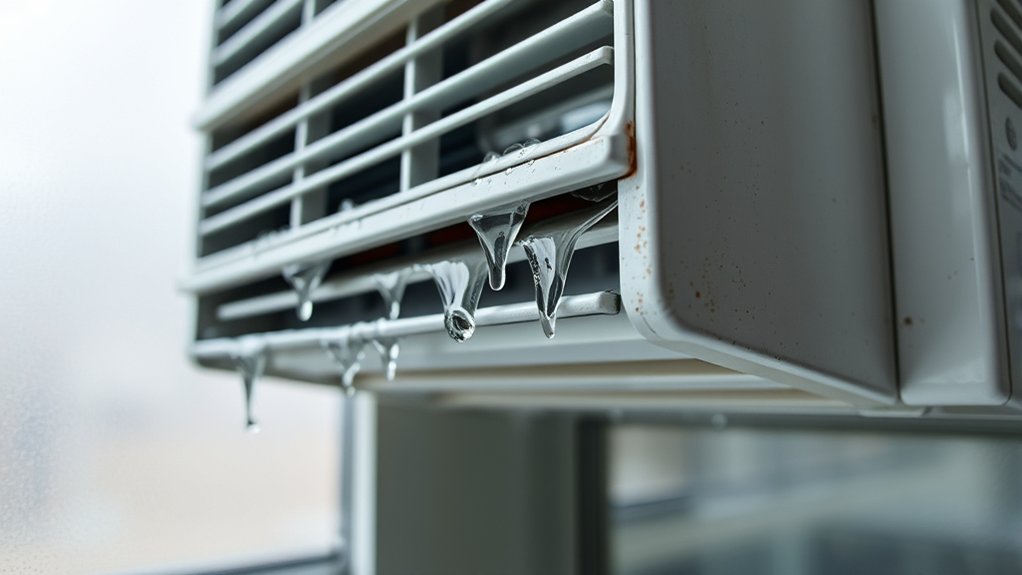
Your window air conditioner is likely leaking water due to blocked drainage, improper installation, or frozen evaporator coils caused by dirty air filters or low refrigerant. A cracked drain pan or incorrect unit tilt can also prevent proper condensation flow, leading to leaks.
Ensuring clean filters, clear drain lines, and a slight backward tilt (1-2 degrees) helps prevent this. Understanding these factors is essential to identify and address the underlying issues effectively. Taking these steps can save you from bigger problems down the line.
Why Is My Window Air Conditioner Leaking Water?
Why is your window air conditioner leaking water? Several technical issues could be the cause.
A clogged drain line often causes water to back up and overflow inside the unit.
Dirty air filters restrict airflow, leading the evaporator coils to freeze. When they thaw, excess water may leak indoors.
Improper installation, such as an incorrect tilt, prevents proper drainage, causing water to pool inside.
Furthermore, a damaged drain pan can fail to collect condensation effectively, resulting in leaks.
Finally, excess humidity and high outdoor temperatures increase condensation volume. This can exceed the drain system’s capacity and cause water to drip from the unit.
Identifying these factors helps you diagnose and address leakage efficiently.
How Does Condensation Cause Water Leaks in Window ACs?
When warm, humid air passes over your window AC’s cold evaporator coils, moisture forms through condensation because of the temperature difference. This water then collects in a drain pan, which is designed to channel it outside.
But here’s the thing—if the drainage system gets blocked or if the unit isn’t tilted properly, that water doesn’t go where it’s supposed to. Instead, it can leak indoors.
Moisture Formation Process
Although window air conditioners efficiently cool indoor air, they also cause moisture in the air to condense on the evaporator coils. This moisture formation process happens when warm, humid air touches the cold coils, turning water vapor into liquid condensation.
Proper airflow is key to keeping the coil temperature steady and preventing freezing, which can mess up how condensation is managed. If airflow gets blocked by dirty filters or clogged coils, condensation can build up too much, raising the chance of leaks.
Also, good drainage is super important. The water needs to flow out of the unit smoothly. If the AC unit is tilted or not installed right, drainage can be blocked, causing water to pool and leak inside.
Knowing how this moisture forms helps you troubleshoot leaks better. Just focus on airflow, the condition of the coils, and how well the drainage works to keep everything running smoothly.
Temperature Differential Effects
Understanding how moisture forms on the evaporator coils means looking closely at the temperature differences that cause it. The warm indoor air meets the cold refrigerant inside the coils, and this temperature difference causes condensation. That condensation is key for cooling, but if it’s not managed well, it can lead to water leaks.
High humidity makes the problem worse by increasing moisture buildup. If your AC’s temperature setting is too low compared to the outdoor air, you might end up with too much condensation, which can leak out.
There are a few important factors to keep in mind. First, the size of the temperature difference affects how fast condensation happens.
Then, indoor humidity levels play a big role in how much moisture builds up.
You also want to consider the drainage system’s capacity and condition—if it’s clogged or damaged, it won’t handle the condensate properly.
That’s why regular maintenance is so important; it helps prevent blockages and keeps water flowing out efficiently.
Drainage System Role
Since condensation naturally forms inside window air conditioners as warm air cools, your unit relies on an efficient drainage system to channel this moisture away. The condensate pan collects excess water, directing it through the condensate drain line. If the drain line becomes clogged, water can’t flow properly, causing overflow and water leakage inside the unit.
Also, make sure to inspect the condensate pan for cracks or damage because these can lead to leaks.
Ensuring your air conditioner has the proper tilt is critical. Without the correct angle, water won’t drain effectively, which increases the risk of leakage.
Regular maintenance is key here. This includes clearing the drain hole and checking that airflow isn’t blocked.
These simple steps help keep the drainage system working well and prevent water damage caused by condensation buildup.
How Do the Drain Pan and Drain Hole Cause Leaks?
How does water from your window air conditioner end up leaking inside the unit? The drain pan and drain hole play critical roles in managing condensation. If the drain pan is cracked or improperly positioned, it can cause water to leak inside rather than drain out.
Similarly, a blocked drain hole traps water, leading to overflow and leaks. Regular maintenance is vital to prevent blocked drainage caused by dirt and debris buildup.
A blocked drain hole causes water overflow; regular cleaning prevents leaks from dirt and debris buildup.
A cracked drain pan fails to contain condensation efficiently. Misalignment or lack of tilt in the drain pan hinders water flow toward the drain hole.
Debris buildup in the drain hole obstructs drainage, causing water backup. Routine inspection and cleaning guarantee unobstructed drainage and prevent leaks.
Keeping an eye on these parts helps stop water from leaking inside your unit.
How Can a Dirty Air Filter Cause Water Leaks in Window ACs?
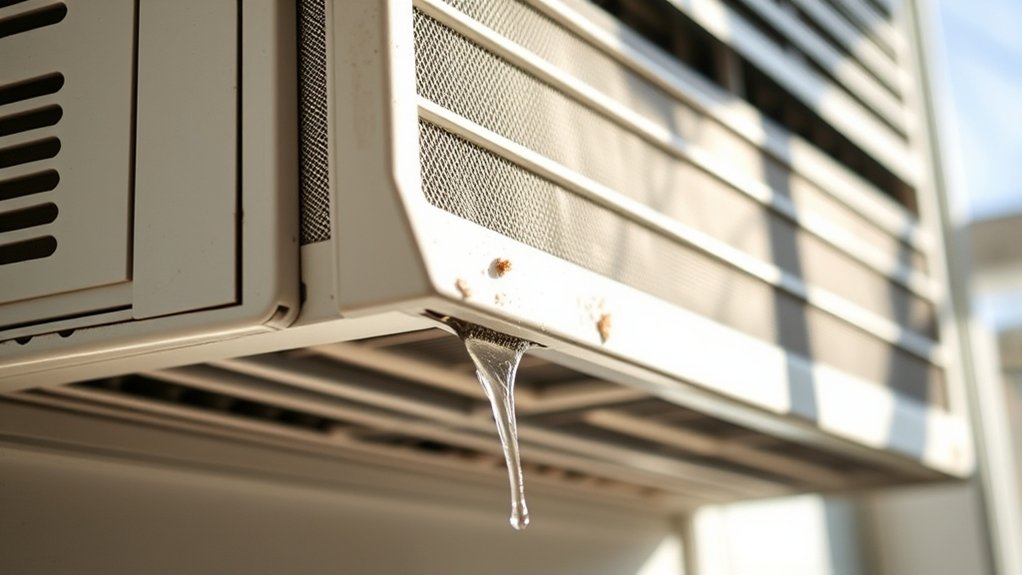
When your air filter gets dirty, it blocks the airflow. This makes the evaporator coils get too cold and freeze up.
Then, when the ice melts, extra water builds up and can start leaking from your window AC.
On top of that, the restricted airflow means your AC doesn’t cool as well. This leads to more humidity and condensation inside the unit, which can also cause water to leak.
Airflow Restriction Effects
If your window air conditioner’s air filter is dirty, it restricts airflow and causes the evaporator coils to get too cold. This often leads to ice buildup.
When this ice melts, excess water can overflow the drain pan, causing water leaks inside your room.
Airflow restriction from a clogged filter also forces the system to work harder. This reduces efficiency and increases the risk of leaks.
Key points to evaluate:
- A clogged filter limits airflow, cooling evaporator coils excessively.
- Ice forms on coils due to restricted airflow, later thawing into excess water.
- Overflow from the drain pan causes water leaks inside.
- Regularly clean or replace the air filter every 1-3 months to maintain proper airflow and prevent leaks.
So, keep an eye on your filter condition.
Doing this is essential for peak drainage and system performance.
Ice Formation Consequences
A dirty air filter restricts airflow to the evaporator coils, causing them to freeze because there isn’t enough heat exchange. When this ice melts, the extra water can overwhelm the condensate drain pan. This often leads to water leaking inside the unit.
Clogged air filters mess up proper airflow and cause ice to build up. That ice can damage the evaporator and other parts of the system. So, regular maintenance of air filters is key to preventing ice formation.
Keeping filters clean helps your AC cool efficiently and stops leaks before they start.
| Issue | Cause | Result |
|---|---|---|
| Ice Formation | Clogged air filters | Frozen evaporator coils |
| Ice Melts | Insufficient airflow | Water leaking inside AC |
| Component Damage | Prolonged ice buildup | Costly repairs |
Make sure to keep air filters clean to avoid these ice formation problems.
Why Does Proper Tilt Matter for Window AC Drainage?
Because proper tilt directs condensate water away from the unit, it plays an essential role in preventing leaks and water damage.
When your window air conditioner is installed with a slight backward tilt (about 1-2 degrees) toward the outside, it guarantees effective drainage. This prevents water from pooling inside the unit.
If the unit is level or tilted forward, water can accumulate in the drain pan and overflow indoors. That can cause damage you definitely want to avoid.
To maintain proper drainage, consider these points:
- Use a torpedo level during installation to confirm the correct tilt angle.
- Aim for a backward tilt to facilitate condensate flow outside.
- Regularly inspect the unit’s tilt, especially after storms or maintenance.
- Avoid a level or forward tilt to prevent water backup and leaks.
Proper tilt is critical to your window air conditioner’s drainage and overall performance. It really makes a difference in keeping things running smoothly.
How Do Frozen Evaporator Coils Cause Water Leaks Inside Window ACs?
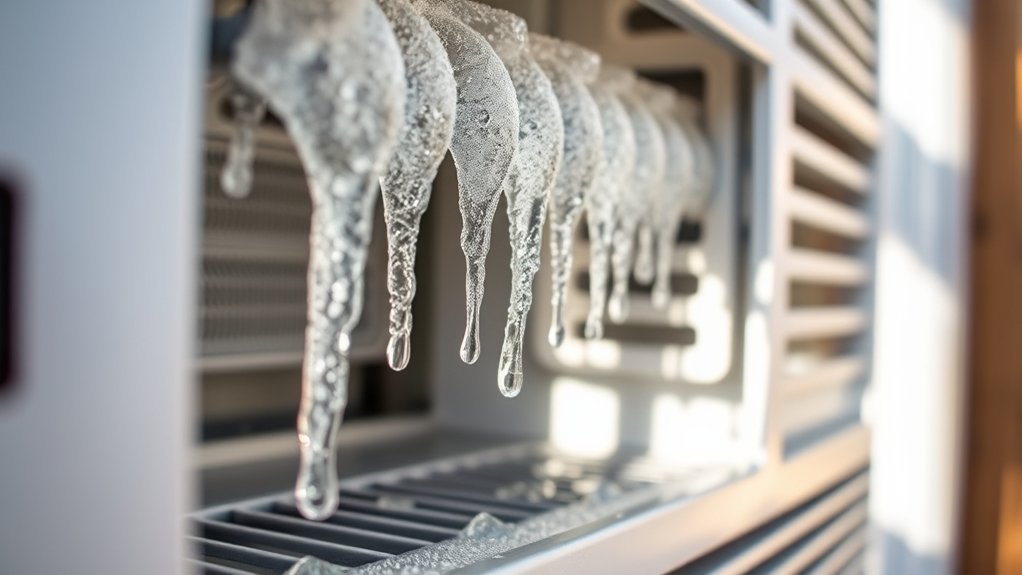
Frozen evaporator coils happen when airflow gets restricted, usually because of dirty filters or blocked vents. This causes ice to build up on the coils.
Then, when the AC runs, that ice starts to melt, creating extra water. This water can overflow the drain pan and end up leaking inside your room.
Knowing how airflow impacts the coil temperature can really help you stop these leaks before they start.
Ice Formation Causes
When airflow gets restricted due to dirty air filters or blocked vents, ice can form on the evaporator coils inside your window air conditioner. This ice formation happens because restricted airflow reduces heat exchange, causing the coil temperature to drop below freezing.
Frozen evaporator coils lead to water leaks as the ice melts and overwhelms the drainage system.
Also, low refrigerant levels decrease pressure and temperature in the coils, which promotes ice buildup.
Key causes of ice formation include:
- Dirty air filters limiting airflow
- Blocked vents causing restricted airflow
- Low refrigerant levels reducing coil temperature
- High indoor humidity and improper temperature settings
Taking care of these factors can help prevent frozen coils and the water leakage that comes with them inside your window AC.
Airflow Restriction Effects
If your window air conditioner’s airflow gets restricted, ice will start to build up on the evaporator coils as they drop below freezing temperature. This airflow restriction usually results from dirty air filters that block proper circulation.
Frozen evaporator coils form when limited airflow prevents heat exchange, causing condensation to freeze. As ice accumulates, it eventually melts, causing water to drip inside your unit.
Performing regular maintenance, such as cleaning or replacing air filters and checking refrigerant levels, helps prevent this issue by ensuring adequate airflow and proper coil temperature.
| Cause | Effect | Prevention |
|---|---|---|
| Airflow restriction | Frozen evaporator coils | Clean/replace filters |
| Dirty air filters | Reduced air circulation | Regular maintenance |
| Frozen evaporator coils | Water dripping inside AC | Maintain airflow |
| Low refrigerant | Coil temperature drop | Check refrigerant |
Thawing Leads Leakage
Ice buildup on the evaporator coils happens because airflow gets restricted.
But the real issue starts when this ice begins to thaw. As the frozen evaporator warms up, it creates extra water that your window AC’s drainage system has to handle.
If the drain pan or lines get clogged, water can start leaking inside the unit. Low refrigerant levels make things worse by causing more coil freezing, which can put your compressor at risk.
Here are the key factors to watch out for:
- Reduced airflow from dirty filters or blocked ducts causes the coils to freeze.
- When the ice thaws, it creates more water than the drainage system can manage.
- Clogged drain pans or lines lead to water leaking inside.
- Low refrigerant levels encourage coil freezing and leaks.
Keeping airflow and drainage in good shape is the best way to stop leaks caused by thawing.
Which Tools Do You Need to Fix a Leaking Window AC?
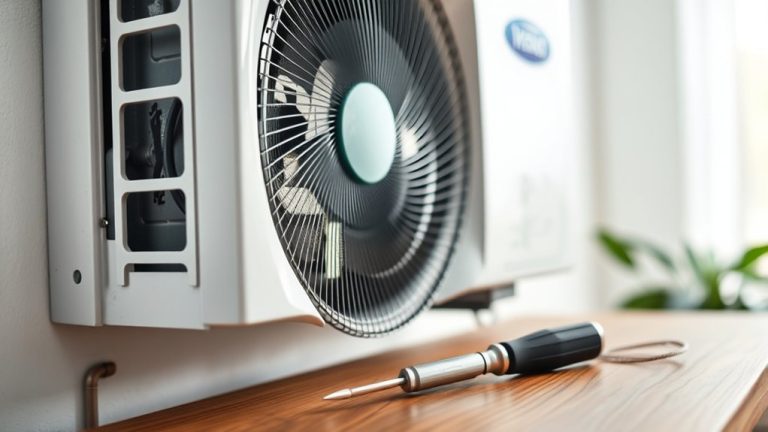
Proper tools are essential for diagnosing and repairing a leaking window air conditioner efficiently. You’ll need a screwdriver to remove the unit’s cover and access internal components for inspection.
A wet/dry vacuum helps clear clogged drain lines, preventing water backup and leaks.
Using a wet/dry vacuum clears clogged drain lines to stop water backups and leaks.
If you find cracks or holes in the drain pan, use epoxy putty to seal them effectively. A torpedo level is vital to verify the air conditioner’s tilt, ensuring proper drainage and avoiding water pooling inside.
Also, cleaning supplies like a sponge and mild detergent allow you to maintain clean coils and drain pans, reducing the risk of leaks.
Having these tools on hand equips you to address common causes of leakage with precision and efficiency.
How to Clean or Replace Your Window AC’s Air Filter
After gathering the necessary tools to inspect your window air conditioner, focus on the air filter. It’s a key component that affects airflow and system performance. A dirty air filter can restrict airflow, which might cause the evaporator coils to freeze.
When the ice melts, water can start leaking. To keep your window AC units running smoothly, make sure to clean or replace the air filter regularly.
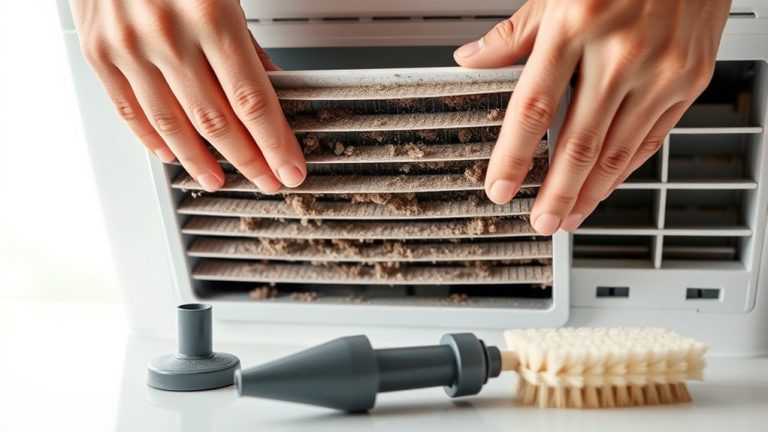
Check the air filter every 1-3 months to see if dust has built up. If you have a reusable filter, rinse it with water, gently scrub it, and let it air-dry completely before putting it back in.
For disposable filters, swap them out with manufacturer-approved models to ensure they fit and work properly. Doing this kind of maintenance often helps your AC cool better and stops leaks by preventing the coils from freezing up.
Taking good care of the air filter keeps your window AC running efficiently and helps you avoid water leakage problems.
When to Check and Clear the Drain Tube?
You should check the drain tube at least once a month, especially during hot and humid periods when your window air conditioner runs frequently.
A clogged drain tube can cause water pooling and leaks, so inspecting it regularly is crucial.
Look for any debris or blockages and clear them using a wet/dry vacuum or plumber’s snake.
Inspect and clear debris from the drain tube with a wet/dry vacuum or plumber’s snake to ensure proper drainage.
Also, make sure the drain tube is properly sloped downward to guarantee efficient drainage. If it’s not tilted right, water might accumulate inside the unit.
If you notice water pooling around your AC, check the drain tube immediately to prevent overflow.
Adding this simple step to your regular maintenance routine not only stops leaks but also helps your air conditioner last longer and avoids costly repairs.
When Should You Call a Professional for Window AC Water Leaks?
How do you know when a window air conditioner leak requires professional help? If your AC leaking water persists despite clearing the clogged drain line and replacing air filters, it’s time to call an HVAC professional.
Persistent leaks from the indoor unit can cause mold and structural damage.
Moreover, certain signs indicate deeper issues needing expert diagnosis.
Watch for these conditions:
- Continuous water pooling around the unit, signaling a clogged drain line or damaged condensate pan
- Ice formation on evaporator coils, risking major leaks when melting
- Improper installation causing unit tilt, preventing proper condensate drainage
- Low refrigerant levels causing internal leaks despite routine maintenance
Addressing these problems promptly with a professional guarantees efficient operation and prevents costly damage.
Don’t wait too long—getting help early can save you a lot of trouble down the road.
Frequently Asked Questions
Can Using the Wrong Refrigerant Cause My Window AC to Leak Water?
Yes, using the wrong refrigerant types can cause your window AC to leak water. Incorrect refrigerants disrupt system pressure, leading to frozen evaporator coils that thaw and overflow.
This not only reduces cooling efficiency but also puts extra stress on the components, which ups the chances of leaks.
To keep your AC running smoothly, it’s important to follow some maintenance tips. Always use the refrigerants recommended by the manufacturer and make sure to check pressure levels regularly.
Using the right refrigerant is key to preventing leaks and keeping your unit working efficiently and lasting longer.
Does the Age of the Window AC Affect Its Likelihood to Leak?
Yes, age factors greatly increase your window AC’s likelihood to leak. Over time, components wear out, like corroded drain pans and seals. Environmental impacts also take a toll, which deteriorates performance.
Older units often suffer from installation errors, such as an improper tilt that makes drainage worse.
If you neglect maintenance practices like cleaning filters and clearing drainage lines, leaks become more common. Regular upkeep is essential to counteract age-related vulnerabilities and prevent water leakage effectively.
How Does Outdoor Humidity Impact Water Leakage in Window AC Units?
High humidity levels increase condensation buildup on your window AC’s evaporator coils. This extra moisture makes it harder for your unit to control moisture, so more water ends up collecting inside.
When temperatures fluctuate, condensation speeds up and can overwhelm the drainage system if air circulation isn’t good enough.
To keep leakage to a minimum, make sure air flows properly and drainage paths stay clear.
Managing outdoor humidity really affects how well your AC handles condensation. Doing this helps stop water from leaking into your space.
Can Pests or Insects Cause Drainage Issues in Window Air Conditioners?
Yes, pest infestation can cause drain blockage in your window air conditioner, leading to water leakage.
Insects and rodents may nest inside, clogging drainage holes and promoting mold growth.
To prevent this, follow maintenance tips like regular inspection and cleaning of drainage pathways.
If you notice signs of pests, seek professional repair solutions promptly to clear blockages and avoid further damage or contamination in your AC system.
Is It Safe to Use a Window AC if It Is Leaking Water?
You shouldn’t use a window AC if it’s leaking water, as it risks water damage and poses safety concerns.
Take immediate safety precautions by turning off the unit to prevent electrical hazards.
Then, explore repair options like clearing clogged drains or replacing damaged parts.
Regular maintenance tips, such as cleaning filters and drain lines, help maintain efficiency and prevent leaks.
If you’re unsure, consulting a professional guarantees proper diagnosis and safe, effective repairs.
It’s always better to be safe than sorry when dealing with electrical appliances and water.
Conclusion
When your window air conditioner leaks water, remember that “a stitch in time saves nine.” Addressing issues like clogged filters, improper tilt, or blocked drain holes promptly prevents bigger problems.
Make sure to regularly clean or replace filters, check the drain tube, and ensure the unit is correctly angled. These simple steps can stop leaks before they start.
If leaks persist despite your efforts, don’t hesitate to call a professional. Timely maintenance guarantees efficient cooling and protects your home from water damage.