How Many Ton Air Conditioner Do I Need Step by Step
To find the right AC tonnage, first measure your home’s usable square footage accurately, excluding non-living areas. Multiply that by 20 BTUs per square foot as a baseline, then adjust for insulation, windows, and climate by increasing tonnage 10-20% if needed.
Typically, 1.5 tons suits 600 to 1,100 sq ft, 2 tons fits 901 to 1,400 sq ft, and 3 tons covers 1,950 to 2,200 sq ft. Oversizing wastes energy, while undersizing reduces comfort.
So, getting this right really matters. Understanding these steps leads to more precise sizing methods that keep your home comfortable without driving up your energy bills.
What Is AC Tonnage and Why It Matters
AC tonnage measures an air conditioner’s cooling capacity, defined as the amount of heat the unit can remove per hour. One ton equals 12,000 BTUs, which quantifies how much heat the AC can extract from your space every hour.
Proper sizing is crucial; selecting the right AC tonnage guarantees efficient energy use and ideal comfort. An oversized unit causes short cycling and poor humidity control, while an undersized one struggles to cool adequately, raising energy costs.
Choosing the right AC size ensures energy efficiency and comfort, avoiding short cycling or insufficient cooling.
HVAC professionals use the Manual J calculation to accurately determine your home’s cooling load, considering factors such as insulation quality and local climate. This precise method helps you choose an AC with the correct cooling capacity, maximizing energy efficiency and maintaining consistent indoor comfort.
It’s all about finding that perfect balance so your AC works just right for your space.
How to Measure Your Home’s Square Footage Accurately
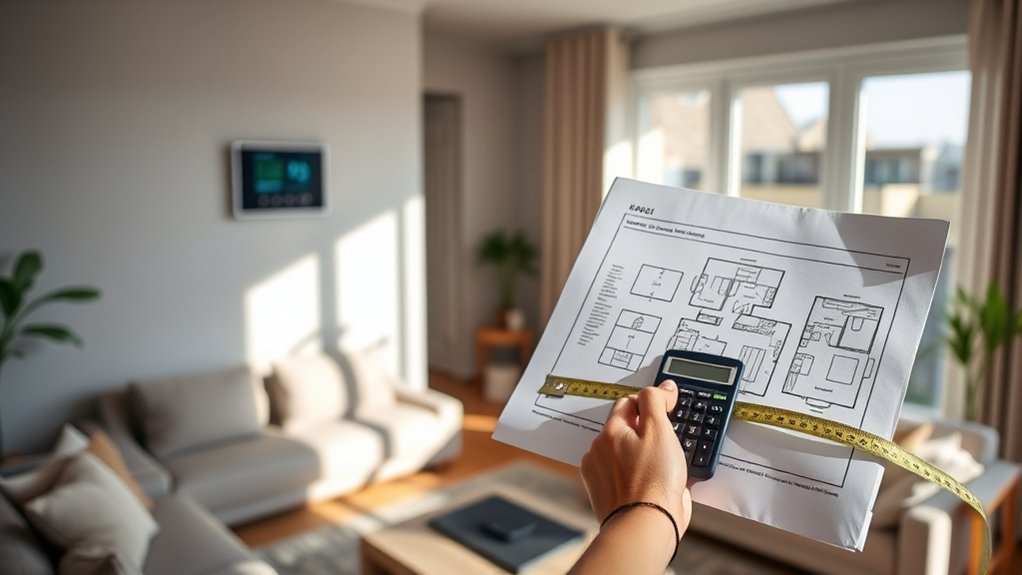
Start by measuring your home’s exterior dimensions to get the overall footprint. This gives you a good starting point.
Next, you’ll want to figure out the usable living area. That means you should exclude spaces that aren’t livable, like garages or unfinished basements.
If your home has multiple levels, it’s best to measure each floor separately.
Once you have those numbers, just add them all together for an accurate total square footage.
Measuring Exterior Dimensions
Accurately measuring your home’s square footage requires calculating the area of each room by multiplying its length and width in feet. When measuring exterior dimensions, use a tape measure to determine the length and width of your home’s footprint.
Make sure you measure along the walls to capture any irregularities. Include all exterior walls that enclose livable rooms, but skip non-inhabitable spaces like garages.
For homes with multiple stories, measure each level’s exterior dimensions separately. Then, add them up to get the total square footage.
If your home has alcoves or recesses, measure those areas individually and include them in your calculations. This precise approach to measuring exterior dimensions guarantees an accurate total square footage.
And that’s super important for correctly sizing your air conditioner.
Calculating Usable Living Area
Once you’ve measured the exterior dimensions of your home, focus on calculating the usable living area by measuring each room’s length and width in feet. Use a laser measuring tool for accurate measurements, guaranteeing you capture all dimensions precisely.
Multiply length by width to find each room’s square footage, then add these values for the total square footage of your living spaces.
Exclude non-living areas like garages or unfinished basements. For irregularly shaped rooms, divide the space into smaller rectangles or squares, calculate each area, and sum them for accuracy.
This method guarantees you’re calculating the true usable living area, which is essential for determining the correct air conditioner tonnage needed to efficiently cool your home.
Including Multi-Level Spaces
When measuring your home’s square footage for air conditioning purposes, you need to treat each level of a multi-story house as a separate area and calculate its dimensions individually. Measure the length and width of each room on every floor, excluding non-livable spaces like garages or basements. Then sum these areas for total square footage. This accurate method guarantees you account for multi-level spaces precisely.
Use an estimated 20 BTUs per square foot to determine the cooling load, which guides your AC tonnage selection. Remember, vaulted ceilings and large open spaces can increase the cooling load, so factor them in.
Consider insulation upgrades to optimize efficiency and potentially reduce required tonnage.
Properly measuring square footage across all levels is essential for sizing your air conditioner correctly. Taking the time to measure carefully can save you from buying an undersized or oversized system.
Find Your AC Unit’s Tonnage From the Model Number
How can you quickly determine your air conditioner’s tonnage without complex tools? Start by locating the model number on your outdoor condenser or air handler’s data plaque.
This model number typically contains a two-digit figure representing the unit’s BTU rating. Since one ton of cooling capacity equals 12,000 BTUs, divide that number by 12 to find the air conditioner size in tons.
For example, a model number with “24” indicates a 2-ton unit. Common indicators include 18 for 1.5 tons and 30 for 2.5 tons.
This method offers a straightforward way to assess your existing system’s tonnage. If the model number is unclear or you need precise tonnage identification, just consult an HVAC professional.
They can guarantee an accurate cooling capacity assessment.
How to Quickly Estimate Your AC Size by Square Footage

To quickly estimate your AC size, a good rule of thumb is to start with 20 BTUs per square foot of your living space.
From there, you’ll want to tweak that number depending on your climate zone and how well your home is insulated.
For example, you can use tonnage guidelines to find a rough match—like 1.5 tons for spaces between 600 and 1,100 square feet, or about 3 tons if you’re looking at 1,501 to 2,100 square feet.
When you combine the square footage with factors like climate and insulation, you’ll get a much better estimate of the right AC size for your needs.
Square Footage Guidelines
Selecting the right air conditioner size often starts with understanding the square footage of your space. For HVAC professionals and homeowners, general square footage guidelines help estimate the ton capacity needed.
A 1.5-ton unit typically suits 600 to 1,100 square feet, while 2 tons cover 901 to 1,400 square feet. For areas between 1,201 and 1,650 square feet, a 2.5-ton unit is appropriate, and 3 tons handle 1,501 to 2,100 square feet.
However, insulation quality considerably impacts the required size. Well-insulated spaces may demand less tonnage, while poor insulation increases the cooling load.
Though square footage offers a quick estimate, precise load calculations like Manual J consider insulation quality, air leakage, and other factors. This ensures you get the ideal air conditioner size and efficiency.
Climate Zone Impact
Square footage provides a baseline for estimating air conditioner size, but climate zone greatly influences cooling requirements. Your cooling needs vary with temperature and humidity, affecting the tonnage necessary for efficient operation.
For example, a 2-ton AC unit may cover 1,200 square feet in a mild climate but less in a hotter zone. Using BTU values aligned with your climate zone helps refine your estimate quickly.
| Climate Zone | Square Footage per AC Unit Size |
|---|---|
| Mild (1.5-ton unit) | 600–1,100 sq ft |
| Moderate (2-ton unit) | 901–1,400 sq ft |
| Hot (3-ton unit) | 1,501–2,100 sq ft |
A 5-ton AC unit is typically needed for larger spaces or extreme climates. Just adjust accordingly for accurate sizing.
Tonnage Estimation Methods
How do you quickly estimate the right AC tonnage for your space? A common tonnage estimation method relies on square footage. One ton (12,000 BTUs) typically cools 600 to 1,000 sq ft, while 1.5 tons covers 1,050 to 1,400 sq ft.
For 1,450 to 1,700 sq ft, a 2-ton unit is ideal. Two and a half tons suit 1,750 to 1,900 sq ft, and 3 tons handle 1,950 to 2,200 sq ft. This rough estimate helps size AC units by correlating cooling power with area based on BTU per ton.
Keep in mind, insulation and climate affect requirements, so it’s wise to consult an HVAC contractor.
For an existing home, a professional load calculation offers precise sizing. They’ll account for unique factors beyond square footage, ensuring efficiency and comfort.
How Your Climate Zone Affects AC Size Requirements
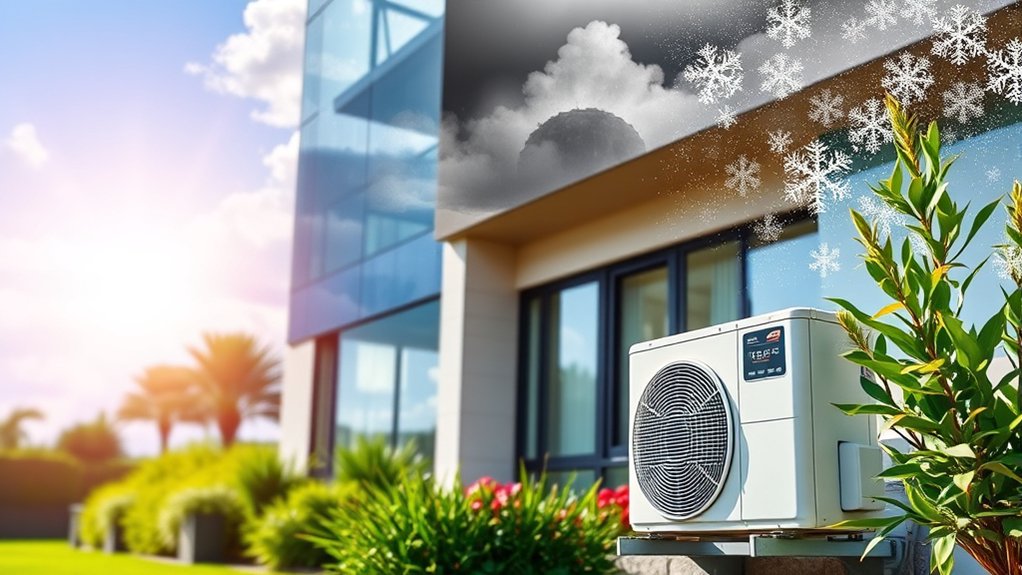
Because climate zones vary widely, your air conditioner’s size requirements depend heavily on where you live. Different climate zones dictate varying BTU capacities. Hotter zones demand higher cooling power than moderate ones.
When sizing air conditioner units, regional guidelines recommend about 20 BTUs per square foot in temperate climates, increasing to 30 BTUs in hotter areas. Tonnage adjustments are essential. For example, a 2-ton system may cool 1,200–1,400 sq ft in a moderate zone but fall short under intense heat.
Humidity considerations also impact sizing, as high moisture levels increase perceived temperature and cooling demands.
Always factor in local weather patterns and seasonal extremes to select the correct AC tonnage. This ensures efficient performance and comfort tailored to your specific climate zone.
Adjust AC Size Estimates Based on Insulation and Windows
When determining the right air conditioner size, you’ll need to adjust estimates based on your home’s insulation quality and window types.
Well-insulated homes usually allow for a lower tonnage requirement, about 600 to 1,000 sq ft per ton. On the other hand, poorly insulated homes require larger units because of increased heat gain.
The number of windows and their type also affect the cooling load. Single-pane windows increase heat gain more than double-pane ones, which means you might need a higher capacity unit.
To refine AC sizing, consider increasing tonnage by 10-20% if your home has many windows or poor insulation.
For precision, a Manual J load calculation factors in insulation quality, window count, and orientation to optimize your AC sizing decisions. This helps ensure efficient cooling without oversizing or undersizing your air conditioner.
Problems With Oversized and Undersized AC Units
If your AC unit is oversized, it will short cycle. This means it turns on and off frequently, which can increase wear and tear.
Plus, it won’t properly dehumidify your space, leaving it feeling less comfortable.
On the flip side, if your unit is undersized, it has to run constantly just to keep up. This struggle not only makes it harder to reach the temperature you want but also drives up your energy bills.
That’s why it’s so important to get the sizing right. Using a Manual J calculation helps ensure your AC unit is the perfect fit, so it cools efficiently and lasts longer.
Issues With Oversizing
Although you might think a bigger air conditioner will cool your space faster, oversizing creates several issues that can compromise comfort and efficiency. Oversized AC units cause short cycling, which increases wear and reduces lifespan.
They also struggle with humidity control, leaving indoor air sticky and uncomfortable. Plus, quick cooling prevents proper air mixing, causing uneven temperatures throughout your space.
These units waste energy, leading to inefficient energy use and higher operating costs.
| Issue | Cause | Impact |
|---|---|---|
| Short Cycling | Oversized capacity | Increased wear, reduced lifespan |
| Humidity Control | Rapid cooling | Sticky, uncomfortable air |
| Energy Inefficiency | Frequent on/off cycles | Higher energy bills, costs |
Choosing the right size guarantees adequate cooling and helps control operating costs efficiently. It’s all about finding the balance that works best for your space.
Risks Of Undersizing
Since selecting the right air conditioner size directly impacts your system’s efficiency and comfort, understanding the risks of undersizing is essential. An undersized AC unit struggles to provide sufficient cooling, causing it to run constantly and driving up your energy bills.
This persistent operation not only wastes power but also fails to reduce high indoor humidity effectively, leading to discomfort.
On the other hand, oversized AC units cause short cycling, which means frequent on-off cycles. This increases wear and maintenance costs while shortening the equipment’s lifespan.
Both undersized and oversized units result in higher maintenance costs and inefficient performance.
To avoid these issues, you must focus on accurate sizing. Properly sized units balance cooling capacity and energy use, ensuring maximum comfort, humidity control, and lower long-term expenses.
It really pays off to get the size just right.
How to Get an Accurate Manual J Load Calculation
When you want to size your air conditioner accurately, getting a Manual J load calculation is essential. This calculation evaluates your home’s specific cooling needs by analyzing factors like square footage, insulation, window types, and local climate.
To get precise BTUs for each room, professionals measure room dimensions, orientation, and air leakage. This guarantees the HVAC system is sized correctly, preventing issues like short-cycling and insufficient cooling.
As a homeowner, you can either hire an HVAC expert or use specialized software for this calculation. Accurate sizing from a Manual J load calculation optimizes unit performance and enhances energy efficiency. That saves you money and improves comfort.
How Different AC System Types Affect Unit Sizing
Because different air conditioning system types operate with varying efficiencies and installation approaches, the required tonnage can differ considerably. A split-system air conditioner offers high cooling efficiency and allows precise sizing per room. On the other hand, packaged units cool entire spaces from one source, often needing higher tonnage.
Ductless AC systems provide targeted cooling, which can reduce tonnage requirements in larger homes. HVAC professionals use a Manual J load calculation to factor in these specific characteristics and home design. This ensures the system is sized accurately for the space.
| AC System Type | Impact on Tonnage Requirements |
|---|---|
| Split-System | Precise, often lower tonnage per zone |
| Packaged Units | Higher tonnage for whole-house cooling |
| Ductless AC | Flexible, can reduce total tonnage |
| Manual J Calculation | Essential for accurate sizing |
How to Choose the Right SEER2 Rating for Your AC
How do you determine the right SEER2 rating for your air conditioner? Start by using a tonnage calculator to size your unit accurately, then factor in your local climate and home insulation quality.
Higher SEER2 ratings indicate better energy efficiency, with ratings between 14 and 16 considered standard efficient models, while those above 16 qualify as high-efficiency models.
Higher SEER2 ratings mean greater energy efficiency; 14-16 is standard, above 16 is high-efficiency.
If you live in a warmer climate or have poor insulation, opting for a higher SEER2 rating can greatly reduce cooling costs. Choosing a unit with a SEER2 of 20, for example, can cut energy expenses by up to 30% compared to a 14 rating.
Plus, selecting high-efficiency models is financially smart because of available tax credits and federal incentives. These can further lower your installation and operational costs, making it a win-win choice.
Frequently Asked Questions
How Often Should I Service My Air Conditioner for Optimal Performance?
You should schedule AC maintenance at least once a year, ideally before the cooling season starts.
Following a filter replacement schedule every 1-3 months helps keep your home cooling efficient.
Technician inspections usually include checking coils, refrigerant levels, and electrical components.
Using a seasonal service checklist can help you spot common AC issues early on.
Doing some DIY maintenance, like cleaning filters, definitely helps.
But regular professional servicing really brings the benefits—preventing breakdowns and extending your unit’s lifespan.
Can I Install an Air Conditioner Unit Myself to Save Money?
Yes, you can install an air conditioner yourself, but you’ll need proper tools and a good understanding of system compatibility.
It’s also important to follow local regulations closely. Using DIY installation tips can help you avoid common mistakes like improper wiring or mishandling refrigerant.
Make sure to prioritize safety precautions and know the maintenance requirements upfront.
While doing it yourself can save money, an improper setup might void warranties or lead to costly repairs.
If you’re unsure at any point, consulting a licensed professional is a smart move.
They can guarantee compliance and help your system perform at its best.
So, weigh the pros and cons before deciding to install the unit on your own.
Taking the time to prepare will make the process smoother and safer.
What Is the Average Lifespan of a Typical Central Air Conditioning System?
Think of your air conditioner lifespan like a well-tuned engine. It usually lasts 12 to 15 years. How often you maintain it, like changing filters and doing system checks, really affects how well it runs and how long it lasts.
Keep an eye out for signs that it might need replacing, such as rising energy costs or strange noises. The brand you choose, how well it’s installed, and the warranty you have also play important roles.
By staying on top of maintenance, you can keep your system running smoothly and avoid costly surprises down the road.
It’s all about being proactive to get the most out of your air conditioner.
How Do Air Purifiers Impact the Efficiency of My AC Unit?
Air purifiers improve your AC unit’s energy efficiency by reducing indoor pollutants, enhancing air quality, and preventing filter clogging. This means your filters don’t get dirty as quickly, so you won’t need to clean or replace them as often.
It also helps extend the lifespan of your system, which can save you money in the long run.
When choosing an air purifier, make sure it’s compatible with your AC unit. Otherwise, you might end up with increased noise levels, which nobody wants.
Plus, the health benefits of cleaner air combined with consistent temperature control really boost your AC’s overall performance.
In short, an air purifier helps your AC work smarter, not harder. It keeps the air fresh and your system running smoothly without extra strain.
Are There Any Rebates or Tax Credits Available for New AC Installations?
Yes, you can take advantage of rebate programs and tax credits to reduce installation costs for new AC units. Many local incentives reward energy efficiency, especially if you choose high-SEER models.
Seasonal promotions and manufacturer discounts often coincide with home improvement efforts, maximizing savings.
Check specific eligibility and deadlines, as these vary by region. Staying informed guarantees you capitalize on all available financial benefits while upgrading your cooling system efficiently.
It’s worth doing a little research or asking your installer about current offers. That way, you won’t miss out on any opportunities to save money during your AC upgrade.
Conclusion
So, you want to pick the perfect AC tonnage without turning your home into the Arctic or a sauna? Easy. Just ignore all calculations, square footage, climate zones, and SEER2 ratings.
Or, you know, follow the precise steps we outlined to avoid an oversized monstrosity wasting energy or an undersized unit gasping for mercy.
Either way, your comfort depends on smart sizing, not wishful thinking. Science beats sweating every time.