How Does a Portable Air Conditioner Work?
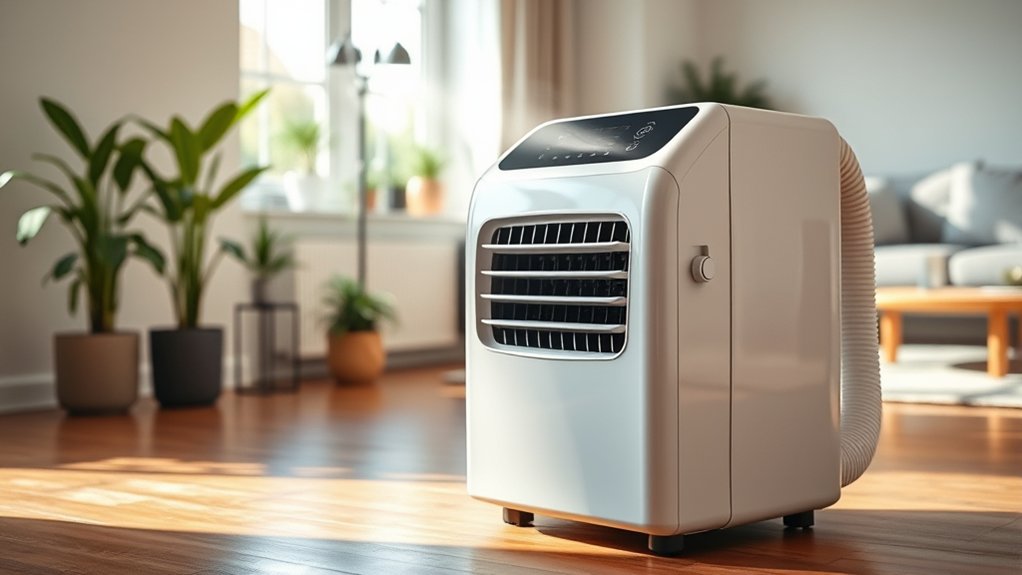
A portable air conditioner works by drawing warm air from your room and passing it over refrigerant-filled evaporator coils. These coils absorb heat and cool the air. The heated refrigerant then moves to condenser coils outside, where it releases heat through an exhaust hose.
This cycle keeps going until your set temperature is reached. Depending on the model, the unit uses either single or dual hoses for intake and exhaust. This can affect how efficient it is and the airflow you get.
Knowing these details can help you get the best performance from your unit. It also makes maintenance easier and more effective.
How a Portable Air Conditioner Cools Your Room
A portable air conditioner cools your room by drawing warm air inside and passing it over evaporator coils filled with refrigerant. The refrigerant absorbs heat and lowers the air temperature.
Portable air conditioners cool rooms by drawing in warm air and using refrigerant-filled coils to lower the temperature.
Then, the portable AC unit circulates the cooled air back into the room while pumping the heated refrigerant to condenser coils. At the condenser coils, the absorbed heat is released outside. This cycle runs continuously until the thermostat’s set temperature is reached, making sure your room stays consistently cool.
Many portable air conditioners also have a dehumidifier function. This removes excess moisture, which not only improves comfort but also helps prevent mold growth.
Proper venting through an exhaust hose is really important. It gets rid of the hot air outside, so the unit doesn’t end up raising the indoor temperature.
All in all, this efficient heat exchange process makes portable AC units a great choice for temporary or extra cooling when you need it.
Key Components and Their Functions in Portable ACs
You’ll find that the evaporator and condenser coils play a key role in transferring heat during the refrigerant cycle.
Basically, the compressor moves the refrigerant back and forth between these coils to make cooling happen.
At the same time, centrifugal fans take care of airflow by pushing the cooled air into the room and blowing the hot air outside.
It’s all about moving air efficiently to keep your space comfortable.
Evaporator And Condenser Coils
The evaporator coils contain refrigerant that absorbs heat from the warm air you draw into the unit, cooling the air before it circulates back into the room. As air passes over these coils, moisture condenses on their surface, aiding in dehumidification.
The refrigerant inside shifts from a low-pressure gas to a high-pressure liquid, which is essential for the cooling process.
On the flip side, the condenser coils, usually located outside the unit, release the absorbed heat from the refrigerant. This converts it back into a low-pressure gas, ready to continue the cycle.
Keeping both evaporator coils and condenser coils clean guarantees peak heat exchange and helps maintain your portable AC’s efficiency.
Refrigerant Cycle Components
Although the evaporator and condenser coils play essential roles, the refrigerant cycle relies on several key components working together to transfer heat efficiently.
The evaporator coils absorb heat from indoor air, causing the refrigerant to evaporate into a low-pressure gas. This gas then moves to the compressor, which compresses it into a high-pressure, high-temperature gas.
Next, the refrigerant flows through the condenser coils, where it releases heat to the outside air and condenses into a high-pressure liquid.
The expansion valve then reduces the refrigerant’s pressure, converting it into a low-pressure liquid ready to re-enter the evaporator coils.
This continuous cycle enables your portable air conditioner to efficiently extract heat from your room and keep your indoor environment cooler.
It’s pretty neat how all these parts work together seamlessly!
Airflow And Fans
Since efficient heat transfer depends heavily on proper air circulation, portable air conditioners incorporate fans designed to move air effectively through the system.
These units use a fan to draw warm room air over evaporator coils, where refrigerant absorbs heat and cools the air before recirculating it.
Centrifugal fans then exhaust hot air through the exhaust hose, ensuring continuous heat removal. Proper airflow management is critical. Any blocked or kinked ducts can drastically reduce cooling efficiency and increase energy use.
Many portable ACs offer adjustable fan speeds, allowing you to optimize airflow intensity for comfort and power savings.
Understanding the role of fans and airflow management helps you maintain peak performance and extend the lifespan of your portable air conditioner.
The Refrigerant Cycle in Portable Air Conditioners
You’ll see, the refrigerant cycle really depends on precise phase changes to move heat efficiently.
When the refrigerant evaporates, it soaks up heat from the indoor air, which cools down your room.
Then, as it condenses, it releases that heat outside.
This back-and-forth keeps the cooling going continuously.
Refrigerant Phase Changes
When the refrigerant cycle operates within a portable air conditioner, it continuously moves through four essential phases: compression, condensation, expansion, and evaporation. These phases work together to regulate indoor temperature effectively.
You’ll find the cycle starts as low-pressure refrigerant gas is compressed, which increases its pressure and temperature. Then, it flows to the condenser coils where it releases heat and condenses into a high-pressure liquid.
Next, the refrigerant passes through the expansion valve, dropping pressure rapidly and causing it to evaporate into a low-pressure gas. This phase change happens in the evaporator coil, where the refrigerant absorbs heat from indoor air.
This continuous refrigerant cycle guarantees efficient cooling by cycling between gas and liquid states. It enables heat transfer that’s vital for keeping your space comfortable.
Heat Absorption And Release
The refrigerant cycle in portable air conditioners consists of four main stages that work together to absorb and release heat efficiently. When warm air passes over evaporator coils, the low-pressure refrigerant absorbs heat and evaporates.
The compressor then increases the refrigerant’s pressure and temperature. Next, the refrigerant releases heat in the condenser coils, condensing back to liquid. Finally, it returns to the evaporator coils to repeat the heat absorption process. This cycle keeps the cooling and dehumidification steady and consistent.
| Stage | Action | Effect |
|---|---|---|
| Compression | Raises pressure & temperature | Prepares refrigerant for heat release |
| Condensation | Releases heat | Refrigerant condenses to liquid |
| Expansion | Lowers pressure | Prepares refrigerant for heat absorption |
| Evaporation | Absorbs heat | Refrigerant evaporates in evaporator coils |
Venting Options for Portable Air Conditioners
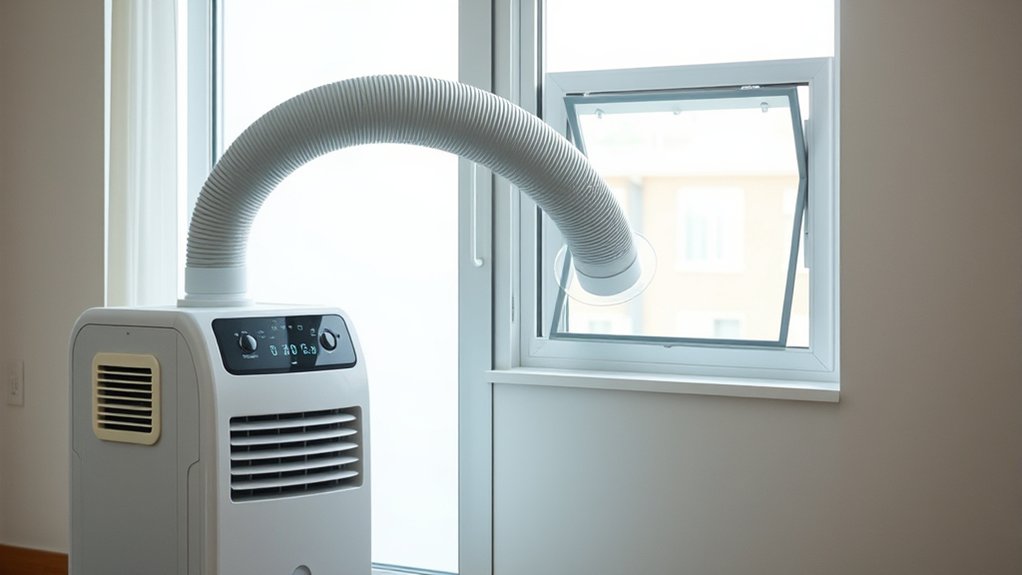
Three primary venting options exist for portable air conditioners, each designed to efficiently expel warm air outside your space. The most common method uses an exhaust hose connected to a window via a window kit. This setup is adaptable to various window types.
Alternatively, you can vent through a wall opening or use flexible ducting to direct hot air outdoors. Proper installation of these venting options is critical to prevent warm air from re-entering the cooled area. That would reduce the unit’s effectiveness.
The exhaust hose must be sealed tightly at the outlet to maintain effective temperature control.
Single Hose vs Dual Hose Portable ACs: Which Is Better?
You’ll notice that single-hose portable ACs use just one hose for both intake and exhaust. This setup can reduce cooling efficiency because it creates negative pressure inside the room.
On the other hand, dual-hose models separate these functions, which improves efficiency and makes them a better choice for larger or hotter spaces.
Hose Configuration Differences
Although both single-hose and dual-hose portable air conditioners serve the same basic function, their hose configurations really affect cooling efficiency and performance. Single-hose units use one hose for both intake and exhaust. This setup causes negative pressure that pulls warm air from nearby areas, which reduces cooling efficiency.
On the other hand, dual-hose models have separate intake and exhaust hoses. They draw fresh outdoor air and expel hot air without any pressure loss. This improves cooling efficiency, especially in larger spaces.
| Feature | Single Hose |
|---|---|
| Hose Configuration | One hose for intake & exhaust |
| Cooling Efficiency | Lower due to negative pressure |
| Suitability | Smaller rooms, easier setup |
| Performance | Moderate |
| Feature | Dual Hose |
| Hose Configuration | Separate intake & exhaust |
| Cooling Efficiency | Higher, no negative pressure |
| Suitability | Larger spaces, hotter climates |
| Performance | Superior |
Efficiency and Cooling Impact
When comparing single-hose and dual-hose portable air conditioners, their efficiency and cooling impact show clear differences that affect your comfort and energy use.
Single-hose units are compact and easier to install, but they can create negative pressure. This pulls warm air from nearby spaces and lowers cooling efficiency.
Dual-hose models have separate intake and exhaust hoses, which helps keep indoor temperatures stable and boosts cooling efficiency. This is especially true in larger or hotter rooms.
Because of this setup, dual-hose units cool rooms faster and use less energy, making them more efficient overall.
Plus, dual-hose systems handle heat and humidity better without sucking in extra warm air. That means they can perform up to 30% better than single-hose units under similar conditions.
Ideal Room Applications
Choosing the right portable air conditioner depends largely on the size and conditions of the room you need to cool. For ideal room applications, understanding whether a single-hose or dual-hose unit fits your space is essential.
Single-hose models suit smaller rooms due to their compact design and simple installation but may reduce efficiency by drawing warm air from adjacent areas.
Dual-hose units are preferable for larger or hotter environments. They maintain better airflow and prevent negative pressure, which helps keep your space comfortable.
Consider these points for portable air conditioning:
Single-hose units are cost-effective and suitable for temporary use in small spaces.
Dual-hose units provide superior efficiency in larger or humid rooms by using separate intake and exhaust.
Climate and room size dictate which system delivers consistent cooling and energy savings.
Moisture Management in Portable Air Conditioners
As portable air conditioners cool warm air, they cause humidity to condense on the evaporator coils. This effectively removes moisture from the environment. The moisture is automatically managed either by expelling it through the exhaust hose or by collecting water in a built-in condensate tank.
Many units collect water and will trigger an automatic shutdown when the tank is full to prevent overflow. Some models use an auto-evaporation system, which reduces the need for manual drainage. In high-humidity areas, though, you might still need to manually drain the water or use a condensate pump for continuous operation.
| Moisture Management Method | Description |
|---|---|
| Built-in Tank | Collects water, auto-shutdown |
| Auto-evaporation System | Expels moisture via exhaust hose |
| Manual Drainage | Required in high humidity |
Top Features to Consider When Buying a Portable AC
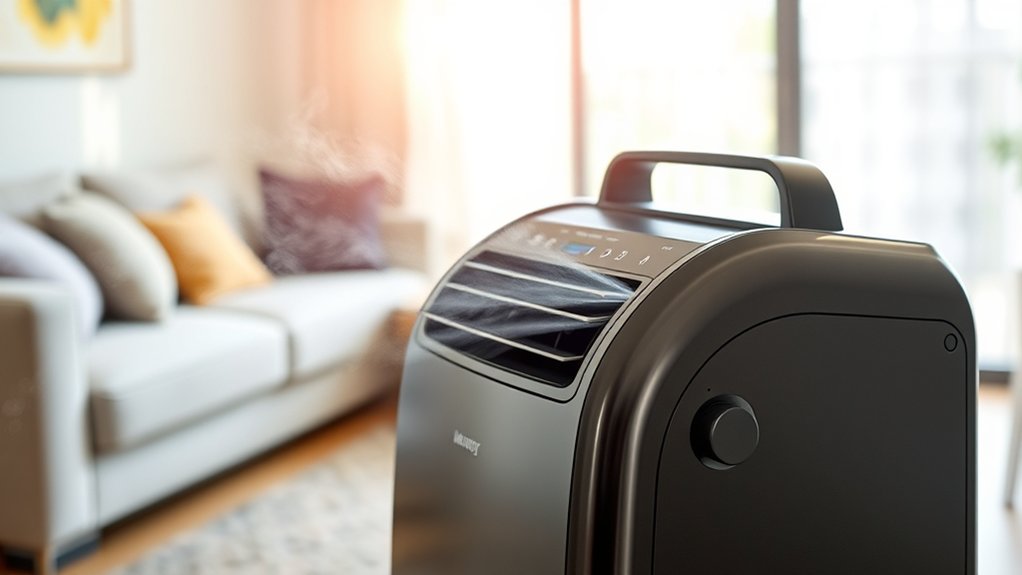
Several key features can greatly impact the performance and convenience of a portable air conditioner. When selecting a unit, focus on components that optimize comfort and efficiency. An adjustable thermostat lets you maintain precise temperature settings, preventing energy waste.
A built-in dehumidifier reduces indoor humidity, enhancing comfort and inhibiting mold growth. It’s a handy feature, especially in humid climates.
Also, consider these features:
Multiple cooling speeds for tailored airflow and noise control.
Timer function for scheduled operation, which helps with energy management.
Robust air filtration system to capture airborne particles and improve air quality.
These extras can make a big difference in how well your portable AC works for you.
How to Choose the Right Portable Air Conditioner for Your Space
When determining the right portable air conditioner for your space, start by measuring the room’s square footage to match the unit’s BTU rating with your cooling needs. Typically, you’ll want about 20 BTUs per square foot.
Next, decide between a single-hose or dual-hose portable air conditioning unit. Dual-hose models are more efficient for larger rooms because they prevent negative pressure.
Consider features like adjustable thermostats, multiple cooling speeds, and built-in dehumidifiers to optimize comfort.
Also, check drainage options. Auto-evaporation systems help reduce manual maintenance.
Finally, review the energy efficiency rating (EER) to make sure your unit balances cooling power with energy consumption.
Picking the right BTU, hose configuration, and efficiency will guarantee effective, cost-conscious cooling tailored to your space.
Maintenance Tips to Keep Your Portable AC Efficient
Choosing the right portable air conditioner is only part of the equation. Maintaining its components guarantees consistent performance and energy efficiency.
To keep your unit running effectively, focus on these essential maintenance tips:
To ensure optimal performance, prioritize these key maintenance steps for your portable air conditioner.
Regularly clean or replace air filters every 1-2 months to guarantee proper airflow and cooling efficiency.
Perform cleaning evaporator and condenser coils at least once per season to maintain efficient heat exchange and extend the unit’s lifespan.
Inspect and clear the exhaust hose of kinks or blockages to prevent increased energy consumption and reduced performance.
Additionally, drain the condensate tank frequently in humid conditions to avoid overflow.
Store the unit in a cool, dry place during off-seasons to protect its sensitive components from dust and moisture.
These steps preserve functionality and reduce energy costs.
Troubleshooting Common Problems With Portable Air Conditioners
If your portable air conditioner isn’t cooling properly, the issue often lies in airflow restrictions or venting problems.
Start by checking for dirty or clogged filters that reduce airflow and prevent the system from effectively removing the heat.
Also, inspect the exhaust hose to verify it’s properly connected and free from kinks or blockages. Poor venting causes hot air to recirculate rather than expel, which messes with cooling.
If you notice water leaks, check the condensate tank for overflow. Make sure the drainage system is working correctly too.
Frequent shut-offs might mean the thermostat is faulty or miscalibrated. You may need to recalibrate or replace it.
Unusual noises often come from loose parts or debris inside the unit. So, give it a thorough cleaning and inspection.
Fixing these common issues helps keep your air conditioner running at its best.
Frequently Asked Questions
Can a Portable Air Conditioner Be Used in Multiple Rooms?
Yes, you can use a portable air conditioner in a multi-room setup, but you need to manage airflow considerations carefully.
Each time you move the unit, you’ll have to vent it through a window or door for proper exhaust.
Dual-hose models handle multi-room setups better by reducing negative pressure and improving efficiency.
Also, make sure you position the unit to maximize airflow and cooling effectiveness in each space you use.
It’s all about getting the best out of your AC no matter where it’s placed.
How Noisy Are Portable Air Conditioners During Operation?
You’ll find noise levels in portable air conditioners range from 50 to 70 decibels. That’s about the same as quiet conversations or background office noise.
The compressor hums, fans spin, and airflow moves, all adding up to the overall sound.
Dual-hose models and quiet mode settings can reduce noise levels even more. Plus, units with better insulation help dampen sound.
This means you can enjoy effective cooling without disruptive noise during operation.
Are Portable Air Conditioners Energy Efficient Compared to Window Units?
You’ll find portable air conditioners generally less energy efficient than window units because their energy consumption is higher relative to their cooling capacity.
They often have lower EER ratings, meaning they use more electricity to cool the same space.
While portable units offer flexibility, you’ll likely run them longer to achieve desired temperatures, which increases energy use.
If energy efficiency is your priority, window units typically provide better performance for similar cooling needs.
Can Portable Air Conditioners Improve Indoor Air Quality?
Yes, portable air conditioners can improve indoor air quality through built-in air filtration systems that capture dust, allergens, and airborne particles.
You’ll benefit from adjustable fan speeds and humidity control features that reduce moisture, preventing mold and dust mite growth.
To maximize air purification, you should regularly clean or replace the filters.
Advanced models even use HEPA filters, capturing up to 99.97% of microscopic particles, ensuring cleaner, healthier air.
It’s pretty great how these features work together to keep your space comfortable and fresh.
What Is the Average Lifespan of a Portable Air Conditioner?
Imagine your portable air conditioner humming steadily, cooling your space efficiently for 5 to 10 years. To reach this lifespan, you need to follow essential maintenance tips like regularly cleaning filters and inspecting coils.
Ignoring common issues such as clogged vents or poor ventilation can shorten its life. Proper upkeep and timely repairs guarantee your unit runs smoothly, preventing wear from humidity or extreme temperatures.
This way, you maximize its durability and performance.
Conclusion
Now that you understand how a portable air conditioner works, you can make an informed choice for your space. Did you know that portable ACs can reduce room temperature by up to 20°F in under an hour?
By grasping the refrigerant cycle, venting options, and maintenance needs, you’ll maximize efficiency and comfort. Remember, selecting the right unit and keeping it well-maintained guarantees peak cooling performance throughout the season.