How Does a Mini Split Air Conditioner Work?
A mini split air conditioner works by circulating refrigerant between a compact indoor unit and an outdoor unit. It absorbs heat from inside your space and releases it outside without using ducts. The indoor unit’s evaporator coil and blower deliver conditioned air, while the outdoor unit’s compressor and condenser manage heat exchange.
Variable speed compressors optimize energy use for precise comfort. This efficient design also enhances air quality. You’ll find detailed insights on operation, installation, and maintenance ahead.
What Is a Mini Split Air Conditioner and How Does It Work?
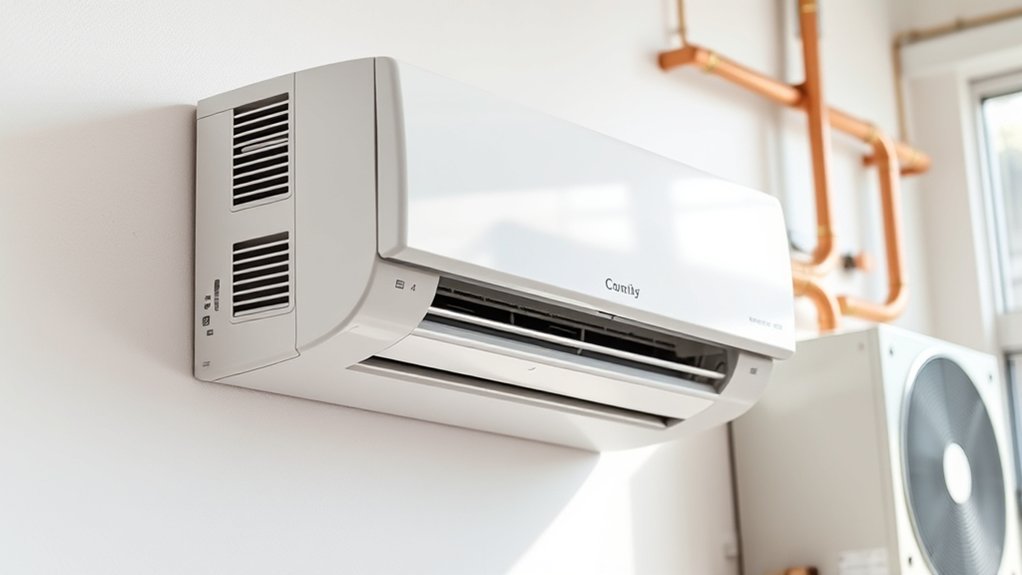
A mini split air conditioner is a compact, efficient system designed to regulate indoor temperature through heat transfer rather than air cooling alone. This ductless system consists of an outdoor unit housing the compressor and condenser, connected by refrigerant lines to one or more indoor units responsible for air distribution.
Mini-split heating and cooling systems use super-chilled refrigerant to absorb and release heat, enabling both cooling and heating functions. Thanks to variable speed compressors, these systems operate with high precision, making them up to three times more energy efficient than traditional HVAC units.
Plus, the indoor units typically feature advanced filters that enhance air quality by reducing airborne contaminants. This is great for anyone with allergies or respiratory sensitivities.
How Indoor and Outdoor Units Work Together in a Mini Split
Two main components work seamlessly in a mini split system: the outdoor unit containing the compressor and condenser coil, and one or more indoor units housing the evaporator coil and blower fan. These units connect via insulated refrigerant tubing, enabling efficient heat exchange without ductwork.
Thanks to heat pump technology, the outdoor unit extracts or dissipates heat based on whether you’re cooling or heating. Variable speed compressors adjust output to maintain comfort and optimize energy efficiency. This coordination makes mini-split systems highly adaptable and efficient.
| Component | Function |
|---|---|
| Outdoor Unit | Houses compressor and condenser coil; manages heat exchange |
| Indoor Units | Contain evaporator coil and blower fan; circulate conditioned air |
| Refrigerant Tubing | Connects units, enabling heat transfer without ducts |
How Refrigerant Moves Heat in Your Mini Split System
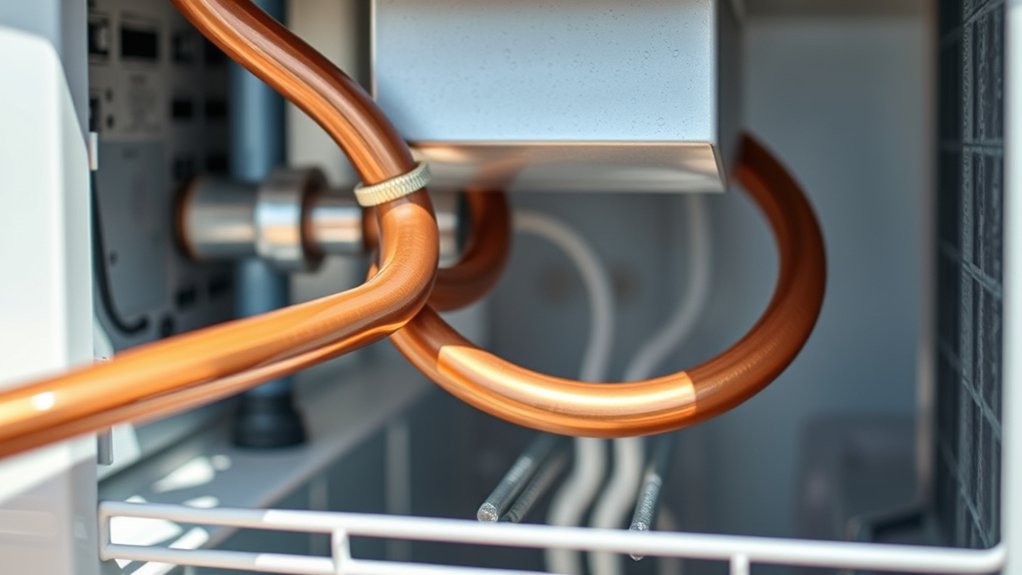
You’ll notice that refrigerant keeps moving back and forth between the indoor and outdoor units. It soaks up heat inside your space and then releases it outside, helping to keep the temperature just right.
As the refrigerant changes from a low-pressure gas to a high-pressure liquid (and back again), it’s really good at moving heat around. This happens with the help of the compressor and evaporator coils.
Getting a handle on this cycle makes it easier to understand how your mini split system does such a great job of heating or cooling your home.
Refrigerant Cycle Basics
Although it operates quietly and compactly, your mini split system relies on a sophisticated refrigerant cycle to move heat efficiently between indoor and outdoor units. The refrigerant absorbs heat at the indoor evaporator coil, evaporating from liquid to gas and cooling your indoor air. The compressor then pressurizes this gas, increasing its temperature.
Next, the hot refrigerant passes through the outdoor condenser coil, releasing heat outside and condensing back to liquid. This cycle continuously enables precise temperature control, reversing for heating when needed.
| Component | Function |
|---|---|
| Evaporator Coil | Absorbs indoor heat, cools air |
| Compressor | Pressurizes refrigerant gas, raises temperature |
| Condenser Coil | Releases heat outdoors, condenses refrigerant |
| Refrigerant | Transfers heat during phase changes |
Heat Transfer Process
The heat transfer process in your mini split system relies on the refrigerant’s ability to absorb and release heat through controlled phase changes.
Inside the indoor unit, refrigerant starts as a low-pressure liquid in the evaporator coil, absorbing heat from the air to evaporate into a low-pressure vapor. This vapor travels to the outdoor unit, where the compressor raises its pressure and temperature.
The high-pressure refrigerant then flows through the condenser coil, releasing heat to the outside air and condensing back into a liquid. This continuous cycle meets your cooling needs efficiently.
Also, the heat pump function reverses this process in colder months, extracting heat from the outdoor air to warm your indoor space.
This way, you get year-round climate control without any hassle.
How Mini Splits Provide Both Cooling and Heating
You’ll find that mini splits cool your space by circulating super-chilled refrigerant. This refrigerant absorbs indoor heat and then expels it outside.
When you switch to heating mode, the system actually reverses this cycle. It pulls heat from the outdoor air and transfers it inside to warm your space.
Because of this dual functionality, your mini split can efficiently regulate the temperature all year long.
Cooling Process Explained
When you want to cool your space efficiently, a mini split air conditioner transfers heat from indoors to outdoors by circulating super-chilled refrigerant through copper tubing between the indoor and outdoor units. This cooling process begins as the refrigerant evaporates in the indoor unit’s coil, absorbing indoor heat and lowering air temperature.
Mini splits work using variable speed compressor technology, which adjusts cooling output to match demand. This ensures energy-efficient cooling and precise temperature control. The system continuously transfers heat outside while the indoor unit circulates cooled air.
It also improves indoor air quality with built-in filtration that captures dust and allergens.
Heating Mode Function
Beyond cooling, mini split air conditioners also deliver efficient heating by operating as heat pumps that transfer heat rather than generate it. In heating mode, the refrigerant flow reverses, allowing the indoor unit to absorb heat from outside air, even at temperatures as low as -5°F (-20°C), and transfer it indoors.
This heat pump system uses advanced variable speed compressor technology to adjust output precisely. That way, it maximizes energy savings and ensures consistent comfort. By combining heating and efficient cooling in one system, mini splits eliminate the need for separate units, which simplifies installation and maintenance.
| Feature | Description | Benefit |
|---|---|---|
| Refrigerant Flow | Reverses in heating mode | Transfers heat indoors |
| Compressor Technology | Variable speed for precise control | Energy savings |
| Indoor Unit | Absorbs outdoor heat | Maintains warmth |
| Temperature Range | Operates down to -5°F (-20°C) | Reliable heating |
| Dual Functionality | Provides cooling and heating | Simplifies system |
Why Variable Speed Compressors Make Mini Splits Efficient
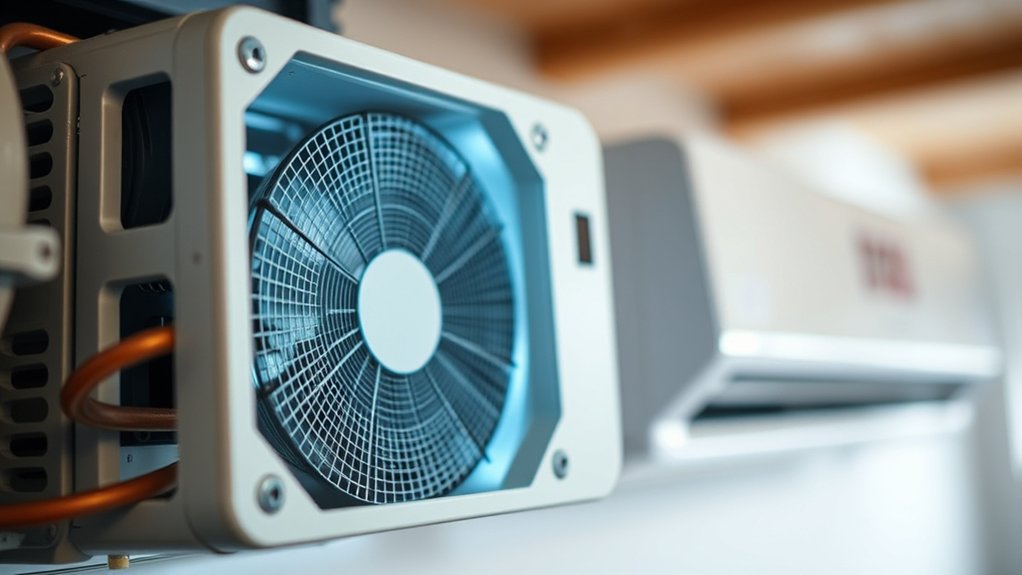
How exactly do variable speed compressors enhance the efficiency of mini split systems? Variable speed compressors adjust their speed based on real-time cooling or heating demand, enabling precise temperature control and enhanced energy efficiency.
Unlike fixed-speed compressors that cycle on and off, these compressors continuously modulate output, reducing energy consumption by up to 30%. This modulation efficiently maintains temperatures, minimizing short cycling and reducing energy waste.
Plus, variable speed compressors operate quietly, improving indoor comfort by eliminating frequent noise spikes. Running at lower speeds for longer periods also reduces mechanical stress, which helps extend lifespan and reliability.
Key Components of a Mini Split and Their Functions
You’ll find that a mini split system mainly depends on two key components: the indoor units and the outdoor unit.
The indoor units take care of moving air around and absorbing heat inside your space.
Meanwhile, the outdoor unit compresses and circulates the refrigerant.
When you understand what each part does, it’s easier to see how they work together to keep things cool or warm efficiently.
Indoor Unit Functions
The indoor unit of a mini split air conditioner plays an essential role in regulating your room’s temperature and air quality. It houses the evaporator coil, which absorbs heat from the indoor air, facilitating efficient heat transfer and cooling.
A blower fan then distributes the cooled air evenly, maintaining consistent comfort.
To enhance indoor air quality, the unit includes filters that trap dust and allergens. You can control these functions conveniently using remote controls, adjusting temperature and airflow as needed.
The indoor unit connects to the outdoor compressor through a conduit containing refrigerant tubing, power cables, and a condensate drain.
This setup guarantees seamless heat transfer and moisture removal while minimizing disruption to your building’s structure.
Understanding these components helps you appreciate the indoor unit’s critical functions. It’s pretty interesting how much is going on behind the scenes to keep your room comfortable!
Outdoor Unit Roles
While the indoor unit handles cooling and air circulation within your space, the outdoor unit manages the system’s heat exchange with the environment.
The outdoor unit houses the compressor, which compresses low-pressure refrigerant gas into high-pressure gas, enabling efficient heat transfer. It also contains the condenser coil, where the refrigerant releases absorbed heat to the outside air, cooling before it returns indoors.
A fan in the outdoor unit enhances airflow over the condenser coil, accelerating heat dissipation and improving overall efficiency. Connected to the indoor unit via insulated copper refrigerant lines and electrical wiring, the outdoor unit guarantees seamless operation.
Designed for flexible installation, it can be positioned up to 50 feet away, with durable construction to withstand various weather conditions year-round.
This setup makes sure your system runs smoothly no matter where you place the outdoor unit.
Installation Basics for Mini Split Air Conditioners
Installing a mini split air conditioner involves connecting an outdoor unit to one or more indoor units through a single small wall opening. This opening houses refrigerant lines, power cables, and a condensate drain. Because it’s ductless, the system only needs a minimal hole for the conduit, which makes installation simpler compared to traditional ducted setups.
You can mount indoor units on walls or ceilings, giving you flexible options to fit your room layout and improve airflow. The outdoor unit can be placed up to 50 feet away, which adds even more versatility to where you put it.
For the best performance, it’s a good idea to have a professional handle the installation. They’ll make sure the system is sized right, refrigerant lines are connected properly, and the conduit is securely routed.
Getting these details right really affects how energy efficient and reliable your mini split will be, so expert help is worth it to get the most out of your system.
How Mini Splits Improve Indoor Air Quality
Beyond efficient installation and flexible placement, mini split air conditioners actively enhance your indoor air quality through integrated filtration and humidity control. Their built-in filters capture dust and allergens, recycling cleaner indoor air and reducing cross-contamination between rooms.
Advanced filtration systems eliminate up to 99.9% of airborne bacteria and viruses, improving your indoor environment’s health. Meanwhile, variable speed compressors maintain consistent airflow and temperature, stabilizing humidity levels to prevent moisture buildup that can degrade air quality.
| Feature | Function | Benefit |
|---|---|---|
| Built-in Filters | Capture dust and allergens | Improved air quality |
| Advanced Filtration | Remove airborne bacteria/viruses | Healthier indoor environment |
| Variable Speed Compressor | Control airflow and humidity | Stable humidity levels |
Troubleshooting Common Mini Split Problems and Fixes
If your mini split isn’t performing as expected, identifying common issues quickly can save you time and money. Address these typical problems to restore efficiency:
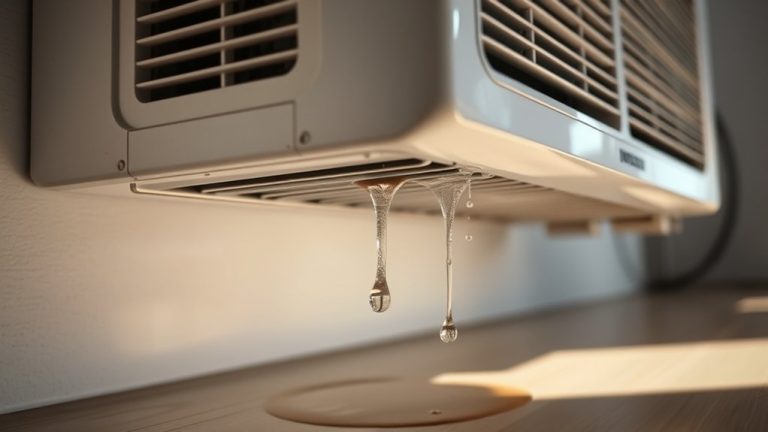
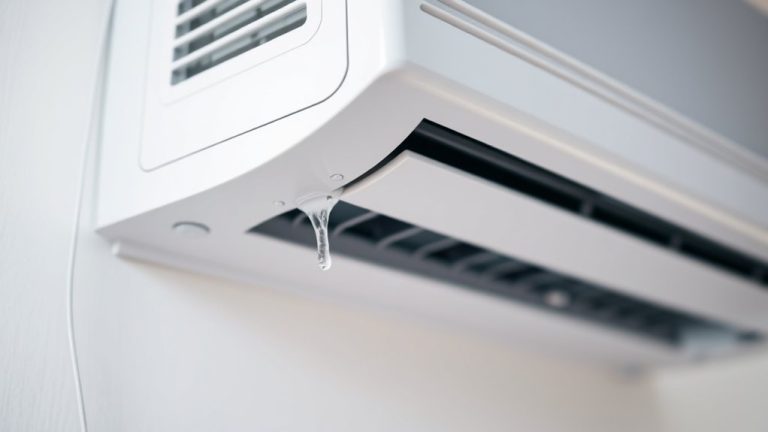
- Water leaks often stem from clogged drains or poor installation. Regular maintenance can prevent buildup and overflow.
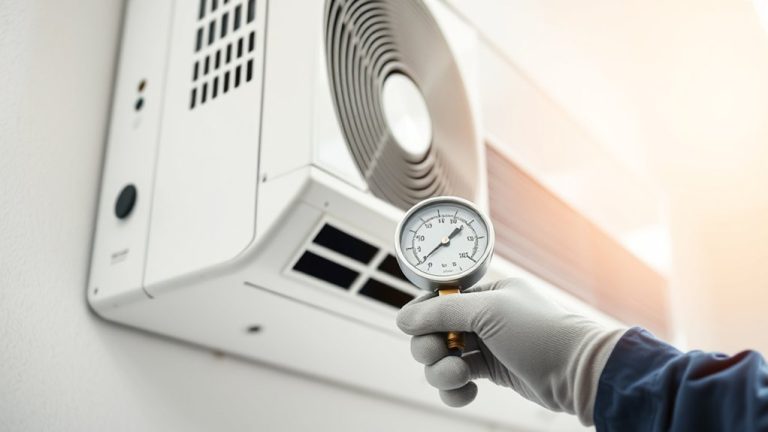
- Low refrigerant levels reduce cooling capacity. A professional must check and refill refrigerant to guarantee peak function.
- Dirty air filters restrict airflow and impair cooling. Clean or replace filters monthly to maintain energy efficiency.
- Short cycling happens when units are oversized or improperly placed. This causes frequent on/off cycles that increase wear and reduce efficiency.
If you hear strange noises, mechanical issues might be the cause. Getting these inspected promptly can help avoid further damage.
Timely troubleshooting minimizes downtime and keeps your mini split running reliably.
Maintaining Your Mini Split for Long-Term Performance
Addressing common mini split issues promptly helps maintain system reliability, but ongoing care is equally important to preserve long-term performance.
To keep your mini split heat pumps efficient, clean air filters in each indoor unit monthly to guarantee maximum airflow and energy efficiency.
Monthly cleaning of air filters ensures your mini split delivers optimal airflow and energy savings.
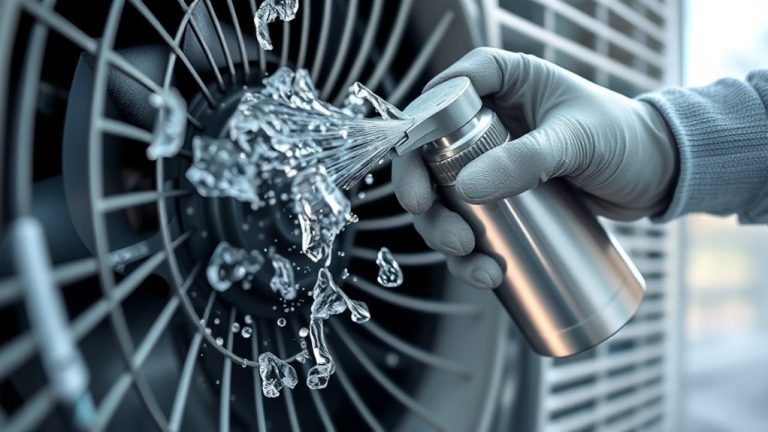
Inspect and clear debris from the outdoor unit’s condenser coil annually to prevent reduced heat exchange.
Regularly check the condensate drain line for clogs to avoid water damage and maintain proper drainage.
Maintain a clear area around the outdoor unit to promote efficient airflow and cooling capacity.
Finally, schedule professional maintenance yearly to verify refrigerant levels, electrical connections, and overall system health.
This will extend your system’s lifespan and keep it running at peak performance.
Taking these steps makes a big difference in how well your mini split works over time.
Frequently Asked Questions
What Is the Average Lifespan of a Mini Split Air Conditioner?
You can expect the average lifespan of a mini split air conditioner to be between 10 and 20 years. To maximize this, follow installation tips carefully and use a sizing guide to prevent overworking the system.
Stick to a maintenance checklist for filter cleaning and system checks to avoid common problems. Understanding energy efficiency and performing regular troubleshooting steps also help a lot.
Plus, weighing the benefits overview in your cost analysis can really extend your mini split’s durable performance. Taking these steps makes a big difference in how long your system lasts.
Are Mini Splits Compatible With Smart Home Systems?
You can hit two birds with one stone using mini splits, as many models offer smart thermostat integration and wireless control options.
With app connectivity features and voice command compatibility, you’ll enjoy seamless multi zone capabilities that enhance energy efficiency benefits.
Keep installation requirements in mind and review user experience feedback to choose the right system.
This tech-forward approach simplifies managing your home’s climate while reducing energy costs effectively.
How Noisy Are Mini Split Air Conditioners During Operation?
You’ll find mini split air conditioners operate at low noise levels, often between 19 to 50 decibels. This is thanks to advanced compressor types like inverter-driven models. Proper installation location and sound insulation reduce noise even further.
Plus, vibration dampening components help minimize the operational hum. Many users highlight how much quieter these units are compared to traditional air conditioners. It really makes a difference.
To keep your mini split running quietly, follow some simple maintenance tips. Regular filter cleaning is key. This ensures peak operational efficiency and helps maintain consistent low noise throughout the system’s lifespan.
Can Mini Splits Be Used in Extremely Cold Climates?
When winter hits hard, mini splits are no small potatoes in cold climate efficiency. Their inverter technology benefits allow precise temperature control and reduced energy consumption rates, even in freezing temps.
With proper mini split installation and frost protection features, you’ll see heating performance comparison favoring mini splits over traditional systems.
Maintenance requirements remain low, and customer satisfaction reviews often praise their reliability and warmth in extreme cold conditions.
What Are the Typical Costs of Repairing a Mini Split System?
Repair costs for a mini split system usually range from $150 to $1,200, depending on common issues like refrigerant leaks or compressor failures.
You should follow maintenance tips such as cleaning filters to avoid expensive repairs.
Installation expenses vary, but warranty coverage can help reduce costs on replacement parts.
Using troubleshooting steps can improve efficiency ratings and pinpoint problems early, saving you money and extending your system’s lifespan.
Conclusion
In choosing a mini split, you’re selecting smart, seamless solutions for superior temperature control. This system’s synchronized indoor and outdoor units skillfully shift refrigerant to swiftly and silently sustain your space’s comfort. With variable speed compressors, you’ll enjoy efficient energy use and enhanced heating and cooling.
By maintaining your mini split regularly, you prevent problems and prolong performance. This ensures your investment remains reliable, responsive, and ready to refresh your room whenever needed. It’s all about keeping things running smoothly so you can enjoy consistent comfort without the hassle.