What Size Air Conditioner Do You Need for 1500 Square Feet?
You need about a 30,000 BTU (2.5-ton) air conditioner for a 1,500 square foot home as a baseline. Adjust this based on insulation quality, your local climate, window size and efficiency, and the number of occupants. Each person adds roughly 400-600 BTUs.
Proper ductwork and home layout also influence system efficiency. Getting the right size prevents issues like short cycling and high energy costs. Understanding these factors helps guarantee maximum comfort and performance.
How to Calculate the Right AC Size for 1500 Square Feet
To calculate the right air conditioner size for a 1,500 square foot home, start with a baseline estimate of 30,000 BTUs or 2.5 tons, based on 20 BTUs per square foot.
However, size depends on more than just square footage. Adjust your estimate by considering factors like insulation, sun exposure, and occupancy.
Remember to consider insulation, sun exposure, and occupancy when estimating your air conditioner size.
Each person adds 400-600 BTUs, so keep that in mind. Use a BTU to square footage chart for guidance, and remember that climate zones influence the load.
For areas with heavy shade, reduce BTUs by 10%; increase by 10% for sunny locations.
Don’t forget to add 4,000 BTUs for kitchens.
To guarantee you select the right system, always seek professional load calculations such as a Manual J assessment. This ensures accurate sizing tailored to your home’s unique cooling needs.
Why 2.5 Tons Is the Starting Point for a 1500 Sq Ft Ranch
You’ll start with 2.5 tons because it delivers around 30,000 BTUs, which lines up nicely with the 20 BTU per square foot guideline for a 1,500 sq ft ranch.
But remember, things like the climate you live in, how good your insulation is, and your home’s overall efficiency can change that baseline a bit.
So, you might need to tweak the size to keep your cooling just right.
Knowing these factors helps you pick a unit that’s not only powerful enough but also energy-smart.
BTU Per Square Foot
A 1,500 square foot ranch typically requires around 30,000 BTUs of cooling capacity, which translates to about 2.5 tons of air conditioning. This estimate is based on an average of 20 BTUs per square foot, a common guideline for sizing your air conditioner.
When selecting the right size air conditioner for a 1500 sq ft home, consider these key points:
- BTU per square foot generally ranges from 18 to 25, influencing cooling capacity between 27,000 and 37,500 BTUs.
- Proper sizing avoids inefficiencies. Undersized units underperform, and oversized units waste energy and increase wear.
- Use a Manual J calculation to refine BTU needs beyond simple square footage metrics.
Getting an accurate BTU per square foot assessment guarantees ideal comfort and efficiency in your 1500 sq ft ranch. It’s definitely worth taking the time to get it right!
Climate Impact Factors
Although 2.5 tons of cooling capacity is commonly recommended for a 1,500 square foot ranch, this figure serves as a baseline influenced by several climate-related factors.
In hot, humid climates, you need approximately 30,000 BTUs, equivalent to 2.5 tons, to maintain comfort, following the 20 BTUs per square foot rule. Climate zones with higher temperatures demand increased capacity to counteract heat and humidity effectively.
Insulation quality affects this baseline; better insulation reduces cooling loads, while poor insulation increases them.
Moreover, solar gain through large windows raises BTU requirements, so you need to size your air conditioner accordingly. Each occupant beyond two adds 400 to 600 BTUs, which further influences tonnage.
Understanding these climate impact factors helps you select an air conditioner that matches your 1,500 sq ft ranch’s specific cooling needs precisely.
Taking all these details into account ensures you stay comfortable without overspending on unnecessary capacity.
Insulation And Efficiency
Because insulation quality directly affects your home’s cooling load, understanding its role is essential when sizing an air conditioner for a 1,500 square foot ranch.
Typically, a well-insulated home needs about 30,000 BTUs or 2.5 tons of cooling capacity, based on 20 BTUs per square foot.
However, insulation impacts your system’s efficiency rating and operating costs considerably.
Here’s why 2.5 tons is the starting point:
- If your home is well insulated, the system runs efficiently with lower tonnage, reducing energy use and costs.
- Poor insulation or drafts increase heat gain, forcing larger capacity units to maintain comfort.
- Upgrading insulation and windows lowers cooling capacity needs, improving overall efficiency.
Proper insulation balances cooling capacity and operating costs effectively.
It’s really about making sure your system isn’t working harder than it needs to.
How Climate Zones, Insulation, and Windows Affect AC Size
Where your home is located plays a big role in deciding how powerful your AC needs to be. If you live in a hotter climate zone, you’ll usually need a unit with higher BTUs to keep things cool.
Now, insulation is another important factor. If your walls aren’t well insulated, more heat can sneak in, which means your AC has to work harder and you’ll need more BTUs per square foot.
And don’t forget about your windows. Larger or less efficient windows let in more solar heat, so often you’ll have to size up your air conditioner by about 10-20% to handle that extra load.
It all adds up!
Climate Zone Impact
When determining the appropriate air conditioner size for a 1,500 square foot home, climate zones play an essential role in calculating cooling requirements. Your cooling load varies markedly depending on the climate zone, affecting the ton unit capacity you need.
For example, homes in warmer climate zones require higher tonnage due to increased heat gain. Consider these factors: In hot climate zones, a 1,500 square foot home typically demands about 3 tons (36,000 BTUs) of cooling power. Better insulation quality lowers the cooling load, allowing for smaller AC units.
Cooler climate zones reduce heat gain, so less tonnage is necessary compared to warmer areas. Understanding your climate zone guarantees you select an air conditioner sized precisely for your home’s needs.
It really makes a difference in comfort and efficiency. So, taking the time to factor in your local climate pays off when choosing the right AC unit.
Insulation And Windows
Three key factors, insulation quality, window characteristics, and climate zone, directly influence the cooling capacity your air conditioner requires.
If your home has poor insulation, heat infiltration increases, which means you’ll need a higher BTU capacity. On the other hand, good insulation minimizes heat gain, so you can get away with a smaller AC unit.
The number of windows and their type also impact the cooling load. Larger glass areas let in more solar heat, increasing your cooling needs. Installing energy-efficient windows can help reduce this effect, which lowers the BTUs required.
In hotter climate zones, like Zone 5, these factors add up. Often, you’ll need about 50-60 BTUs per square foot.
How Home Layout and Ductwork Affect AC Efficiency

Although selecting the correct air conditioner size is essential, the efficiency of your system heavily depends on your home’s layout and ductwork design.
Your home layout, including ceiling height and open floor plans, directly impacts airflow needs, influencing system efficiency.
Proper duct sizing guarantees adequate airflow, preventing energy waste.
To optimize performance, focus on:
- Duct sizing and sealing: Undersized or leaky ducts reduce airflow and system efficiency by up to 20%.
- Balanced airflow: Duct placement must deliver even cooling, avoiding hot or cold spots.
- System commissioning: Regular airflow balancing guarantees the AC operates efficiently within your home’s specific layout.
What Happens If Your AC Is Too Big or Too Small?
Improper air conditioner sizing can undermine even the most well-designed ductwork and airflow system.
An oversized air conditioner causes short cycling, frequently turning on and off, which reduces efficiency and shortens the unit’s lifespan. It also fails to run long enough to dehumidify properly, leading to increased indoor humidity.
On the other hand, an undersized AC unit struggles to maintain comfortable temperatures. It ends up running constantly, which drives up energy bills because it’s not efficient.
For a 1500 sq ft area, the recommended cooling capacity is about 20 BTUs per square foot, totaling roughly 30,000 BTUs.
Deviating from this guideline negatively impacts performance, increases maintenance costs, and wastes energy.
Choosing the Best AC Type for a 1500 Sq Ft Ranch
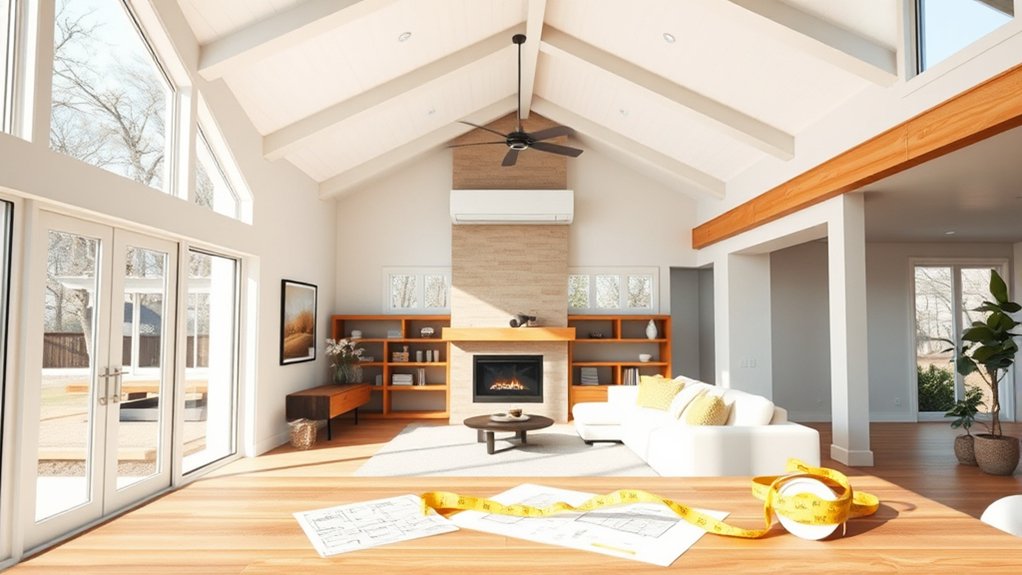
When selecting the best air conditioning system for a 1,500 sq ft ranch, you’ll need to weigh factors like existing ductwork, zoning preferences, and energy efficiency.
Ranch homes often benefit from these options:
- Central AC: Ideal if your home has ductwork, providing uniform cooling and excellent dehumidification. Choose a size unit that matches your square footage for peak performance and energy efficiency.
- Ductless Mini-Splits: Offer zoning flexibility and precise temperature control without ducts. This improves comfort and saves energy in specific areas.
- Window or Portable Units: More affordable but less efficient. They’re suitable for supplemental cooling in individual rooms.
Prioritize air conditioning systems with higher SEER2 ratings to reduce seasonal energy costs.
This way, your 1,500 sq ft ranch stays comfortable without excess energy consumption.
Why You Should Get a Professional Manual J Load Calculation
Since every home has unique characteristics affecting its cooling needs, getting a professional Manual J load calculation guarantees your air conditioner is sized accurately. This detailed assessment goes beyond square footage, factoring in insulation, window types, occupancy, ceiling heights, and ductwork efficiency.
A professional assessment confirms your HVAC system matches your home’s specific requirements, avoiding common sizing errors that lead to inefficiency. By relying on a certified technician, you verify compliance with local codes and optimize performance.
A certified professional ensures your HVAC system fits perfectly, boosting efficiency and meeting local code requirements.
A properly sized system enhances comfort while maximizing energy savings by preventing the pitfalls of oversized or undersized units.
Ultimately, a Manual J load calculation provides the precision needed to tailor your cooling solution effectively, safeguarding your investment and improving your home’s overall HVAC efficiency.
Tips to Optimize Your AC Size for Comfort and Efficiency
After confirming your home’s cooling requirements with a Manual J load calculation, you can fine-tune your air conditioner size to balance comfort and efficiency. For a 1,500 square feet home, adjust the cooling load based on insulation quality, sun exposure, and occupancy.
Here’s how to optimize your AC size:
- Adjust BTUs by ±10% depending on shading or sun exposure to reflect actual cooling needs.
- Factor in additional occupants by adding 400-600 BTUs each to the cooling load for accurate capacity.
- Guarantee proper duct sizing, sealing, and balanced airflow to minimize energy loss and maintain consistent temperature.
Taking these steps helps your air conditioner operate efficiently, prolong its lifespan, and maintain comfort without oversizing or undersizing your AC system.
It’s all about getting the right fit for your home’s unique needs.
Frequently Asked Questions
How Often Should I Service My Air Conditioner?
You should service your air conditioner at least once a year to keep it running efficiently.
During this service, professionals take care of air filter maintenance, check refrigerant levels, and clean the coils. They also calibrate the thermostat and inspect ducts for any leaks or blockages.
Regular servicing helps prevent performance drops and costly repairs.
It’s a smart move to schedule your annual tune-up in early spring. That way, your system is ready to cool your home effectively throughout the season.
This also helps extend your air conditioner’s lifespan and keeps your comfort levels high.
What Is the Average Cost to Install a 2.5-Ton AC Unit?
You can expect the average cost to install a 2.5-ton AC unit to range from $3,500 to $7,500.
Air conditioner types and energy efficiency ratings greatly influence this. Installation factors like ductwork, electrical upgrades, and geographic location cause cost variations.
Don’t forget seasonal maintenance to keep efficiency high and avoid costly repairs.
It really helps extend the life of your system. Always get multiple quotes and a Manual J calculation for precise sizing and fair pricing.
That way, you make sure you’re getting the best deal for your needs.
Can a Smart Thermostat Improve My Ac’s Efficiency?
Yes, a smart thermostat improves your AC’s efficiency by providing precise temperature control and enabling energy savings through adaptive scheduling.
With remote access, you can adjust settings from anywhere, guaranteeing peak performance.
The smart thermostat benefits include learning your habits to minimize waste and integrating with other devices for better energy management.
For installation tips, verify compatibility with your HVAC system and consider professional setup to maximize efficiency and functionality.
Are There Energy Rebates for Installing a New AC System?
Installing a new AC system can open the door to a treasure chest of energy rebates. Many rebate programs reward you for boosting energy efficiency. This can lower your installation costs and reduce your environmental impact.
Check with local utilities. They often offer incentives that cut upfront expenses.
Don’t forget to explore federal tax credits and state financing options too.
Keep documentation from your HVAC contractor handy. This will help prove efficiency ratings and maximize your rebate benefits.
How Long Does a Typical Air Conditioner Last?
A typical air conditioner lifespan ranges from 15 to 20 years. Factors affecting longevity include installation quality, system type, local climate, and usage patterns.
To maximize your unit’s life, follow maintenance tips like regularly cleaning or replacing filters.
Watch for signs of failure such as reduced cooling or unusual noises.
When your system nears the end of its lifespan or shows frequent issues, explore replacement options with newer, more efficient models to save energy and costs.
It’s definitely worth considering to keep your home comfortable without breaking the bank.
Conclusion
Imagine stepping into your 1500 square foot home and feeling the perfect cool breeze that matches your space flawlessly. Choosing the right AC size, starting around 2.5 tons and adjusted for climate, insulation, and layout, ensures peak efficiency and comfort.
Avoid the pitfalls of oversized or undersized units by trusting a professional Manual J load calculation. With precise sizing, your air conditioner will work smarter, not harder. This keeps your home consistently comfortable and energy-efficient year-round.