How Do Bugs Come Through Window Air Conditioners?
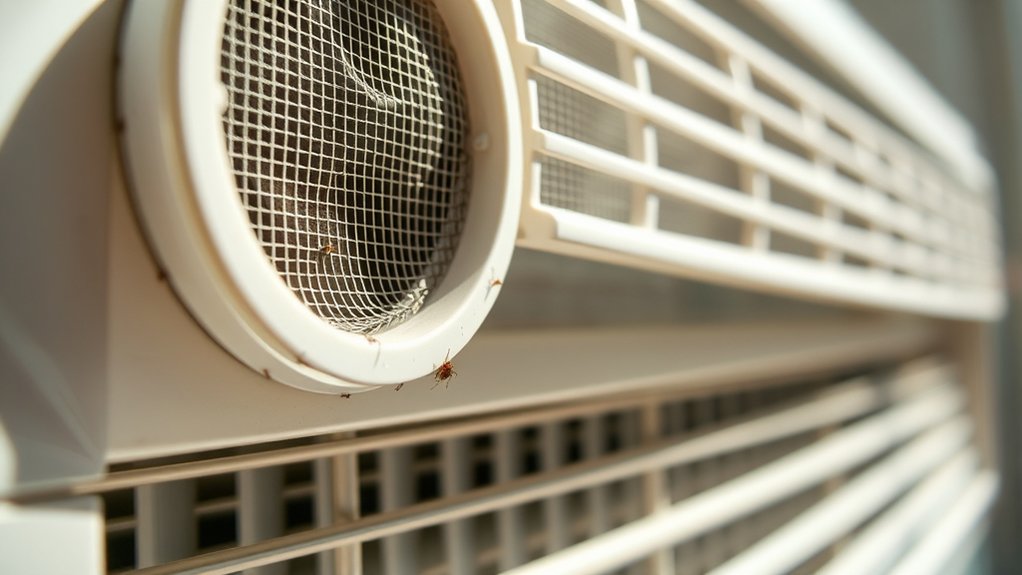
Bugs enter your home through window air conditioners mainly because of tiny gaps, moisture, and airflow pathways. The cool, humid environment attracts pests like ants, stink bugs, and flies. These critters can slip through cracks as small as 1/16 inch near seals or installation points.
Poor sealing and standing water make things worse, increasing the risk of bugs getting inside. You can cut down on these invasions by sealing up gaps, making sure drainage works properly, and keeping the unit clean.
If you want to know more about how to prevent bugs and maintain your air conditioner, just keep reading. There’s plenty more to learn!
Why Bugs Are Attracted to Window Air Conditioners
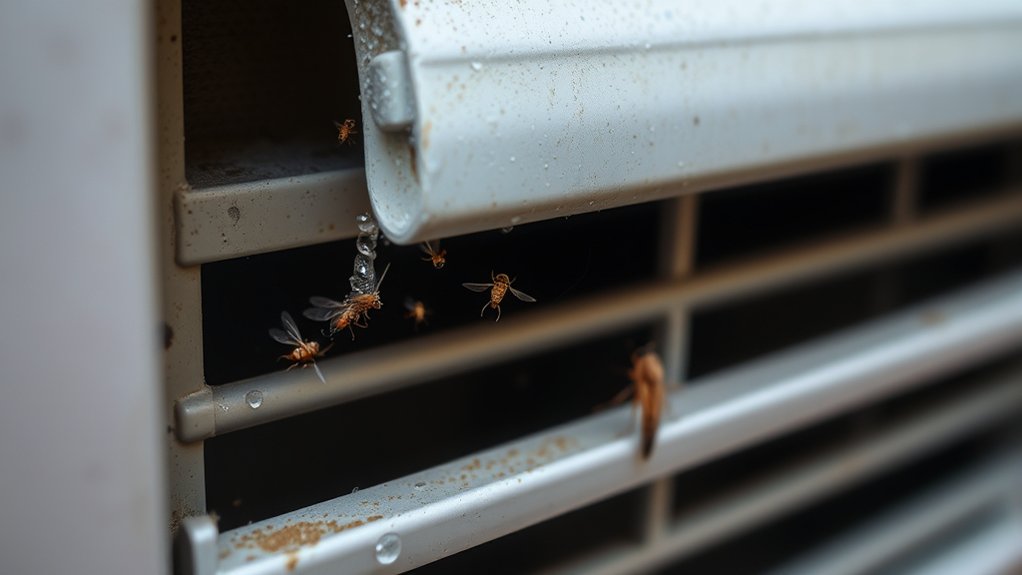
Because window air conditioners generate cool, moist environments, they attract insects seeking shelter and favorable conditions.
When you operate a window AC unit, the moisture it produces creates an ideal habitat for pests such as roaches and small winged ants.
Also, food odors inside your home can lure flies and other bugs toward the unit’s vicinity.
Food smells inside your home can attract flies and bugs near your window AC unit.
Stagnant water pooling around or inside the unit further increases the risk of infestations.
To prevent bugs, it’s essential to manage moisture levels and regularly clean your window AC unit.
Eliminating water accumulation and controlling odors reduces the attractiveness of the area.
Understanding why bugs are drawn to these units helps you implement targeted strategies to prevent bugs and maintain a pest-free environment.
It’s all about keeping things dry and fresh around your AC!
How Bugs Enter Your Home Through Gaps and Openings
You’ll often find bugs sneaking in through the tiny gaps and openings around your window air conditioner.
When these spaces aren’t properly sealed, insects can easily slip inside through cracks or unsealed edges.
That’s why applying caulk or weatherproof tape around these areas is super important—it helps block pests and keeps a secure barrier in place.
Common Entry Points
Several common gaps around window air conditioners provide easy access points for bugs to enter your home. These gaps often arise from improper installation, wear and tear, or design features intended for airflow. Even tiny openings allow ants, flies, and other insects to infiltrate your living space.
Understanding where these entry points are helps in identifying vulnerabilities.
| Entry Point | Description |
|---|---|
| Side Gaps | Spaces between the unit and window frame |
| Rear Openings | Airflow vents without proper sealing |
| Bottom Seams | Cracks at the base of the unit |
| Installation Gaps | Misaligned or loose fittings |
| Damaged Seals | Worn or torn weather stripping |
Make sure to regularly inspect these gaps around your window air conditioner. Doing this can really help minimize bug intrusions.
Sealing Techniques
Identifying gaps around your window air conditioner is only the first step in preventing bug entry. Effective sealing techniques are essential for blocking these tiny openings.
Use expansion foam or silicone to fill cracks and joints around the AC unit, ensuring a tight, durable seal.
Installing fine mesh screens at the back of the unit lets air flow freely while stopping bugs from infiltrating your home.
Regularly inspect and replace weatherstripping to maintain a secure barrier against insects. Plus, keep the area around the AC clean to reduce attractants that draw bugs near.
How Airflow Around Window ACs Lets Bugs Sneak In
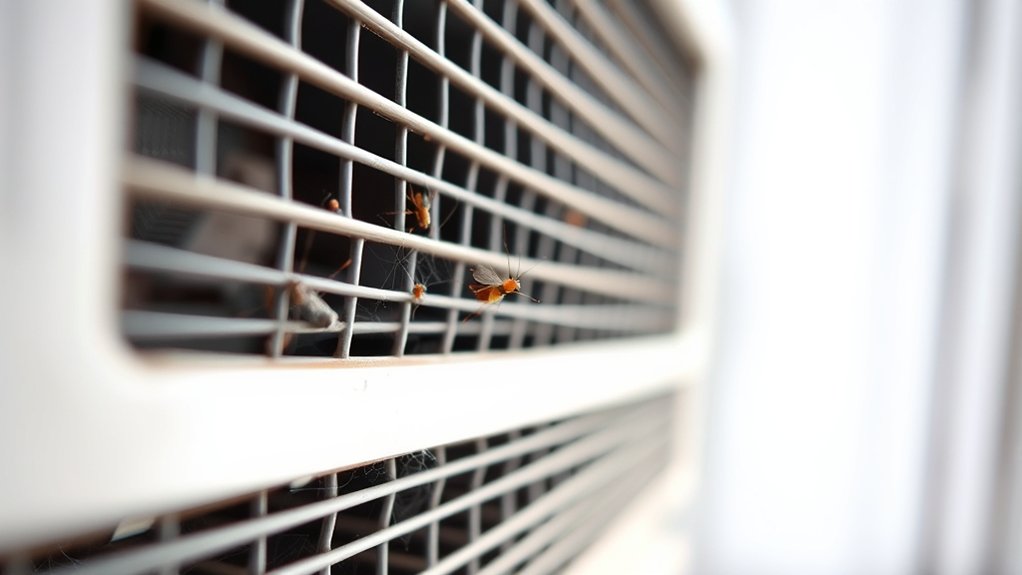
Because window air conditioners rely on proper airflow to function efficiently, they must remain open to some extent.
But this necessary openness creates potential entry points for insects. Airflow moves through the unit’s vents and small gaps around the sides and rear, which, if not sealed correctly, allow bugs like ants or flies to enter.
The unit’s design includes vents essential for heat exchange, but these can serve as unintended pathways for insects.
Plus, the slight tilt needed for drainage often produces gaps that bugs exploit, especially during warmer months when insect activity increases.
To prevent this, you should regularly inspect and seal any visible cracks or openings around the unit.
It’s all about balancing the need for adequate airflow with effective insect exclusion.
Common Bugs That Invade Window Air Conditioners
You’ll often find stink bugs, winged ants, flies, and mosquitoes sneaking into your window air conditioner through small gaps and vents.
They’re pretty clever about it, taking advantage of even the tiniest openings around the unit to get inside.
Knowing where these bugs usually come in can really help you focus your maintenance efforts.
That way, you can keep those pesky invaders out and avoid any unwanted infestations.
Typical Insect Invaders
Although window air conditioners provide relief from heat, they often attract a variety of insects seeking cool, moist environments or food sources. Among the typical insect invaders, stink bugs are common, drawn specifically to the unit’s cool and humid conditions.
Small winged ants exploit minute gaps around the window air conditioner, entering through openings as tiny as 1/16 of an inch. Flies are frequently attracted by food odors emanating from your home, making them persistent nuisances near the unit.
Moreover, spiders may appear, hunting the other bugs attracted to the AC. Understanding these typical window bugs helps you identify potential infestations early.
Regular maintenance and sealing gaps are essential steps to prevent these insects from infiltrating your living space through the air conditioning system. Taking these precautions can save you a lot of hassle down the road.
Entry Points Explored
When window air conditioners aren’t installed properly or maintained regularly, small gaps and openings form around the unit. These provide easy entry points for insects like ants, flies, and stink bugs.
These entry points in your window AC unit often include sealing gaps between the unit and window frame. Even gaps as narrow as a fraction of an inch can allow bugs to get in.
Cracks in the casing or around the drainage area are another common spot. Moisture here attracts pests that are looking for cooler environments.
Vents and louvers can become direct access routes for flying insects if they’re left unprotected.
How Poor Installation Increases Bug Entry Risks
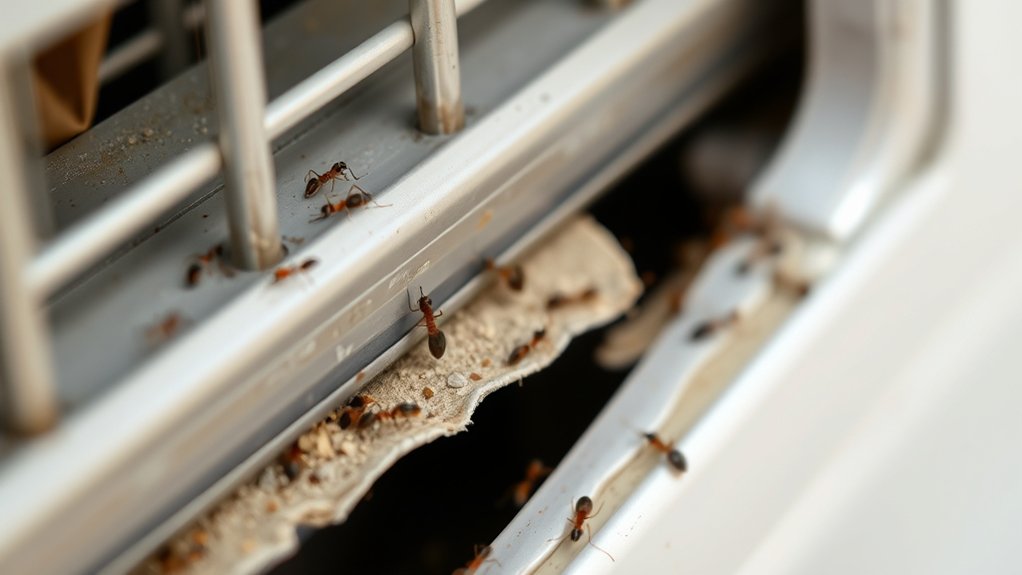
If a window air conditioner isn’t installed properly, it creates gaps that become easy entry points for bugs. Poor installation often results in misalignment or inadequate sealing, preventing a tight seal around the unit. These gaps allow pests like ants, flies, and spiders to infiltrate your home.
Improperly installed window AC units create gaps that invite ants, flies, and spiders into your home.
Incorrect sizing of the AC further enlarges openings, which increases the risk of bug intrusion. To minimize these risks, you need to make sure the unit fits precisely and that all edges are securely sealed.
It’s a good idea to rely on trusted HVAC professionals for installation since they’ve the expertise to eliminate gaps effectively.
Regular inspections are also essential to catch and fix any new vulnerabilities. This way, you keep the tight seal intact and reduce the chances of bugs sneaking in over time.
Sealing Gaps to Stop Bugs Without Blocking Airflow
You’ll want to seal the gaps around your window air conditioner carefully. The goal is to keep bugs out without cutting off the airflow. For bigger openings, try using weatherstripping and silicone caulk—they work really well.
At the same time, think about adding fine mesh screens. These help keep the air flowing while stopping those pesky insects from getting in.
Don’t forget to check your seals regularly and make sure the unit is installed properly. That way, you can keep the bugs away and your air conditioner running smoothly.
Effective Gap Sealing
Although window air conditioners need good airflow to work well, sealing gaps properly is key to keeping bugs out of your home. Effective gap sealing helps block insects while still letting air move where it needs to.
To do this, start by applying weatherstripping and silicone caulk around the edges of the unit. This creates a tight seal without blocking airflow.
Then, install fine mesh screens at the back to stop bugs but still allow air to pass freely for heat exchange.
You can also use HVAC tape to secure any loose connections and cover small gaps. This not only keeps bugs out but also makes the seal last longer.
Make sure to check these seals regularly so you can fix any wear and tear quickly.
Maintaining Proper Airflow
Since proper airflow is essential for efficient heat exchange and preventing overheating, you need to seal gaps around your window air conditioner carefully without restricting air intake.
Maintaining proper airflow means using materials like weatherstripping or caulk that fill openings but don’t obstruct ventilation pathways. Installing fine mesh screens at the back further blocks insects while allowing necessary circulation.
Regularly inspect and clean vents to remove debris that could hinder airflow or attract bugs.
Also, make sure the unit is slightly tilted to promote drainage and airflow, preventing water buildup that draws insects.
Alternative Bug Barriers
When addressing insect intrusion in window air conditioners, choosing alternative bug barriers allows you to seal gaps effectively without restricting airflow. You can enhance your window unit’s protection by implementing these precise solutions:
- Install fine mesh screens at the back of the unit, blocking bugs while maintaining necessary air circulation.
- Apply removable caulk around the edges to fill gaps; it prevents insect entry and can be removed without harming surfaces or airflow.
- Use specialized AC screening materials to encase poorly fitting sections, ensuring bug-proof sealing without compromising ventilation.
Also, make it a habit to regularly inspect weather stripping on the window frame. This helps you spot and seal any new gaps that might appear.
Maintaining a slight unit tilt helps with drainage and supports effective barrier installation.
These alternative bug barriers optimize insect prevention while preserving your unit’s performance.
How to Use Screens and Filters to Keep Bugs Out
Screens and filters form the first line of defense against bugs entering your window air conditioner. Installing fine mesh screens at the unit’s rear blocks insects while maintaining airflow essential for operation.
You should regularly inspect these screens for any wear or damage, as even small tears can provide entry points for pests.
Also, keeping your filters clean is really important. Dirty filters not only reduce efficiency but can also harbor insects.
External screens or filters can help reduce dirt and bug infiltration even more.
Make sure you clean both screens and filters regularly to keep them working well.
Finally, proper sealing around the window installation complements these barriers by eliminating gaps that bugs might use to get in.
Outdoor Maintenance Tips to Keep Bugs Away From Your Window AC
Maintaining the outdoor area around your window air conditioner plays a crucial role in keeping bugs at bay. Implementing effective outdoor maintenance tips can greatly reduce insect intrusion.
First, regularly clean debris and standing water near the unit to eliminate bug attractants.
Next, trim vegetation around the AC to remove potential bug hiding spots and pathways.
Third, inspect for and promptly repair any water leaks from the condenser, as moisture draws pests like mosquitoes and roaches.
Also, make sure the unit is slightly tilted outward to prevent water accumulation.
Seal any gaps with caulk or mesh screens.
Natural Repellents to Keep Bugs Away From Window ACS
Although outdoor maintenance is essential, incorporating natural repellents offers an additional layer of defense against bugs invading your window air conditioner. You can spray a mixture of peppermint oil and water around your window AC unit to repel stink bugs and other insects effectively.
Similarly, a garlic-infused water spray works as a natural deterrent. These natural repellents require frequent reapplication to maintain their protective barrier.
Garlic-infused water sprays naturally deter bugs but need frequent reapplication to stay effective.
To boost their effectiveness, think about placing sticky traps near the window AC unit. These traps catch insects that manage to get past the repellents.
Regularly checking the area around your window AC unit is super important for spotting any bugs early on. Also, chatting with neighbors or local community members can help you fine-tune your natural repellent approach.
This way, you keep your window AC unit bug-free while using fewer chemicals.
How Regular AC Maintenance Prevents Bug Entry
Since bugs often exploit gaps and moisture to invade window air conditioners, regular maintenance plays an essential role in preventing infestations. By conducting regular AC maintenance, you reduce bug entry points and discourage insect attraction.
Focus on these key actions: seal gaps and repair damaged insulation to block bug entry pathways. Clean filters and external screens to eliminate dirt and debris that attract insects.
Perform routine checks to guarantee efficient operation, preventing moisture buildup that lures bugs. Regular servicing by HVAC professionals also keeps airflow clear, preventing overheating and potential malfunctions that create additional vulnerabilities.
Frequently Asked Questions
Can Bugs Damage the Internal Components of My Window AC?
Yes, bugs can damage the internal components of your window AC. Insect entry can lead to blockages in vents and drainage paths, which may cause overheating and water buildup. This can really affect how well your AC works.
Some insects might even chew on wiring or insulation, which can lead to malfunctions or safety hazards. It’s not something you want to overlook.
To prevent this, try sealing any gaps where bugs could get in. Cleaning filters and inspecting internal parts regularly also helps a lot.
Taking these steps will protect your unit’s efficiency and help it last longer by keeping insect-related damage to a minimum.
Do Window Air Conditioners Attract Specific Types of Bugs Seasonally?
Yes, window air conditioners attract specific bugs seasonally because their cool, moist environment matches up with the bugs’ seasonal behavior.
During warmer months, pests like stink bugs and ants look for cooler spots and moisture, so your AC unit becomes a popular hangout.
You’ll notice more bug activity near these units as insects find and use gaps and openings.
Knowing these seasonal patterns can really help you take the right steps with maintenance to keep infestations down.
It’s all about being a little proactive!
How Does Humidity From the AC Unit Affect Bug Presence?
Coincidentally, the very moisture your AC produces to cool your space also invites pests.
Humidity levels rise around your window unit due to condensation effects, creating a damp environment bugs love. This increased moisture attracts insects like mosquitoes and roaches who seek water sources.
To control bug presence, you should manage humidity by ensuring proper drainage and cleaning your AC regularly.
Reducing the condensation helps keep these unwelcome visitors away. It’s a simple way to make your space less attractive to bugs without much hassle.
Are Certain Window AC Brands Less Prone to Bug Infestations?
Yes, certain window AC brands are less prone to bug infestations because they combine energy efficiency with superior sealing and integrated mesh filters.
When you choose units designed with tight insulation and effective condensation management, you reduce moisture that attracts bugs.
Maintaining your filter regularly guarantees airflow remains ideal, preventing gaps where insects enter. It’s a simple step that really helps keep those unwanted visitors out.
Also, prioritize brands with reinforced joints and pest-resistant features. These details make a big difference in minimizing bug issues efficiently.
Can Bugs Cause Allergies or Health Issues Through AC Units?
Yes, bugs can cause allergy symptoms and health issues through AC units. Their droppings and body parts act as allergens, triggering respiratory problems and asthma, especially in sensitive individuals.
You should prioritize pest prevention by regularly cleaning and sealing your air conditioner to reduce insect presence.
Proper maintenance minimizes allergen dispersion, helping you maintain better indoor air quality. This also protects you from potential health risks linked to bug infestations in your AC system.
Conclusion
So, unless you’re aiming to host a bug convention in your living room, sealing those gaps and installing proper screens is non-negotiable. Think of your window AC as a five-star bug hotel. Without strict check-in protocols, the creepy crawlies move right in.
Regular maintenance and natural repellents aren’t just suggestions; they’re your bouncers, keeping unwanted insect guests from crashing your cool air party. Stay vigilant, or prepare for an uninvited six-legged takeover.