Why Is My Air Conditioner Not Cooling and How Can I Fix It Fast?
Your air conditioner may not be cooling because of incorrect thermostat settings, a dirty air filter, restricted airflow, or debris around the outdoor condenser unit. Start by setting your thermostat to cool mode with the fan on AUTO. Also, clean or replace the air filter every 1 to 3 months.
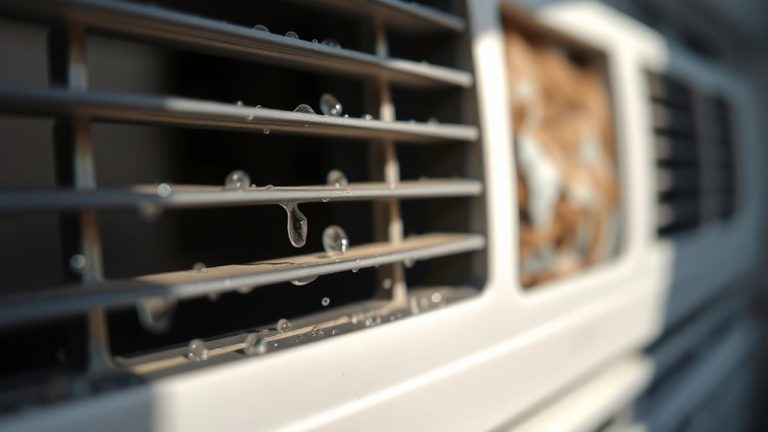
Make sure to clear any blockages from vents and remove debris near the condenser. If you notice ice forming on the coils, turn off the system to let it thaw naturally.
If the problem keeps happening, getting professional help is the fastest way to fix it. You can explore more effective steps to restore your AC’s performance too.
How to Check and Adjust Your Thermostat Settings
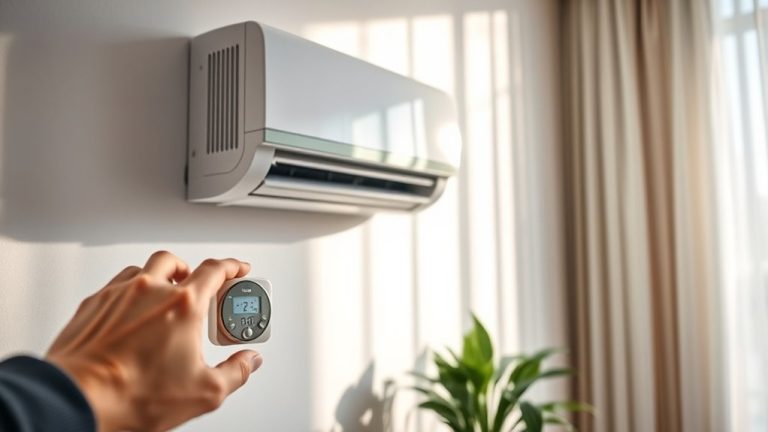
How do you guarantee your thermostat is set correctly to cool your space efficiently? Start by confirming the thermostat settings are set to cool mode, with the desired temperature lower than the current room temperature. This activates the AC system properly.
Next, check the fan setting; it should be on AUTO, not ON, to prevent the fan from running constantly without cooling.
Set the fan to AUTO, not ON, to avoid unnecessary running without cooling.
If your thermostat is programmable, verify the schedule matches your cooling needs to optimize efficiency.
Clean dust or debris from the thermostat’s sensor area to guarantee accurate temperature readings.
If these adjustments don’t work, reset the thermostat by powering it off, waiting a few minutes, then turning it back on.
These precise steps streamline your AC troubleshooting and improve cooling performance. Easy fixes like these can make a big difference!
Why a Dirty Air Filter Stops Your AC From Cooling
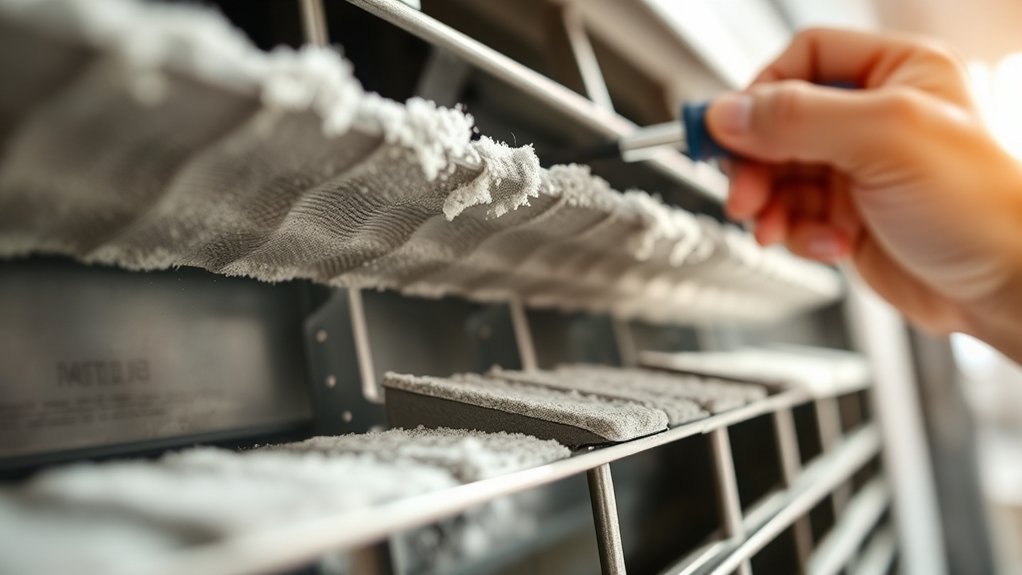
When your air filter becomes clogged with dust and debris, it restricts airflow through your AC system. This makes your AC work harder and reduces its cooling efficiency. A dirty air filter blocks the ventilation needed for peak heat exchange.
Because of this, your AC won’t cool effectively and there’s an increased risk of system freeze-ups. This added strain also causes your energy consumption and utility costs to go up by as much as 15%.
To keep things running smoothly, you should clean or replace the air filter every 1 to 3 months. Regular maintenance not only improves airflow but also enhances indoor air quality and helps you avoid costly repairs.
Checking the filter is an easy DIY task that ensures your AC operates efficiently and lasts longer. So, addressing a dirty air filter quickly is key to fixing cooling problems fast.
Quick AC Fixes to Improve Airflow
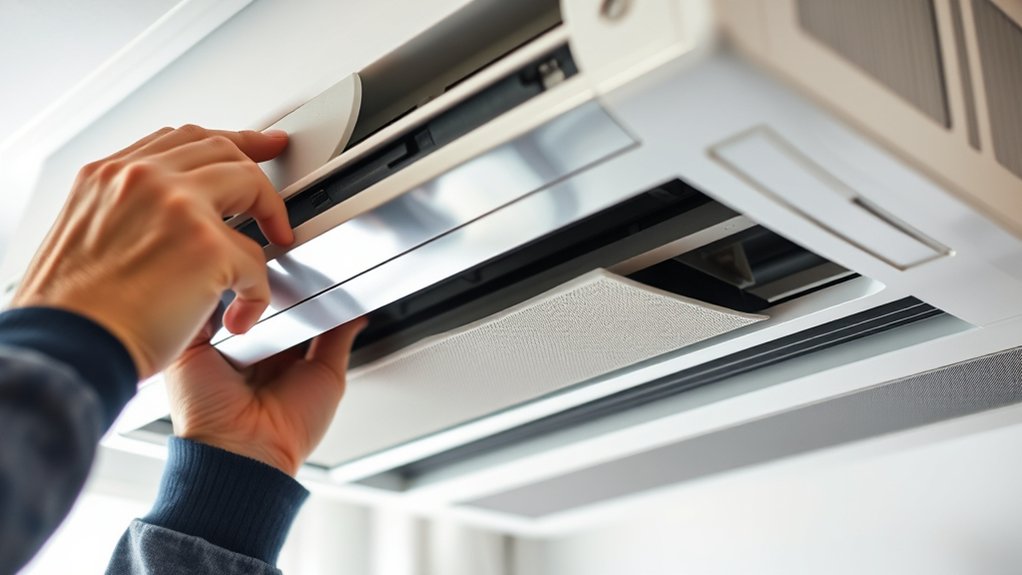
Three quick fixes can greatly improve your AC’s airflow and restore its cooling efficiency.
First, check your air filter. Replace or clean it regularly to prevent airflow restriction that compromises cooling.
Next, inspect all supply and return vents for blockages. Blocked vents disrupt air circulation, so make sure they’re open and unobstructed.
While you should maintain the outdoor condenser unit for peak performance, here we’re focusing on indoor airflow.
Also, verify that your thermostat is set to “AUTO” rather than “ON.” This allows the system to cycle properly, which enhances airflow and efficiency.
These simple steps help maintain consistent air movement, reduce strain on your system, and improve overall cooling performance quickly without needing advanced tools or professional help.
Clearing Debris From the Outdoor Condenser Unit
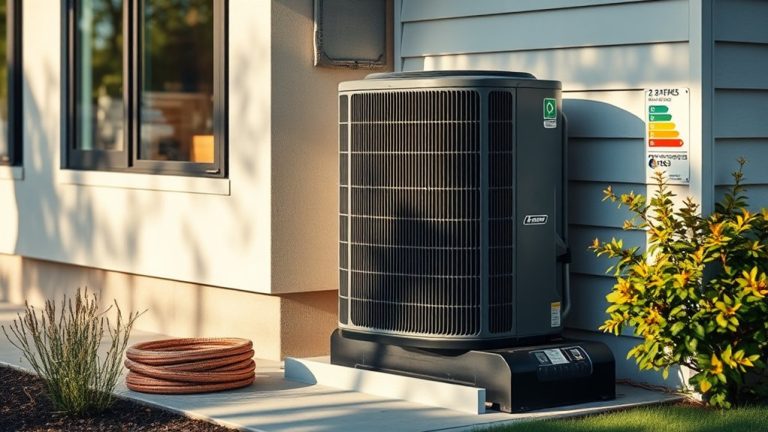
Because debris like leaves, grass, and dirt can block airflow and reduce your AC’s cooling efficiency, you need to regularly inspect and clean the outdoor condenser unit.
Start by clearing any obstructions within a 2-foot radius around the outdoor unit and trim back plants to maintain ideal airflow.
Use a soft brush or a garden hose on a gentle setting to remove dirt and debris from the condenser coils. This helps enhance heat exchange and overall system performance.
Keep an eye on the unit for signs of overheating or unusual noises, which might mean airflow is being restricted due to buildup.
For thorough maintenance, schedule annual professional cleanings to make sure the condenser operates efficiently and lasts longer.
Consistently removing debris keeps your air conditioner cooling effectively and helps you avoid costly repairs.
How to Fix Frozen Evaporator Coils
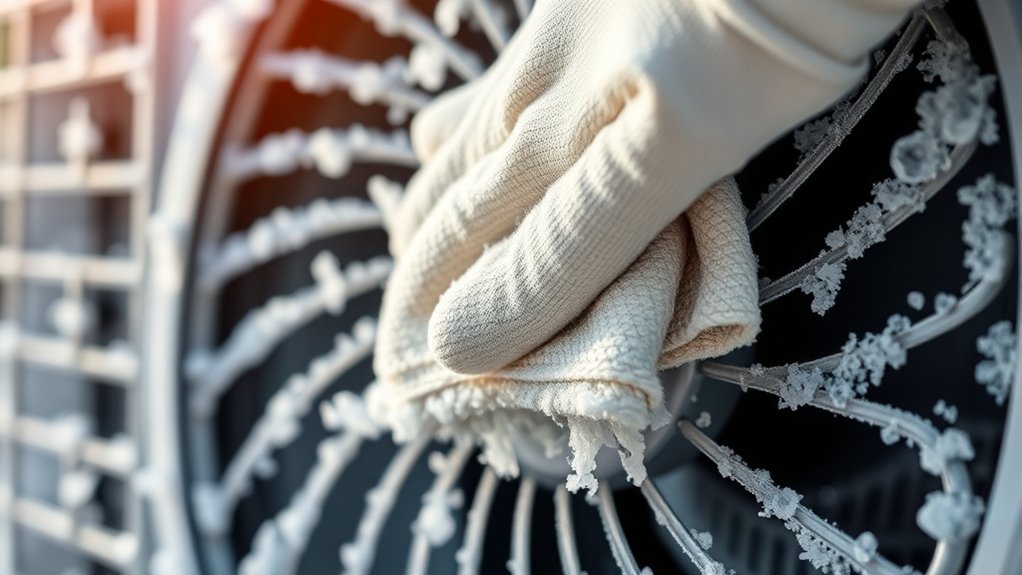
Maintaining proper airflow around your outdoor condenser unit is only part of guaranteeing your air conditioner cools effectively.
Frozen evaporator coils often happen because of restricted airflow, usually from dirty air filters. To fix this, first turn off the system and let the coils thaw completely so you don’t cause any damage.
Next, clean or replace your air filters every 1-3 months. Also, make sure all your vents are open and unobstructed to get the airflow back to normal.
If the coils freeze again after you do these things, it might mean your refrigerant levels are low or there’s a faulty component.
When that happens, it’s best to call a professional to check things out and fix the real problem.
Keeping up with regular maintenance and acting quickly when you notice issues will stop frozen evaporator coils from happening and keep your AC cooling at its best.
Signs of Refrigerant Leaks and When to Call a Pro
If your air conditioner starts blowing warm air or you notice ice buildup on the evaporator coils, these are strong indicators of a refrigerant leak. Recognizing signs of refrigerant leaks early can prevent costly damage.
Watch for reduced cooling efficiency despite normal thermostat settings. You might also hear hissing or bubbling noises near refrigerant lines or see visible ice accumulation on the evaporator coils.
Keep an eye on your energy bills too — unusually high costs can mean your system is working harder than it should. Warm air blowing from vents during cooling cycles is another red flag.
Handling refrigerant takes specialized skills, so call a professional HVAC contractor right away if you notice these symptoms. They’ll diagnose the leak accurately, safely recharge the refrigerant, and fix any damage.
Ignoring a refrigerant leak can lead to compressor failure and more expensive repairs, so getting expert help quickly is the best way to get your AC back to performing well.
What Happens When Your AC Compressor Fails
One essential component that keeps your air conditioner running efficiently is the compressor. It circulates refrigerant throughout the system. When the compressor fails, your AC can’t move refrigerant properly, which causes warm air to blow from the vents.
You might notice unusual noises like grinding or hissing, or detect refrigerant leaks. Both of these are signs that the compressor is compromised.
Failure often results from electrical faults, dirty parts, or insufficient maintenance. These issues lead to overheating and burnout.
Electrical issues, dirty components, and poor upkeep cause overheating and compressor burnout.
Since repairing or replacing a compressor often costs a significant portion of your AC’s value, it’s important to keep up with regular maintenance. This includes checking refrigerant levels and cleaning coils.
Doing this helps prevent premature compressor failure and can extend your system’s lifespan.
When and How to Reset Your Central AC System
A failed compressor can cause major cooling problems, but not all issues require extensive repairs. Sometimes, you just need to reset your central AC system. Here’s how to do it efficiently:
- Set the thermostat to “off.”
- Turn off power at the breaker box for about 5 minutes.
- Restore power and set the thermostat to “cool” mode.
- Adjust the thermostat temperature below the current indoor temperature.
- Observe if the AC system resumes normal cooling operation.
Resetting the system helps clear minor glitches or tripped breakers affecting performance.
If problems persist after the reset, you likely need professional diagnosis.
Regularly resetting your AC system can maintain peak operation and resolve intermittent cooling inconsistencies without unnecessary repairs.
It’s a simple step that can save you time and hassle.
Identifying Undersized AC Units for Your Home
Properly sizing your air conditioner is critical to maintaining efficient and effective cooling in your home. An undersized AC unit often fails to meet your cooling load requirements, leading to longer cooling cycles, uneven temperatures, and elevated indoor humidity.
To figure out the right size, calculate the cooling load based on factors like square footage, insulation, and local climate. It’s usually around 20 BTUh per square foot, but specific conditions can change that estimate.
If you notice your unit cycling on and off frequently or cooling inconsistently, it might be undersized.
It’s a good idea to consult a professional HVAC technician. They can perform precise load calculations and recommend a system tailored to your home’s needs.
Taking care of an undersized AC promptly helps it run efficiently, reduces wear and tear, and keeps your home comfortable during those hot days.
Why Professional Maintenance Can Save Your AC Fast
You can avoid expensive repairs by having regular professional maintenance done. It helps catch problems early and keeps your system running smoothly.
Technicians tune up your AC to boost its performance, so it cools better and can last up to ten more years.
Taking care of your unit this way saves you money and makes sure you stay cool when it really matters.
Prevent Costly Repairs
When you schedule regular professional maintenance, you catch small issues like refrigerant leaks before they escalate into expensive repairs.
An HVAC professional’s routine inspection helps prevent costly repairs by identifying problems early. This ensures your AC operates efficiently.
Regular maintenance also protects your investment by maintaining warranties and optimizing performance.
Key benefits of professional maintenance include:
- Detecting refrigerant leaks to avoid compressor strain
- Cleaning coils to improve heat exchange efficiency
- Checking airflow to prevent system overwork
- Reducing energy consumption by 10-30%
- Ensuring compliance with manufacturer guidelines
Extend System Lifespan
Although air conditioners are built to last, neglecting professional maintenance can drastically shorten their lifespan. To prolong the life of your system, regular professional maintenance is crucial. HVAC experts perform thorough inspections to detect refrigerant leaks, electrical faults, and worn components before they cause serious damage.
During these visits, they clean evaporator coils and condenser coils, which improves heat exchange and prevents system strain. This targeted upkeep reduces wear, enabling your unit to operate efficiently and reliably for 5 to 10 additional years.
By scheduling annual tune-ups, you not only extend your AC’s life but also avoid costly replacements. Trusting professionals with specialized tools and precise adjustments guarantees your system stays in peak condition.
This saves you time and money while maintaining consistent performance. It’s really a smart move that keeps your home comfortable without unexpected breakdowns.
Improve Cooling Efficiency
A thorough professional maintenance session can boost your air conditioner’s cooling efficiency by up to 30%, ensuring it runs at peak performance.
Professional maintenance tackles issues that reduce cooling efficiency, such as dirty filters and clogged components. This helps restore ideal airflow and heat exchange.
During maintenance, technicians will replace or clean dirty filters to improve air quality and airflow.
They’ll also inspect refrigerant levels to prevent leaks and maintain proper pressure. Cleaning evaporator coils and condenser units is another key step for effective heat transfer.
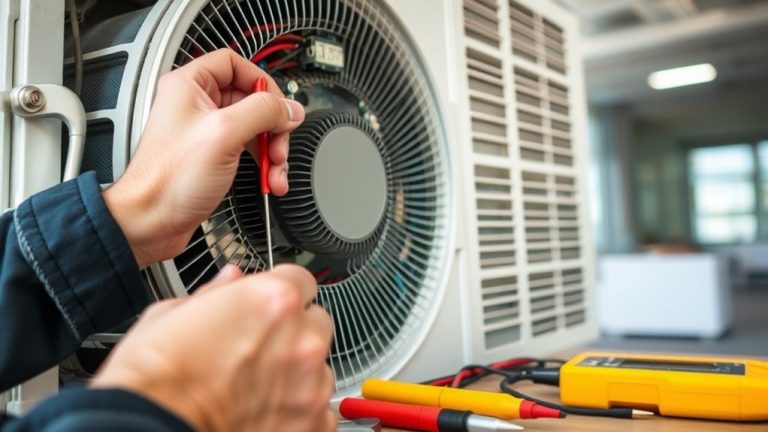
Technicians will check electrical connections and controls to ensure reliable operation.
Plus, they’ll identify any wear and tear to help prevent sudden breakdowns. Regular upkeep like this keeps your AC running smoothly and efficiently.
Frequently Asked Questions
Can Using a Ceiling Fan Reduce My Ac’s Cooling Load?
Yes, using a ceiling fan can greatly reduce your AC’s cooling load.
Ceiling fan benefits include improved air circulation and a wind-chill effect, letting you raise your thermostat by about 4°F without discomfort.
For maximum energy savings, follow fan usage tips like running it counter-clockwise in summer and turning it off when rooms are empty.
This reduces your AC’s runtime and energy consumption while maintaining consistent, comfortable indoor temperatures.
How Does Humidity Affect My Air Conditioner’s Performance?
Humidity effects on your air conditioner can be a subtle energy thief. Excess moisture makes your system work overtime to maintain air quality, often causing longer cooling cycles and increased energy use.
High humidity encourages moisture buildup and ice on evaporator coils, which reduces efficiency. To combat this, follow maintenance tips like ensuring proper ventilation and using a dehumidifier.
Keeping indoor humidity between 30% and 50% optimizes your AC’s performance and comfort.
It’s a simple step that can make a big difference in how well your system runs.
Are Smart Thermostats More Efficient Than Traditional Ones?
Yes, smart thermostats offer clear energy savings compared to traditional ones. They optimize your HVAC schedule using learning algorithms and geofencing, delivering smart thermostat benefits like reduced energy waste.
For installation tips, confirm compatibility with your system and place the thermostat away from direct sunlight or drafts for accurate readings.
Can Closing Vents in Unused Rooms Improve Cooling Efficiency?
Don’t bite off more than you can chew by closing vents in unused rooms; it often causes vent blockage issues and disrupts room temperature balance.
Instead, focus on airflow optimization tips like keeping vents open and using zoning dampers to control airflow effectively.
This approach prevents pressure buildup and duct leaks, ensuring your AC runs efficiently without strain.
Maintaining balanced airflow helps your system cool better and last longer.
It’s all about working smarter, not harder, when it comes to keeping your home comfortable.
How Often Should I Replace My Ac’s Refrigerant?
You don’t typically replace your AC’s refrigerant on a set schedule. Instead, you check for refrigerant leaks during your routine maintenance.
If you find leaks or low refrigerant levels, you’ll need a licensed professional to recharge the system with the correct refrigerant type, like R-410A or R-22.
Fixing leaks quickly helps prevent compressor damage and keeps your AC running efficiently.
Conclusion
Think of your AC as the heart of your home’s comfort system. When it falters, your space feels the chill. By checking your thermostat, cleaning filters, and clearing debris, you’re restoring its pulse.
Quick fixes like thawing coils or resetting the system can revive its rhythm fast. But if problems persist, don’t hesitate to call a pro.
Regular maintenance keeps your AC beating strong. It ensures cool relief flows efficiently when you need it most.