How Long Does a Window Air Conditioner Last and How to Maintain It
Your window air conditioner typically lasts about 10 years, but regular maintenance is key to extending its lifespan. Clean or replace filters monthly to keep airflow efficient and reduce energy use. Schedule annual professional check-ups to inspect refrigerant levels and electrical components.
Proper installation and sealing prevent air leaks and moisture buildup, which boosts durability. Watch for unusual noises or rising energy bills as signs you might need a repair or replacement. Following these care tips helps make sure your unit runs smoothly for longer.
How Long Does a Window Air Conditioner Typically Last?
Although several factors affect its longevity, a window air conditioner typically lasts around 10 years. You can expect the average lifespan to extend slightly if you perform regular maintenance. Proper upkeep, especially cleaning or replacing air filters, helps maintain cooling efficiency and prevents premature wear.
Units aged 6 to 8 years may still function well for an additional 2 years with diligent care. However, declining performance, unusual noises, or increased energy consumption are clear signs you might need to replace the unit soon.
While environmental conditions can influence durability, your focus should be on consistent maintenance to maximize the window air conditioner’s operational life. Staying proactive with servicing guarantees you get the most value from your investment without unexpected failures.
What Factors Affect Your Window Air Conditioner’s Lifespan?
When you want your window air conditioner to last as long as possible, several key factors come into play. The lifespan of your window unit depends heavily on regular maintenance, usage patterns, environmental exposure, and installation quality. Neglecting maintenance accelerates wear and reduces efficiency.
Using the unit too much strains its components, which can shorten how long it lasts. Coastal salt and humidity also cause parts to degrade faster. Proper installation is important because it guarantees minimal strain and better insulation. This helps preserve the unit’s integrity.
| Factor | Impact on Lifespan |
|---|---|
| Maintenance | Extends life by improving airflow and efficiency |
| Environmental Exposure | Accelerates wear in harsh climates |
| Installation Quality | Prevents strain, improves durability |
Understanding these factors lets you optimize care and get the most out of your window air conditioner’s lifespan.
How to Clean and Replace Your Window AC Filter
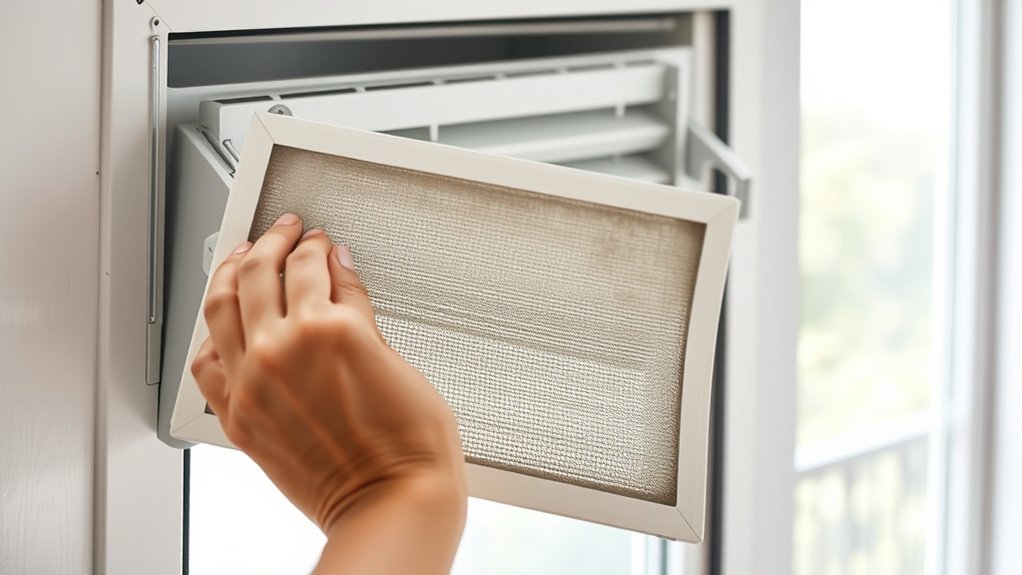
Regularly cleaning or replacing your window AC filter is crucial to maintain peak cooling efficiency and indoor air quality. You should clean the filter every month or follow the manufacturer’s instructions to guarantee maximum airflow.
Most filters are washable; just rinse them with water and let them dry completely before putting them back in.
A dirty filter restricts airflow, which forces your unit to work harder. This can increase your energy costs by up to 15%. If the filter shows signs of wear or damage, replace it promptly to keep your AC running smoothly and maintain good air quality.
Keeping up with filter maintenance not only boosts cooling efficiency but also stops dust and allergens from circulating in your home.
Plus, it helps your air conditioner last longer. It’s a simple step that makes a big difference!
How Regular Professional Maintenance Keeps Your AC Running Longer
It’s a good idea to schedule annual professional inspections for your window AC. This way, any potential problems can be caught early, helping your unit run more efficiently.
During these visits, technicians do a thorough cleaning of the system and can make timely repairs or replace parts before things break down.
Annual Professional Inspections
Although window air conditioners require minimal user intervention, scheduling annual professional inspections plays a critical role in maintaining their efficiency and lifespan.
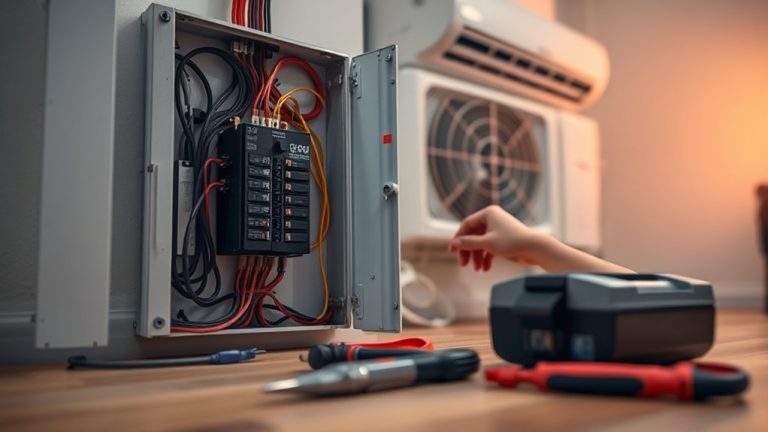
During these inspections, technicians thoroughly clean internal components like coils and fans, ensuring efficient airflow and ideal cooling performance. They also check refrigerant levels to prevent leaks that reduce efficiency and increase energy consumption.
Plus, professionals assess electrical components for safety, minimizing the risk of hazards and ensuring reliable operation. By identifying minor issues early, these inspections help you avoid significant malfunctions and extend your unit’s service life.
So, prioritizing annual inspections not only preserves your air conditioner’s functionality but also boosts energy efficiency and protects your investment over the long term.
It’s definitely worth making it a regular part of your maintenance routine.
Timely Repairs And Replacements
When professionals perform timely repairs and replacements, they stop minor issues from turning into costly failures that can shorten your window air conditioner’s lifespan.
Regular maintenance makes sure parts like condenser coils and drainage systems get checked, and any wear is taken care of quickly.
If you notice your AC cooling less effectively or hear unusual noises, scheduling repairs right away can prevent more damage and expensive replacements later on.
Plus, replacing worn parts or filters during maintenance keeps airflow smooth and reduces strain on your unit.
Skipping these steps can lead to higher energy bills and faster wear and tear.
By committing to professional service at least once a year and fixing problems as soon as they pop up, you’ll get the most out of your AC’s life and efficiency.
In the end, deciding when to replace your window air comes down to how bad the damage is during these important check-ups.
Thorough System Cleaning
Since dirt and debris accumulate quickly within a window air conditioner, regular professional cleaning is essential to keep it running efficiently and lasting longer.
Thorough system cleaning includes inspecting and replacing the air filter every month to ensure proper airflow and lower energy use.
Technicians also clean condenser coils and fins to stop the unit from overworking. This can boost cooling efficiency by up to 15%.
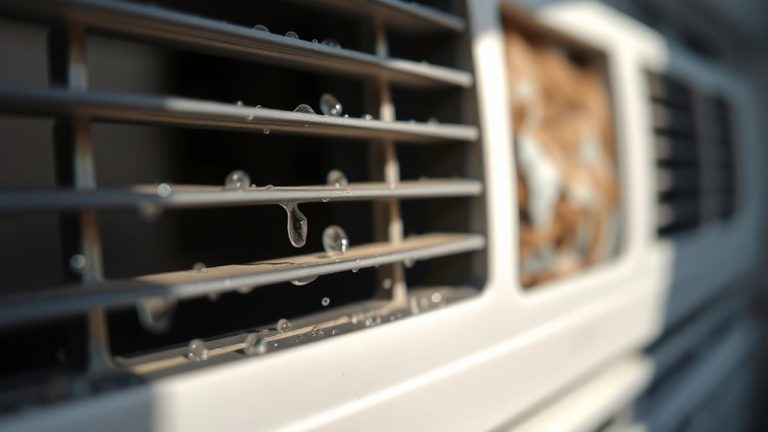
They clear the drain line too, which helps avoid clogs that might cause water damage and mold growth. Mold can seriously hurt your system’s performance.
Routine professional maintenance helps spot small problems early. This prevents expensive repairs down the line and extends your unit’s lifespan.
Why Proper Installation and Insulation Protect Your Window AC
You want to make sure your window AC is sealed up tight. This stops any air leaks that can make your cooling less efficient and push your energy bills higher.
Plus, adding proper insulation around the unit helps block heat from sneaking in or out, which keeps your indoor temperature steady and takes some pressure off your system.
And don’t forget to keep the area around your AC clear of any airflow blockages. When air can move freely, your unit works better and lasts longer.
It’s a simple step that really pays off in the long run.
Importance Of Window Sealing
Although installing a window air conditioner might seem straightforward, improper sealing can drastically reduce its efficiency and lifespan. You need to seal gaps around the window unit with foam insulation or weather-stripping to prevent air leaks. This maintains indoor temperatures, reduces energy consumption by up to 50%, and limits moisture buildup that causes mold growth.
Proper sealing also blocks outdoor pollutants and humidity, improving air quality and comfort. Furthermore, a securely sealed unit resists damage from rain or snow, protecting its durability. It’s worth taking the time to get the sealing right to enjoy these benefits.
| Benefit | Reason | Result |
|---|---|---|
| Energy Efficiency | Prevents air leaks | Lowers power use by 50% |
| Mold Prevention | Stops moisture infiltration | Safeguards health |
| Unit Protection | Blocks external elements | Extends AC lifespan |
Benefits Of Proper Insulation
When you properly insulate your window air conditioner during installation, you greatly enhance its efficiency by preventing cool air from escaping and reducing the workload on the system.
Proper insulation maintains consistent indoor temperatures, which helps your unit operate smoothly and extends its lifespan by minimizing component wear.
By sealing gaps with weather-stripping or foam insulation, you reduce energy costs, sometimes by up to 20%, because the system doesn’t have to work as hard to cool your space.
Plus, insulation limits condensation and moisture buildup, effectively preventing mold and mildew growth that can compromise air quality and health.
This tight seal also protects your AC from external temperature fluctuations, ensuring reliable performance even in extreme weather conditions.
Avoiding Airflow Obstructions
Because proper installation and insulation create a secure, airtight fit for your window air conditioner, they prevent airflow obstructions that can compromise performance. You must ascertain the unit is firmly installed with no gaps, as openings can disrupt airflow and reduce cooling efficiency.
Use foam or weather-stripping to seal the edges tightly, minimizing air leaks and maximizing capacity.
Keep the area around the AC unit clear of curtains, furniture, or debris to maintain unobstructed airflow. Regular maintenance, including cleaning exterior surfaces and vents, prevents buildup that restricts airflow.
Also, tilt the unit slightly outward to promote drainage, avoiding water accumulation that can cause mold and airflow blockages.
Signs Your Window AC Needs Repair or Replacement
How can you tell if your window air conditioner needs repair or replacement? Key signs include unusual noises like grinding or squealing. These often mean mechanical issues that need immediate attention.
If your AC unit emits foul odors, such as musty or smoky smells, it could be a sign of mold buildup or electrical faults. Both of these are hazardous and require professional repair or replacement.
Also, if your energy bills spike a lot when the AC is running, your unit might be inefficient or malfunctioning. Frequent breakdowns or ongoing repair needs usually mean it’s more cost-effective to replace the unit, especially if repairs cost more than a new one.
Rising energy bills and constant repairs often signal that replacing your AC is the smarter choice.
Finally, think about the age of your air conditioner. Window ACs typically last around 10 years. After that, if performance drops, it’s probably time to replace it.
Tips to Prevent Common Window AC Problems Like Noise and Poor Cooling
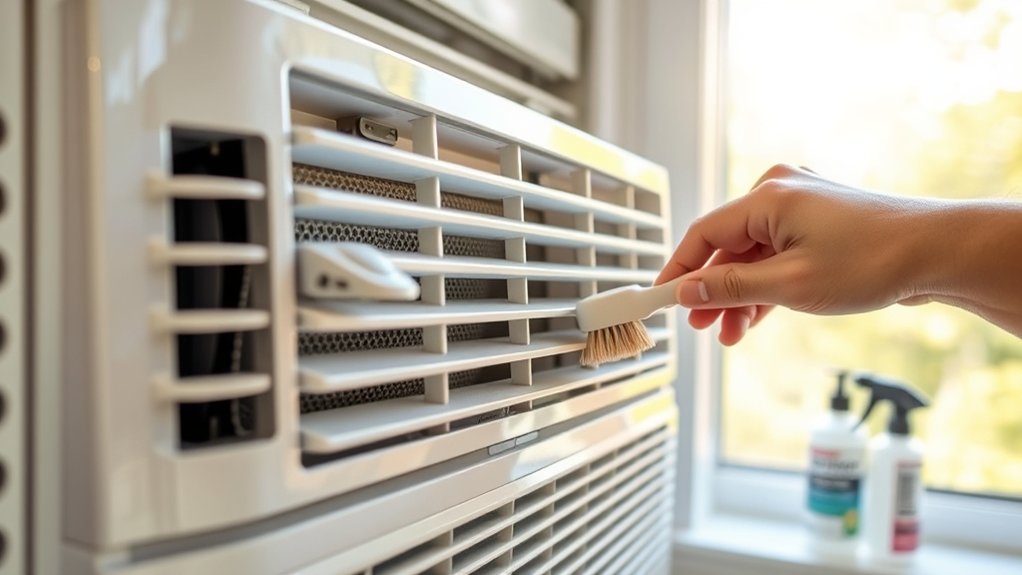
To prevent common issues like noise and poor cooling in your window air conditioner, you need to maintain key components regularly.
Start by cleaning or replacing the air filter every month to guarantee ideal airflow and clean the air effectively. Dirty filters reduce cooling efficiency and increase energy costs.
Also, inspect and clean the condenser coils and fins seasonally to avoid debris buildup that impedes airflow and causes overheating.
Check that the drain hose is clear and the unit tilts slightly outward to prevent water damage.
Keep an ear out for unusual noises like grinding or squealing, as these usually mean mechanical problems that need prompt attention.
It’s a good idea to schedule annual professional maintenance to catch hidden issues early.
And if your AC’s performance drops despite all the upkeep, it might be time to think about replacing your unit for reliable air conditioning.
When to Upgrade Your Window AC: Signs and Buying Tips
When should you consider upgrading your window air conditioner? If your unit is near or over 10 years old, it’s a good idea to think about replacing it for better efficiency and comfort.
Consider replacing your window air conditioner if it’s approaching or exceeds 10 years for improved efficiency and comfort.
You might notice rising water bills or higher energy costs when using it—these often mean the AC isn’t performing well anymore.
Also, if you hear persistent mechanical noises or smell foul odors, it could be a sign of internal damage or mold, which isn’t good for your health.
If you find yourself paying for frequent repairs that cost more than a new unit, it’s definitely time to upgrade.
Watch for these signs:
- Significant increases in water bills or energy consumption
- Musty or smoky odors suggesting mold or electrical faults
- Frequent breakdowns or mechanical noises like grinding
When you’re shopping, look for the best window AC units with high Energy Star ratings.
It’s smart to choose models with advanced filtration to keep respiratory issues at bay.
Don’t forget to check for reliable warranties too—they help with long-term savings and keeping you safe.
Frequently Asked Questions
Can I Use a Window Air Conditioner in Multiple Rooms?
You generally can’t use a window air conditioner to cool multiple rooms effectively because it compromises airflow efficiency.
Instead, consider portable air conditioners if you need flexibility between rooms. They allow better room cooling strategies by letting you move the unit around.
For ideal cooling, install dedicated units per room to maintain efficiency and comfort.
Trying to cool multiple rooms with one window unit often leads to uneven temperatures and higher energy use. It’s usually not worth the hassle or the extra cost on your energy bill.
How Much Electricity Does a Window Air Conditioner Consume?
A typical window air conditioner consumes about 900 watts per hour, but this varies with cooling capacity comparison. Larger units use more energy.
To get the most out of your AC, try running it only during peak heat periods. Following seasonal usage guidelines can really help.
Also, regularly cleaning filters and sealing gaps are simple energy efficiency tips that reduce electricity consumption.
Keep an eye on your power bills to spot any inefficiencies. This way, your window AC stays cost-effective and runs at its best throughout the cooling season.
Are Window Air Conditioners Eco-Friendly Compared to Other Types?
Yes, window air conditioners can be more eco-friendly if you choose models with high energy efficiency and modern refrigerant types like R-410A.
These units usually consume less electricity than central systems, which helps reduce their environmental impact.
That said, older models that use R-22 refrigerant are harmful to the ozone layer.
So, it’s best to avoid those if you want to be more eco-conscious.
To get the most eco-friendly option, look for Energy Star-rated units.
Also, make sure to maintain them regularly so they run efficiently and keep greenhouse gas emissions to a minimum.
Can I Install a Window Air Conditioner Myself Safely?
Yes, you can safely install a window air conditioner yourself by following key installation tips and safety precautions.
First, measure your window accurately and gather necessary DIY tools like a drill, screwdriver, and level. Secure the unit firmly using a support bracket for stability.
Avoid extension cords and seal gaps with foam insulation.
Always follow the manufacturer’s instructions precisely to guarantee proper airflow and prevent hazards during installation.
Taking these steps will make the whole process smoother and safer for you.
What Is the Average Cost of Repairing a Window Air Conditioner?
You can expect repair costs breakdown for a window air conditioner to range from $100 to $500.
Common issues like capacitor replacement or coil cleaning typically cost $100-$200, while compressor problems might exceed $500.
Professional services usually charge $75 to $150 for maintenance, which helps prevent expensive repairs.
If repair costs get close to half your unit’s value, replacing it might make more sense.
Plus, newer models tend to be more energy-efficient, so upgrading could save you money in the long run.
Conclusion
You can expect your window air conditioner to last around 8 to 12 years if you maintain it well. Regular cleaning, timely filter changes, and professional check-ups act like a well-oiled clockwork, keeping your unit reliable and efficient.
Proper installation and insulation are essential to prevent wear and tear. Watch for signs of trouble early, and don’t hesitate to upgrade when performance dips. Your cool comfort depends on it.