How Does a Central Air Conditioner Work in 5 Easy Steps
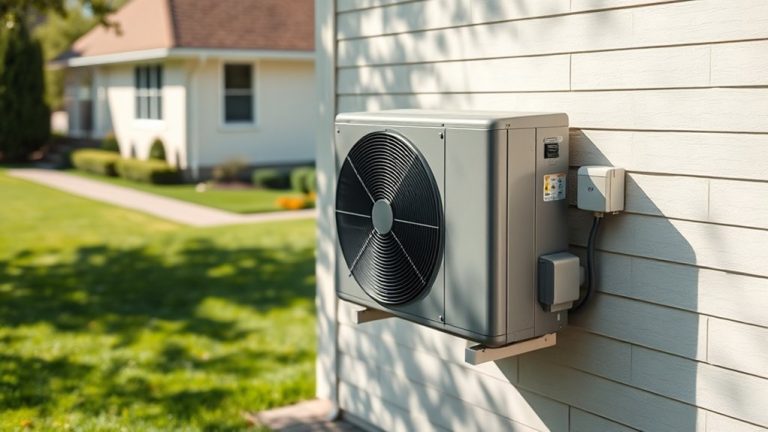
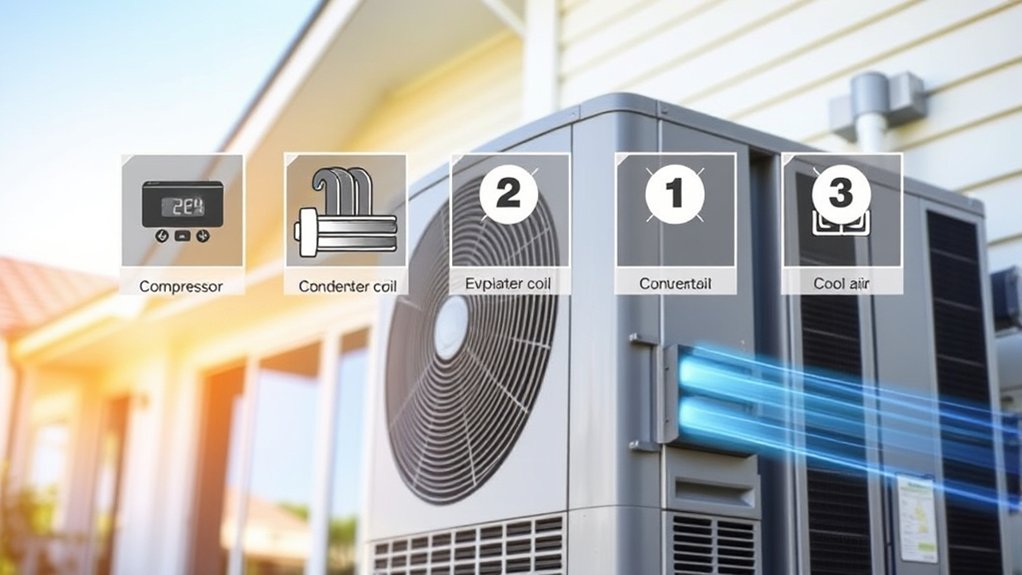
When your thermostat senses heat, it signals your central air conditioner to start. The compressor pressurizes refrigerant, turning it into a hot gas that moves to the outdoor condenser. There, heat is released with the help of fan-driven airflow.
Inside, warm air passes over the evaporator coil, cooling as refrigerant absorbs heat. Finally, the blower fan circulates the cooled air throughout your home. Understanding each step gives you a clearer view of how your system maintains comfort efficiently.
How a Central Air Conditioner Starts Cooling Your Home
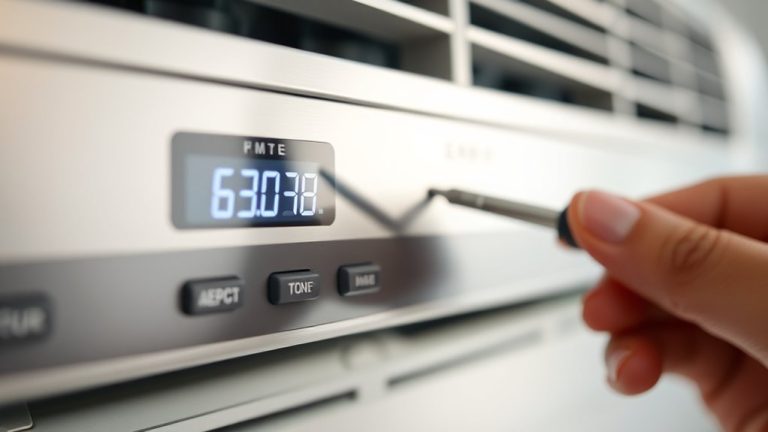
When your thermostat senses that the indoor temperature has risen above your set point, it immediately signals the central air conditioner to start cooling.
Your thermostat detects rising indoor heat and promptly triggers the air conditioner to begin cooling.
The indoor fan activates, pulling warm air through return ducts and across the evaporator coil. Inside the coil, the refrigerant absorbs heat from the air, changing from liquid to gas.
The compressor pressurizes this refrigerant gas and sends it to the outdoor unit. There, the condenser coil releases the absorbed heat into the outside air, allowing the refrigerant to cool and revert to liquid form.
This liquid refrigerant then cycles back to the evaporator coil.
This continuous cycle of heat absorption and release keeps things running smoothly. It maintains consistent cooling and efficiently lowers your indoor temperature while the system operates.
What the Compressor Does to Pressurize Refrigerant
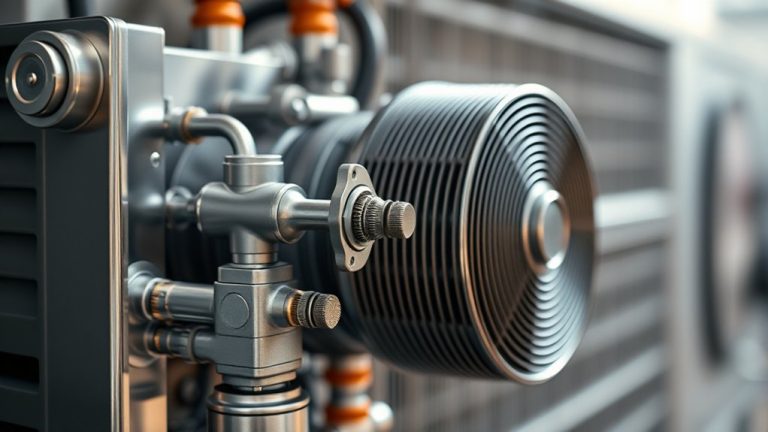
The compressor pumps refrigerant through the system, transforming it from a low-pressure gas into a high-pressure gas. When refrigerant enters, it’s cool and low in pressure, which lets the compressor increase both temperature and pressure efficiently.
This pressurized gas then moves to the condenser coil for heat release. The compressor uses electricity and is critical for maintaining system pressure and efficient cooling.
Here’s what the compressor does:
- Draws in low-pressure refrigerant gas
- Compresses it to raise pressure and temperature
- Sends high-pressure gas to the condenser coil
- Relies on electricity and is a key focus during system maintenance
Without the compressor’s work, your air conditioner can’t maintain proper pressure or deliver efficient cooling.
How the Outdoor Condenser Releases Heat Efficiently
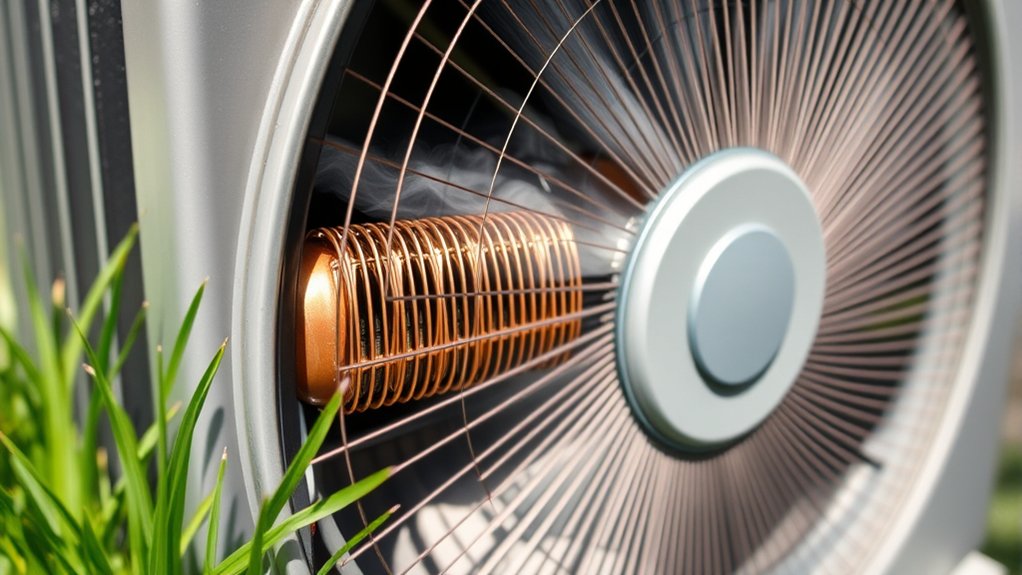
After the compressor pressurizes the refrigerant into a high-pressure gas, it flows into the outdoor condenser unit, where heat removal takes place.
The outdoor condenser releases heat by passing this gas through coils equipped with metal fins that boost heat exchange efficiency by expanding the surface area. A fan inside the unit draws ambient air across the coils, promoting airflow that cools the refrigerant, causing it to condense back into a liquid.
Operating at outdoor temperature, the condenser efficiently expels heat absorbed from your home.
To maintain ideal cooling performance, regular maintenance is essential. Debris buildup can obstruct airflow and reduce heat release efficiency.
By ensuring proper airflow and keeping the fan and coils clean, you help the outdoor condenser sustain efficient heat dissipation and reliable air conditioner operation.
It’s a simple way to keep your system running smoothly and your home comfortable.
How the Indoor Evaporator Absorbs Heat From Your Air
As warm indoor air flows into your air conditioner, it passes over the evaporator coil. Here, the refrigerant absorbs heat and changes from a liquid to a gas. This is a critical step in the cooling process that happens inside the indoor evaporator.
The evaporator efficiently soaks up heat from the indoor air to keep your space comfortable. Here’s how it works: warm indoor air is drawn over the evaporator coil, and the refrigerant inside absorbs the heat, evaporating from liquid to gas.
Proper airflow is key because it guarantees maximum heat absorption. After absorbing heat, the heated refrigerant moves to the compressor, where it gets pressurized.
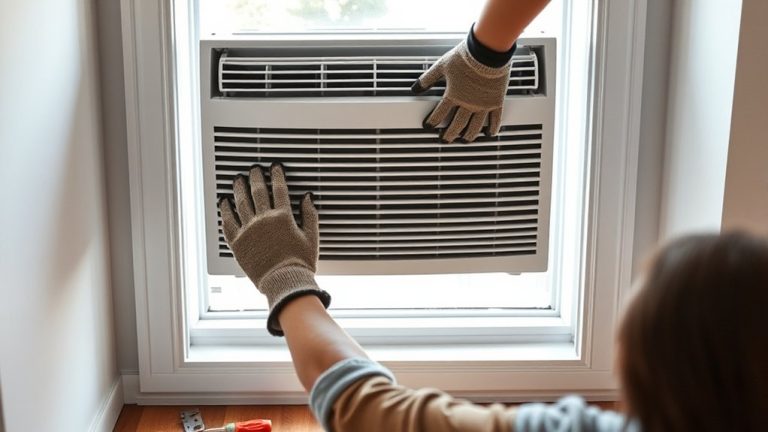
Keeping up with regular maintenance, like changing your filters, makes sure airflow isn’t blocked. This helps your system run efficiently and keeps your indoor air nice and cool.
How the Blower Fan Circulates Cool Air Throughout Your Rooms
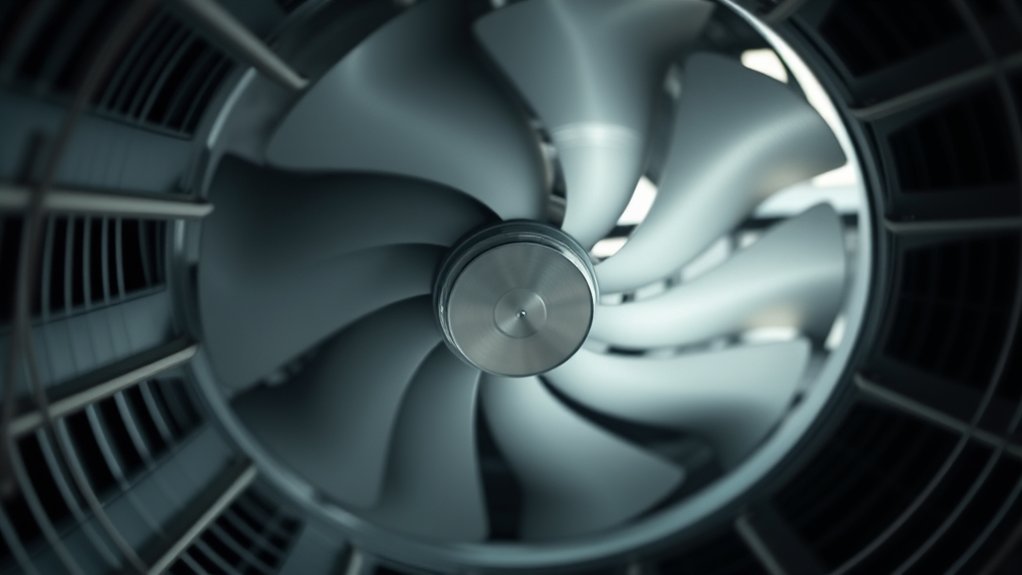
Once the refrigerant absorbs heat in the evaporator coil, the blower fan takes over by pulling warm air from your rooms through return ducts and air filters. The blower fan is located within the indoor unit and makes sure the warm air passes efficiently over the evaporator coil. Here, the refrigerant cools the air by absorbing heat.
The cooled air is then pushed through supply ducts and out of vents, helping to lower your indoor temperature. The blower fan runs continuously during the cooling cycle to keep the air moving. This steady airflow helps maintain an even temperature throughout your home.
To keep everything running smoothly, it’s important to regularly maintain both the blower fan and air filters. Doing this prevents any airflow restrictions that could reduce your system’s efficiency.
Plus, it ensures your living spaces stay comfortable all season long.
Frequently Asked Questions
How Often Should I Service My Central Air Conditioner?
You should follow a service schedule that includes professional inspections at least once a year, ideally before peak cooling seasons.
Regular maintenance tips include cleaning filters every 1 to 3 months and checking refrigerant levels during service.
Don’t forget duct inspections to maintain airflow.
This routine boosts energy efficiency, extends your system lifespan, and helps with troubleshooting issues early.
Seasonal preparation guarantees your central air conditioner performs reliably when you need it most.
What Size Air Conditioner Is Best for My Home?
You’ll want an air conditioner sized around 20 BTUs per square foot of your home’s living space.
Accurate air conditioner sizing depends on a precise BTU calculation, factoring in home square footage, insulation quality, ceiling height, window size, climate zone, number of occupants, and ductwork condition.
Don’t forget to check energy efficiency ratings too.
A professional Manual J Load Calculation guarantees your unit cools efficiently without short cycling or inadequate performance.
It’s definitely worth getting this done to make sure your air conditioner works just right for your home.
Can I Improve Efficiency With a Programmable Thermostat?
Yes, you can improve efficiency with a programmable thermostat by optimizing thermostat settings and using scheduling features to reduce energy consumption during off-peak hours.
Its user-friendly interface makes temperature control and humidity management easier, which also boosts comfort.
You can even adjust settings remotely, anytime you want, which helps save money. Just make sure to check if your system is compatible before you install it.
Also, maintenance reminders keep your AC running well and extend its lifespan.
This way, you’ll enjoy consistent energy savings without sacrificing comfort. It’s a smart upgrade for managing your home’s temperature more effectively!
How Noisy Is a Central Air Conditioning System?
Imagine a quiet library next to a bustling street. That’s how indoor noise compares to outdoor noise from your central air conditioning system. Noise levels usually range from 50 to 70 decibels.
Most of the outdoor noise comes from compressor sounds and fan operation. You can reduce vibration issues and improve soundproofing options through maintenance tips and insulation.
It’s a good idea to opt for quiet models that meet noise regulations. This way, you ensure a peaceful environment without sacrificing performance.
What Common Problems Cause a Central AC to Stop Cooling?
Common problems causing your central AC to stop cooling include incorrect thermostat settings and low refrigerant levels, often from leaks.
Airflow issues arise from dirty filters, duct leaks, or blocked vents. Compressor failure or electrical problems in the condenser unit can halt cooling.
Insulation problems and drainage issues may also impair performance.
Regular maintenance helps you avoid these technical faults and guarantees efficient operation.
Conclusion
Now that you understand how a central air conditioner works, you might think it’s too complex to maintain. However, by knowing these five key steps: starting the cooling, compressing refrigerant, releasing heat, absorbing indoor heat, and circulating cool air, you can better troubleshoot and optimize your system’s performance.
This knowledge helps you guarantee efficient cooling, extend your unit’s lifespan, and reduce energy costs.
It makes central air conditioning a smart, manageable investment for your home.