How Long Should an Air Conditioner Run: 5 Tips for Efficiency
Your air conditioner should run in cycles lasting about 15 to 20 minutes, two to three times per hour. This helps it cool efficiently without wasting energy or stressing the system. Setting your thermostat around 75°F and maintaining good insulation can reduce run times even more.
Try to avoid continuous operation because it spikes energy bills and wears out components faster. Make sure to regularly clean your filters and schedule maintenance so airflow stays at its best.
Following these tips will help you balance comfort and efficiency. If you want, you can explore more ways to enhance your AC’s performance.
How Long Should Your Air Conditioner Run for Optimal Cooling?
How long should your air conditioner run to cool your space effectively? Typically, an AC unit operates in cycles lasting 15 to 20 minutes, cycling 2 to 3 times per hour to maintain ideal performance and energy efficiency.
Run times vary based on indoor temperatures, the temperature set, and humidity levels.
Run times depend on indoor temperature, thermostat settings, and humidity for optimal cooling efficiency.
Oversized units often short cycle, which reduces efficiency. On the other hand, undersized units may run for too long, increasing energy consumption. It’s a bit of a balancing act to get it just right.
To achieve precise control, make sure your system gets regular maintenance. Clean air filters and check airflow to support proper operation within ideal run time parameters.
Monitoring these factors helps your AC avoid continuous operation, which usually means it’s not working efficiently.
By managing run times correctly, you keep indoor temperatures comfortable while boosting your unit’s energy use and longevity.
It’s all about finding that sweet spot for your AC to run smart, not hard.
How Thermostat Settings and Insulation Affect AC Run Time
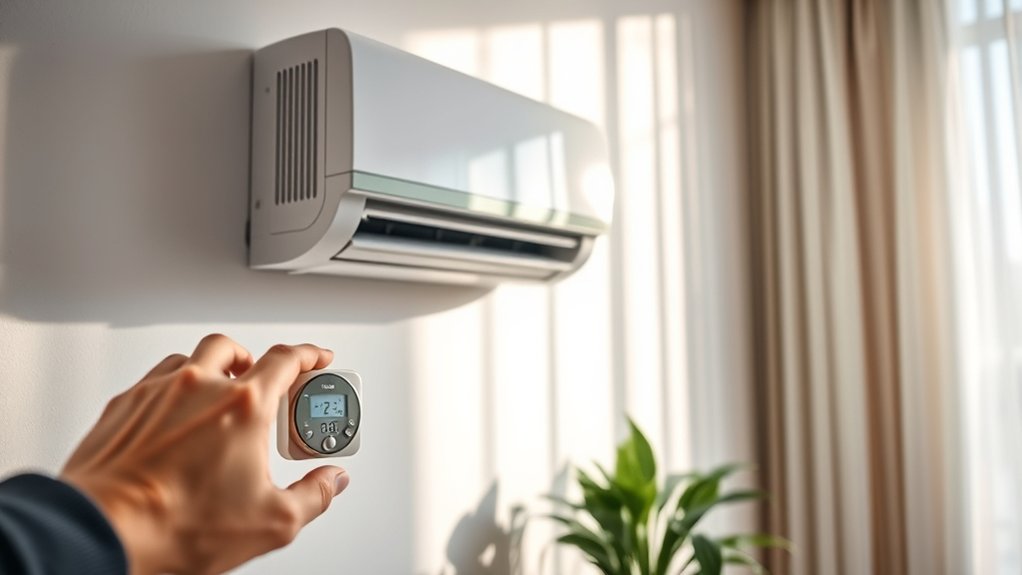
Thermostat settings and insulation quality directly influence your air conditioner’s run time and efficiency. Setting your thermostat too low (like 68°F) makes your AC run longer and use more energy because it’s working hard to cool your space.
Instead, try setting it around 75°F. This helps your AC run more efficiently and avoids unnecessary cooling cycles.
Good insulation is really important too. It keeps the cool air inside and stops heat from sneaking in from outside. When your insulation is up to par, your AC runs in shorter, less frequent cycles that last about 15 to 20 minutes.
That means it uses less energy and doesn’t wear out as fast.
You can also tweak your thermostat based on the outdoor temperature and humidity. Doing this helps your system run smoother and saves energy.
Why Continuous Air Conditioner Run Time Drives Up Energy Bills
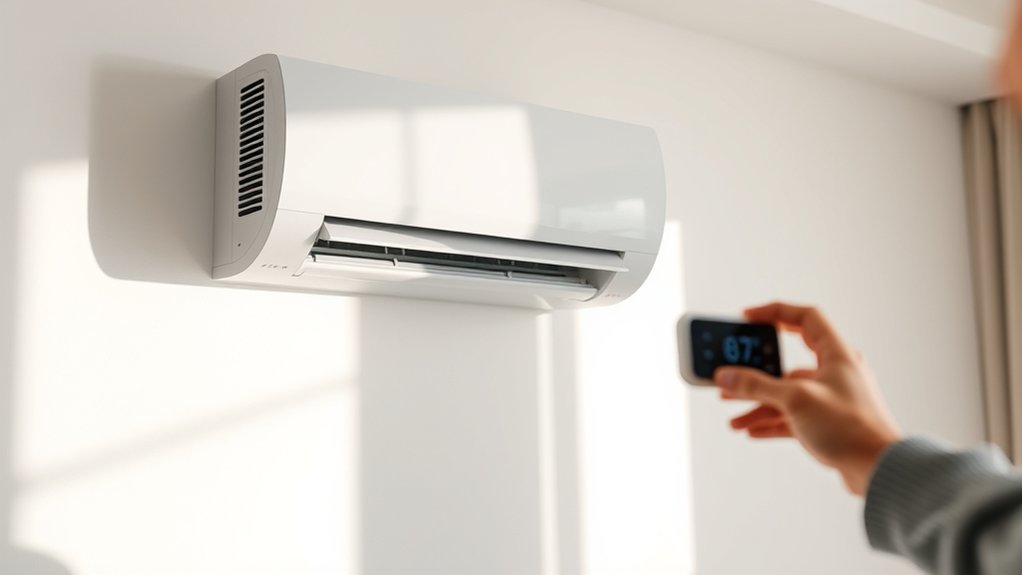
Because continuous air conditioner run time forces your unit to consume electricity without breaks, your energy bills can spike by 20-30% during peak summer months. When your AC unit runs non-stop, it disrupts efficient cycling, preventing the perfect 15-20 minute cooling cycle and increasing energy consumption.
Continuous operation also causes excessive wear and tear on components, leading to costly repairs and reduced unit lifespan. High humidity levels further extend run times, driving higher utility bills.
To manage costs, consider energy-efficient models designed for optimal cycling and humidity control.
| Factor | Impact | Result |
|---|---|---|
| Continuous Operation | Increased energy consumption | Higher utility bills |
| Excessive Wear | Component damage | Frequent repairs |
| Inefficient Cycling | Poor cooling efficiency | Elevated energy costs |
How Regular Maintenance Prevents Continuous AC Operation
When you perform regular maintenance on your air conditioner, you improve airflow and system efficiency, which directly prevents the unit from running continuously.
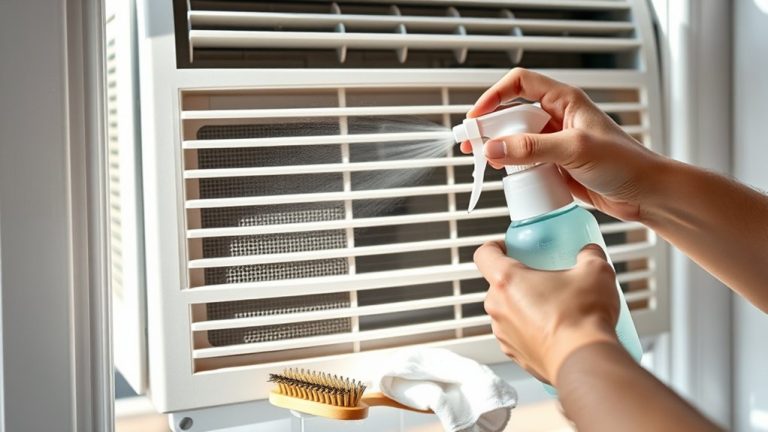
Regular maintenance tasks, such as cleaning or replacing filters, enhance airflow, reducing the strain on your AC caused by restricted circulation.
You must clean the coils regularly because dirty evaporator coils decrease cooling efficiency, forcing the air conditioning unit to work harder and longer.
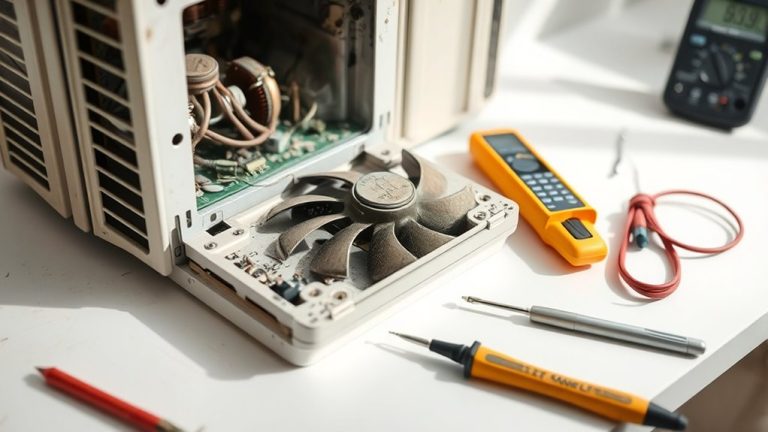
Routine inspections help identify minor issues early, avoiding malfunctions that lead to continuous operation.
During maintenance, address airflow obstructions like blocked vents or ducts to guarantee optimal air distribution.
Scheduling professional tune-ups annually ensures all components perform effectively, minimizing unnecessary continuous running during peak demand.
Consistent upkeep is key to maintaining your AC’s performance and preventing it from running continuously.
It really pays off to stay on top of these tasks so your system runs smoothly all season long.
Easy Ways to Make Your AC Run Better and Last Longer
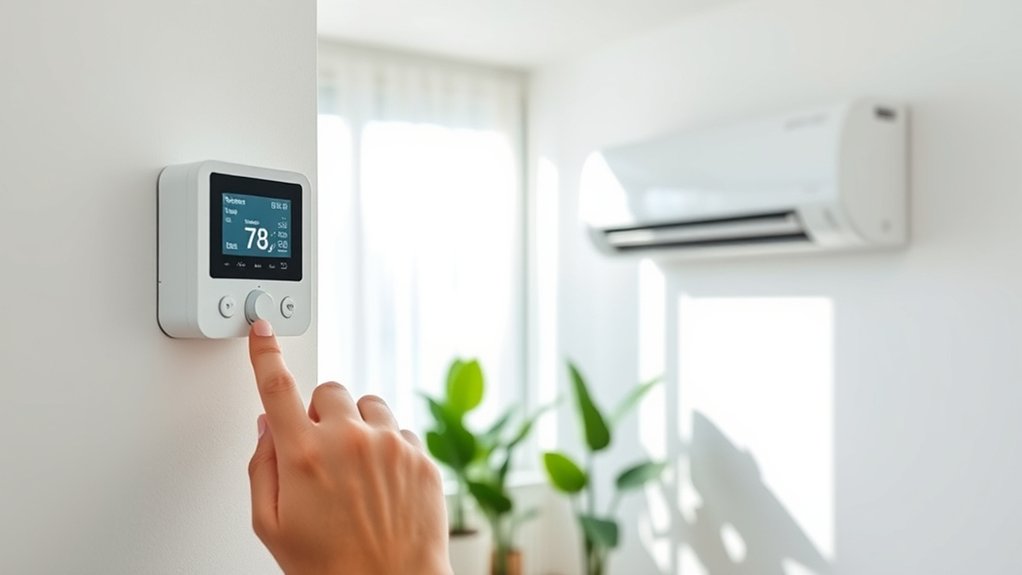
To enhance your air conditioner’s performance and extend its lifespan, you should regularly clean or replace air filters every 1 to 3 months to maintain proper airflow and efficiency.
Regularly cleaning or replacing air filters every 1 to 3 months ensures optimal airflow and boosts your AC’s efficiency.
Here are four easy ways to keep your air conditioning system running better and longer:
- Maintain at least 2 feet of clearance around the outdoor unit by removing vegetation and debris. This guarantees ideal air circulation and cooling system efficiency.
- Seal gaps and improve insulation quality in attics and ductwork to reduce heat gain. Doing this lowers energy usage and eases the AC’s workload.
- Schedule professional maintenance annually to detect issues early and sustain system efficiency.
- Set the temperature around 75°F to maintain comfort while reducing energy bills and minimizing cycling frequency.
These steps help maintain ideal operation and reduce wear on your cooling system.
Taking care of your AC this way can save you money and keep your home comfortable all season long.
Frequently Asked Questions
What Type of Refrigerant Is Best for Air Conditioners?
You should choose refrigerant types like R-32 for the best eco friendly options, as it offers lower environmental impact and aligns with recent regulatory changes.
While R-410A has strong efficiency ratings, R-32’s lower global warming potential makes it preferable despite a slightly higher cost comparison.
To avoid refrigerant leaks and maintain performance metrics, follow strict maintenance tips and guarantee proper installation considerations.
Using the recommended refrigerant boosts long-term efficiency and system lifespan. It really pays off to stick with what’s recommended!
How Does Window Placement Affect Air Conditioner Efficiency?
Think of window orientation as the gateway controlling sunlight exposure and airflow patterns in your space. South-facing windows increase heat, forcing your AC to work harder.
You’ll want to optimize insulation quality and window seals to prevent leaks.
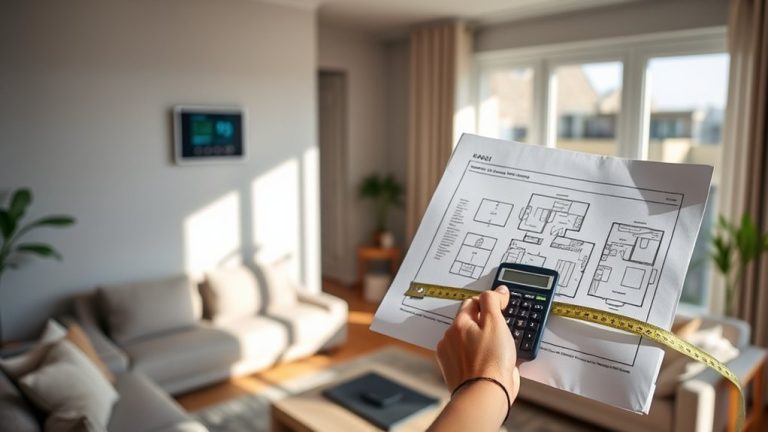
Consider shading options and evaluate room size and heat sources to balance thermal mass. Proper duct placement also matters.
These factors together influence efficiency by reducing AC runtime and energy use.
Can Using Ceiling Fans Reduce AC Run Time?
Yes, using ceiling fans can reduce AC run time by improving air circulation and enhancing comfort levels.
Adjust fan speed to create a wind-chill effect, allowing you to raise your AC’s thermostat setting slightly. This combination lowers energy use and boosts energy savings, especially in well-insulated homes.
Ceiling fans also help with humidity control and managing cooling zones more effectively.
Just make sure your system is compatible to get the best results. That way, you can optimize room temperature and keep summer heat at bay more efficiently.
What Are Signs of a Failing Compressor?
Like a ticking clock nearing its end, your AC’s failing compressor reveals itself through compressor noise and unusual vibrations.
If you notice inconsistent cooling or an overheating unit, these are red flags.
Refrigerant leaks and electrical issues often cause frequent cycling, straining your system.
Age concerns and maintenance neglect accelerate wear, signaling it’s time for compressor replacement.
Stay vigilant. Early detection saves efficiency and costly repairs.
How Do Smart Thermostats Improve AC Performance?
Smart thermostats improve AC performance by using learning algorithms to optimize temperature control and scheduling features, maximizing energy savings.
Their user-friendly interfaces let you easily adjust settings, while remote access guarantees cost efficiency by preventing unnecessary cooling.
They also integrate with other smart devices, which boosts overall system efficiency. Plus, maintenance reminders keep your AC in top shape, helping you avoid costly repairs.
These smart thermostat benefits help you maintain comfort while reducing energy waste effectively. It’s a simple way to keep your home cozy and your bills low.
Conclusion
To keep your air conditioner running efficiently, set your thermostat wisely, improve your insulation, schedule regular maintenance, and avoid letting it run continuously. Balancing run time prevents energy waste, reduces wear, and maintains peak cooling.
By managing settings, enhancing home sealing, maintaining components, and monitoring usage, you’ll extend your AC’s life and lower costs. Follow these steps closely, and you’ll guarantee your system operates effectively, efficiently, and economically.