What Is a Split Air Conditioner?
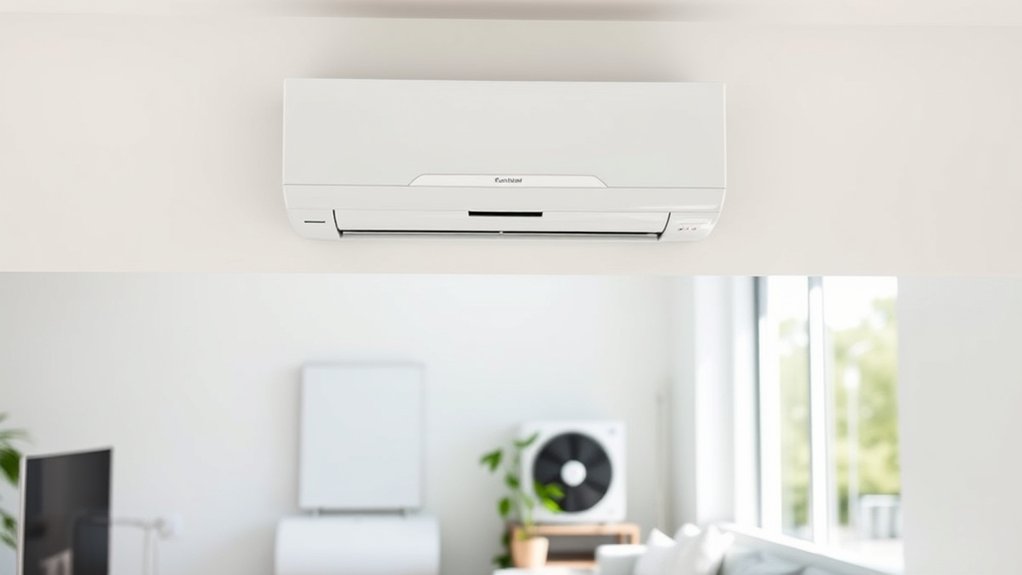
A split air conditioner cools your space through two separate units: an indoor unit with an evaporator coil and blower, and an outdoor unit housing the compressor and condenser. Refrigerant circulates between them, transferring heat without needing ductwork. This design lets you cool specific rooms efficiently while saving energy.
You’ll also find various types tailored for heating, cooling, or flexible installation. Understanding its components and benefits helps you make informed choices about your cooling needs. It’s pretty convenient once you get the hang of how it all works.
What Is a Split Air Conditioner and How It Works
A split air conditioner consists of two main components: an indoor unit containing the evaporator coil and air handler, and an outdoor unit housing the compressor and condenser.
You’ll find the evaporator coil in the indoor unit, where it absorbs heat from the air, cooling it before circulation.
The refrigerant flows continuously between the indoor and outdoor units, transferring heat efficiently through evaporation and condensation.
Refrigerant cycles seamlessly between units, enabling efficient heat transfer through evaporation and condensation.
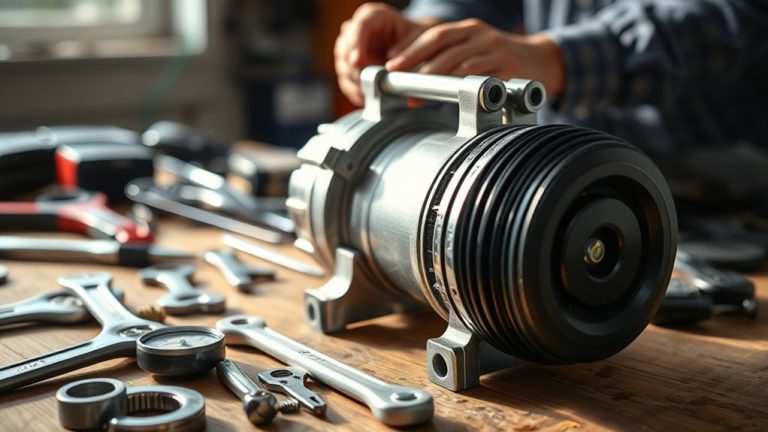
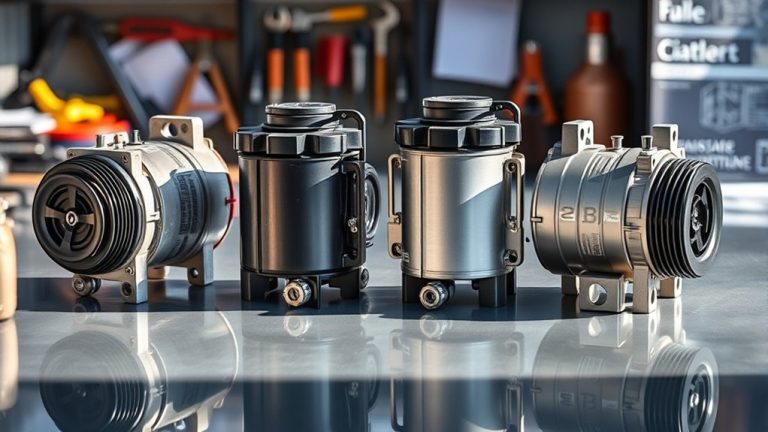
The compressor in the outdoor unit pressurizes the refrigerant, enabling this heat exchange cycle.
Because split air conditioners don’t require ductwork, they offer targeted cooling for specific rooms or areas.
Their design also enhances energy efficiency, often delivering high SEER ratings that help reduce your utility bills while maintaining ideal indoor comfort.
Types of Split Air Conditioners and Their Uses
Split air conditioners come in several types, each tailored to specific heating and cooling requirements. You’ll find split system air conditioners, which feature an outdoor unit containing the compressor and condenser. These are paired with an indoor unit housing the evaporator for efficient cooling.
Split system heat pumps add versatility by providing both heating and cooling through heat transfer from outside air. This makes them ideal for year-round climate control.
Ductless mini-split systems eliminate the need for ductwork, offering flexible installation and individual room temperature control. Each type emphasizes energy efficiency, often achieving high SEER ratings that reduce energy costs while maintaining peak indoor comfort.
Understanding these distinctions helps you select the right system for your specific needs in heating and cooling performance.
Key Components of a Split AC System
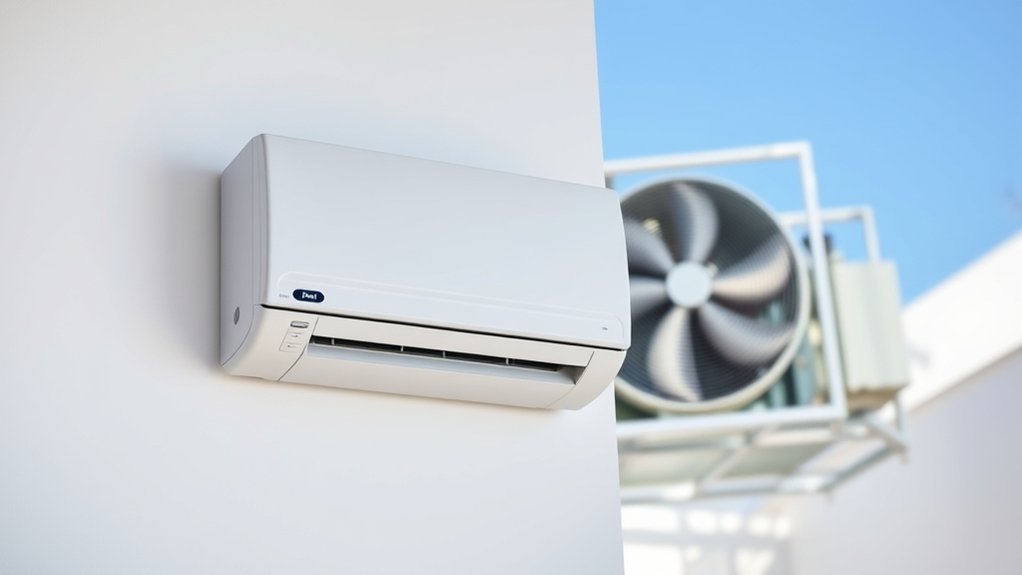
You’ll find that the indoor unit takes care of air circulation and cooling by passing the room air over the evaporator coil, which is filled with refrigerant.
At the same time, the outdoor unit holds some important parts like the compressor and condenser coil. These components work to release the heat that’s been absorbed from inside.
When you understand how these two units work together, it becomes a lot easier to grasp how a split AC system operates.
Indoor Unit Functions
Although often overlooked, the indoor unit plays a critical role in maintaining your comfort by actively cooling and circulating air within the room. It contains the evaporator coil, which absorbs heat from indoor air, lowering the temperature before the air is pushed back into your space.
The blower fan guarantees even distribution of this conditioned air. Integrated air filters trap dust and allergens, improving indoor air quality. You can control the temperature precisely through the built-in thermostat, which regulates the system’s operation.
Connected to the outdoor unit via insulated refrigerant lines, the indoor unit facilitates efficient heat exchange, transferring absorbed heat outside. This coordinated function guarantees consistent cooling performance and ideal comfort in your living environment.
It’s pretty amazing how all these parts work together to keep you comfortable, isn’t it?
Outdoor Unit Components
The outdoor unit serves as the powerhouse of a split air conditioner, housing essential components like the compressor, condenser coil, and fan. The compressor pressurizes the refrigerant, enabling efficient heat transfer through the system.
The condenser coil facilitates releasing absorbed heat into the outside air, aided by the fan that enhances airflow and promotes effective ventilation.
Insulated refrigerant lines connect the outdoor unit to the indoor unit, transporting refrigerant between them to maintain the cooling cycle.
For peak performance, you must guarantee proper placement of the outdoor unit, allowing sufficient space for ventilation and clearance from obstructions.
This positioning prevents overheating and keeps all components running efficiently.
When everything’s set up right, your split AC system runs smoothly and reliably.
Benefits of Choosing a Split Air Conditioner
You’ll find that split air conditioners offer superior energy efficiency, boasting SEER ratings up to 24. This means they can help lower your utility bills quite a bit.
Plus, their dual-component design lets you cool specific rooms, so you’re not wasting energy on empty spaces.
That kind of precise control doesn’t just make your home more comfortable—it also helps the whole system run more smoothly and efficiently.
Energy Efficiency Advantages
When you choose a split air conditioner, you benefit from advanced energy efficiency that greatly lowers electricity consumption.
Split air conditioners often feature a high SEER2 rating, up to 24, which means you get superior energy savings compared to traditional systems. Many units are Energy Star certified, so they meet strict efficiency standards.
Plus, their zoning capabilities let you cool only the rooms you’re actually using, which helps reduce electricity bills. Without ductwork, you avoid the energy losses that are common in central systems.
Split systems also provide heating and cooling all year round, so you can optimize energy use no matter the season.
Key energy efficiency advantages include:
- High SEER2 rating for lower power consumption
- Energy Star certified models for guaranteed performance
- Zoning capabilities to avoid cooling unused spaces
- Reduced energy loss by eliminating ductwork
- Integrated heating and cooling functions for all-season efficiency
Targeted Room Cooling
Although many cooling systems try to regulate entire homes, split air conditioners let you focus on individual rooms. This way, you can tailor temperatures to fit specific needs and preferences.
Targeted cooling cuts down energy use by only conditioning the spaces you’re actually using, which can save you money on utility bills compared to central systems.
Plus, because they don’t require ducts, split air conditioners are easy to install in places where ductwork isn’t available or practical.
You can place indoor units strategically to get the best airflow and cooling efficiency, making sure you have precise control over your room’s climate.
What’s more, many split systems come with advanced filtration that captures dust, allergens, and pollutants, helping to improve indoor air quality.
What Are the Downsides of Split AC Units?
Several factors can influence your decision when considering split air conditioner units, particularly their downsides. You should be aware of these technical and practical limitations before investing.
For starters, the upfront costs tend to be higher compared to traditional systems, which can affect your budget.
Also, installation costs increase because you need both indoor and outdoor units, especially if they’re spaced far apart. Plus, the installation process is more complex and usually requires a professional to ensure everything is set up properly and works as it should.
Installation costs rise with separate indoor and outdoor units, requiring professional setup for optimal performance.
Another thing to keep in mind is that outdoor units require adequate space, which can be tricky if you’re working with a confined area.
On top of that, noise from the outdoor units can disrupt outdoor activities or even sleep, particularly if the unit isn’t regularly maintained.
Knowing these constraints helps you weigh the benefits against the potential drawbacks. That way, you can make a well-informed choice when it comes to split AC units.
How to Choose the Right Split AC: Size, Efficiency & Budget
How do you guarantee your split air conditioner meets your space’s cooling needs without wasting energy or money? Start by determining the correct size. Calculate the cooling capacity in BTUs, typically 20 BTUs per square foot.
Next, prioritize efficiency by selecting units with energy efficiency ratings like SEER2 of 16 or higher. These ratings help reduce long-term energy costs. Factor in your budget, including installation costs.
Keep in mind, higher-efficiency models often demand greater upfront investment but offer savings over time.
For flexible solutions, consider ductless options that cool specific rooms without ductwork.
Finally, consult HVAC professionals to get precise calculations and tailored recommendations based on your home’s layout and climate. This approach guarantees peak performance, energy savings, and cost-effectiveness in choosing your split AC.
Comparing Split ACs to Other Cooling Systems
When you compare split air conditioners to central systems, one thing you’ll notice is that split units operate without ductwork. This means they provide targeted cooling and help minimize energy loss.
Plus, ductless split ACs offer a lot of installation flexibility.
You’ll also find that they often achieve higher SEER ratings than traditional ducted systems.
Knowing these differences can really help you pick the most efficient and suitable cooling solution for your space.
Split AC vs Central
Although both split air conditioners and central air systems aim to cool your living space, they differ considerably in design and performance.
When comparing these cooling systems, consider the following:
Energy efficiency is one big factor. Split AC units usually have higher SEER ratings, which means they use less energy compared to a central air conditioner.
Zoning capability is another difference. Split systems let you cool individual rooms with precise control. Central units, on the other hand, cool the entire home uniformly.
Installation flexibility matters too. Split ACs don’t need ducts, so they’re easier to install in homes without existing ductwork.
When it comes to noise levels, split units operate quietly because the noisy parts stay outside. Central systems may create some indoor duct noise.
Maintenance needs also vary. Split systems usually demand less upkeep thanks to their simpler design and fewer components.
Ductless Versus Ducted
Because split air conditioners operate without ducts, they provide distinct advantages over traditional ducted systems, especially in energy efficiency and installation flexibility. Ductless systems avoid the energy losses exceeding 30% that you often see in ducted systems due to ductwork inefficiencies.
Installation involves only a small conduit hole, which means less disruption compared to installing extensive ductwork.
With zoning capabilities, split air conditioners let you cool individual rooms independently. This helps reduce energy waste in unoccupied areas, unlike ducted systems that cool uniformly throughout the house.
High-efficiency split systems often achieve SEER2 ratings up to 24, which is higher than many ducted models.
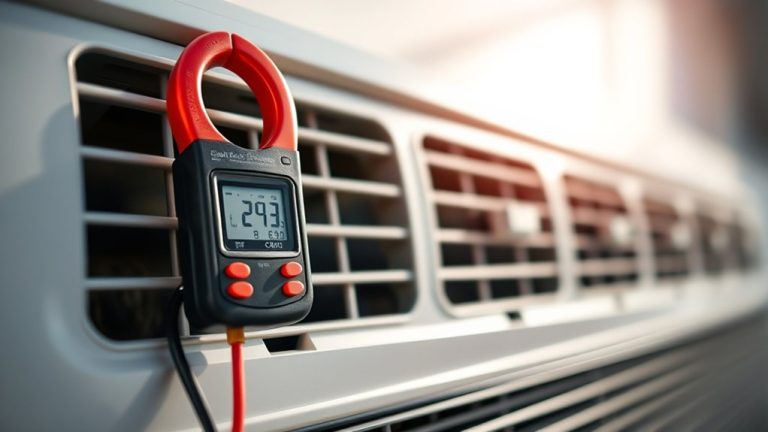
Maintenance requirements are different too. Ductless systems mainly need air filter replacements and upkeep of the outdoor unit.
On the other hand, ducted systems require regular duct cleaning to maintain proper airflow.
What You Need to Know About Installing a Split AC
Installing a split air conditioner requires professional expertise to guarantee the indoor and outdoor units are correctly positioned and connected. You’ll need professional help to handle the complex installation, which involves precise sealing of refrigerant lines and optimizing ductwork to promote energy efficiency.
Installation costs vary depending on unit placement and setup complexity. Adhering to local building codes is vital to avoid compliance issues.
After installation, regular maintenance is important to extend your system’s lifespan, typically 12 to 15 years.
Here are some key points to keep in mind:
- Accurate placement of indoor and outdoor units
- Proper sealing of refrigerant lines
- Optimization of ductwork for performance
- Compliance with local building regulations
- Scheduled maintenance to maintain efficiency and lifespan
Energy Efficiency and Cost Savings With Split Air Conditioners
When you choose a split air conditioner, you benefit from advanced energy-saving technologies that greatly reduce operating costs.
Split AC systems typically feature high SEER ratings, often exceeding 20, which enhance energy efficiency and deliver substantial cost savings over time.
Their targeted cooling capability allows you to cool specific zones, reducing energy consumption by up to 30% compared to central systems.
Many units are Energy Star certified, ensuring compliance with strict efficiency standards and eligibility for rebates.
Plus, ductless systems eliminate energy losses common with ductwork leaks, which further boosts efficiency.
Integrating smart thermostats optimizes temperature control, maximizing energy savings and lowering utility bills.
Maintenance Tips to Keep Your Split AC Running Smoothly
Maximizing the energy efficiency and cost savings of your split air conditioner really depends on proper upkeep. Regular AC maintenance helps preserve the cooling system’s performance and keeps those efficiency ratings high.
To keep your split system air conditioner running smoothly, just follow these essential tips:
Replace the air filter every 1-3 months to sustain airflow and prevent energy waste. Schedule annual professional maintenance to check refrigerant levels and detect leaks.
Clear the outdoor unit of debris and dirt to avoid airflow blockages and overheating. Clean indoor units’ evaporator coils and drain lines yearly to guarantee effective heat exchange.
Also, keep an ear out for unusual noises or any drops in performance so you can catch issues early.
If you stick to these practices, you’ll extend your system’s lifespan and get the most out of its efficiency. It’s really worth the effort!
Frequently Asked Questions
Can I Control My Split AC Remotely With a Smartphone?
Yes, you can control your split AC remotely using smartphone compatibility through app connectivity. Many brands offer remote features that make life easier, letting you adjust settings, switch modes, or schedule operation from anywhere.
To get this working, you’ll need to set up Wi-Fi, which might add a bit to the cost. But it’s worth it because controlling your AC remotely helps you save energy and cut down on bills.
Just be sure to pick a brand that fits your smart home setup and budget. That way, you get the convenience you want without any surprises.
Are Split Air Conditioners Noisy During Operation?
Split air conditioners typically maintain low noise levels thanks to advanced sound insulation and vibration reduction technologies. The indoor unit operates quietly, so you usually won’t even notice it running.
That said, the compressor in the outdoor unit can produce some moderate noise during operation. You can also adjust the fan speed to help control the sound output.
Proper installation and following maintenance guidelines are key to optimizing energy efficiency and keeping noise to a minimum.
Stick to these tips, and your split AC will run smoothly without disrupting your comfort.
How Long Does a Typical Split AC Unit Last?
Imagine you install a high-quality split AC with excellent energy efficiency and refrigerant types suited for your climate.
With proper maintenance tips, seasonal usage adjustments, and timely filter changes, your unit can last 12 to 15 years.
Installation costs and cooling capacity affect performance, so compare brands carefully.
Don’t forget to check warranty options to protect your investment.
Regular upkeep guarantees peak function and extends your split AC’s lifespan considerably.
Do Split AC Units Improve Indoor Air Quality?
Yes, split AC units improve indoor air quality through advanced air filtration that captures dust and allergens.
Their humidity control prevents mold, enhancing comfort. Proper maintenance, like regular filter changes, guarantees peak performance and cooling capacity.
Though installation and cost factors vary, their energy efficiency reduces environmental impact.
Following maintenance tips maximizes these benefits, making split ACs a smart choice for cleaner, healthier indoor air.
Can I Install Multiple Indoor Units With One Outdoor Unit?
Absolutely, you can install multiple indoor units with one outdoor unit. It’s like cooling a small city!
This multi-zone capability lets you tailor temperatures room by room, which boosts energy efficiency and saves you money.
Just keep in mind the sizing requirements and installation considerations to make sure it fits your home.
It’s a good idea to compare brands for top performance ratings. Also, follow maintenance tips to keep everything running smoothly.
With proper planning, you’ll enjoy peak comfort and a longer-lasting system without wasting resources.
Conclusion
Choosing a split air conditioner is like placing a skilled conductor at the helm of your indoor climate, orchestrating efficient cooling with precision. You’ll enjoy tailored comfort, energy savings, and a quieter environment, all while managing installation and maintenance with ease.
It’s not without its quirks, but this system strikes a balance between performance and practicality. That way, your space stays a sanctuary from the heat’s relentless symphony.