What Is a 2-Stage Air Conditioner and How to Use It
A two-stage air conditioner operates at two levels, around 65-70% and 100% capacity, to efficiently match your cooling needs. You use it by setting a programmable thermostat that lets the unit run at low capacity during mild conditions. This saves energy and improves humidity control.
It also reduces wear from cycling and maintains steady indoor temperatures. Understanding how it works compared to single-stage and variable-speed units can help optimize both comfort and savings in your home. It’s pretty handy once you get the hang of it!
What Is a Two-Stage Air Conditioner and How It Works
Although traditional single-stage air conditioners operate at full capacity regardless of cooling needs, a two-stage air conditioner adjusts between approximately 70% and 100% capacity. This modulation enhances energy efficiency by matching cooling your home to actual demand, reducing power consumption compared to single-stage systems.
By running longer at lower speeds, a two-stage air conditioner minimizes temperature fluctuations, maintaining consistent indoor comfort throughout the day.
Operating longer at reduced speeds, two-stage air conditioners ensure steady temperatures and consistent comfort all day.
Plus, extended operation at reduced capacity improves humidity control, as the system dehumidifies more effectively during mild conditions.
This also lessens the frequency of ON/OFF cycling, which lowers wear and tear and can potentially extend the unit’s lifespan.
Comparing Two-Stage ACs With Single-Stage and Variable-Speed Units
When you compare two-stage ACs with single-stage and variable-speed units, you’ll notice some pretty significant differences in efficiency and how well they control temperature.
Two-stage systems tend to use energy more efficiently and keep your home more comfortable than single-stage units.
But if you’re looking for the best possible temperature adjustments, variable-speed models really take the cake. They can fine-tune their output to match exactly what your home needs at any moment.
Of course, it’s also important to think about the initial costs and what kind of maintenance each system requires.
That way, you can pick the one that fits your budget and lifestyle best.
Efficiency and Energy Use
Because two-stage air conditioners operate at approximately 70% and 100% capacity, they offer greater energy efficiency than single-stage units that cycle fully on or off.
This dual-capacity operation reduces cycling frequency, decreasing energy consumption and lowering energy costs.
Two-stage air conditioners typically achieve SEER ratings above 16, reflecting their improved efficiency compared to single-stage models.
While variable-speed units outperform both with SEER ratings of 20 or higher and capacity modulation from 30% to 100%, two-stage systems still deliver significant long-term savings.
Plus, running longer at lower speeds enhances humidity control, which boosts comfort and further reduces energy use during mild conditions.
Although initial costs are higher than single-stage units, the combination of reduced cycling and better humidity management makes two-stage air conditioners a cost-effective, energy-efficient solution.
Temperature Control Differences
If you want more consistent temperature control, two-stage air conditioners offer a clear advantage over single-stage units by operating at two capacity levels, around 65% and 100%, instead of just fully on or off. This reduces cycling and improves indoor comfort. Plus, it better manages humidity levels.
Variable-speed units provide the most precise temperature control with numerous speeds, but two-stage systems balance energy efficiency and cooling needs effectively.
| Feature | Single-Stage Units | Two-Stage Air Conditioner |
|---|---|---|
| Temperature Control | On/off cycling | Two capacity levels (65%, 100%) |
| Humidity Levels | Less effective dehumidification | Improved dehumidification |
| Energy Efficiency | Lower due to frequent cycling | Higher due to sustained operation |
Cost and Maintenance Factors
Two-stage air conditioners typically cost between $8,000 and $9,000 upfront, placing them above single-stage units priced at $6,000 to $7,000 but well below variable-speed systems, which can reach $15,000 to $17,000.
The cost difference reflects the balance of energy efficiency and complexity. Two-stage systems offer SEER ratings up to 18-20, outperforming single-stage units (14-15 SEER).
This translates into long-term energy savings despite slightly higher maintenance costs.
When considering cost and maintenance factors, keep these points in mind:
- Two-stage systems require proper maintenance to optimize performance and reduce wear, affecting overall maintenance costs.
- Their energy efficiency provides a cost-effective solution compared to variable-speed units with higher initial costs.
- Single-stage units have lower upfront costs but higher energy consumption, increasing operating expenses over time.
Benefits of Two-Stage Cooling for Home Comfort and Humidity
When your air conditioner runs at about 65% capacity during mild weather, it not only saves energy but also maintains a stable and comfortable indoor temperature.
This two-stage system reduces temperature fluctuations, providing enhanced comfort throughout your home. By operating longer at lower capacity, it improves dehumidification, effectively removing excess moisture and delivering superior humidity control.
Operating longer at lower capacity, the two-stage system enhances comfort by reducing temperature swings and improving humidity control.
This means you can set your thermostat higher without sacrificing comfort, benefiting from both energy-efficient cooling and improved indoor air quality.
Plus, the consistent operation reduces on/off cycling, which helps minimize wear and tear.
Overall, a two-stage air conditioner offers precise temperature and humidity management, ensuring a comfortable living environment while supporting energy savings and system longevity.
It’s a smart choice for anyone looking to boost comfort and efficiency in their home.
How Two-Stage AC Cooling Saves Energy and Lowers Bills
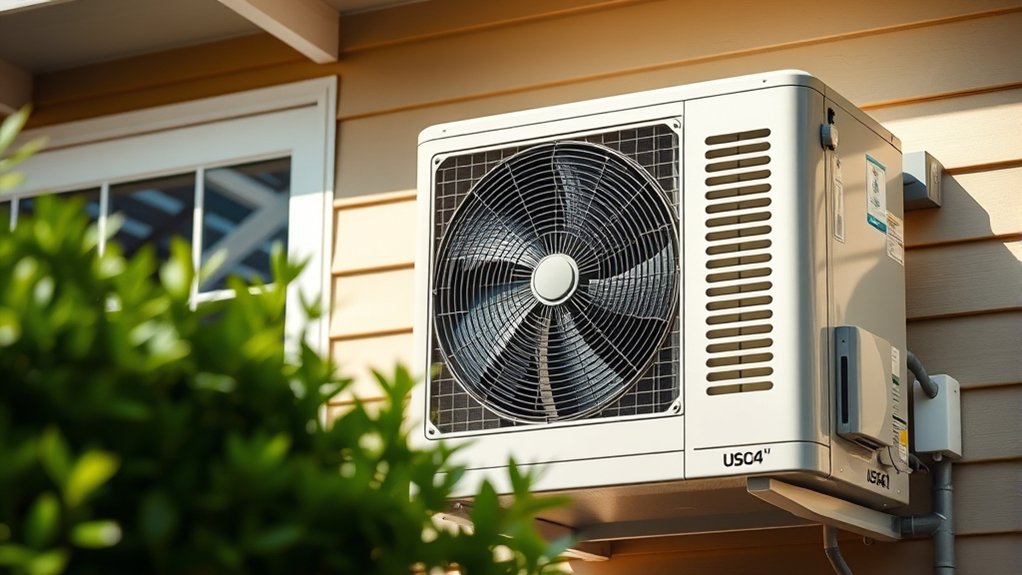
Operating at about 65% capacity during mild weather, a two-stage air conditioner markedly cuts energy use compared to single-stage systems that run at full power constantly.
This efficiency translates directly into energy savings and lower bills for you. Here’s how two-stage AC cooling achieves this:
- By reducing on/off cycling, it lowers peak energy spikes common in single-stage units, decreasing electricity consumption.
- Extended run times improve dehumidification, allowing you to raise thermostat settings without losing comfort, further reducing cooling costs.
- Higher SEER ratings in two-stage systems indicate superior energy efficiency over time, making them more cost-effective.
Switching to a two-stage AC can save you up to 65% annually in energy costs while ensuring consistent, efficient cooling.
It’s a smart move for your wallet and your comfort.
Low vs. High Capacity Operation Explained for Two-Stage ACs
Although air conditioners come in various designs, those with dual capacity settings offer distinct advantages in efficiency and comfort.
A two-stage air conditioner operates in low capacity operation at about 70% power during mild weather, maintaining a steady indoor temperature and improving humidity control. This mode runs longer, optimizing energy efficiency and contributing to reduced electricity bills.
Operating at 70% power during mild weather, two-stage ACs enhance comfort and lower energy costs.
When outdoor temperatures spike, the system switches to high capacity operation at 100% power, delivering rapid cooling to quickly reach your desired indoor temperature.
This dual-mode functionality minimizes on/off cycling, reducing wear on components and extending system lifespan.
By balancing these two capacities, your two-stage AC guarantees precise climate control and cost-effective performance regardless of external conditions.
It’s a smart way to keep your home comfortable without wasting energy.
How to Set Your Thermostat for Optimal Two-Stage AC Performance
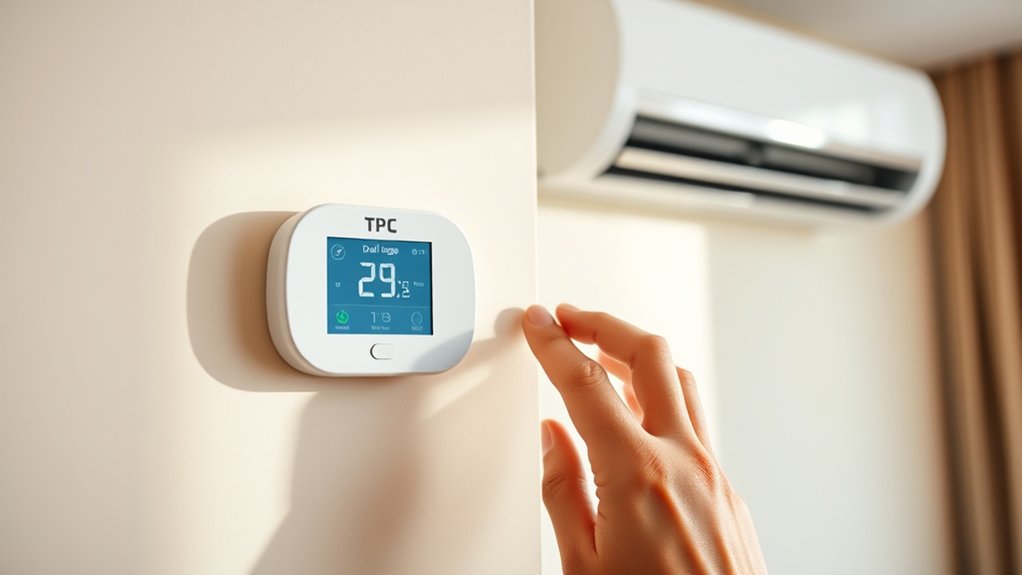
Setting your thermostat correctly is crucial to activating the full efficiency of your two-stage air conditioner. To achieve peak performance, focus on precise temperature control and energy efficiency while managing indoor humidity effectively.
Here’s how you can set your thermostat:
- Use programmable thermostats to schedule your two-stage AC to run at low capacity during milder days and off-peak hours. This helps reduce energy consumption without sacrificing comfort.
- Maintain a consistent temperature setting to minimize cycling. This allows your system to stabilize indoor humidity and temperature efficiently.
- Adjust the thermostat slightly higher when you’re away. This reduces energy use while keeping your home comfortable when you return.
Following these steps guarantees your two-stage AC operates smoothly, maximizing comfort and system longevity. It’s a simple way to get the most out of your cooling system.
Common Myths About Two-Stage ACs: Busted
Why do so many misconceptions surround two-stage air conditioners? These myths often come from misunderstandings about how they’re designed and how they work.
Contrary to what many think, two-stage air conditioners aren’t just for extreme climates. They actually do great in all kinds of environments by providing precise temperature control.
They’re also not complicated at all. You’ll find their operation pretty straightforward since they automatically switch between stages based on what your indoor conditions need.
When it comes to energy use, two-stage systems usually consume less than single-stage units because they mostly run at lower capacity. This helps reduce peak energy demand.
You might assume they’re noisy or need frequent maintenance, but that’s not the case. Two-stage ACs often run more quietly, especially when operating at low capacity.
Plus, they experience less wear and tear because they cycle less often. Busting these myths really helps you see the true efficiency and reliability of two-stage air conditioners.
Installation and Maintenance of Two-Stage ACs
Understanding the true capabilities of two-stage air conditioners is only part of the equation. Confirming they operate efficiently and reliably depends heavily on proper installation and maintenance.
You need professional installation to guarantee correct sizing and compatibility with your HVAC systems. Two-stage units often require complex ductwork adjustments, so it’s important to get it right from the start.
For peak performance, follow these essential steps:
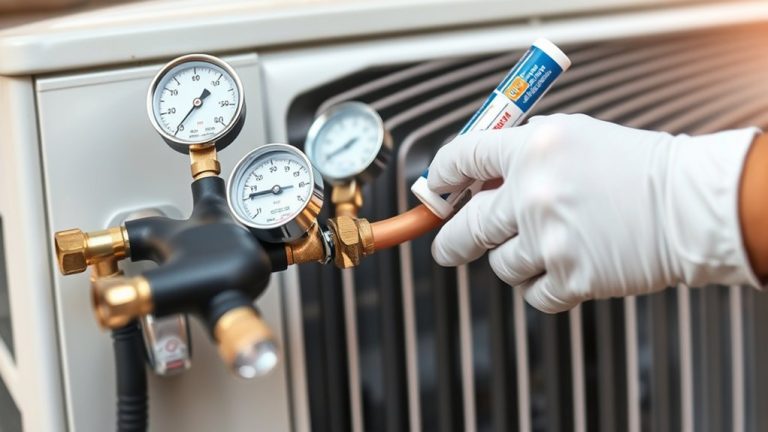
- Schedule annual inspections with an HVAC technician to check refrigerant levels and system operation.
- Perform regular maintenance by checking and replacing filters every 1-3 months to maintain airflow and air quality.
- Install a programmable thermostat to enhance operational settings, boosting energy efficiency and comfort.
How to Troubleshoot Common Two-Stage Air Conditioner Issues
Start troubleshooting your two-stage air conditioner by checking the thermostat settings to confirm it’s in cooling mode and set to the desired temperature. Next, inspect the air filter for clogging, as restricted airflow lowers efficiency.
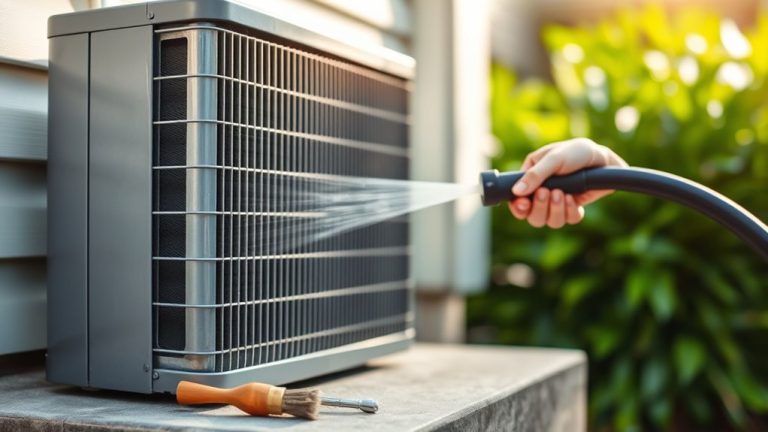
Listen for unusual compressor noises like rattling or grinding, which could signal mechanical issues. Also, clear debris around the outdoor unit to maintain proper airflow and system efficiency.
If you notice frequent stage cycling or short cycling, it often points to refrigerant or thermostat problems. These issues usually require professional servicing, so don’t hesitate to call an expert.
| Issue | Cause | Solution |
|---|---|---|
| Ineffective cooling | Incorrect thermostat settings | Adjust thermostat settings |
| Reduced airflow | Clogged air filter | Replace or clean air filter |
| Noisy operation | Compressor malfunction | Schedule professional servicing |
Is a Two-Stage Air Conditioner Right for Your Home and Budget?
After troubleshooting common issues with your two-stage air conditioner, you might be wondering if investing in this type of system really fits your home’s needs and budget.
A two-stage air conditioner offers better indoor comfort and can save you a good amount on energy, especially if you live in a moderate climate or an area with high humidity.
That said, the initial cost is higher, usually around $8,000 to $9,000, so it’s worth thinking carefully before making a decision.
Keep in mind, the upfront cost ranges from $8,000 to $9,000, so consider carefully before deciding.
Here are some things to keep in mind:
- Energy savings: It mostly runs at 70% capacity, which means it reduces those intense peak load cycles and helps lower your energy bills.
- Indoor comfort: Because it runs longer at low speed, it’s great at removing humidity, which is perfect if you live somewhere humid.
- Budget and home specifics: It’s a good idea to talk with an HVAC pro who can check out your home and help figure out what makes the most sense financially.
Frequently Asked Questions
Can a Two-Stage AC Be Integrated With Smart Home Systems?
Yes, a two-stage AC can be integrated with smart home systems, making your experience way better through remote control and compatibility with smart thermostats. This means you can adjust your cooling even when you’re not home, which is pretty convenient.
This smart integration helps optimize performance by adjusting cooling based on occupancy and weather. So, it’s not just about comfort but also about saving energy. You’ll notice cost savings from reduced runtime and better humidity control.
Plus, features like scheduling and maintenance alerts make managing your AC easier and more effective. It helps keep your home comfortable consistently while making sure your energy use is optimized.
What Is the Typical Lifespan of a Two-Stage Air Conditioner?
You can expect a two-stage air conditioner to last around 15 to 20 years. This is largely thanks to its energy efficiency and reduced wear from cycling.
Proper maintenance, like regular filter changes and professional check-ups, really helps extend its lifespan.
Installation costs and climate suitability also play a role in durability. Plus, making sure your system is compatible guarantees peak cooling capacity.
It’s a good idea to keep an eye on any troubleshooting issues early on to avoid costly repairs.
Are Two-Stage Air Conditioners Noisier Than Single-Stage Units?
No, two-stage air conditioners aren’t noisier than single-stage units. You’ll notice lower noise levels since they run at reduced capacity most of the time. This not only improves energy efficiency but also cools your space quietly.
Although their installation process and maintenance requirements can be slightly more complex, the user experience benefits from less disruptive sounds.
While the initial cost comparison shows two-stage units are pricier, their quieter operation and consistent comfort make them a smart long-term choice.
How Do Two-Stage ACS Affect Indoor Air Quality?
Two-stage ACs improve your indoor air quality by enhancing air filtration and humidity control.
They run longer at lower capacity, promoting consistent temperature and better airflow distribution. This helps reduce dust buildup and allergens that get stirred up during frequent cycling.
Because the system runs more steadily, you get fewer allergens floating around, which can really help if you’re sensitive.
Plus, their energy efficiency supports steady operation, so your air quality doesn’t fluctuate as much.
Overall, you end up with cleaner, more comfortable air.
The moisture stays balanced, and there are fewer airborne irritants to bother you.
It’s a simple way to make your home feel fresher and healthier.
Can Two-Stage Air Conditioners Be Used in Commercial Buildings?
You can boost commercial efficiency by up to 30% with two-stage air conditioners, making them ideal for commercial buildings. They offer precise temperature control and zoning benefits, which helps reduce energy consumption and operational costs.
However, you’ll face installation challenges that require careful planning and sizing. Maintenance requirements are moderate but essential for peak performance.
While the initial cost is higher compared to single-stage units, the energy savings and improved comfort definitely justify the investment.
It’s worth considering if you want a system that balances efficiency and comfort.
Conclusion
Choosing a two-stage air conditioner can reduce your energy use by up to 30%, offering both comfort and efficiency. By operating at low capacity most of the time, it maintains consistent temperatures and humidity levels. This helps save you money on bills.
Understanding its dual-stage function makes it easier to troubleshoot and maintain the system effectively. If you’re aiming for reliable performance and energy savings, a two-stage AC is a smart investment for your home and budget. It’s definitely worth considering if you want to stay comfortable without breaking the bank.