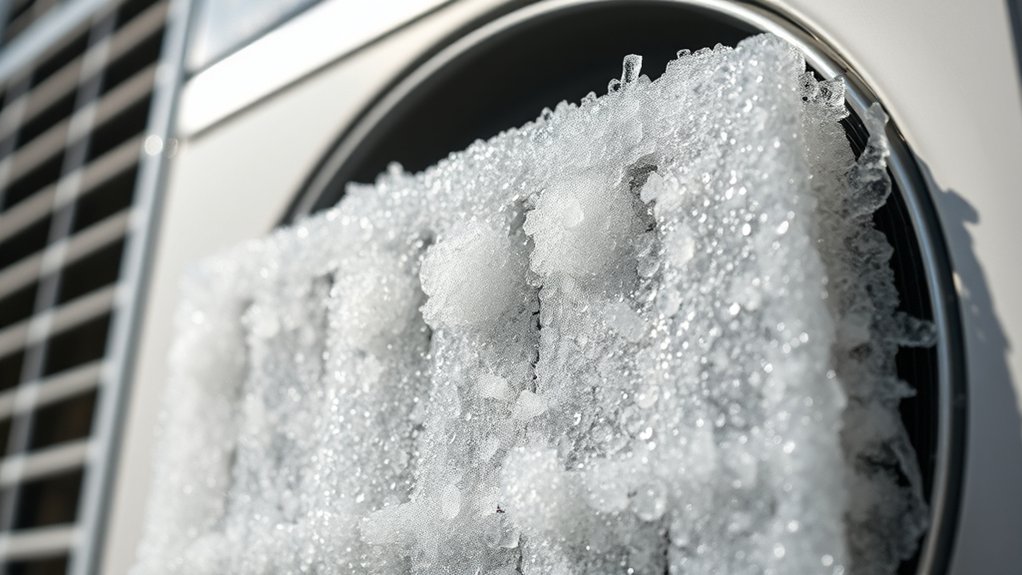
What Causes an Air Conditioner to Freeze Up?
Your air conditioner freezes up mainly because restricted airflow or low refrigerant levels cause the evaporator coil to get too cold, leading to ice formation. Dirty filters, blocked vents, or a malfunctioning blower fan reduce airflow. Meanwhile, refrigerant leaks lower system pressure and coil temperature.
A faulty thermostat can also make freezing worse by running the AC too much. If your unit freezes, it impacts cooling efficiency and can damage components. Knowing how these issues cause freezing helps you troubleshoot effectively.
So, keeping an eye on airflow and refrigerant levels is key to avoiding a frozen AC.
How Your AC Works: And Why It Can Freeze
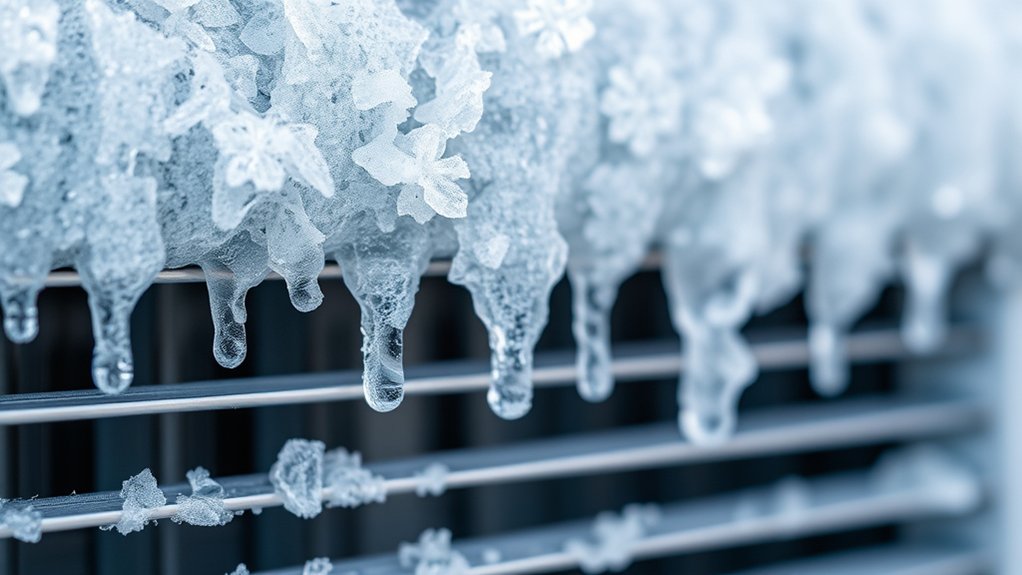
Although your air conditioner is designed to keep your indoor environment cool by circulating refrigerant through a refrigeration cycle, it can freeze up if key components don’t work properly.
In your HVAC system, the refrigerant absorbs heat through the evaporator coil, which cools the indoor air.
But if airflow is restricted because of a dirty filter or blocked vents, the coil temperature can drop too low. This causes the evaporator to freeze and ice to build up.
Low refrigerant levels, often due to leaks, can also make the coils too cold and lead to ice formation.
On top of that, a clogged condensate drain line might trap moisture and make the freezing worse.
Knowing how your AC’s parts work together helps you figure out why ice builds up.
Understanding your AC’s components is key to diagnosing and preventing ice buildup issues.
That way, you can fix the problem before it hurts your system’s performance or causes damage.
Signs Your AC Is Freezing (And What to Look For)
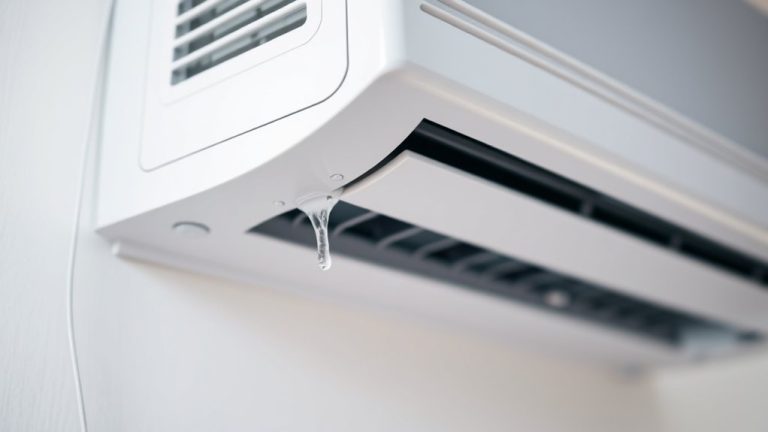
When your air conditioner begins to freeze, it shows distinct signs that you can detect early to prevent further damage. Look for visible ice on the evaporator coil or refrigerant lines. This indicates a frozen AC unit.
Weak or warm airflow from air supply vents signals restricted cooling caused by frozen components. Unusual noises like hissing or gurgling often accompany refrigerant problems. Pooling water near the unit results from melting ice.
Rising energy bills reflect decreased efficiency. Timely detection combined with proper maintenance helps avoid costly repairs.
| Sign | Cause | Indicator |
|---|---|---|
| Frozen Evaporator | Ice buildup | Visible ice on coil |
| Warm Airflow | Frozen components | Weak, warm air from vents |
| Pooling Water | Melting ice | Water around unit |
Why Low Refrigerant Makes Your AC Freeze
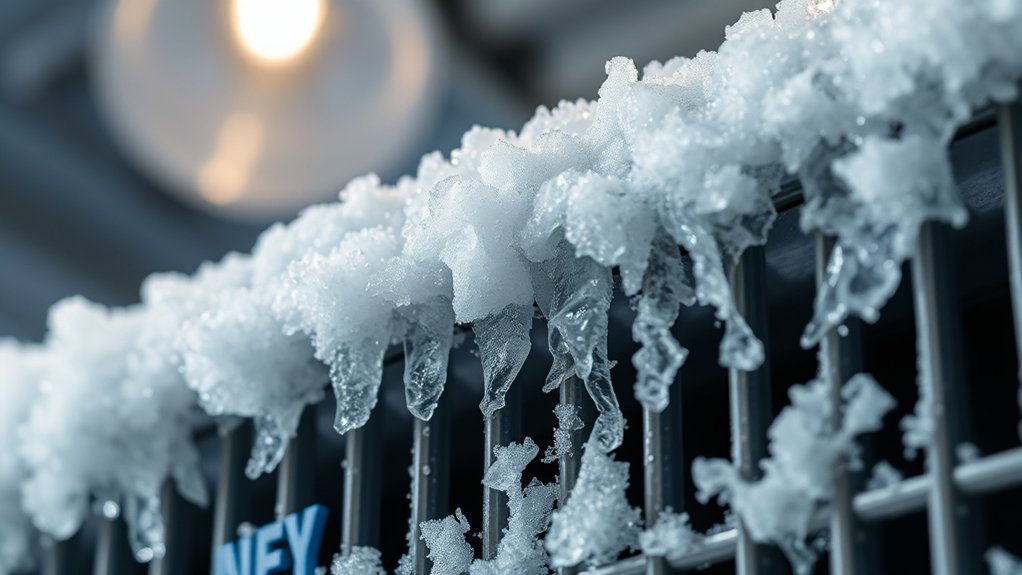
When your AC has a refrigerant leak, the system pressure drops, which causes the evaporator coils to get really cold—below freezing, actually.
Because of this temperature drop, the coils can’t absorb heat properly. That means moisture in the air starts to freeze right on the coils.
If you don’t take care of it, the ice buildup will block the airflow and make your AC work even harder, which lowers its efficiency even more.
Refrigerant Leak Effects
If your AC’s refrigerant levels drop, the evaporator coil can’t absorb enough heat. This causes its temperature to fall below freezing and ice to form. A refrigerant leak lowers pressure and disrupts airflow, which makes ice formation even worse and can cause your AC unit to freeze.
When this happens, airflow gets restricted even more, forcing the system to work harder. This extra strain can lead to mechanical failure. That’s why regular maintenance by an HVAC professional is so important. They can detect leaks early and keep refrigerant levels where they should be, preventing the coil from freezing.
| Issue | Cause | Result |
|---|---|---|
| Low refrigerant | Refrigerant leak | Evaporator coil ice formation |
| Pressure imbalance | Reduced refrigerant | Inefficient cooling |
| Restricted airflow | Ice buildup | AC unit freezes |
| Increased strain | Blocked airflow | Mechanical failure risk |
| Lack of maintenance | Undetected leaks | Costly repairs |
Temperature Drops Impact
Because low refrigerant levels reduce the pressure within your AC system, the evaporator coil‘s temperature can fall below freezing, causing ice to form. When refrigerant levels drop, the evaporator coil absorbs less heat, which decreases cooling efficiency and prompts ice formation.
Refrigerant leaks make things worse by letting moisture build up, which freezes when it touches the cold coil. High indoor humidity also adds to the problem, since water vapor freezes on the coil surface.
Plus, improper airflow caused by a dirty evaporator restricts heat exchange and speeds up freezing. To prevent this, regular HVAC maintenance is key.
Keep an eye on refrigerant levels, fix leaks quickly, and make sure airflow is good. Taking care of these factors helps your AC run efficiently and avoids expensive repairs from ice buildup.
How Dirty Filters and Coils Cause Ice Build-Up
Although your air conditioner relies on clean filters and coils to function properly, neglecting their maintenance can cause ice to form on the evaporator coils.
Dirty air filters restrict airflow, reducing the heat exchange necessary to keep the coils above freezing temperatures.
When clogged filters limit air movement, the evaporator coils can’t efficiently absorb heat, creating conditions favorable for ice formation.
Plus, accumulated dirt on evaporator coils acts like an insulating layer, which further hinders heat transfer and increases freezing issues within the AC system.
To prevent ice build-up, replace clogged filters every one to two months and perform regular cleaning of evaporator coils.
Keeping the airflow ideal and the coils clean ensures your AC runs efficiently and avoids those temperature drops that cause freezing problems.
How Blocked Vents and Poor Airflow Freeze Your AC
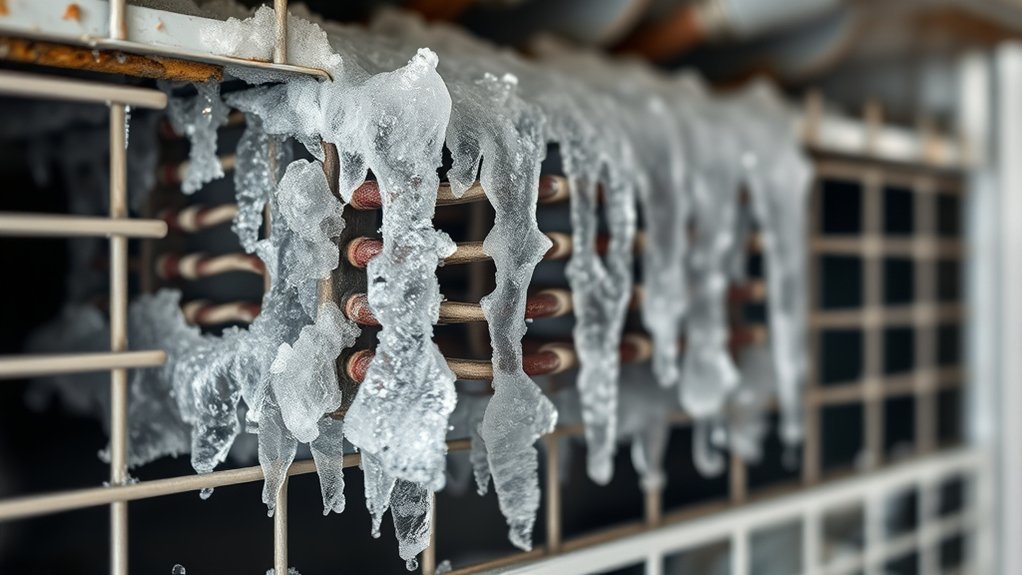
Blocked vents and poor airflow directly reduce the amount of warm air reaching your air conditioner’s evaporator coil, causing the coil temperature to drop below freezing.
When vents are blocked by furniture or other objects, and a dirty air filter restricts airflow, your cooling system struggles to maintain proper circulation.
This lack of warm air causes the refrigerant in the evaporator coil and refrigerant lines to cool excessively, leading to ice formation on the coil.
Airflow issues force the system to work harder, making the problem even worse.
Restricted airflow causes the system to overexert, worsening ice buildup and decreasing efficiency.
To prevent freeze-ups, regularly inspect and clear blocked vents and replace dirty air filters.
Taking care of these airflow issues ensures efficient heat exchange.
This reduces ice buildup and cuts down on the need for a thawing process that can mess with your AC’s performance.
Is Your Thermostat or Blower Fan Causing the Freeze?
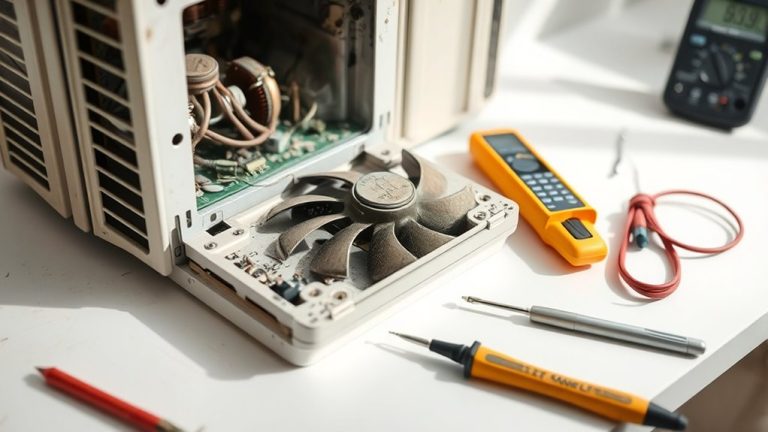
Guaranteeing proper airflow is only part of the equation when preventing your AC from freezing up; the thermostat and blower fan also play significant roles. A malfunctioning thermostat may fail to signal your HVAC system to shut off, causing the evaporator coil to become excessively cold and promote ice formation.
Similarly, if the blower fan runs slowly or stops, it restricts airflow over the coil, lowering temperatures and triggering freezing. An improperly set thermostat, particularly at very low temperatures, can make these issues worse by causing inefficient operation.
Make it a habit to regularly check your blower fan to ensure it maintains adequate airflow. This helps prevent temperature drops that lead to ice buildup.
Addressing thermostat and blower fan problems quickly helps keep the evaporator coil at the right temperature and avoids freezing complications.
How to Thaw a Frozen AC Quickly and Safely
When you notice your air conditioner has frozen up, the first step is to turn off the unit immediately to prevent further damage and allow the ice to start thawing naturally.
Set the thermostat to “Off” and switch the fan to “On” to promote air circulation. This helps warm air reach the coil and evaporator for efficient thawing.
You can use a blow dryer on a low setting, keeping it six inches away, to gently accelerate melting without harming the system. Just be careful not to overheat any parts.
Allow the system to thaw completely for at least 24 hours before restarting it. This ensures all moisture evaporates properly.
After thawing, inspect and clean or replace any dirty filters.
Also, check for airflow blockages to prevent future freezes. Regular maintenance or a quick check-up with an HVAC technician can really help keep your AC’s performance in top shape.
When to Call a Professional for AC Freezing Problems
Although you can resolve minor freezing issues on your own, repeated ice buildup or unusual noises like hissing and gurgling signal deeper problems that require professional diagnosis.
If your AC unit is freezing despite changing air filters and guaranteeing proper airflow, it’s time to contact the experts.
Causes of a frozen AC often involve refrigerant leaks or mechanical failures that only a professional HVAC technician can safely address.
Furthermore, if you notice reduced cooling efficiency or rising energy bills, the system needs a thorough inspection to prevent further damage.
Don’t ignore persistent freezing or strange sounds; these indicate issues beyond basic maintenance.
Prompt professional intervention guarantees your AC operates efficiently and maintains peak performance, safeguarding your home comfort and system longevity.
Frequently Asked Questions
Can Using the Wrong Refrigerant Type Cause My AC to Freeze?
Yes, using the wrong refrigerant types can cause your AC to freeze. Incorrect refrigerants affect pressure levels, often leading to low refrigerant or high pressure in the system. This disrupts heat absorption at the evaporator coil, causing ice buildup.
System leaks make this problem worse. Compressor issues and improper thermostat settings also play a role in freezing. Regular maintenance helps catch these problems early.
Plus, environmental factors can make freezing more likely if your AC isn’t properly charged with the right refrigerant.
Does Outdoor Temperature Affect the Likelihood of My AC Freezing?
Yes, outdoor temperature greatly affects your AC freezing risk. Temperature fluctuations combined with outdoor humidity influence refrigerant levels and heat index, impacting coil temperatures.
Poor air circulation and low insulation quality worsen this by limiting heat exchange. Sunshine exposure and wind chill change surface temperatures, while seasonal shifts cause outdoor conditions to change quickly.
Keeping your refrigerant levels correct and ensuring proper airflow really helps prevent freezing caused by these environmental factors. Just a little attention can make a big difference!
How Often Should I Replace My Ac’s Air Filter to Prevent Freezing?
You should replace your AC’s air filter every 1 to 2 months to prevent airflow blockage and keep your system running efficiently.
During peak seasons or when humidity is high, changing it monthly is the way to go.
Also, think about the type of filter you’re using and check it seasonally to get the best performance.
Keep an eye out for installation mistakes and ductwork problems since they can make airflow issues worse.
Proper filter care helps your thermostat work better, cuts down the risk of freezing, and can extend your system’s lifespan.
Can Running My AC on Fan-Only Mode Help Stop Freezing?
Yes, running your AC on fan mode benefits system efficiency by improving airflow direction and reducing humidity around evaporator coils, which helps prevent freezing.
It supports compressor function by balancing temperature and moisture levels.
But fan-only mode isn’t a fix-all. You still need to keep up with maintenance like regular ductwork inspection, addressing insulation issues, and optimizing thermostat settings.
These steps are key to making sure your system runs properly and avoids freeze-ups.
Does the Size of My AC Unit Impact Freezing Issues?
Yes, unit capacity directly impacts freezing issues. Oversized units cool too quickly, causing airflow issues and excess moisture on coils.
Undersized units struggle with heat load, running longer and risking ice buildup.
Poor ductwork design or installation mistakes can also disrupt airflow. Climate considerations play a role in sizing decisions too.
Properly sized units optimize energy efficiency and prevent freezing by balancing airflow and heat load. This helps your system operate smoothly without freezing risks.
Conclusion
If your AC is freezing up, don’t just sweep it under the rug. Low refrigerant, dirty filters, blocked vents, or faulty components can all cause ice buildup and reduced efficiency. Understanding these issues lets you act swiftly, whether cleaning filters or adjusting airflow, to keep your system running smoothly.
When problems persist, calling a professional guarantees you avoid costly damage. Staying proactive keeps your AC in top shape and prevents small issues from turning into a big headache. So, keep an eye on your system and address any signs of trouble early.