How to Test Air Conditioner Capacitor in 3 Simple Steps
First, turn off power at the circuit breaker to guarantee safety, then verify no voltage at the capacitor terminals. Next, set your multimeter to the capacitance setting, connect the leads firmly, and measure the capacitor’s microfarad value, comparing it to the rated specification.
Finally, inspect the capacitor for physical damage like bulging or blackened terminals. Following these steps helps you identify issues early and maintain your AC’s performance. Keep exploring to understand detailed precautions and testing tips.
Turn Off Power to Your AC Capacitor Safely
Before you begin testing your AC capacitor, make certain you turn off the power at the circuit breaker to prevent any electrical hazards. This step is critical for a simple fix on your air conditioner.
After switching off the breaker, use a multimeter to verify that no voltage is present at the capacitor terminals. This double-check guarantees your safety before handling the component.
Use a multimeter to confirm no voltage at the capacitor terminals before proceeding to ensure safety.
Wait at least 15 minutes to allow any residual charge within the capacitor to dissipate fully. Always wear insulated gloves and use tools with rubber grips to reduce the risk of electrical shock.
Following these precautions helps you safely prepare your air conditioner for diagnostic testing or repair. It makes the process both efficient and secure.
Taking these steps really pays off in the long run.
Measure Your AC Capacitor’s Value With a Multimeter
Start by safely discharging your AC capacitor using a resistor or the leads of your multimeter to prevent electrical shock.
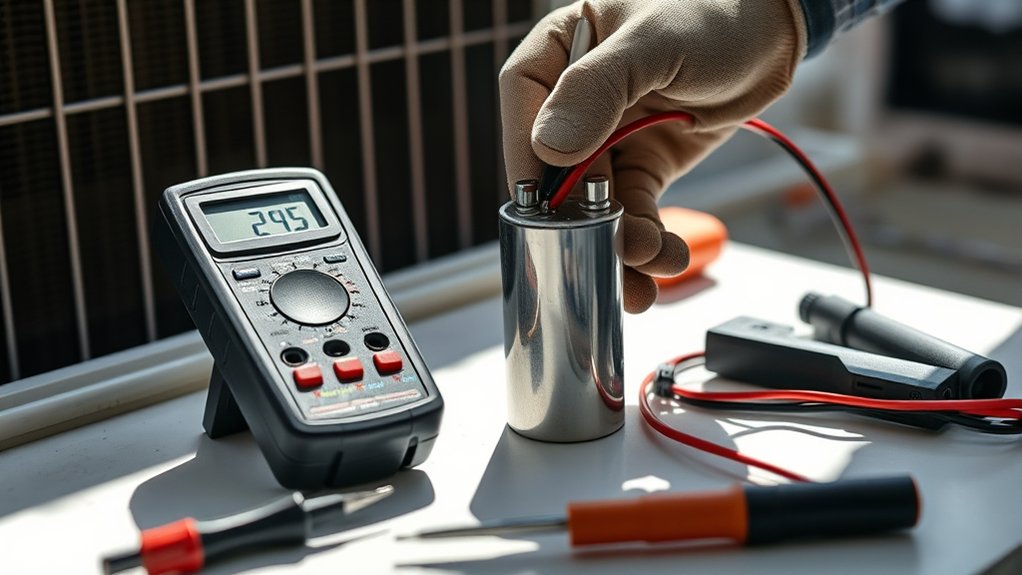
Once discharged, set your multimeter to the capacitance setting, often labeled “Cap” or “C.”
Connect the multimeter leads firmly to the capacitor terminals, guaranteeing a secure connection for an accurate reading.
The multimeter will display the capacitance value in microfarads (µF).
Compare this reading to the rated value printed on the capacitor’s casing.
If the measured capacitance is noticeably lower than the rated value, your capacitor may be failing and should be replaced.
Remember, this test is done with the AC unit powered off to avoid hazards and guarantee accurate measurement.
It’s important to keep safety in mind and double-check your setup before testing.
Check Your Capacitor for Physical Damage
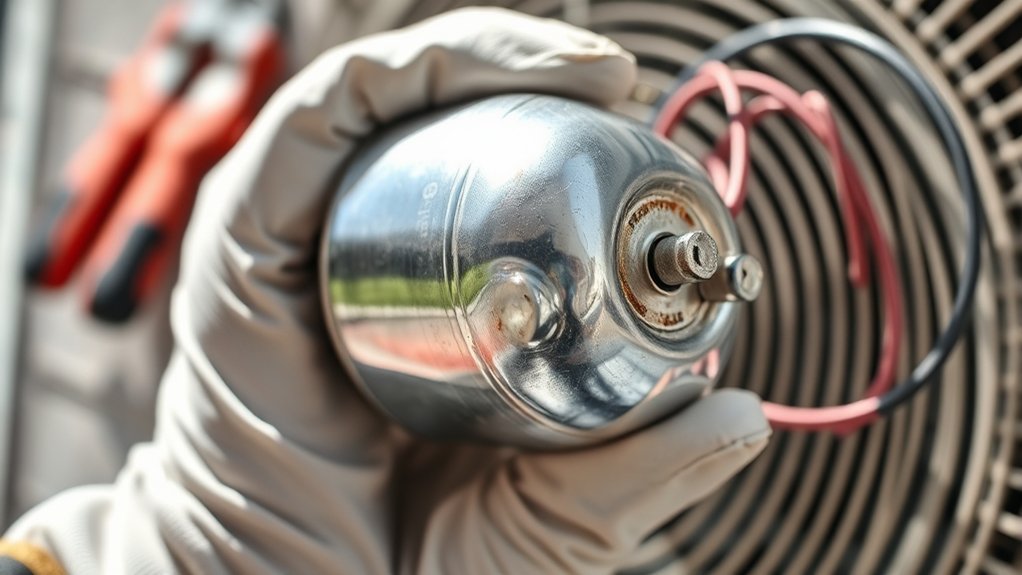
After measuring the capacitance, inspect your capacitor for physical damage that could impair its function.
First things first, check for bulging at either end. This is a common sign of failure in central AC units.
Next, take a close look at the top leads for any blackening. That usually means there are serious internal issues.
Also, inspect the wiring connected to the capacitor carefully. Burns or discoloration suggest overheating and potential failure.
Make sure the capacitor isn’t leaking any fluids, as that can compromise its performance.
If you spot any damaged wiring, replace it right away to avoid further complications in your central AC system.
Addressing these physical defects early helps keep your system efficient and prevents costly repairs.
And remember, always prioritize safety by disconnecting power before handling any components.
Frequently Asked Questions
What Type of Multimeter Is Best for Testing Capacitors?
You should use digital multimeters for testing capacitors because they provide precise capacitance readings and are easier to use than analog multimeters.
Digital multimeters often include specific capacitance measurement modes and safety features like short test functions.
Analog multimeters lack this precision and functionality, making them less reliable for capacitor testing.
Always verify your digital multimeter’s capacitance range matches your capacitor’s rating to get accurate results.
It’s a simple step that can save you from incorrect measurements.
Can a Capacitor Be Tested Without Removing It From the AC Unit?
Yes, you can test a capacitor without removing it from the AC unit by performing capacitance measurement directly.
First, turn off the power to avoid shock. Use a multimeter with a capacitance setting and connect it to the capacitor terminals.
Be sure your voltage testing stays within the capacitor’s rated voltage to prevent damage. A reading outside the 10% tolerance indicates the capacitor needs replacement. Always inspect for physical damage, too.
Testing this way is pretty straightforward and saves you the hassle of taking the capacitor out.
Just remember to be safe and double-check your meter’s settings before you start.
How Long Does a Capacitor Typically Last Before Needing Replacement?
A capacitor lifespan typically ranges around 5 years before you should consider replacement.
You’ll want to watch for replacement signs like slower fan speeds, humming noises, or your AC failing to start.
Heat and electrical load can shorten this lifespan, so regular monitoring helps catch issues early.
Replacing the capacitor proactively every 5 years prevents unexpected failures and costly repairs.
This way, you can keep your system running efficiently without downtime.
It’s a small step that saves you from bigger headaches later on.
What Causes an AC Capacitor to Fail Prematurely?
You know the saying, “a chain is only as strong as its weakest link”? Your AC’s capacitor lifespan can shorten when exposed to high heat, frequent power surges, or moisture damage.
These factors cause failure symptoms like slow motor start or humming noises.
Age also plays a big role. Capacitors usually last about five years.
Continuous cycling due to thermostat issues wears it down faster, so watch for these signs to catch problems early.
Are There Any Safety Precautions When Disposing of Old Capacitors?
Yes, you must fully discharge the capacitor before disposal to avoid electric shock.
Always wear gloves and safety glasses when handling old capacitors to prevent injury. Wrap the capacitor in electrical tape or a non-conductive container to avoid accidental contact.
Check local regulations for capacitor recycling to minimize environmental impact.
It’s a good idea to take the capacitor to an electronic waste recycling facility. This way, you guarantee safe, compliant, and eco-friendly disposal.
Conclusion
To test your AC capacitor confidently, constantly commit to caution. Cut power carefully before starting to avoid shocks. Consistently check capacitor values with a calibrated multimeter for correct readings.
Carefully consider any physical damage, cracks, or bulges that could compromise performance. Consistent, careful checks can catch capacitor concerns early, creating cooler, more consistent air conditioning.
Remember, careful capacitor care cultivates cooler comfort and can cut costly repairs. Stay sharp, stay safe, and stay cool!