
5 Key Tips on Should You Cover Your Air Conditioner in Winter
You should only cover your air conditioner in winter with breathable material that shields it from debris while allowing airflow. Avoid plastic or vinyl covers, as they trap moisture, causing rust and mold. Consider partial covers to reduce snow buildup without sealing the unit completely.
Regularly clear leaves and debris to protect it effectively. Proper maintenance outperforms full covers for unit longevity. Keep these tips in mind to learn how to balance protection and airflow for ideal winter care.
Do You Need to Cover Your AC in Winter?
Why consider covering your air conditioner during winter? Many homeowners think an air conditioner cover protects their A/C unit from falling debris and harsh weather.
However, most modern units are designed to withstand winter conditions without covers.
Using a standard cover can trap moisture inside, which increases the risk of rust, mold growth, and operational issues.
Standard covers trap moisture, leading to rust, mold, and potential damage to your air conditioner.
Restricting airflow by fully covering the unit only makes moisture buildup worse, which can hurt performance.
If you decide to cover your AC, it’s better to choose a breathable cover or partial protection.
That way, you keep good airflow while still guarding against debris.
In the end, regular maintenance and inspection throughout winter do a better job of protecting your A/C unit’s longevity and functionality than just relying on a cover.
Winter Weather’s Impact on Your AC Unit
While covering your AC unit might seem like the best way to protect it during winter, understanding how winter weather actually affects your system helps you make smarter maintenance choices.
Modern outdoor air conditioner units are made from corrosion-resistant materials like stainless steel and aluminum. These materials are designed to withstand snow, ice, and cold without significant rust or damage.
Excessive snow accumulation can harm coils over time, but routine maintenance, such as clearing debris and inspecting components, effectively prevents this.
Full covers often trap moisture, which increases the risk of rust, so they’re generally discouraged. However, if you live in an area with heavy snowfall, a partial cover can reduce snow buildup without compromising ventilation.
Your HVAC system is built for year-round exposure to outdoor air.
So, proper upkeep rather than completely enclosing your unit guarantees peak winter performance.
It’s all about keeping it clean and well-maintained to avoid problems down the line.
Risks of Plastic and Vinyl AC Covers
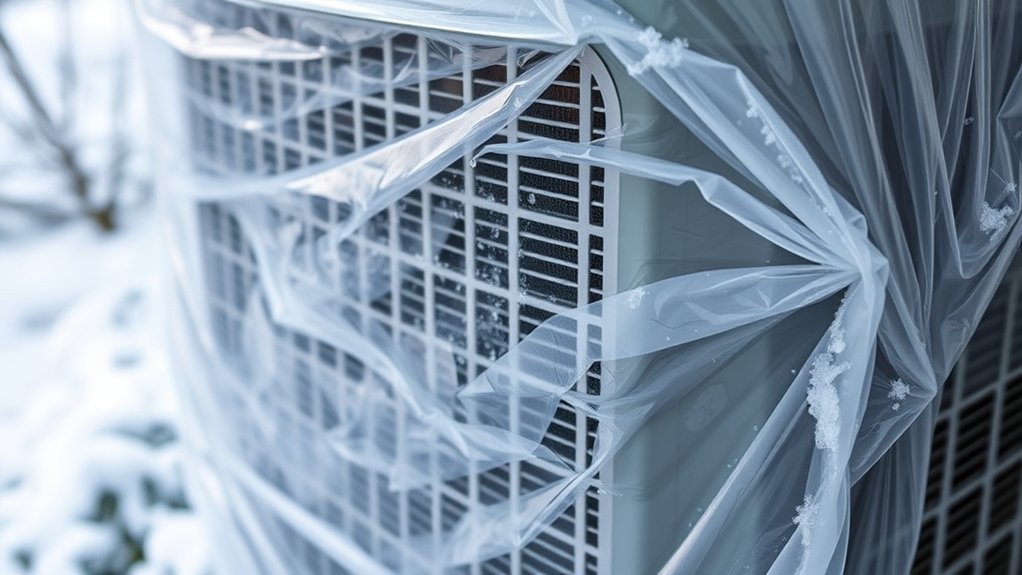
Although plastic and vinyl covers might seem like convenient protection for your air conditioner during winter, they often cause more harm than good.
These AC covers trap moisture inside the unit because of poor airflow, which speeds up rust and corrosion of important internal parts.
The trapped humidity encourages mold growth, which can damage electronics and hurt your AC’s performance.
On top of that, the warm, enclosed space created by plastic and vinyl attracts pests like rodents. This increases the chance of nests forming inside your unit.
Moisture buildup can also lead to freezing coils, causing problems when you actually need your AC during the colder months.
Over time, these issues add up, resulting in costly repairs and maintenance.
When You Should Consider Covering Your AC
If you live in a region where falling leaves or heavy snow pose risks to your AC unit, you should consider covering it during the fall or specific winter events.
Cover your air conditioner to prevent debris accumulation, such as leaves and twigs, which can harm internal components. Use breathable covers to protect the unit while allowing airflow, reducing moisture buildup that leads to rust issues.
In areas prone to winter storms, partial covering helps shield the unit from ice and snow weight. However, avoid full-sized, airtight covers that trap moisture.
It’s best to consult HVAC professionals to get tailored advice based on your local climate and unit condition.
Covering your unit strategically during high-risk periods effectively protects it without compromising its structural integrity or airflow.
This way, you keep your AC in good shape and ready to go when the warm weather returns.
How to Protect Your AC Without Blocking Airflow
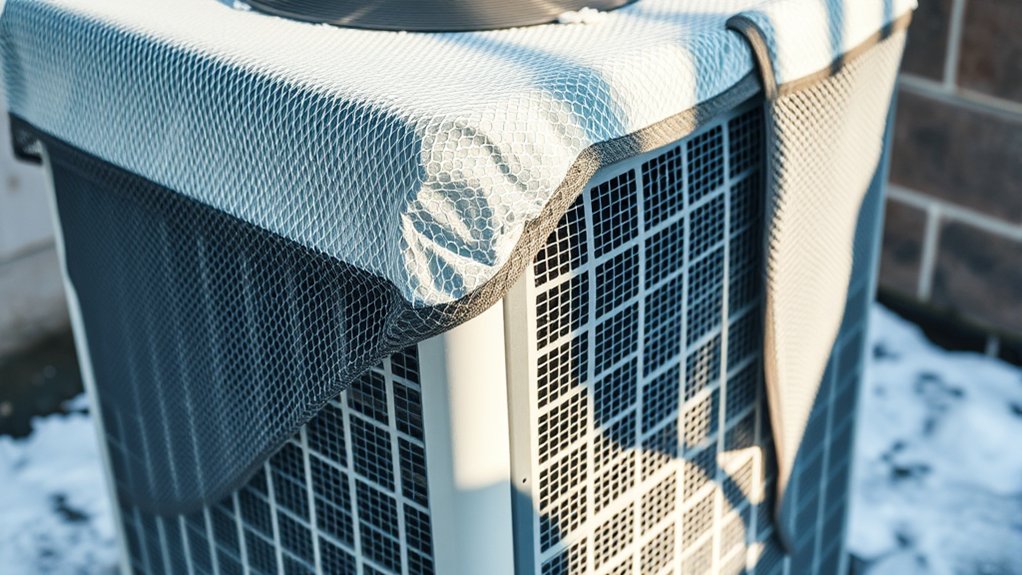
How can you shield your AC unit during winter without blocking essential airflow? Start by using breathable covers designed to allow airflow. This helps prevent moisture buildup that causes rust and mold.
Avoid plastic or vinyl covers because they trap humidity and encourage mildew. Instead, go for breathable covers that protect your unit from moisture while still letting it breathe.
You might want to install a sturdy top cover or plywood to guard against falling debris. Just make sure to keep the sides open so airflow isn’t blocked.
Also, remember to regularly clear leaves, twigs, and debris around your AC. This stops airflow from getting obstructed and prevents damage.
For severe winter storms, use temporary coverings to protect from snow and ice, but take them off when the weather improves.
Avoid permanent covers that restrict airflow and increase moisture risks. That way, your unit stays protected yet ventilated all winter long.
Frequently Asked Questions
Can Covering My AC Save Energy During Winter?
No, covering your AC won’t really save energy during winter. Modern units already come with insulation benefits and are built to handle cold climates.
Using covers can actually trap moisture and cause condensation, which might lead to rust and lower your AC’s efficiency. Proper air circulation is key, so if you do decide to use a cover, make sure it’s breathable.
Instead, focus on regular maintenance, keep an eye on your usage patterns, and think about how your local climate affects your unit.
That’s a much better way to get ready for winter.
How Often Should I Clean My AC Unit in Winter?
You should set your cleaning frequency to at least once during winter for basic winter maintenance.
Focus on clearing debris from the outdoor unit, performing coil cleaning, and checking the air filter to maintain airflow and aid condensation removal.
If you face heavy snowfall, monthly cleaning is ideal.
Incorporate DIY cleaning with seasonal checks, but don’t skip professional servicing annually to optimize efficiency.
Follow these efficiency tips to keep your AC reliable year-round.
It’s all about staying on top of maintenance so your unit runs smoothly no matter the season.
Are There Specific Materials Better Than Plastic for AC Covers?
Think of your AC cover like a breathable jacket, not a plastic bag suffocating your unit.
Fabric options and breathable materials outperform plastic, offering insulation benefits while preventing moisture concerns like mold and rust.
Custom covers or DIY solutions with UV protection guarantee seasonal storage safety.
Focus on cover maintenance to extend lifespan.
Though cost considerations matter, investing in breathable, all-weather covers safeguards your AC better than cheap plastic alternatives.
Can Pests Damage Uncovered AC Units in Cold Weather?
Yes, pests can damage uncovered AC units in cold weather by causing rodent issues and blocking airflow with nesting materials.
For effective pest prevention, focus on maintenance tips like regular inspections to spot wildlife attraction early.
While covering alternatives offer insulation benefits and seasonal protection, improper covers may lead to moisture accumulation.
This can actually make damage repair more difficult.
So, prioritize pest control and proper airflow management to minimize risks and extend your unit’s lifespan.
Taking these steps really helps keep your AC in good shape through the colder months.
Should I Cover My AC if I Live in a Mild Winter Climate?
You generally shouldn’t cover your AC in a mild winter climate. While it seems like good outdoor unit protection, covering can trap humidity, causing rust and mold.
Energy efficiency myths suggest insulation benefits, but proper airflow matters more.
Seasonal care practices, like regular AC maintenance tips, are essential. Consider local weather impact and cost analysis: the cons of trapping moisture outweigh debris prevention.
Focus on inspections rather than covers for ideal winter climate considerations.
Conclusion
Covering your AC in winter isn’t always black and white. While a proper cover can shield your unit from harsh weather, plastic or vinyl wraps risk trapping moisture, which can lead to corrosion.
Think of your AC as a delicate instrument. It needs protection but not suffocation.
Opt for breathable covers or just a sturdy top shield to prevent debris buildup. This balanced approach helps keep your system in tune and ready for seamless performance when summer returns.