Why Is My Air Conditioner Not Working and How Can I Fix It?
If your air conditioner isn’t working, start by checking the thermostat settings and making sure the power supply, including circuit breakers, is functioning properly. Next, inspect and replace clogged air filters to improve airflow.
Also, clear any debris around the outdoor unit to ensure proper ventilation. Keep an eye out for signs of refrigerant leaks, like warm air or ice buildup on the unit.
If the problem persists, especially with electrical or mechanical faults, it’s best to get a professional diagnosis. Keep following these steps to understand detailed troubleshooting and maintenance tips.
Why Your Air Conditioner Might Not Work
If your air conditioner isn’t working, the issue could stem from several common causes that are often straightforward to diagnose.
First, check for a tripped circuit breaker. It interrupts power to the unit, and resetting it can restore function quickly.
Next, inspect the air filters. Clogged air filters restrict airflow, reducing cooling efficiency and potentially causing the system to shut down to prevent damage.
Clogged air filters limit airflow and cooling efficiency, possibly triggering system shutdowns to avoid damage.
Refrigerant leaks can also lower refrigerant levels and impair the unit’s ability to cool effectively. Detecting these leaks usually requires professional tools and expertise, so you should schedule a service if you suspect one.
Addressing these issues promptly helps maintain peak performance and prevents further damage to your air conditioner.
It’s always better to catch problems early before they become bigger headaches.
Check Your Thermostat and Power Supply
First, make sure your thermostat is set to “cool” and that the temperature is lower than the current room temperature so the system kicks on.
Then, take a look at your circuit breaker to see if any switches have tripped and might be cutting power to your unit.
Lastly, check the power switch near the indoor air handler to confirm it’s turned on—this ensures your system is getting electricity.
Thermostat Settings Verification
How do you guarantee your air conditioner responds correctly to your cooling commands? Start by verifying your thermostat settings.
Check that the thermostat is set to “cool” mode and that the target temperature is below the current room temperature, enabling the AC to activate.
Make sure the thermostat isn’t set to “heat” or “fan only,” because these settings disable cooling.
Also, check the thermostat’s batteries. Low or dead batteries can disrupt communication with the AC and prevent it from operating.
Don’t forget to inspect the power supply to the thermostat itself. Ensure it’s properly connected and receiving power to avoid any control interruptions.
If your thermostat settings are accurate but the AC still won’t respond, you might need to look into further electrical checks.
But verifying thermostat settings is always your foundational step for proper AC function.
Circuit Breaker Inspection
After confirming your thermostat settings are correct, the next step is to inspect the circuit breaker and power supply.
Check the circuit breaker panel to verify the breaker controlling your AC unit hasn’t tripped. A tripped circuit breaker interrupts power, preventing the system from running.
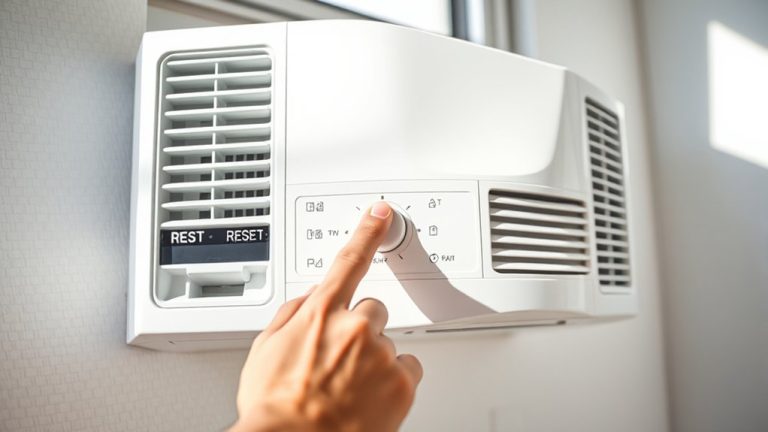
If it has tripped, reset it by switching it off and then on. Verify that the AC unit’s outdoor disconnect switch and any nearby emergency shut-off switches are in the “ON” position, as these control power flow to the unit.
If the breaker repeatedly trips after resetting, avoid further attempts and contact a professional. Persistent tripping often signals an electrical fault that requires expert diagnosis to prevent damage or safety hazards.
This step confirms your AC unit is receiving stable power before moving to other troubleshooting methods.
Power Switch Check
Before proceeding with more complex diagnostics, check three critical components to verify your AC unit can receive and respond to power commands.
First, verify your thermostat settings are correctly set to “cool” and the temperature is below the room temperature.
Second, inspect the HVAC system’s power supply by confirming the circuit breaker is on and the outdoor disconnect switch is engaged.
Third, make sure the power switch inside the air handler closet is turned to “ON.”
Moreover, if your thermostat uses batteries, replace them to rule out low battery issues.
Listen for any unusual sounds or check for indicator lights on the thermostat, as these can signal power interruptions or malfunctions affecting your AC’s operation.
This systematic power switch check verifies proper energy flow and control signals to your unit.
It’s a simple step but can save you from unnecessary troubleshooting later on.
Inspect and Replace Dirty Air Filters
Regularly inspecting and replacing your air conditioner’s filters is essential for maintaining efficient airflow and system performance. A dirty air filter restricts airflow, which reduces cooling efficiency and increases energy use. You should inspect the air filter every 1-3 months as part of routine AC maintenance to prevent overheating and possible compressor damage.
Make sure the replacement filter fits securely. This helps avoid air bypass, which lowers efficiency and indoor air quality. Using HEPA filters can boost air quality by trapping more pollutants than standard filters.
Below is a quick reference for air filter upkeep:
| Task | Frequency | Notes |
|---|---|---|
| Inspect air filter | Every 1 month | Check for dust accumulation |
| Replace air filter | Every 1-3 months | Depends on usage and environment |
| Use HEPA filters | Optional | Improves indoor air quality |
| Confirm proper fit | Each replacement | Prevents air bypass |
| Monitor airflow | Ongoing | Detects clogged filters early |
Clear Debris Around Your Outdoor AC Unit
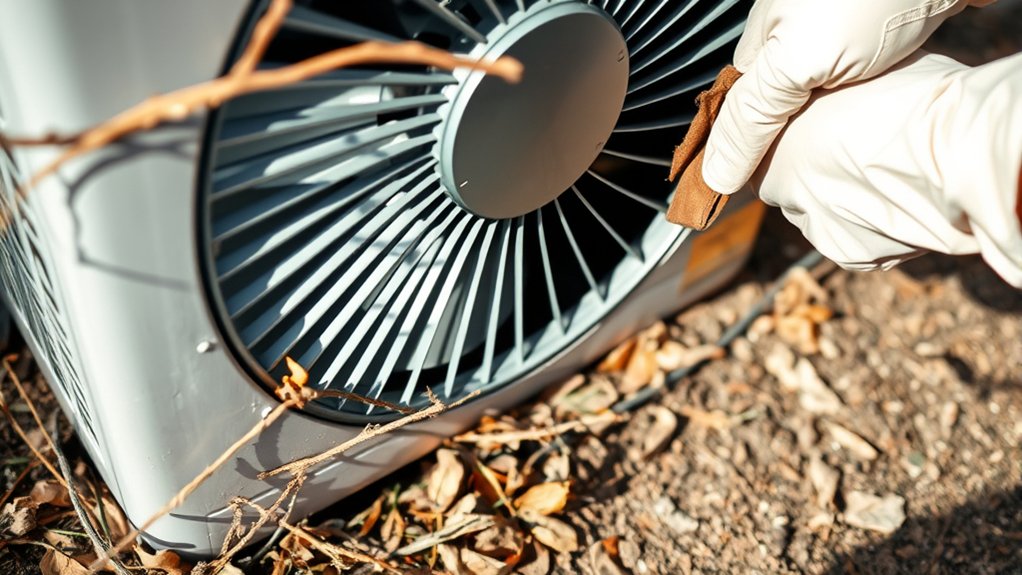
When you clear debris such as leaves, dirt, and grass clippings from around your outdoor AC unit, you help ensure proper airflow. This also prevents blockages that can reduce cooling efficiency.
To keep your unit running at its best, you should guarantee at least two feet of clearance around it. This space helps with airflow and heat dissipation.
You’ll also want to regularly remove any obstructions like weeds or furniture. These could restrict air movement and cause the unit to overheat.
Finally, gently hose down the condenser coils with low pressure. This clears dirt buildup without damaging delicate components.
Spot Refrigerant Leaks and Low Cooling Signs
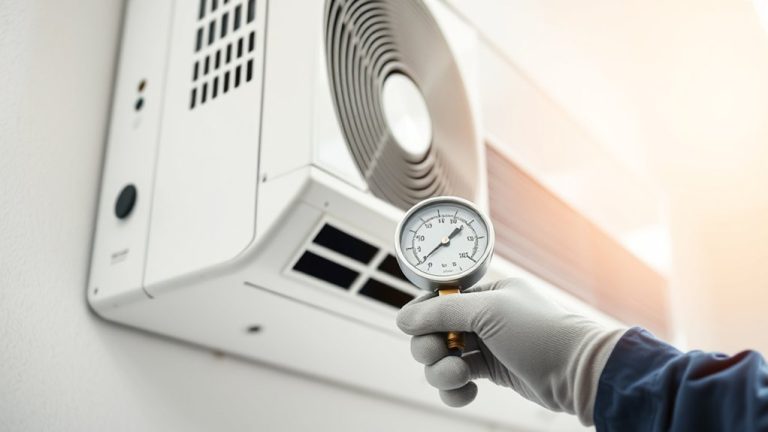
Refrigerant leaks can severely compromise your air conditioner’s performance by reducing cooling efficiency and increasing energy consumption. You’ll notice signs of low refrigerant when your system isn’t cooling properly.
Warm air blowing from vents, longer run times, or ice buildup on evaporator coils are common clues. A hissing sound near the unit often signals a refrigerant leak that needs immediate attention.
Warm air, extended running, ice on coils, or a hissing noise often indicate a refrigerant leak needing prompt repair.
Low refrigerant levels not only reduce comfort but also strain the system and cause higher energy bills. Because fixing refrigerant leaks requires specialized tools and expertise, it’s best to rely on trained technicians to detect and repair leaks accurately.
Regular maintenance checks, including refrigerant level verification, help prevent leaks and keep your air conditioner running at maximum efficiency. This way, you maintain ideal cooling performance without any hassle.
Fix Drainage Problems and Stop Water Leaks
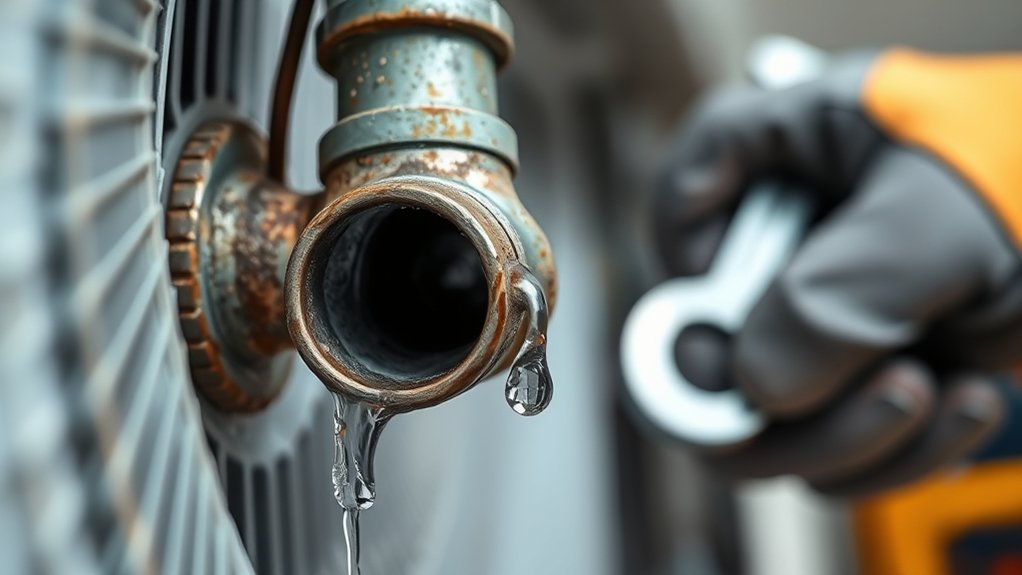
If your air conditioner’s drainage system isn’t working right, water can back up and cause leaks that damage your property. To fix drainage problems and stop water leaks, focus on these essential steps:
First, clear any clogged condensate drain by regularly flushing the drain line. This helps prevent blockages and water backup.
Next, make sure the unit is level and securely mounted. This allows efficient drainage and reduces the risk of overflow.
Also, perform regular maintenance. Clean the drain pan, check the drain lines for kinks or debris, and make sure the condensate pump is working correctly.
These actions help prevent overflow and keep your drainage system working properly.
Plus, keeping an eye on indoor humidity levels can reduce strain on your system’s drainage. That way, you can avoid leaks and water damage even more.
Identify Mechanical and Electrical AC Failures
Proper drainage prevents water damage, but your air conditioner can still stop working if mechanical or electrical components fail.
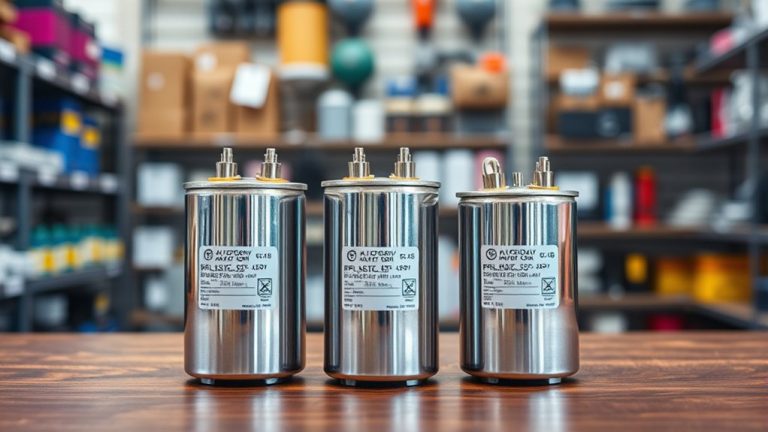
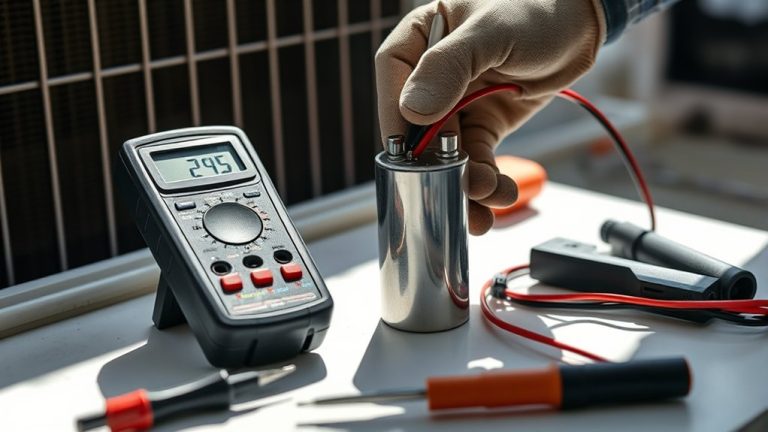
Mechanical failures often involve the AC compressor, which may malfunction and fail to pressurize refrigerant, halting cooling.
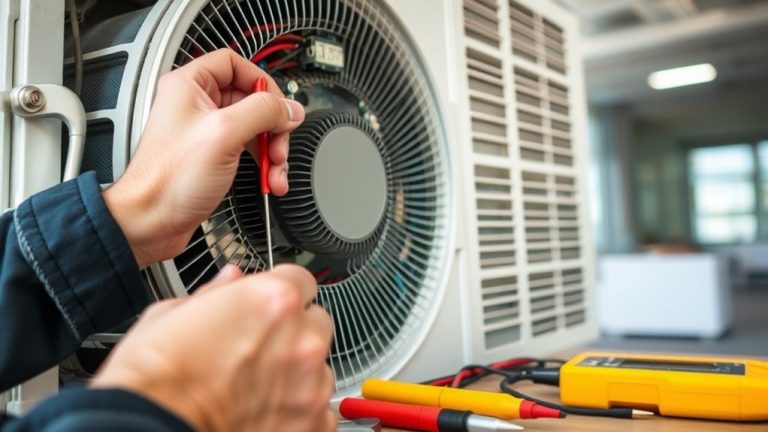
Electrical issues such as tripped circuit breakers, blown fuses, or a faulty thermostat can interrupt power or cause miscommunication between user settings and system operation.
Moreover, damaged wiring or loose connections can result in intermittent or complete failure.
To identify these problems, inspect the circuit breaker panel and thermostat settings first.
If the AC compressor doesn’t engage or you detect unusual noises, mechanical failure is likely.
For wiring concerns, professional diagnosis is essential to prevent hazards.
Recognizing these mechanical failures and electrical issues early helps you address AC problems effectively.
Prevent AC Issues With Routine Maintenance
Routine maintenance is essential to preventing AC issues and making sure your system runs efficiently.
Prioritize these key tasks to keep your air conditioner in great shape:
Change air filters every 1-3 months. This helps maintain proper airflow and reduces strain on the system.
Regularly changing air filters ensures good airflow and eases system strain for optimal AC performance.
Clean the outdoor condenser unit regularly by removing debris. This improves heat dissipation and boosts cooling performance.
Schedule annual inspections with a qualified HVAC technician. They can catch early mechanical or refrigerant problems before they become bigger issues.
Also, don’t forget to flush the condensate drain line and keep an eye on refrigerant levels.
These simple steps help avoid drainage problems and cooling failures.
By incorporating these routine maintenance activities, you’ll prevent inefficiencies and potential breakdowns.
That way, your AC lasts longer and runs reliably throughout the cooling season.
Safe Troubleshooting Steps You Can Do at Home
Maintaining your air conditioner through regular care reduces the likelihood of problems, but minor issues can still pop up. When your AC isn’t working, start with some basic troubleshooting steps.
First, check the thermostat settings to make sure it’s set to “cool” and below the current room temperature to get the system going.
Next, take a look at the outdoor unit. See if there’s any debris or anything blocking airflow that could mess with cooling efficiency.
Also, check the circuit breaker for any tripped switches and reset it if needed to bring power back.
Don’t forget about the air filter. A clogged filter can really restrict airflow and hurt performance, so it’s a good idea to clean or replace it regularly.
Finally, clear out the condensate drain pan and lines to stop water buildup from causing safety shutdowns.
These steps cover common issues you can handle safely and effectively at home. It’s a simple way to keep your AC running smoothly without stress.
When to Call an HVAC Professional for AC Repairs
If your air conditioner just won’t cool down no matter what you try, it’s a good idea to call in an HVAC professional for a proper diagnosis. Sometimes, it’s not something simple you can fix on your own.
Also, if you notice strange noises or smells coming from your unit, or if your circuit breaker keeps tripping, these are signs that something’s wrong.
And don’t ignore any signs of refrigerant leaks either—they need immediate attention.
Getting these electrical and mechanical problems checked out quickly helps make sure your system runs safely and efficiently.
It’s better to catch issues early than to deal with bigger, costlier repairs later on.
Persistent Cooling Problems
When your air conditioner runs without effectively cooling your space, it often signals underlying issues like low refrigerant levels or dirty coils that require professional diagnosis. Ignoring persistent cooling problems can lead to inefficiency and increased energy costs.
You should call an HVAC professional if you notice persistent airflow problems, such as uneven temperature distribution. This may indicate leaky ducts or closed vents that need a professional assessment.
Also, watch out for refrigerant levels consistently dropping. This suggests leaks that only a certified technician can locate and repair.
If you hear unusual noises or notice strange smells during operation, it could be mechanical issues or refrigerant leaks. These risks can cause further damage if left untreated.
Timely intervention guarantees your AC system operates safely and efficiently. It helps prevent costly repairs and keeps your cooling performance at its peak.
Electrical And Mechanical Issues
Although some electrical and mechanical issues might seem minor, they can quickly compromise your air conditioner’s functionality and safety.
Electrical problems like tripped circuit breakers or blown fuses often cut power to your unit. These issues usually require inspection and possibly a reset or replacement.
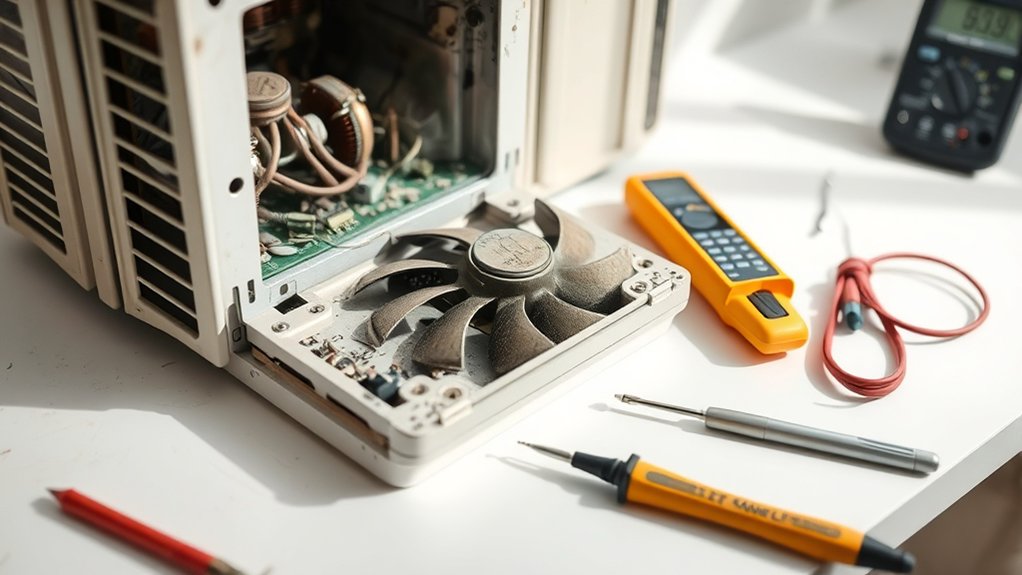
Mechanical failures, such as a faulty compressor or damaged fan motor, can be complex and potentially hazardous. They demand professional diagnosis and repair.
If you notice unusual noises like grinding or squealing, it’s best to call an HVAC technician right away to prevent further damage.
Refrigerant leaks affect cooling efficiency and safety, too. But since handling refrigerant requires special skills, professional help is essential.
Regular maintenance by a qualified technician helps catch electrical and mechanical issues early. This way, you can avoid costly repairs and keep your system running smoothly.
Refrigerant Leak Concerns
Electrical and mechanical problems often signal deeper issues, such as refrigerant leaks, which can considerably reduce your air conditioner’s cooling efficiency.
You should call an HVAC professional for a thorough assessment if you notice ice buildup on evaporator coils or hissing sounds near the unit, which usually means refrigerant is escaping.
Also, if your air conditioner isn’t cooling as well as it used to, even though the electrical parts seem fine, that could be a sign of a leak. Another red flag is if the system seems undercharged after recent installation or maintenance.
Getting a professional to check things out is really important. They can find the leak and fix it properly before adding more refrigerant.
Fixing the leak not only gets your system running efficiently again but also helps protect the environment from harmful refrigerant release.
Frequently Asked Questions
Can I Use My Air Conditioner if It Smells Like Mold?
You shouldn’t use your air conditioner if it smells like mold because it can spread spores and make mold health risks worse. This will also affect your indoor air quality in a negative way.
Turn off the unit right away and do some thorough HVAC maintenance. Check and clean the air filter, evaporator coil, and drain pan to get rid of any moisture buildup.
If the mold smell sticks around after cleaning, it’s a good idea to call a professional technician. They can help stop ongoing health hazards and get your AC running safely again.
How Do I Improve My Ac’s Energy Efficiency?
To improve your AC’s energy efficiency, start with simple energy-saving tips like regularly changing or cleaning filters every 1-3 months.
Also, keep vents unobstructed so air flows freely.
It’s a good idea to schedule seasonal maintenance with an HVAC technician. This helps guarantee your system is running at its best.
Try adjusting your thermostat settings using a programmable thermostat. It can match your schedule and save you about 10-15% on cooling costs.
Plus, sealing leaks and adding insulation can reduce your cooling load.
This boosts your AC’s overall efficiency quite a bit.
What Is the Average Lifespan of a Central Air Conditioner?
Think of your air conditioner as a hardworking guardian, typically lasting 12 to 15 years with proper air conditioner maintenance.
Common AC issues like clogged filters or refrigerant leaks can shorten this lifespan. Watch for signs of overheating, such as unusual noises or odors, which signal urgent attention.
Regular check-ups keep your unit efficient and extend its life.
With energy-efficient models and diligent care, you might even reach 20 years of reliable cooling. It’s all about staying on top of the little things to get the most out of your AC.
Can a Dirty Duct System Affect AC Performance?
Yes, a dirty duct system can severely impact your AC’s performance by causing airflow restrictions.
These blockages force your unit to work harder, reducing efficiency and increasing energy consumption.
Regular duct cleaning benefits your system by improving airflow, enhancing cooling consistency, and lowering utility bills.
To keep things running smoothly, it’s a good idea to schedule professional duct inspections and cleanings every 3-5 years.
Doing this helps ensure your air conditioner operates efficiently and lasts longer.
Plus, it can save you money in the long run by avoiding costly repairs or higher energy bills.
How Often Should I Replace My Ac’s Thermostat Batteries?
You should replace your AC’s thermostat batteries at least once a year, ideally before the cooling season starts. If your thermostat isn’t programmable, consider doing it twice yearly. Alkaline thermostat battery types are preferred for longer life.
Keep an eye out for signs that battery replacement is needed, like low battery warnings on your display.
When you’re troubleshooting your thermostat, always turn off the power before swapping batteries. This helps keep you safe and avoids any electrical issues.
Conclusion
If your air conditioner isn’t working, don’t panic. It’s not the end of the world! Start by checking your thermostat, power supply, and filters.
Make sure to clear any debris around the outdoor unit. Also, keep an eye out for signs of refrigerant leaks or mechanical failures.
Regular maintenance can prevent many issues. But if problems stick around, it’s best to call an HVAC professional. Taking these steps helps your AC run efficiently and keeps your home cool without turning into a never-ending summer saga.