5 Key Differences: Heat Pumps Vs Air Conditioners
You’ll find five key differences between heat pumps and air conditioners in how they operate, efficiency, cost, climate suitability, and function. Heat pumps provide both heating and cooling by extracting heat from outdoor air, while ACs focus on cooling only.
Heat pumps typically cost more upfront but offer long-term savings and federal incentives. They excel in moderate climates, unlike ACs paired with gas furnaces for cold regions.
Exploring these differences helps you choose the best system for your home. It’s worth understanding what each does so you get the right fit for your needs.
Heat Pumps Vs. Air Conditioners: How They Work and Differ
Although both heat pumps and air conditioners rely on a closed-loop refrigeration cycle, heat pumps offer the added capability of reversing this cycle to provide heating as well as cooling.
You’ll find that air conditioners focus solely on energy-efficient cooling by extracting heat from indoor air and releasing it outside.
Heat pumps, equipped with a reversing valve, switch between heating and cooling modes, enabling them to extract heat even from cold outdoor air. This dual functionality makes heat pumps a versatile heating and cooling system, maintaining indoor temperature year-round.
Heat pumps use a reversing valve to provide year-round heating and cooling by extracting heat from outdoor air.
While installation costs for heat pumps tend to be higher than air conditioners, their ability to deliver efficient heating alongside cooling leads to significant long-term savings on energy bills, especially in moderate climates.
Why Heat Pumps Can Heat Your Home Too
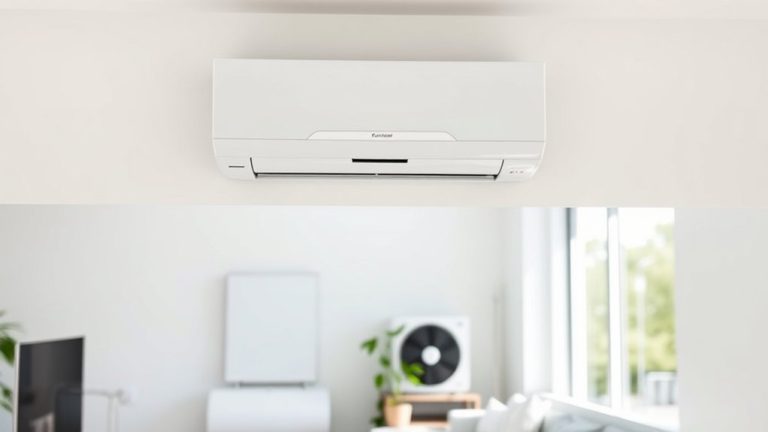
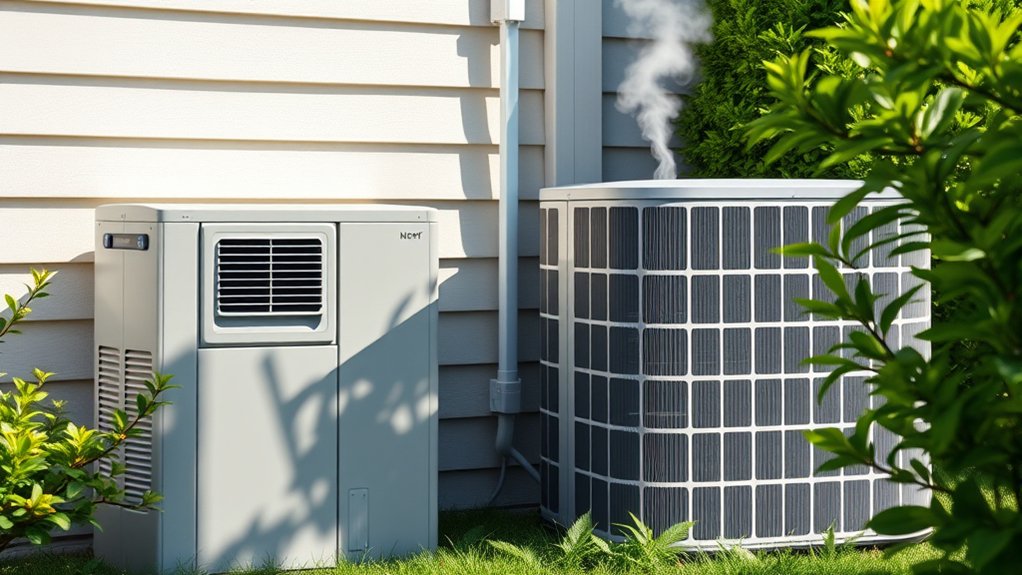
Because heat pumps incorporate a reversing valve, they can switch seamlessly between cooling and heating modes by extracting heat from outdoor air and transferring it indoors. This design gives you both an air conditioning system and an efficient heating solution in one unit.
When heating your home, the heat pump works by absorbing heat from the air outside, even at temperatures as low as 17°F, and delivers effective heating inside. Unlike traditional systems that generate heat, a heat pump moves existing heat, which means it can be more efficient.
Proper heat pump installation guarantees peak performance of its heating capabilities, allowing you to cool and heat your space year-round.
Comparing Energy Efficiency of Heat Pumps and Air Conditioners
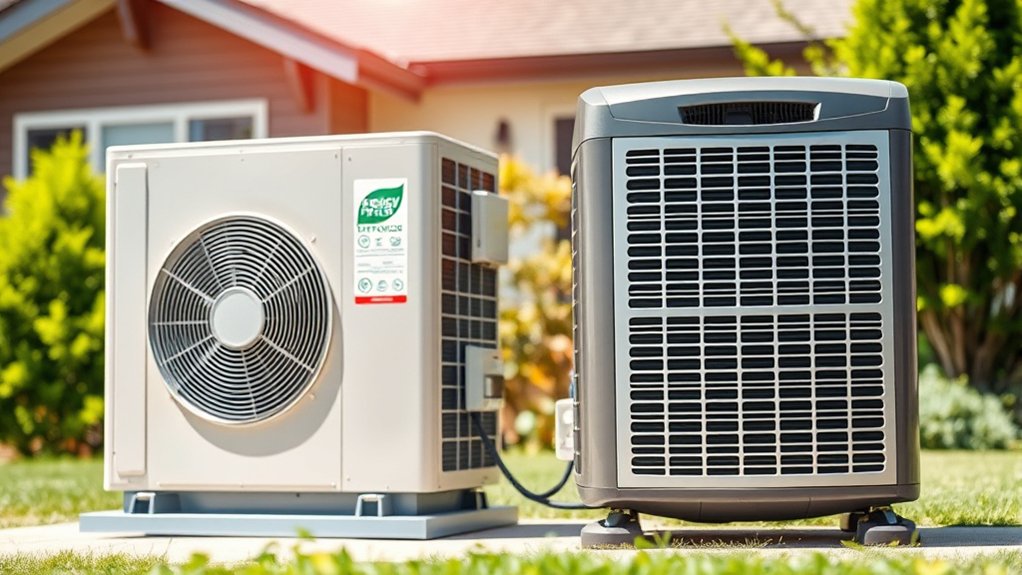
Understanding how heat pumps compare to air conditioners in energy efficiency helps you make an informed choice for your HVAC needs.
In cooling mode, air conditioners can reach a Seasonal Energy Efficiency Ratio (SEER2) of up to 21.5, slightly edging out heat pumps, which max out around 20.5.
Air conditioners offer a marginally higher SEER2 rating in cooling mode compared to heat pumps.
However, in heating mode, heat pumps achieve up to 300% efficiency, far surpassing gas furnaces capped near 98%.
This makes heat pumps especially efficient in moderate climates, where they provide an effective heating system down to 17°F.
When weighing heat pumps vs air conditioners, consider federal incentives under the Inflation Reduction Act that can reduce upfront costs.
These incentives and the superior energy efficiency of heat pumps in heating mode offer significant long-term savings on energy bills, especially if you rely heavily on heating.
Installation and Cost Differences Between Heat Pumps and ACs
When planning your HVAC installation, keep in mind that heat pumps usually cost more upfront than air conditioners. This is because they’ve extra components and sometimes need ductwork adjustments.
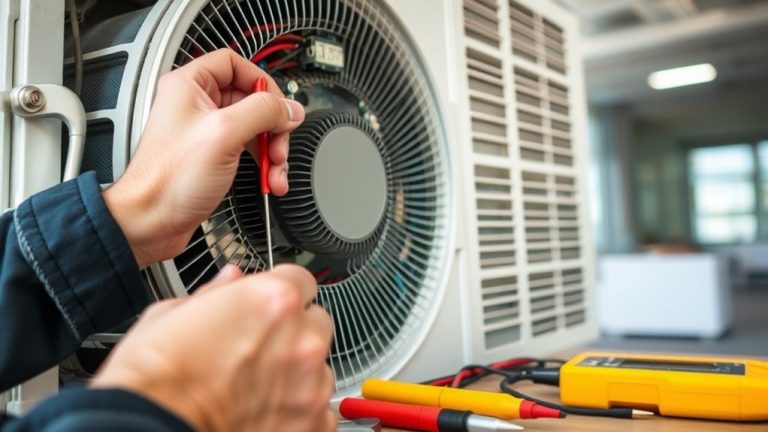
Installation costs for heat pumps tend to be higher since skilled labor is required to handle their complexity and make changes to existing HVAC systems.
But here’s the good part: heat pumps do double duty by providing both heating and cooling. This can reduce the need for separate heating units and might lower your overall installation costs.
So, even though the upfront costs for heat pumps are higher than traditional air conditioners, they can save you money on energy bills over time.
Plus, federal incentives under the IRA can help offset those initial expenses. This makes heat pumps a financially attractive option, despite their higher installation costs compared to standard air conditioners.
It’s definitely worth considering if you want long-term savings and efficiency.
Choosing the Right System for Your Climate
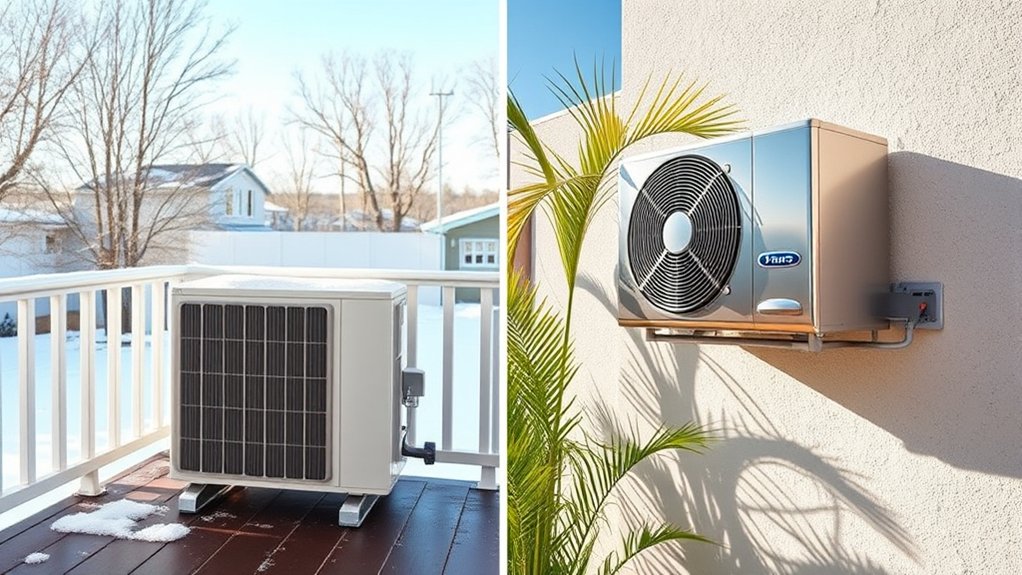
Selecting the appropriate HVAC system depends heavily on your local climate. If you live in moderate climates, heat pumps offer superior energy efficiency by providing both heating and cooling through a single outdoor unit. They operate effectively down to 17°F.
Heat pumps can achieve heating efficiencies up to 300%, which outperforms traditional gas furnaces that max out near 98%. However, if your region experiences severe cold, air conditioners paired with gas furnaces as the primary heating system might serve you better.
Alternatively, dual-fuel systems combine heat pumps with gas furnaces, enhancing performance across extreme temperature fluctuations.
Frequently Asked Questions
Can Heat Pumps Be Used With Existing Ductwork?
Yes, heat pumps can work with your existing ductwork, but you’ll need to assess ductwork compatibility carefully.
Installation challenges may arise, especially if retrofitting is required to optimize airflow and temperature regulation.
Think about the costs involved for any modifications and the maintenance they might need. Proper sizing is key—it improves energy efficiency and helps your system last longer.
You’ll also want to check performance ratings to see if your home is a good fit.
Retrofitting can be a smart, efficient upgrade that balances upfront costs with long-term savings and comfort.
How Often Do Heat Pumps Require Maintenance?
You should schedule professional inspections for your heat pump at least once a year to maintain peak performance and system longevity.
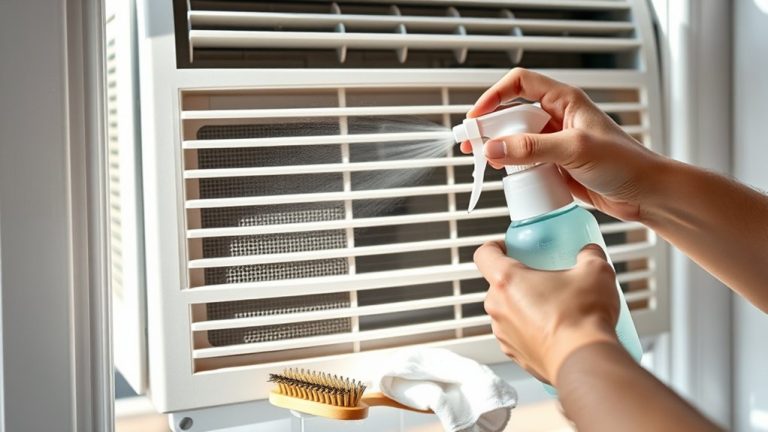
Regular seasonal checks and DIY maintenance, like cleaning or replacing filters every 1-3 months, help prevent common issues and improve efficiency ratings.
Staying on top of maintenance frequency minimizes costly repairs.
Keep cost considerations in mind by addressing troubleshooting tips early.
This way, you ensure your heat pump meets performance expectations throughout the year.
Are There Noise Level Differences Between Heat Pumps and AC Units?
You won’t notice significant noise level differences between heat pumps and AC units since both operate around 50 to 70 decibels.
Advances in technology, like insulated compressors and variable-speed fans, improve user experience by reducing noise and boosting operational efficiency.
Installation costs and energy sources don’t directly affect noise, but regular maintenance lowers repair frequency and prolongs lifespan.
Market trends favor quieter units, minimizing environmental impact and enhancing overall satisfaction.
Can Heat Pumps Operate Efficiently in Extremely Cold Climates?
Yes, heat pumps can operate efficiently in extremely cold climates thanks to advanced heat pump technology and improved cold climate performance.
Modern models maintain heating capacity within a wide temperature range and include frost protection features.
Their high seasonal energy efficiency ratings guarantee long-term savings despite higher installation costs.
Do Heat Pumps Have Any Impact on Indoor Air Quality?
You’ll notice heat pumps work wonders for indoor air quality, almost like they’ve a magic wand! They enhance airflow circulation and use advanced filter types to reduce dust accumulation and allergens effectively.
Their air purification and ventilation systems maintain balanced indoor humidity and temperature control, preventing mold growth.
Plus, their energy efficiency guarantees consistent seasonal performance while minimizing pollutants.
Regular maintenance keeps these features optimized, securing fresh, healthy air year-round.
It’s pretty neat how such a system can make your home feel cleaner and more comfortable all the time!
Conclusion
Think of a heat pump as your home’s Swiss Army knife. It cools in summer and heats in winter, unlike a traditional air conditioner that only cools.
For example, heat pumps can reduce energy use by up to 50% compared to electric heaters. Choosing the right system depends on your climate and budget.
But understanding these key differences guarantees you invest smartly in comfort and efficiency year-round.