How to Repair a Freon Leak in Your Air Conditioner in 3 Easy Steps
To repair a Freon leak in your AC, first spot the leak by checking for warm air, hissing sounds, or oily spots. Then, confirm it with a soap solution.
Next, safely seal small leaks using a refrigerant leak sealant after cleaning the area.
Finally, recharge the system with the correct refrigerant type and amount. Then monitor performance and recheck for leaks.
Follow these steps, and you’ll uncover more ways to keep your AC running efficiently.
How to Spot and Confirm a Freon Leak in Your AC
When your air conditioner starts blowing warm air or runs longer than usual, you might be dealing with a Freon leak. Reduced cooling efficiency is a primary indicator of a refrigerant leak in your AC unit.
Listen carefully for hissing or bubbling sounds, which often signal escaping refrigerant leaks.
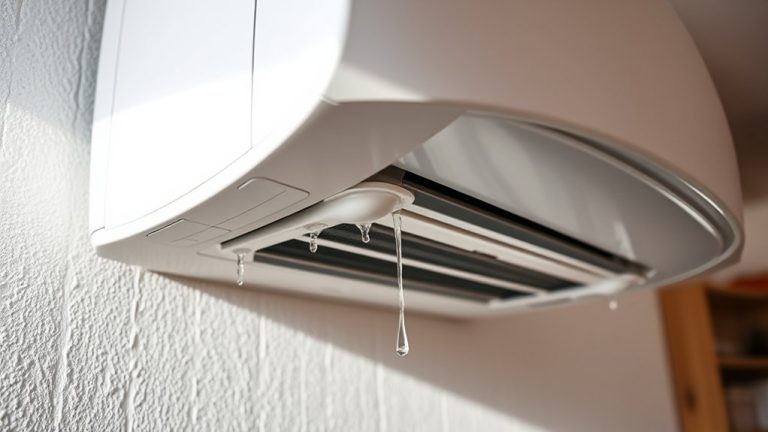
Check for ice buildup on the evaporator coils, a common sign of low refrigerant levels. Inspect the area around the AC unit for moisture or oily spots, which can indicate refrigerant escaping the system.
Also, keep an eye on indoor humidity levels; if they’re higher than usual, it could mean the air conditioner isn’t dehumidifying properly because of refrigerant loss.
While you can spot these symptoms yourself, it’s best to have an experienced HVAC technician confirm the refrigerant leak. That way, you’ll get an accurate diagnosis and effective repair.
How to Safely Fix Small Freon Leaks Yourself
Confirming a Freon leak is only the first step. Fixing small leaks yourself can help prevent further damage, but you have to be careful. Start by turning off the air conditioning unit to stay safe.
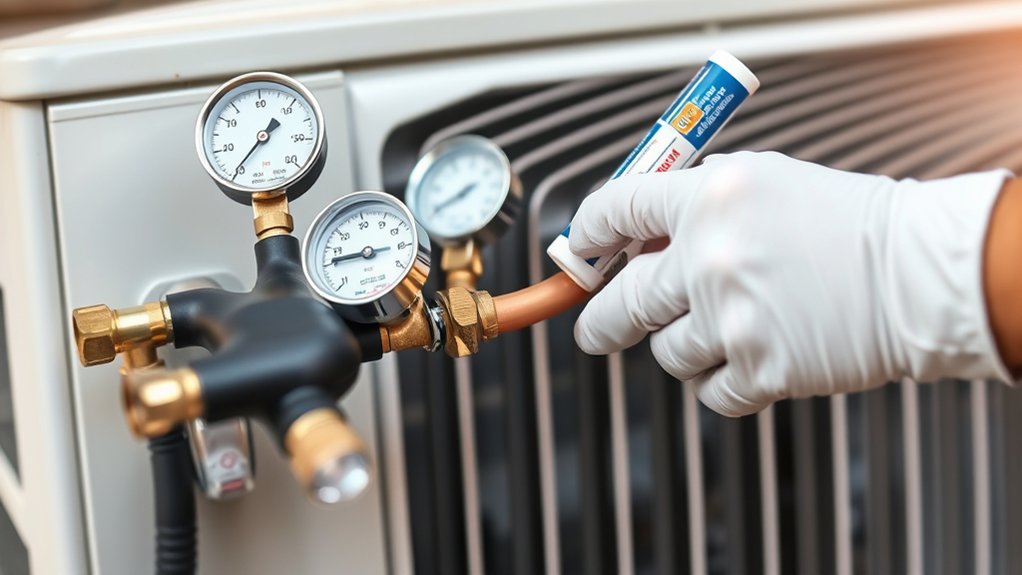
Next, use a soap solution to spot any minor leaks on the cooling system. Make sure to clean the affected area well before you handle it. Then, apply a refrigerant leak sealant to temporarily seal the leak.
Fixing leaks quickly helps keep your system energy efficient and stops refrigerant levels from dropping too low. After sealing the leak, keep an eye on how your system performs. If problems continue, it’s best to schedule a professional HVAC service.
| Step | Action |
|---|---|
| 1 | Turn off AC unit |
| 2 | Use soap solution to locate leak |
| 3 | Clean leak area |
| 4 | Apply refrigerant sealant |
| 5 | Monitor system, plan HVAC service |
How to Recharge and Test Your AC After a Freon Leak Repair
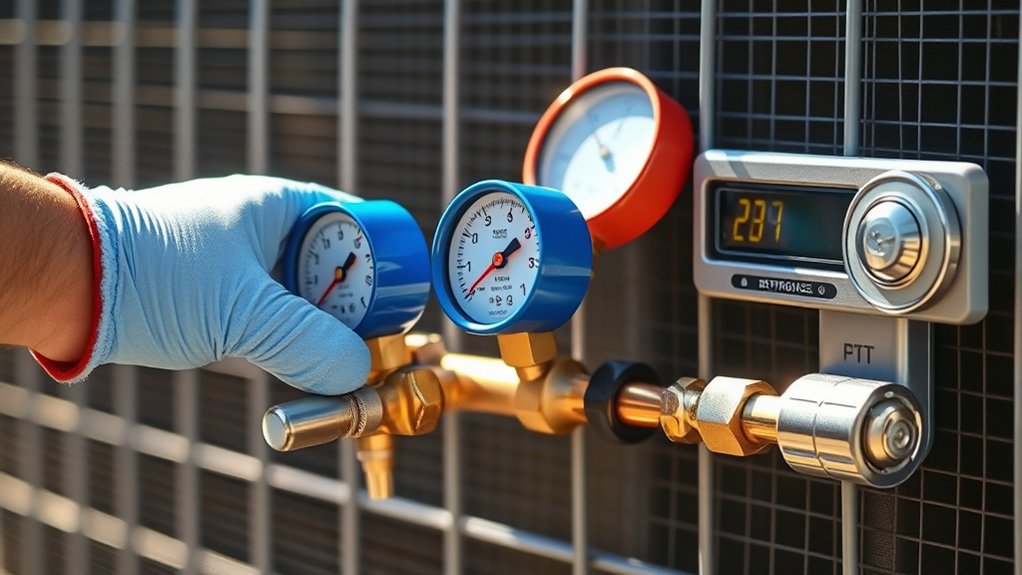
Once you’ve repaired the Freon leak, you’ll need to recharge your AC with the exact refrigerant type and amount specified by the manufacturer. This is important to restore ideal cooling performance.
Using the wrong refrigerant or incorrect quantity can damage your AC system and reduce efficiency.
Using an incorrect refrigerant type or amount harms your AC system and lowers its efficiency.
After recharging, keep an eye on how well your AC is cooling. Adjust the thermostat settings to make sure everything is working properly.
It’s a good idea to check for leaks using a soap solution to confirm the repair is holding.
If you still notice issues, don’t hesitate to contact professional HVAC repair services or emergency service for a thorough inspection.
Use manufacturer-specified refrigerant that’s compatible with your system.
Monitor cooling efficiency after recharging and check carefully for leaks.
Also, schedule regular maintenance with professional HVAC technicians to help prevent future leaks.
Frequently Asked Questions
How Often Should I Schedule Professional AC Maintenance?
You should schedule AC maintenance at least twice a year, ideally in spring and fall. Signs that you might be neglecting your system include reduced cooling and higher energy bills.
Doing some DIY maintenance, like changing filters regularly, can really help and works well alongside professional servicing.
The benefits of regular servicing include improved energy efficiency and a longer lifespan for your AC.
Seasonal checklists usually cover common tasks such as coil cleaning and leak inspections.
Plus, choosing a professional technician ensures warranty requirements are met, especially if you’re upgrading energy efficiency components.
It’s a smart way to keep your system running smoothly and avoid costly repairs down the line.
What Health Risks Are Associated With Freon Exposure?
You face health symptoms like dizziness, headaches, and skin irritation from Freon exposure.
Respiratory effects can worsen, especially if you exceed exposure limits or have preexisting conditions. Neurological impacts include confusion and lethargy, with long-term exposure raising serious risks.
Prioritize refrigerant safety by using personal protection and leak detection tools.
If you suspect a leak, initiate emergency response immediately to minimize harm and guarantee safe handling. Taking these steps really helps keep you safe and prevents bigger problems down the line.
Can a Freon Leak Damage Other Parts of My AC System?
Yes, a Freon leak can severely damage other parts of your AC system.
Leak detection is essential because low refrigerant reduces system efficiency, stressing the compressor and risking compressor damage. Cooling performance drops, and electrical components may fail.
Ignoring this shortens your system’s lifespan and boosts repair costs.
While DIY repairs might seem tempting, professional repair techniques tailored to your refrigerant type guarantee safety and longevity.
Regular maintenance tips can help prevent costly issues.
How Much Does Professional Freon Leak Repair Typically Cost?
Professional Freon leak repair typically costs between $200 and $1,500.
Leak detection and repair techniques influence this cost breakdown, with labor at $75-$150 per hour and refrigerant types adding $50-$200.
DIY methods aren’t recommended because of safety precautions and concerns about system efficiency.
It’s better to leave this kind of work to the pros.
Watch for warning signs like reduced cooling.
Regular maintenance tips can help prevent leaks.
Trust professional services to guarantee precise, safe repairs and protect your AC system’s longevity.
It’s worth it to keep your system running smoothly.
Are There Environmentally Friendly Alternatives to Freon Refrigerants?
Yes, you can switch to eco friendly refrigerants like hydrocarbon refrigerants or CO2 refrigerants, which have lower environmental impact.
Natural refrigerants offer sustainable refrigerant alternatives.
R 410A benefits include better energy efficiency, while R 32 efficiency reduces global warming potential.
Keep in mind refrigerant regulations require proper refrigerant recovery during repairs.
Using these alternatives helps you comply with global standards and minimize your system’s carbon footprint effectively.
It’s a smart move for both the environment and your equipment.
Conclusion
Fixing a freon leak in your AC isn’t just a patch job. It’s the key to restoring your system’s heartbeat. By spotting leaks early, sealing them safely, and recharging your unit precisely, you guarantee efficient cooling and prevent costly damage.
Remember, handling refrigerants demands care and adherence to safety protocols. With these steps, you take control. You keep your AC running smoothly and your home comfortably cool all season long.