How to Charge Air Conditioner Gas in 5 Easy Steps
To charge your car’s AC gas in 5 easy steps, first park in a shaded area. Locate the low-pressure service port and set the AC to max cold.
Next, connect the recharge kit securely and check the pressure gauge. You’ll want to aim for 25-45 psi.
Then, add refrigerant slowly while keeping an eye on the pressure. Stop once it reaches the perfect range.
After that, disconnect the kit and seal the port tightly.
Finally, test the AC cooling effectiveness and check for leaks to make sure everything’s working great. More detailed guidance follows.
Prepare Your Car and Locate the Low-Pressure Service Port
To begin charging your air conditioner gas, start by parking your car in a shaded area or a well-ventilated space to keep things cool. This helps prevent overheating and ensures you get accurate pressure readings.
Next, open the hood and get ready to find the low-pressure service port on your AC system. You’ll usually spot it on the larger tubing connected to the AC compressor. It’s often marked with an “L” or has a blue or black cap.
Before you move forward, make sure the engine is off. Then, set the AC system to the highest fan setting and the coldest temperature.
Carefully take off the cap from the low-pressure service port, being careful not to let dirt or debris get inside.
Oh, and don’t forget to open the car doors to keep the air flowing and stay safe.
Connect the Recharge Kit and Check AC Pressure
Securely connect the recharge kit’s hose to the low-pressure service port, ensuring a tight fit to prevent refrigerant leaks. Locate the low-pressure port, usually marked with an “L” or a blue/black cap, and clean its surroundings before connecting the recharge kit.
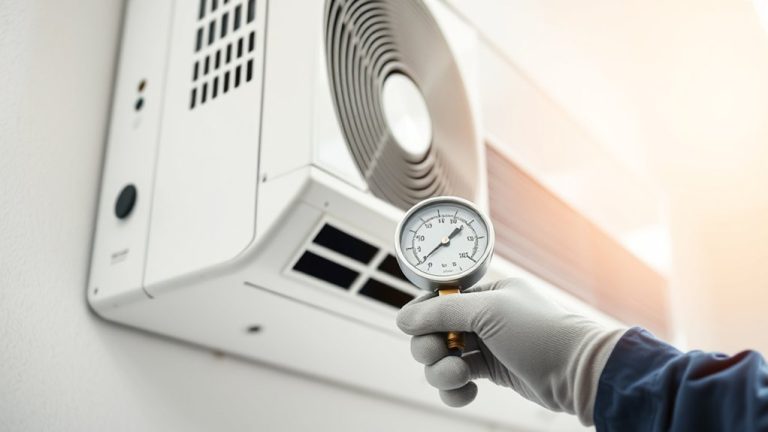
Once connected, check the pressure gauge to assess the refrigerant levels accurately. Aim for an ideal pressure range, typically between 25 and 45 psi. Monitoring this prevents compressor damage caused by under or overcharging.
Use the table below to interpret pressure readings and decide next steps:
| Pressure Reading (psi) | Refrigerant Status |
|---|---|
| Below 25 | Low, add refrigerant |
| 25 – 45 | Ideal levels |
| Above 45 | Overfilled, avoid more |
| Steady Pressure | System stable |
| Fluctuating Pressure | Possible leak |
Always avoid overfilling when you add refrigerant. It’s better to add a little at a time and keep checking. This way, you keep your system running smoothly without risking damage.
Add Refrigerant Safely While Monitoring System Pressure
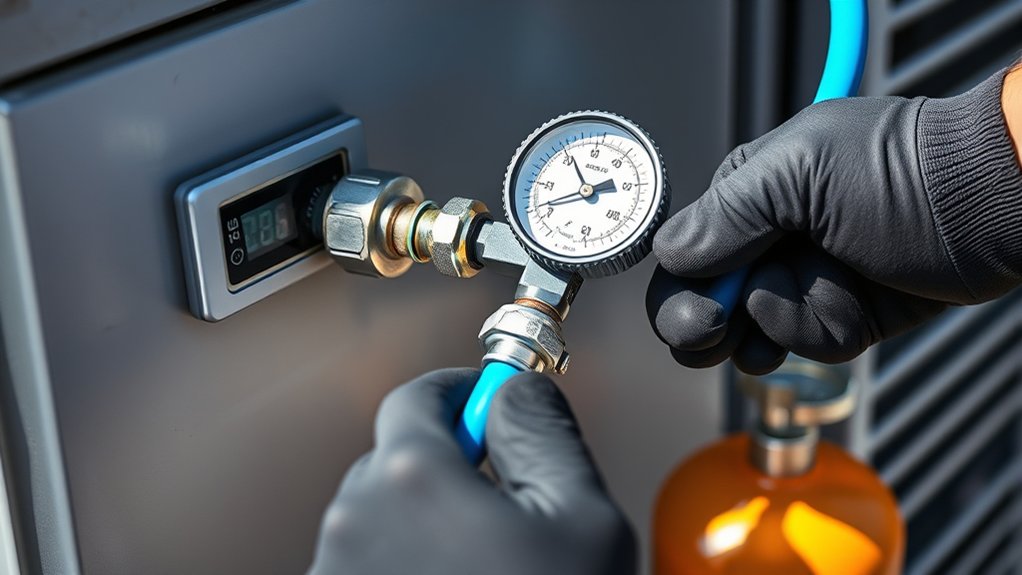
Now that you’ve connected the recharge kit and checked the AC pressure, it’s time to add refrigerant carefully while keeping a close eye on the system’s pressure gauge.
Shake the refrigerant canister thoroughly before attaching it to the low pressure side to guarantee proper mixing.
With the engine running and AC set to maximum cooling, introduce refrigerant in short bursts.
Continuously monitor the pressure gauge, aiming for refrigerant levels within the 25-45 psi range recommended by the service manual.
Stop adding refrigerant once the needle enters the green zone to prevent overcharging, which can damage the AC system.
Throughout the process, watch for any unusual pressure fluctuations or noises.
Following these steps precisely helps maintain system efficiency and avoids complications during recharge.
Just take it slow and steady, and you’ll keep everything running smoothly.
Remove the Recharge Kit and Seal the Service Port
Disconnect the recharge kit carefully from the low-pressure service port while keeping the engine running and the AC set to maximum. This guarantees ideal pressure release, minimizing refrigerant loss.
After you remove the recharge kit, immediately and securely replace the service port cap to maintain refrigerant integrity and prevent contamination. Inspect the cap for cracks or damage during maintenance to avoid refrigerant leaks.
Proper inspection of the service port and cap is essential for system efficiency and long-term reliability.
Store the charging hose in a cool, dry place to prevent damage and contamination, ensuring it’s ready for future use.
Following these precise steps preserves the AC system’s performance and prevents unnecessary refrigerant loss or leaks after charging. Just take your time, and your AC will thank you later.
Test Your Car AC Cooling and Recognize Recharge Issues
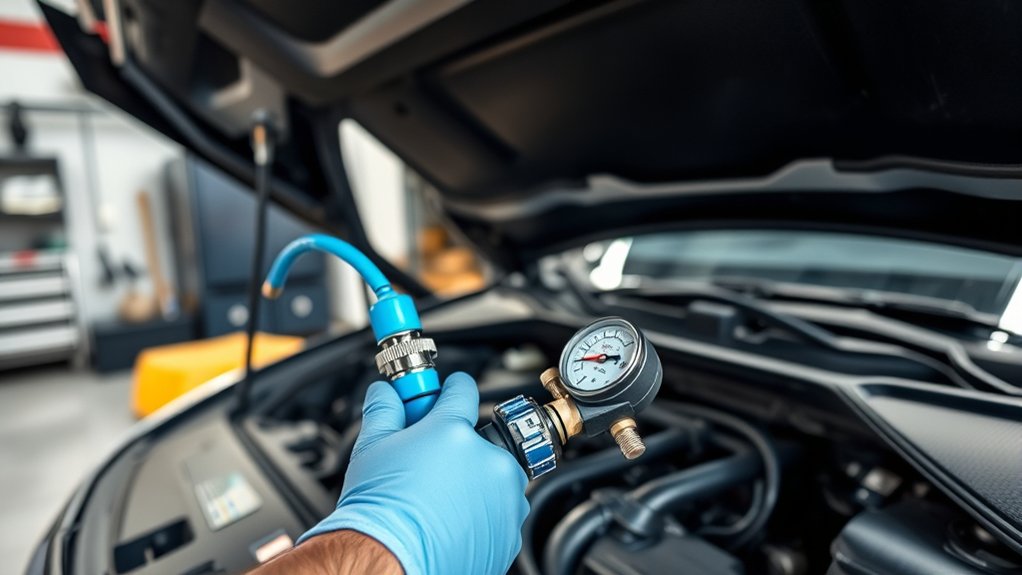
Although you’ve recharged your car’s AC system, you’ll want to verify its cooling efficiency by measuring the vent temperature with a thermometer. Readings above 40°F typically indicate low refrigerant levels.
Next, inspect the AC components for visible refrigerant leaks or residue. These often signal system breaches. Listen carefully for hissing noises, which may suggest leaks or compressor malfunctions that need prompt repair.
Inspect for refrigerant leaks or residue and listen for hissing sounds indicating potential system issues requiring immediate attention.
Check pressure readings using proper gauges to confirm refrigerant levels and system integrity. If cooling performance remains poor despite a full recharge, suspect issues like a faulty compressor or clogged lines.
Regularly inspect and maintain your AC system to prevent malfunction. Proper testing guarantees your recharge was successful and helps identify problems early.
This keeps your AC running efficiently and extends component lifespan.
Frequently Asked Questions
What Type of Refrigerant Is Safe for My Car Model?
You should first identify refrigerant types compatible with your car by checking the label under the hood or your owner’s manual.
Match refrigerant colors to avoid system damage and consider environmental impact. R-1234yf is eco-friendlier than R-134a.
Monitor system pressure carefully during charging.
Use leak detection to guarantee no leaks before recharging.
Prioritize DIY safety and maintenance tips, but it’s a good idea to consult professional services for accuracy and cost-effective, reliable results.
Can I Overcharge the AC System and What Happens?
Yes, you can overcharge the AC system, which causes issues like increased pressure that can damage the compressor.
When the system is overcharged, you might notice unusual noises and a drop in how well it cools.
Using pressure gauges is a good way to keep an eye on the refrigerant type and levels, so you don’t accidentally add too much.
Overcharging not only reduces cooling performance but can also trigger safety features that shut down the compressor.
Because there are risks involved with doing this yourself, it’s a smart idea to get professional help.
They can make sure your AC is charged properly and stays reliable and safe.
How Often Should I Recharge My Car’s AC Gas?
You should recharge your car’s AC system only when the cooling efficiency drops because of low refrigerant levels or leaks. Usually, this happens every 1-2 years, but it’s best to watch out for common signs like weak airflow or warm air coming from the vents.
Try to use maintenance tips to figure out the type of refrigerant your system needs. Avoid DIY methods unless you’re really skilled with car AC systems. It can get tricky and might cause more harm than good.
It’s a good idea to consider professional services for an accurate recharge. They can help with cost analysis and minimize environmental impact.
Regular checks keep your AC performing at its best and prevent the risks of overcharging.
What Tools Do I Need Besides the Recharge Kit?
Before you plunge in, remember not to put the cart before the horse: besides your recharge kit, you’ll need pressure gauges to monitor the AC system’s refrigerant pressure accurately.
Equip yourself with safety precautions like goggles and gloves to handle refrigerant types safely.
For leak detection and troubleshooting steps, a manifold gauge set helps.
Follow maintenance tips and DIY tutorials closely to avoid common mistakes and guarantee proper charging methods for efficient AC system performance.
Is It Safe to Recharge AC Gas by Myself?
You can safely recharge AC gas yourself if you follow refrigerant safety guidelines and understand the refrigerants specific to your system.
DIY AC maintenance requires proper tools, protective gear, and knowledge of common AC issues like signs of leakage.
Keep in mind the environmental impact and cost-saving techniques.
But if basic troubleshooting doesn’t solve the problem, deciding between professional help and DIY matters.
Always prioritize safety and make sure there’s good ventilation for effective home cooling tips and long-term reliability.
Conclusion
By following these five steps carefully, you’ll restore your car’s AC efficiency and avoid costly repairs. Imagine driving on a scorching day, windows down, sweat pouring. Then charging your AC gas quickly and feeling that instant cool relief.
Properly maintaining your system not only saves money but guarantees comfort and safety. Stay attentive to pressure readings and signs of leaks. That way, your AC keeps performing effectively without unexpected breakdowns.