
Why Does My Air Conditioner Smell Musty?
Your air conditioner smells musty because excess moisture inside its components creates an ideal environment for mold and mildew growth. Clogged condensate drains and dirty air filters trap water and dust, fostering fungal buildup that releases unpleasant odors.
Leaky or poorly insulated ductwork can make moisture problems worse, promoting even more microbial growth. Regularly replacing filters and cleaning drain lines helps keep these issues at bay.
Knowing what causes the smell and how to maintain your AC will help you get rid of musty odors and keep your system fresh. Just a little care goes a long way!
Causes of Musty Smells in Your Air Conditioner
When your air conditioner emits a musty smell, it’s usually due to mold and mildew thriving in damp areas caused by excess moisture. This moisture often accumulates because of clogged air filters, which trap dust and water, fostering mold and mildew growth.
Musty air conditioner smells often signal mold growth from moisture trapped by clogged filters.
Also, a blocked condensate drain can cause standing water inside the unit, creating ideal conditions for musty odors.
Leaky ductwork may introduce warm, humid air, increasing condensation and encouraging microbial growth within your system.
These factors degrade air quality and negatively impact your indoor environment.
To prevent these issues, prioritize regular maintenance by inspecting and cleaning air filters, condensate drains, and ductwork.
This approach effectively controls moisture levels and preserves peak air quality, reducing the risk of persistent musty smells in your air conditioner.
How Mold and Mildew Cause Musty Smells in AC Units
Moisture buildup inside your air conditioner creates an ideal environment for mold and mildew to develop, which directly causes musty odors.
Mold and mildew thrive in your AC unit due to excess moisture, often stemming from clogged condensate lines and dirty air filters. This moisture encourages fungal growth, leading to unpleasant smells circulating through your air conditioning system.
To keep things fresh, focus on regular maintenance. Clean and replace air filters to prevent moisture accumulation.
Also, inspect the condensate line for blockages to reduce water buildup in the system.
Controlling humidity levels in your environment helps too. It minimizes condensation inside ducts, which means less chance for mold and mildew to grow.
Taking care of these things will reduce mold and mildew growth, effectively eliminating musty odors and making sure your AC unit runs cleanly and efficiently.
Why Clogged Condensate Drains Lead to Odors
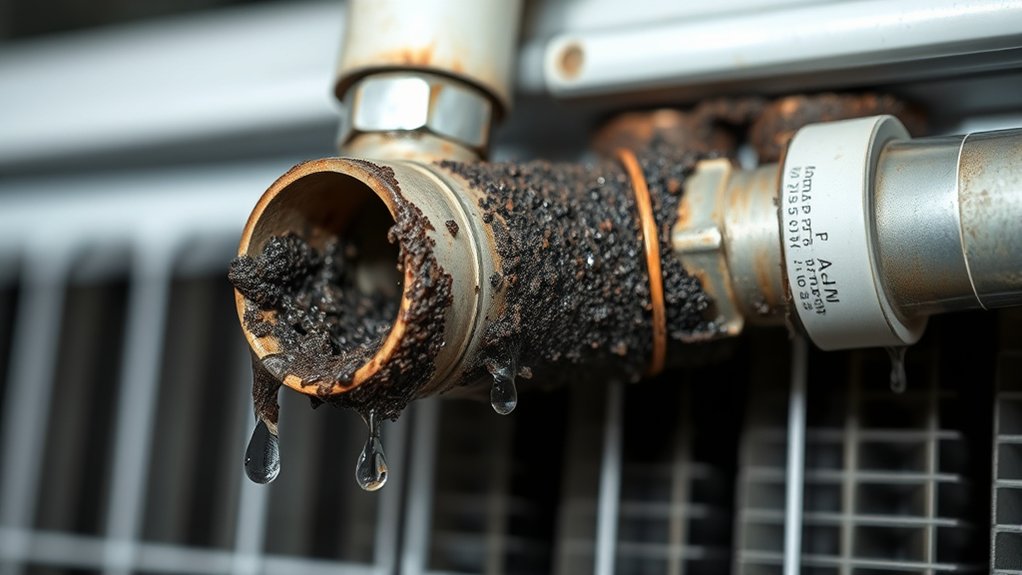
If your condensate drain line gets clogged, water starts to build up in the drain pan. This creates a damp environment that’s perfect for mold to grow.
All that trapped moisture becomes a hotspot for bacteria and mildew, and that’s what causes those musty smells you end up noticing.
Drain Line Blockages
Many air conditioning systems experience issues due to clogged condensate drain lines, which block the proper removal of moisture.
This moisture accumulation in a blocked drain line creates an environment conducive to bacteria and mold growth. That can lead to musty odors throughout your air conditioning system.
To keep things running smoothly, you should focus on identifying signs of a clogged condensate drain line.
Look out for water pooling near the unit or reduced airflow.
Regular maintenance is key.
Try clearing the drain line using a wet/dry vacuum or a specialized brush.
Also, make sure to inspect the system consistently to prevent moisture buildup and mold growth.
Mold Growth Causes
When your condensate drain line clogs, it traps water and debris inside. This creates prime conditions for mold and mildew to flourish within your air conditioning system.
Clogged condensate drains cause standing water buildup, which, combined with dirt and organic matter, accelerates microbial growth and musty odors.
This trapped moisture makes humidity issues worse, creating an environment where mold spores multiply and enter your indoor air. These spores can trigger respiratory issues and worsen allergies.
Given the average ¾-inch diameter of drain lines, blockages from dust, algae, and dirt are common.
To prevent mold or mildew growth and keep your air quality good, regular AC maintenance is a must. Specifically, cleaning condensate drain lines removes blockages and standing water.
This keeps your system running efficiently and your indoor air fresh and safe.
Dirty Air Filters and Musty AC Smells
One common cause of musty odors in your air conditioner is dirty air filters that trap moisture and dust. This creates an ideal environment for mold and mildew growth.
Dirty air filters also disrupt airflow, leading to moisture buildup and fostering bacteria and mold development.
To prevent musty AC smells, you should replace or clean air filters every 1-3 months. This helps maintain peak airflow and minimize moisture buildup.
Avoid clogged filters because they cause evaporator coils to freeze and generate stagnant water, which worsens odors.
Regular maintenance of filters is important too. It eliminates organic matter that encourages bacteria and fungi growth.
Keeping your air filters clean not only reduces musty odors but also improves efficiency. Plus, it extends the lifespan of your air conditioning system.
How Moisture in Ductwork Adds to Mustiness
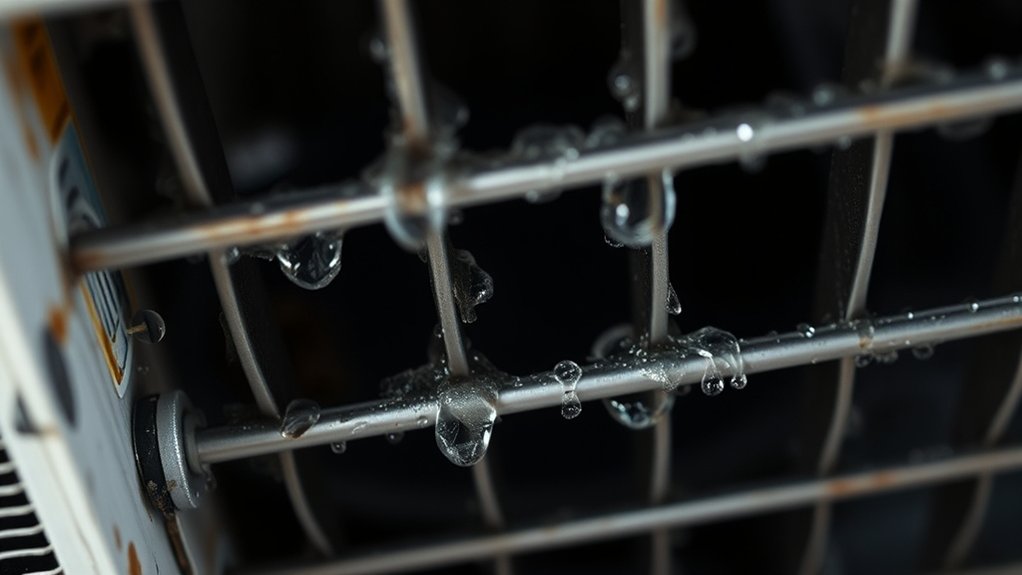
You’ll often find that moisture in your ductwork comes from leaks, poor insulation, or just high indoor humidity. This creates the perfect environment for mold and mildew to start growing.
That moisture doesn’t just cause musty odors—it also affects your indoor air quality by spreading allergens and microbes around.
To keep things fresh, it’s important to have regular duct inspections and make sure everything is properly sealed.
Controlling humidity levels inside your home also helps a lot. Doing these things will keep your air conditioner smelling clean and your air healthier to breathe.
Causes Of Duct Moisture
Although ductwork is designed to keep air flowing efficiently, moisture can still accumulate due to several factors, leading to musty odors. You need to understand the primary causes of moisture issues in your air ducts to address the problem effectively.
- High humidity levels and condensation: Warm, humid air condenses on cooler duct surfaces, especially where insulation is poor, promoting mold growth.
- Leaky ductwork: Leaks allow moist air to infiltrate the system, increasing moisture and fostering mold development inside the ducts.
- Clogged condensate drain lines: When drains are blocked, standing water accumulates within the ductwork, intensifying moisture buildup and musty smells.
Regular inspection and proper insulation are essential to prevent condensation and eliminate standing water.
This helps reduce mold-related odors from your air ducts. It’s all about staying ahead of the problem before it gets worse.
Effects On Indoor Air
Moisture trapped in your ductwork doesn’t just cause localized issues; it actively degrades the quality of indoor air by promoting mold and mildew growth. This moisture buildup leads to musty smells and air conditioning odors that circulate throughout your home via the HVAC system.
Mold spores released from damp ductwork can trigger respiratory issues, especially for people with asthma or allergies. Poor ventilation and clogged ducts only make things worse. They reduce indoor air quality and lower HVAC efficiency.
| Effect on Indoor Air | Cause in Ductwork |
|---|---|
| Musty smells | Moisture accumulation |
| Respiratory issues | Mold spores |
| Reduced HVAC efficiency | Clogged or poorly insulated ducts |
Knowing these effects shows why it’s so important to deal with moisture in your ductwork quickly.
Prevention And Maintenance
When high humidity causes condensation inside your ductwork, it creates an environment where mold and mildew thrive. This often leads to persistent musty odors. To prevent mold and keep your HVAC system running efficiently, focus on managing moisture buildup.
Here’s how you can maintain your ductwork: conduct regular inspections to spot where moisture collects. Address any leaks or poor insulation as soon as you find them.
Also, clean or replace air filters frequently. This helps ensure proper airflow and reduces humidity levels inside the system.
You might want to consider installing a dehumidifier alongside your HVAC system. Keeping indoor humidity below 60% is ideal.
If you still notice persistent musty smells despite these efforts, it’s a good idea to seek professional help. They can do a thorough cleaning and check your ductwork’s overall condition.
Signs Your AC Has Mold or Mildew Growth
How can you tell if your air conditioner has mold or mildew growth? A musty odor is usually the first sign, often coming from mold or mildew inside your AC system.
You might also notice visible mold stains—green, black, or white—on evaporator coils or inside air vents. Poor airflow and reduced cooling efficiency can also mean mold is blocking things up.
Mold spores can be more than just annoying; prolonged exposure might cause health issues like respiratory problems and skin irritation. It’s a good idea to have regular inspections to catch mold early and stop it from spreading or causing damage.
| Sign | Location | Impact |
|---|---|---|
| Musty Smell | Air vents, ducts | Indicates mold/mildew |
| Visible Stains | Evaporator coils | Confirms mold presence |
| Poor Airflow | Entire AC system | Reduces efficiency, health risks |
How to Fix a Musty-Smelling Air Conditioner
If you notice a musty smell coming from your air conditioner, start by changing or cleaning the air filters regularly to improve airflow and reduce moisture buildup.
Next, inspect your system to address common causes of mold growth and drainage issues.
To fix a musty-smelling air conditioner, follow these steps:
- Clean evaporator coils thoroughly to remove dust and prevent mold growth.
- Clear condensate drain lines using a wet/dry vacuum or brush to eliminate clogs that trap moisture.
- Check for standing water inside the unit and resolve any leaks or drainage issues promptly.
If the odor persists, seek professional maintenance to diagnose and fix underlying problems effectively.
This will help ensure your AC operates without mold-related smells.
When to Replace AC Filters and Clean Drain Lines
You should replace your AC filters every 1 to 3 months.
It really depends on how often you use your system and things like pets or allergens in your home. This helps keep dust and mold from building up.
As for the condensate drain line, it’s a good idea to clean it at least once a year.
But if you ever notice water backing up or a musty smell that won’t go away, don’t wait—clean it right away.
Doing these little maintenance tasks regularly keeps the air flowing smoothly and helps prevent those unpleasant moldy odors.
Filter Replacement Frequency
Since filter condition directly impacts airflow and moisture levels, replacing your air conditioning filters every 1 to 3 months is essential to prevent dust buildup and minimize musty odors.
Proper filter replacement frequency helps promote efficient airflow and reduces moisture accumulation that can lead to mold growth.
To maintain your system, replace air filters according to manufacturer guidelines or more frequently if usage is heavy.
Also, schedule regular maintenance with an HVAC technician to inspect and replace filters and assess system condition.
Use high-quality filters to improve indoor air quality and reduce the risk of mold-induced odors.
Consistent filter replacement and upkeep will help mitigate musty odors and extend your air conditioner’s lifespan by controlling moisture and preventing contaminant buildup.
Drain Line Cleaning Signs
Although regular filter replacement is essential, neglecting the condensate drain line can also cause musty odors and system inefficiency. You should inspect the drain line at least once per season for blockages that trap moisture and foster mold growth.
Key signs that cleaning is needed include water pooling around the AC unit, increased indoor humidity, and visible mold or mildew near the drain pan. Use a wet/dry vacuum or specialized brush to clear clogs, ensuring proper water removal and preventing smell issues.
If musty odors persist despite cleaning filters and drain lines, inspect ductwork for hidden moisture problems or consult a professional.
Timely drain line maintenance is critical to maintaining airflow, controlling humidity, and avoiding mold-related AC unit performance degradation.
How Regular Maintenance Prevents Musty Odors
When you perform regular maintenance on your air conditioner, you greatly reduce the risk of musty odors developing. Addressing potential sources early prevents an air conditioner smell caused by mold and moisture buildup.
Focus on these key tasks during your maintenance routine:
- Clean or replace air filters to minimize dust accumulation, which contributes to musty odors.
- Inspect and clear the condensate drain line to prevent clogs that trap moisture, encouraging mold growth.
- Clean evaporator coils to maintain ideal airflow and prevent dirt buildup, reducing stagnant water and odors.
Also, check ductwork for leaks and moisture to avoid humidity issues.
Scheduling annual professional inspections helps identify hidden problems. This way, your system stays free of musty odors and runs efficiently.
When to Call a Professional for Persistent AC Smells
Keeping up with regular maintenance greatly reduces musty odors in your air conditioner, but some smells require more than routine care.
If the musty smell persists after replacing filters and cleaning coils, it may indicate mold growth or clogged condensate lines needing professional intervention. Visible mold inside the unit or ducts calls for immediate action to prevent health risks.
Persistent musty odors after basic cleaning may signal mold or clogged lines requiring professional attention.
When cleaning coils and clearing drain lines don’t resolve the odor, a professional HVAC technician must conduct a thorough diagnosis. Persistent odors returning shortly after cleaning suggest underlying issues beyond simple fixes.
Regular maintenance by professionals not only prevents recurring musty smells but also identifies potential problems early. This helps ensure efficient operation and safeguards your indoor air quality.
Don’t delay professional help when odors persist despite your efforts.
Frequently Asked Questions
Can a Musty AC Smell Affect My Health?
Yes, a musty AC smell can affect your health because it often indicates mold growth. Mold compromises indoor air quality and can trigger respiratory issues and allergies.
Poor HVAC maintenance, like not changing filters regularly or having inadequate ventilation, lets moisture build up. This moisture encourages bacteria and mold to grow.
To protect yourself, make regular cleaning and maintenance a priority. Doing this helps reduce health risks and keeps the air in your home safe and comfortable.
Are Certain Air Conditioner Brands More Prone to Musty Smells?
Studies show 30% of musty AC complaints link to specific brand drainage issues.
When comparing brands, you’ll notice differences in filter types and humidity control features that affect odor sources.
Regular coil cleaning and proper maintenance tips are essential, no matter how old your system is.
Drainage problems often cause moisture buildup, which leads to those unpleasant smells.
Always check user reviews for insights on brand performance related to odor control and maintenance demands before buying.
It can really help you make a smarter choice.
Does Outdoor Humidity Level Influence Musty Odors in AC Units?
Yes, outdoor humidity directly impacts musty odors in your AC unit by increasing indoor air moisture. This moisture promotes mold growth and condensation issues.
High humidity creates damp environments inside the system, which leads to ventilation problems and poor air circulation.
Seasonal changes can make this worse, so it’s important to keep up with filter maintenance and ensure proper drainage.
Regularly checking and changing filters helps control moisture levels. Also, monitoring air circulation prevents mold and musty smells from developing effectively.
Can Using Essential Oils Mask Musty Smells in Air Conditioners?
Think of essential oils as a band-aid on musty odors. They might mask the problem but don’t actually fix it.
Using essential oils or scent diffusers in your air conditioner can temporarily improve the indoor atmosphere.
But they won’t effectively prevent mold or remove odors for good. For lasting air quality, you should prioritize HVAC maintenance like cleaning filters and drain lines.
Essential blends with antifungal properties can help, but only as a supplement to thorough mold control and system upkeep.
How Often Should I Schedule Professional AC Inspections?
You should schedule professional AC inspections at least once a year, aligning with AC maintenance frequency guidelines.
If you notice signs of neglect like musty odors or poor airflow, don’t delay. Use DIY inspection tips from a seasonal maintenance checklist to catch early issues.
Qualified technicians identify common issues, ensuring long-term savings by preventing costly repairs.
Inspections usually cost less than major fixes, making regular check-ups a smart investment.
Conclusion
If your air conditioner smells musty, don’t ignore it. Picture stale, damp air trapped inside your vents. This often signals mold, clogged drains, or dirty filters.
By replacing filters regularly, clearing drain lines, and scheduling maintenance, you can restore fresh airflow and prevent that lingering odor. It’s worth staying on top of these tasks.
If the smell sticks around despite your efforts, it’s time to call a professional. They can diagnose and fix hidden moisture issues, making sure your AC runs clean and efficiently.