How Long Does an Air Conditioner Last in Florida?
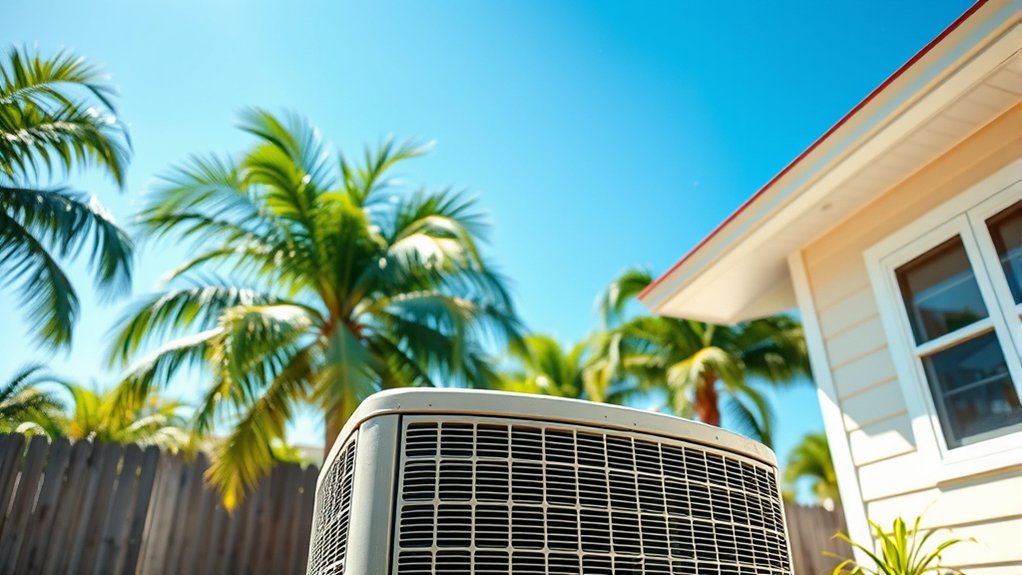
You can expect your air conditioner in Florida to last between 10 and 15 years, but coastal salt air and high humidity often reduce that to 7 to 12 years. Salt accelerates corrosion, especially on condenser coils. Plus, constant use and humidity cause wear and mold risks.
Regular maintenance and proper installation can extend your unit’s lifespan and efficiency. Taking care of your AC means it runs better and lasts longer. Understanding these factors helps you make informed decisions about repairs, replacements, and energy costs.
Typical Lifespan of Air Conditioners in Florida?
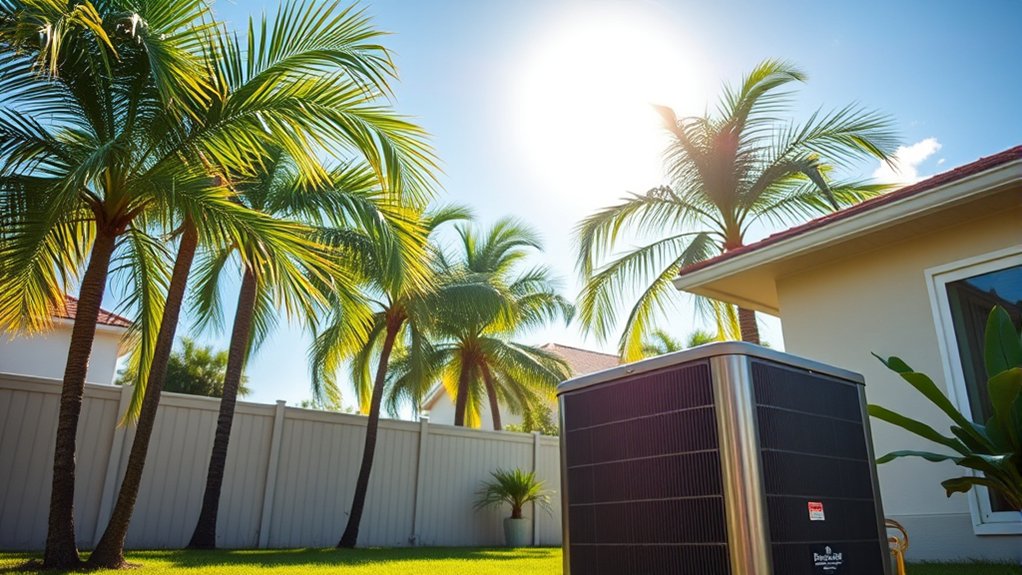
While the average air conditioner in Florida lasts between 10 and 15 years, units installed near the coast may only endure 7 to 12 years due to corrosion from salty air.
Coastal air conditioners in Florida typically last 7 to 12 years due to salty air corrosion.
You should understand that air conditioners last longer when factors like maintenance history and installation quality are optimized. Coastal units face accelerated wear because Florida’s climate combines salty air and high humidity, which promotes rust and mold growth.
To extend the life of your AC, regular maintenance is essential. Annual tune-ups and timely air filter changes help mitigate environmental damage.
Furthermore, selecting reputable brands designed for humid, corrosive conditions can improve the average lifespan.
Why Florida’s Climate Shortens Your AC Unit’s Life
Because Florida’s climate combines high temperatures, intense humidity, and salty coastal air, your AC unit faces relentless stress that shortens its operational life. High humidity levels and constant use increase wear and tear, forcing your system to work harder.
In coastal areas, this effect gets even worse, reducing the AC unit’s lifespan to as little as 7 to 12 years. Regular maintenance is key to slowing this decline and extending how long your system lasts.
If your unit struggles to control humidity, that’s a clear sign it might be time for a replacement.
| Factor | Impact on AC Lifespan |
|---|---|
| High Temperatures | 10–15 years typical |
| Coastal Areas | 7–12 years lifespan |
| Humidity Levels | Increased wear and tear |
| Regular Maintenance | Extends operational life |
Why Coastal Salt Air Wears Out Your AC Faster
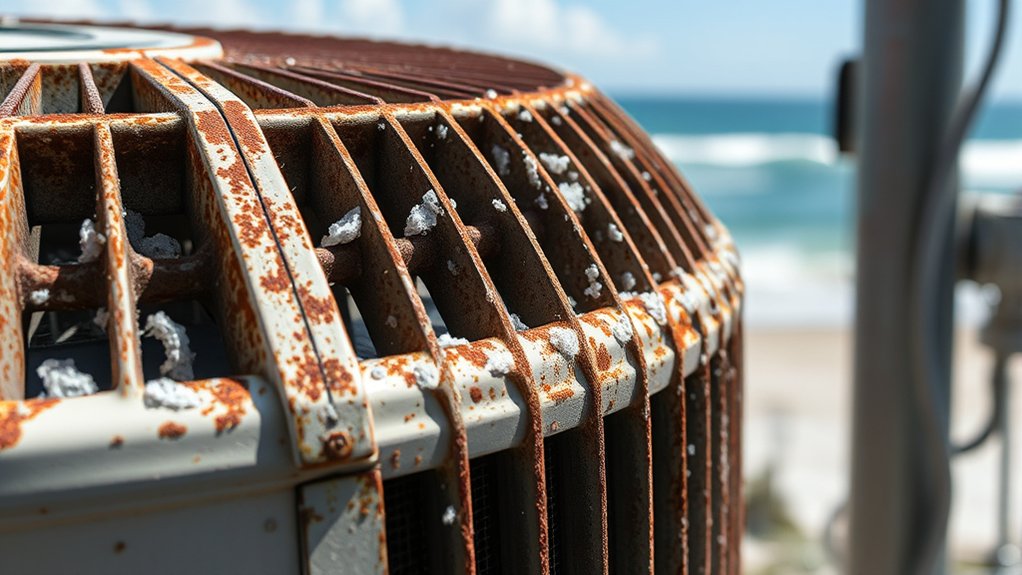
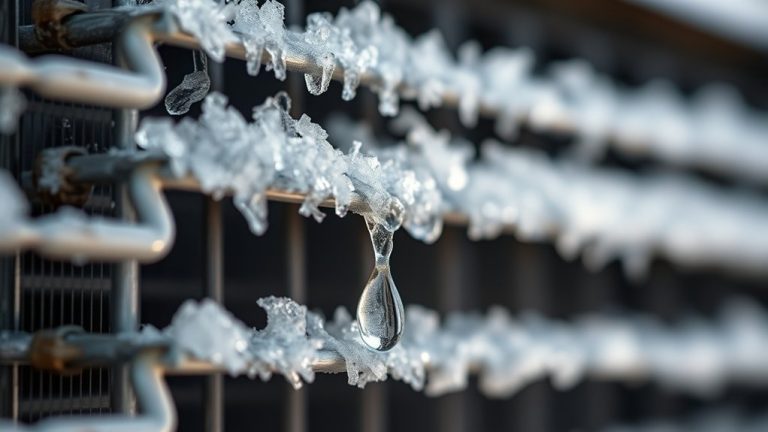
You’ll notice that salt air speeds up corrosion on your AC’s metal parts, especially the condenser and coils.
Living near the coast means your unit is constantly exposed to salty moisture, which isn’t great for those components.
On top of that, the coastal humidity makes things worse by encouraging rust and mold to develop.
This all adds up to your AC working less efficiently and not lasting as long as it should.
The good news is, applying protective coatings and keeping up with regular maintenance can really help protect your unit from these tough conditions.
Salt Air Corrosion
Many coastal Florida homeowners find their air conditioners lasting only 7 to 12 years due to salt air corrosion. Salt air accelerates metal corrosion in AC units, especially on condenser coils. This causes rust, refrigerant leaks, and efficiency loss.
To protect your AC unit in coastal regions, focus on targeted maintenance and preventive measures. Here are some key points to keep in mind:
Salt air promotes rapid corrosion of metal components. Corroded condenser coils reduce cooling efficiency and lifespan. Using anti-corrosion coatings on outdoor units can help mitigate damage.
Regular maintenance checks are important to detect early signs of wear. Neglecting salt-related corrosion greatly shortens your AC’s lifespan.
Coastal Humidity Impact
Salt air corrosion isn’t the only challenge coastal Florida homeowners face with their air conditioners. The high humidity levels in these regions also play a significant role in accelerating wear and tear.
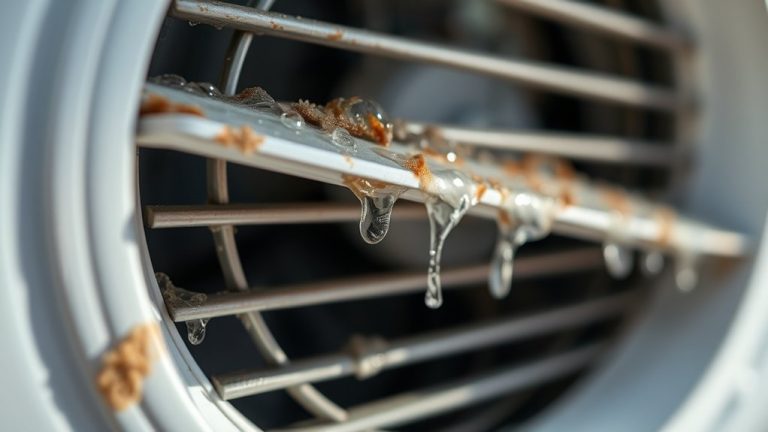
Coastal humidity promotes rust and mold growth on AC components, which further compromises efficiency and reduces your unit’s lifespan. Salt particles combine with moisture to form a corrosive layer on metal surfaces, weakening critical parts like the condenser and compressor.
To preserve your system’s performance, regular maintenance and diligent monitoring are essential. You need to inspect for signs of corrosion and clean affected areas frequently to prevent accelerated degradation.
Without proactive care, the combined impact of salt air and humidity can shorten your air conditioner’s useful life to 7 to 12 years, compared to 10 to 15 years inland.
Protective Coating Benefits
Because coastal salt air aggressively corrodes outdoor AC components, protecting your unit with specialized coatings becomes essential. The salty environment speeds up rust and deterioration, especially on condenser coils and exposed metals. Applying protective coatings creates a barrier that helps extend your system’s life by resisting corrosion.
To get the most durability out of your HVAC system near the coast, focus on a few key things. Use corrosion-resistant materials when selecting your unit. Make sure to apply protective coatings to the parts that are most vulnerable.
Also, regular maintenance and cleaning are important to remove salt buildup. Schedule anti-corrosion treatments every now and then.
And don’t forget to inspect components often for early signs of rust or wear. It’s better to catch those issues early!
Key Signs Your AC Unit Is Starting to Fail
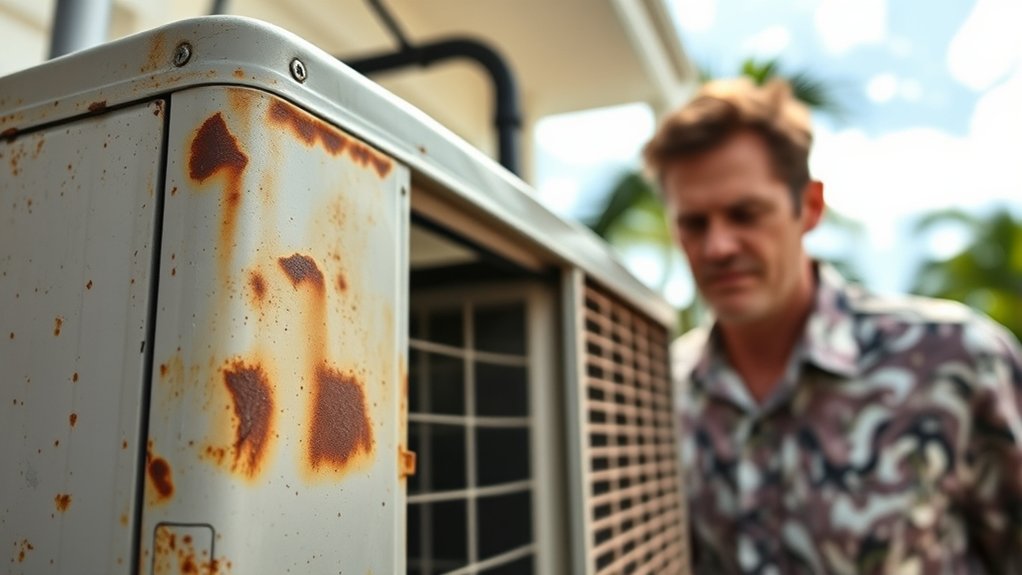
You’ll probably notice warning smells or unusual noises when your AC components start to degrade.
These sounds and smells are signs that something mechanical might be going wrong. Plus, if your AC isn’t cooling as well as it used to, that’s another clear sign it’s not working at full capacity.
Keeping an eye on these changes can help you catch problems early—before they lead to a complete breakdown.
Warning Smells And Noises
How can you tell when your air conditioner is on the verge of failure? Pay close attention to warning smells and strange noises, which often signal underlying issues.
Key signs include:
Burning or musty odors indicating electrical problems or mold growth inside the unit.
Chemical smells like antifreeze are a common indicator of a refrigerant leak.
Grinding, rattling, or hissing sounds usually point to mechanical failures or loose parts.
Elevated indoor humidity levels suggest the system’s dehumidification function is compromised.
Foul odors might reveal burnt wires or significant mold presence, which means you should get a professional to check it out as soon as possible.
Ignoring these symptoms can speed up damage.
Catching warning signs early helps prevent costly breakdowns and can extend the lifespan of your AC unit, especially in Florida’s demanding climate.
Reduced Cooling Efficiency
When your air conditioner starts blowing warm air instead of cool, it’s a clear sign the compressor may be failing.
Reduced cooling efficiency often points to an aging system struggling to maintain peak performance. You might notice inconsistent temperatures throughout your home or rising indoor humidity levels.
That means the AC can’t dehumidify effectively, which is a big deal in Florida’s climate. Frequent maintenance or repairs on major components like the compressor or condenser suggest the unit is nearing the end of its life.
Also, if your energy bills spike without explanation, it could be due to decreased efficiency. Each drop in SEER rating can increase costs by up to 9%.
Watching out for these signs helps you decide when it’s time to repair or replace your air conditioner to keep things comfortable and avoid unexpected expenses.
When Should You Repair vs. Replace Your AC Unit?
Although repairing your air conditioner might seem like the obvious choice, you should consider replacement if repair costs exceed half the price of a new unit. Evaluating your AC unit’s efficiency and maintenance history is essential in deciding whether to repair or replace.
Consider replacing your AC unit if it’s over 10 years old and shows reduced efficiency. Also, think about it if repair expenses are more than 50% of a new unit’s cost.
Energy bills that rise despite regular maintenance are another sign to consider. Frequent repairs on major components become necessary? That’s a red flag.
Plus, if your unit uses obsolete R-22 refrigerant, servicing can get complicated and expensive. Balancing repair costs against your unit’s remaining life expectancy helps you make a practical, cost-effective decision.
This way, you optimize your comfort and save energy too.
How to Choose a Long-Lasting AC Unit in Florida
Since Florida’s climate demands consistent cooling and humidity control, selecting an air conditioner with a high SEER rating of 16 or above guarantees greater energy efficiency and durability.
When choosing your new air conditioner, prioritize reputable HVAC brands known for reliability and strong warranty support.
Choose trusted HVAC brands offering reliability and robust warranty coverage for lasting peace of mind.
Make sure the HVAC system is properly sized by professionals to avoid premature wear and inefficient performance. It really makes a difference in how well your unit runs and how long it lasts.
Look for models with built-in humidity control features and anti-corrosion coatings to combat Florida’s high humidity and salty coastal air. These technical specs really help boost the unit’s lifespan and operational efficiency.
While proper maintenance is essential, starting with a durable, high-SEER unit from trusted manufacturers ensures your system can handle Florida’s environmental stresses and keeps you comfortable for many years.
How Regular Maintenance Prevents AC Failures and Extends Lifespan
Choosing a high-quality, properly sized air conditioner is only part of the equation for long-term performance in Florida’s demanding climate. Regular maintenance is crucial to prevent failures and extend lifespan.
To keep your AC unit reliable, you should schedule annual tune-ups with a certified HVAC technician to detect and fix minor issues early.
Also, change air filters monthly or every 6-9 months to guarantee ideal airflow and system efficiency.
Perform routine cleaning of the outdoor unit to prevent overheating and maintain airflow.
It’s important to address humidity-related risks like rust and mold through consistent upkeep.
Make sure to monitor system components regularly to avoid costly breakdowns and maximize operational life.
Doing these things helps your AC unit withstand Florida’s challenges and operate effectively for up to 15 years or longer.
How Proper Installation Boosts AC Performance and Lifespan
You’ll want to make sure your AC is the right size to avoid short cycling and reduce wear on its parts.
It really helps to hire a professional installer because they can steer clear of common mistakes, like refrigerant leaks, that can hurt performance.
Plus, proper installation means better airflow and smart system placement, which is super important for keeping things running smoothly in Florida’s climate.
Importance Of Correct Sizing
Although it might seem straightforward, installing an air conditioner without proper sizing can markedly reduce its efficiency and lifespan. A correctly sized system guarantees ideal airflow and prevents issues like short cycling, which damages components.
Here’s why correct sizing matters:
- Maintains peak performance by matching unit capacity to your home’s needs.
- Reduces energy costs by 10-30% as the system avoids overwork.
- Enhances lifespan by 10-15% through minimized mechanical strain.
- Prevents excess indoor humidity caused by oversized units cooling too fast.
- Supports longer life span with professional installation considering square footage, insulation, and climate.
Choosing the right size isn’t guesswork. It’s a technical necessity that directly impacts your AC’s performance, energy efficiency, and longevity.
Impact Of Professional Installation
When a professional installs your air conditioner, they guarantee ideal airflow and cooling efficiency. This directly extends the system’s lifespan, often pushing it toward the upper end of Florida’s typical 10-15 year range.
Proper professional installation ensures your HVAC system is correctly sized. This prevents short cycling, which can accelerate wear on components. Technicians also secure the AC unit level and sealed, reducing risks of refrigerant leaks and mechanical failures.
They implement best practices like sealing ductwork with quality materials. This enhances energy efficiency and protects the system from Florida’s humid, corrosive climate. This precision in installation minimizes maintenance needs and maximizes performance.
Avoiding Common Installation Errors
Since improper installation can cause issues like weak airflow, refrigerant leaks, and short cycling, avoiding common errors is critical to boosting your air conditioner’s performance and lifespan.
Proper AC installation by professional HVAC technicians guarantees your system operates efficiently and lasts longer.
To avoid common installation errors, focus on selecting a correctly sized unit to prevent short cycling and extend unit lifespan.
Confirm refrigerant levels are accurately set to avoid leaks and compressor strain.
Make sure all components are secured properly to reduce mechanical failures.
Also, install proper drainage to prevent water pooling and mold growth.
Maintain ideal airflow to support indoor air quality solutions and consistent cooling.
Taking these steps really makes a difference in how well your AC works and how long it lasts.
Why Your Energy Bills Rise as Your AC Gets Older
As your air conditioner ages, it gradually loses efficiency, causing your energy bills to climb. Older systems often have lower SEER ratings. For every SEER decrement, your costs can rise by up to 9%.
Wear and tear reduce airflow and humidity control, so your AC unit has to work harder and consume more power to maintain the same cooling output. Plus, increased breakdowns mean more maintenance expenses, which add to your overall costs.
| Factor | Impact on Efficiency | Effect on Energy Bills |
|---|---|---|
| Lower SEER Rating | Reduced efficiency | Up to 9% cost increase |
| Wear & Tear | Poor airflow | Higher power draw |
| Increased Repairs | Frequent downtime | Higher maintenance |
You’ll notice a clear link between aging AC units and rising energy bills. It’s just how these systems work over time.
How to Find Reliable AC Service in Central Florida
Rising energy bills and frequent repairs are signs it’s time to find dependable AC service in Central Florida. Look for a licensed HVAC company that knows how to handle our local climate conditions.
Make sure their technicians are certified and have experience dealing with Florida’s humidity and salt air challenges. It’s also smart to ask about annual maintenance plans—they help keep your AC running smoothly and can extend its lifespan.
Ensure technicians are certified and experienced with Florida’s humidity and salt air; annual maintenance plans boost AC longevity.
Check out customer reviews and see if the company is accredited by the BBB. This gives you confidence they provide trustworthy service.
Don’t forget to ask about warranty options that match up with reputable manufacturer brands.
Finally, choose a company that’s clear about repair costs and service timelines. You want to avoid any surprises and know exactly what to expect.
Frequently Asked Questions
What Type of Refrigerant Is Best for Florida Air Conditioners?
You’ll find R-410A is the best refrigerant type for Florida air conditioners, balancing energy efficiency and environmental impact well. It offers high cooling capacity and works with modern system compatibility standards.
While newer refrigerants like R-32 improve efficiency further, R-410A remains widely used. Keep refrigerant levels ideal through regular maintenance to avoid performance drops.
Though initial cost considerations matter, investing in the right refrigerant saves money long-term by enhancing system lifespan and efficiency.
It’s definitely worth keeping your system in good shape!
How Does Humidity Affect My Ac’s Efficiency?
You know what they say, “A stitch in time saves nine.” High humidity levels force your AC to work harder, which reduces energy efficiency and makes controlling moisture tougher.
Poor airflow from clogged filters only makes this worse. So, keeping up with system maintenance is really important.
Without seasonal adjustments, your unit struggles to maintain indoor comfort. It ends up running longer and driving up your utility costs.
Regular tune-ups help your AC handle Florida’s humidity. This keeps it efficient and comfortable all year round.
Can Smart Thermostats Help Extend My Ac’s Lifespan?
Yes, smart thermostats help extend your AC’s lifespan by optimizing temperature control and improving energy efficiency. They reduce unnecessary runtime through scheduling and remote access, which helps prevent wear and tear.
Maintenance reminders keep you on top of essential check-ups, enhancing durability.
Plus, smart thermostats save you money by cutting down energy use.
Just make sure you confirm system compatibility before installing. That way, you can maximize the performance and longevity of your air conditioning unit.
Are There Specific Brands Known for Durability in Florida?
While some brands boast sleek energy efficiency, others shine in rugged durability. Your best choice hinges on brand comparisons that weigh customer reviews, warranty options, and local preferences.
For Florida, Trane and Carrier excel in corrosion resistance. On the other hand, Lennox and Rheem focus more on energy efficiency.
You’ll benefit most by pairing these brands with proper installation practices and maintenance tips.
That way, your AC can withstand Florida’s harsh climate effectively.
How Often Should I Replace AC Filters in Florida’s Climate?
You should replace 1-inch AC filters monthly in Florida, following a seasonal replacement guide for peak performance.
Larger media filters need changing every 6 to 9 months.
Filter maintenance tips include comparing filter types for efficiency and allergy considerations.
Use DIY cleaning methods cautiously, and don’t forget to schedule professional servicing. This helps prevent strain on your system.
Proper filter upkeep directly impacts efficiency and prolongs your system’s life in Florida’s humid climate.
Taking care of your filters is definitely worth the effort!
Conclusion
You might think your AC will last forever in Florida’s heat, but the truth is more complex. Coastal salt air, intense humidity, and constant use all chip away at its lifespan. Ignoring early warning signs or skipping maintenance can cost you more than you expect.
So, will you wait for a sudden breakdown or take control now? The choice you make today could define your comfort and your bills for years to come.