7 Key Costs That Affect How Much a New Central Air Conditioner Does Cost
When replacing your central air conditioner, seven key costs affect your total investment. Your home size determines the required capacity and equipment price. System type and efficiency impact both upfront and operating expenses.
Ductwork, electrical, and drainage upgrades add to installation costs. Complexity and site accessibility influence labor fees. Available tax credits and rebates can reduce your out-of-pocket amount.
Seasonal demand plus local market conditions dictate pricing fluctuations. Exploring these factors helps you make a well-informed decision. It’s worth taking the time to understand what goes into the total cost before you buy.
How Your Home Size Affects AC Replacement Costs
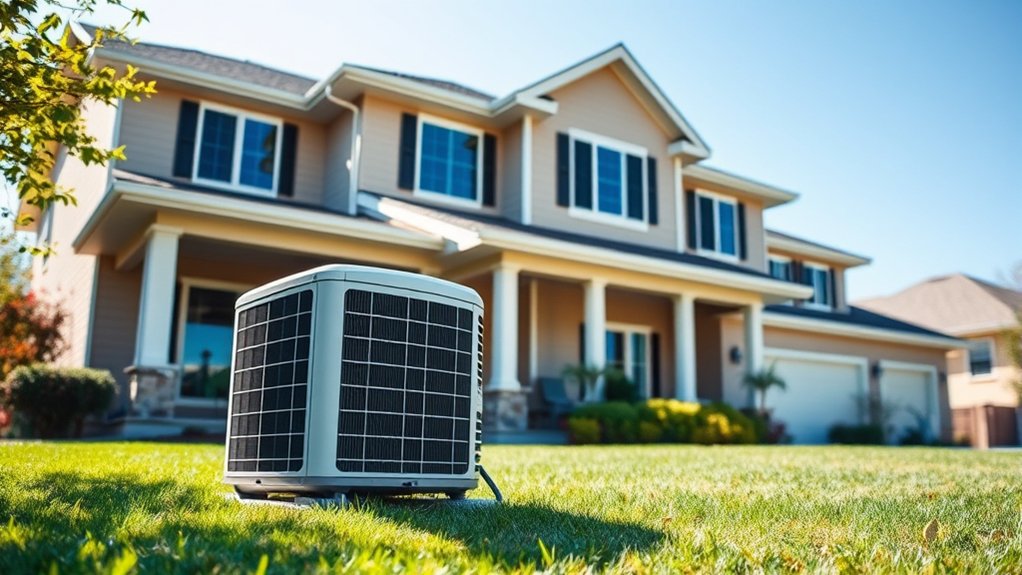
Because the size of your home determines the cooling capacity required, it directly affects the cost of replacing your central air conditioner. Larger homes need units with higher tonnage and BTUs, which increases both equipment and installation costs.
To guarantee optimal performance and comfort, you must conduct a Manual J Load Calculation. This helps accurately evaluate your home size and insulation.
Installing an undersized AC unit will struggle to maintain comfort and drive up energy bills. On the other hand, an oversized unit wastes energy and can raise humidity levels.
Bigger homes often require extended ductwork or HVAC system modifications, which further increase installation costs.
Proper sizing based on precise calculations guarantees efficient operation, balanced cooling capacity, and manageable energy expenses. So, it’s essential to analyze your home size carefully before replacement.
Choosing the Right Replacement AC System for Your Needs and Budget
When you’re choosing a replacement AC system, it’s important to look at the different types available—like central units, ductless mini-splits, or heat pumps—and think about what fits your home’s size and cooling needs.
It’s not just about the initial cost; you also want to consider long-term energy efficiency. That’s where SEER2 ratings come in handy—they help you figure out how much you might save on energy bills over time.
Plus, making sure the system capacity matches your home’s requirements means you’ll stay cool without wasting money on more power than you actually need.
System Types Overview
Although central air conditioning systems remain the most common replacement choice, ranging from $6,000 to $14,000, selecting the right system depends on your specific needs and budget. Various system types influence installation costs and energy efficiency.
Traditional central air systems offer reliable cooling with moderate SEER ratings. Ductless mini-splits and heat pumps provide enhanced energy efficiency and personalized zones but come with higher upfront costs.
Variable-speed systems, priced between $15,000 and $25,000, optimize energy use by adjusting compressor speed. Proper sizing is critical; oversized units waste energy, and undersized units reduce comfort and efficiency.
Considering SEER ratings, with a Midwest minimum of 13.4, helps lower your overall cost through reduced energy bills. Evaluating these factors guarantees you choose a system that balances installation costs and long-term performance.
Balancing Cost Efficiency
Selecting the right replacement AC system hinges on balancing upfront costs with long-term energy savings. You should prioritize a properly sized unit with an excellent SEER rating. Higher ratings (13.4 to 20+) improve energy efficiency, reducing operating expenses despite increased upfront costs.
Incorporating a variable speed compressor enhances comfort levels and further energy savings but raises installation costs.
Moreover, assess your existing ductwork installation since modifications can add $3,000 to $10,000, impacting total expenses. Carefully evaluate your HVAC system’s capacity and compatibility to avoid overspending.
Exploring utility rebates and financing can offset upfront costs, making higher-efficiency systems more affordable.
Matching Home Requirements
Three critical factors determine the best replacement AC system for your home: proper sizing, system type, and compatibility with existing heating equipment.
To meet matching home requirements, choose a properly sized unit based on BTUs and Manual J Load Calculations. This prevents inefficiencies and inflated energy bills.
Consider the SEER rating, aiming for 13.4 or higher to maximize energy efficiency and reduce operating costs.
Evaluate system types like central air conditioning, ductless mini-splits, or heat pumps. Each affects installation costs differently, especially if your existing ductwork requires modification.
Compatibility with your current heating system is vital.
Replacing your air conditioner alongside heating can optimize HVAC installation, enhance performance, and potentially lower the overall cost of a new system.
Careful assessment guarantees your investment matches both your needs and budget precisely.
Why AC Unit Capacity and Efficiency Impact Replacement Costs and Comfort
When you choose the right capacity for your AC unit, measured in BTUs, you directly affect both replacement costs and overall comfort. Using a Manual J Load Calculation guarantees the unit matches your home’s cooling needs. This prevents oversized or undersized systems that increase operational expenses and reduce comfort levels.
Efficiency ratings like SEER directly impact upfront costs and long-term savings. Higher SEER ratings usually mean higher replacement costs but better energy efficiency. So, it’s worth thinking about what balance works best for your budget and comfort.
| AC Unit Capacity (BTUs) | SEER Rating | Impact |
|---|---|---|
| 12,000 | 13.4 (min) | Baseline efficiency, moderate cost |
| 18,000 | 16 | Higher efficiency, higher cost |
| 24,000 | 20 | High-efficiency system, premium price |
| 30,000 | 13.4 | Larger units, increased cost |
| 36,000 | 18 | Larger high-efficiency, ideal comfort |
Balancing capacity and efficiency enhances both comfort and cost. It’s all about finding the right fit for your home and wallet.
How Ductwork, Electrical, and Drainage Affect Replacement Costs
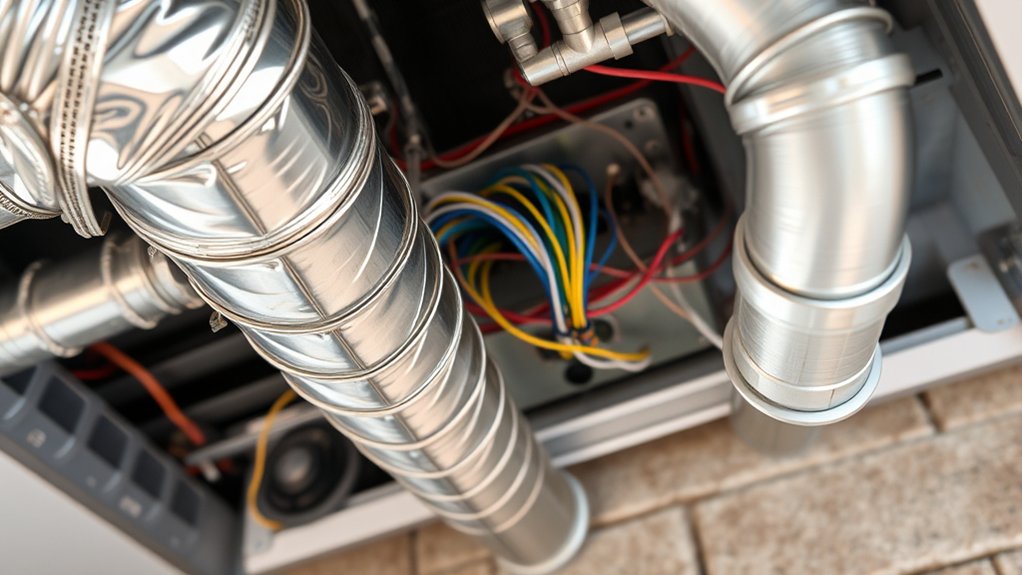
Although the upfront cost of a central air conditioner unit is significant, the condition of your ductwork, electrical system, and drainage setup can add substantially to the total replacement expense.
The condition of ductwork, electrical systems, and drainage can significantly increase central air conditioner replacement costs.
Poor ductwork may require extensive modifications or complete replacement, which can increase HVAC installation costs by $3,000 to $10,000.
Electrical updates, including breakers and thermostats, can add $100 to $600 depending on your home’s setup.
Proper drainage for moisture management often requires a condensate pump installation, averaging $370.
Moreover, local building codes may require specific electrical and drainage standards, which can further affect costs.
So, it’s important to keep these factors in mind.
Key factors impacting replacement costs include:
- Ductwork adjustments for ideal airflow and efficiency
- Electrical system upgrades to meet HVAC requirements
- Drainage solutions compliant with moisture management standards
These elements are critical for a properly functioning central air conditioner.
How Installation Complexity Influences Your Total AC Replacement Cost
Because installation complexity directly impacts labor and material costs, understanding its role is crucial when budgeting for a central AC replacement.
Challenging access areas can increase labor costs considerably. At the same time, necessary ductwork installation may add $3,000 to $10,000 depending on existing duct conditions.
Refrigerant requirements, especially with the phase-out of older types like R-410A, also affect complexity and pricing. Skilled installers are essential to prevent air leaks that reduce performance efficiency and increase energy costs.
Furthermore, compliance checks guarantee the installation meets local building codes, influencing overall installation pricing.
How Tax Credits and Rebates Reduce Your AC Replacement Expenses
You can save money on your AC replacement by taking advantage of tax incentives and utility rebate programs that reward energy-efficient systems.
These offers can really help bring down the overall cost.
Keep in mind, whether you qualify often depends on where you live, the type of equipment you pick, and making sure you submit the right paperwork.
It’s a good idea to talk with your HVAC dealer—they can guide you through the process and help you find and apply for the best credits and rebates available to you.
Available Tax Incentives
Three main types of financial incentives can help lower the cost of replacing your central air conditioner: federal tax credits, utility company rebates, and state-specific programs.
These tax incentives greatly reduce your new AC unit cost by encouraging investment in energy-efficient HVAC systems.
For example, the Inflation Reduction Act offers federal tax credits for qualifying upgrades, directly cutting your tax bill. Furthermore, rebates depend on your system’s SEER rating, rewarding higher efficiency with greater savings.
As a homeowner, you’ll want to explore federal tax credits under the Inflation Reduction Act for energy-efficient central AC units.
Also, look into utility rebates tied to SEER ratings and local utility programs.
Don’t forget to check out state-specific incentives promoting HVAC system upgrades.
It’s a good idea to consult HVAC professionals to maximize these overlapping savings and optimize your replacement expenses.
Utility Rebate Programs
Alongside federal tax credits, many utility companies offer rebate programs designed to lower the upfront cost of installing a new central air conditioner.
These utility rebate programs incentivize energy-efficient purchases by providing financial incentives linked to specific SEER ratings. Higher-rated systems typically qualify for larger rebates.
Furthermore, local and state programs may offer supplementary rebates, further reducing your initial investment.
As a homeowner, you can greatly decrease out-of-pocket expenses by combining these rebates with federal tax credits.
To maximize savings, it’s essential to research available rebates and tax credits in your area before making a purchase.
Understanding the interplay between SEER ratings, utility rebate programs, and federal incentives helps you optimize the cost-effectiveness of replacing your central air conditioner.
It’s worth taking the time to explore all your options so you can get the best deal possible.
Eligibility and Application
When installing a new central air conditioner, qualifying for federal tax credits and local utility rebates can really help reduce your upfront costs. Your eligibility usually depends on meeting the Department of Energy’s efficiency standards, which is often shown by a high SEER rating.
These incentives can directly lower your replacement and installation costs, making energy-efficient models more affordable.
To maximize your savings, here are a few things to keep in mind:
- First, confirm that the SEER rating of your AC unit meets or exceeds the required thresholds.
- Work with HVAC professionals who are familiar with current tax credits and rebate programs.
- And don’t forget to submit all the necessary documentation and applications promptly so you can claim the benefits.
How Seasonal Demand and Local Markets Influence AC Replacement Prices
Because demand for air conditioner replacements surges during the hottest months, you’ll often face higher prices due to increased competition among contractors. Seasonal demand directly impacts AC replacement prices. HVAC contractors tend to charge premiums during peak cooling needs.
Local market dynamics, such as labor availability and material costs, also influence installation costs. Geographic variations mean that hotter regions often require higher capacity units, which raises expenses. Plus, compliance requirements vary by municipality, affecting overall costs.
If you schedule replacements in off-peak seasons, you can save money. Contractors usually reduce rates during these times to attract more business.
| Factor | Influence on AC Replacement Prices |
|---|---|
| Seasonal Demand | Higher prices during peak cooling months |
| Local Market Dynamics | Variable labor/material costs |
| Geographic Variations | Demand for higher capacity units |
Frequently Asked Questions
How Often Should Central Air Conditioners Be Professionally Serviced?
You should schedule professional service for your central air conditioner at least once a year to optimize maintenance frequency.
A qualified technician will follow an inspection checklist, addressing common issues and performing performance tuning. Seasonal preparation guarantees peak efficiency during high demand.
This service improves energy efficiency, supports warranty coverage, and includes essential cleaning tips.
Regular maintenance benefits your system’s longevity and reliability. It also prevents costly repairs while maximizing cooling performance.
Keeping up with yearly checkups really helps your AC run smoothly when you need it most.
What Is the Average Lifespan of a Central Air Conditioner?
You can expect your central air conditioner to last around 15 to 20 years, depending on factors like energy efficiency, maintenance tips you follow, and installation costs.
Proper sizing guarantees ideal cooling capacity and minimizes repair frequency.
Seasonal performance and noise levels vary by brand, so consider brand comparisons and warranty options carefully.
Climate impact also plays a role. Humid or extreme temperatures can shorten lifespan, so schedule regular servicing to maintain efficiency and durability.
Can Smart Thermostats Reduce Central AC Operating Costs?
Think of a smart thermostat as the conductor of an orchestra, fine-tuning every instrument to create perfect harmony.
By using smart technology and temperature scheduling, you gain precise temperature control and system integration, boosting energy efficiency.
This means you’ll enjoy cost savings and user convenience through remote access and eco-friendly options.
Your investment return comes as lower bills and extended AC lifespan, making smart thermostats a smart, technical upgrade for your home.
How Do Different Refrigerants Affect the Environmental Impact of AC Units?
Different refrigerant types directly impact your AC unit’s environmental footprint through their global warming potential and ozone depletion risks.
Environmental regulations push you toward alternative refrigerants with lower GWP to meet strict emission standards. Choosing refrigerants with better efficiency ratings reduces energy consumption and refrigerant leaks, lowering emissions.
It’s a good idea to look at lifecycle assessments to evaluate the overall environmental impact.
This way, you can ensure your AC complies with evolving standards and minimizes harm to the atmosphere while still keeping performance up to par.
Are There Financing Options Available for New Central Air Conditioners?
Yes, you’ll find various financing plans for new central air conditioners that consider your budget and credit requirements.
These plans often offer flexible payment options, including low interest rates or leasing agreements, to cover installation costs and equipment. Loan terms vary, so it’s smart to compare offers.
Plus, energy rebates can reduce upfront expenses, enhancing long-term savings.
Discuss with HVAC dealers to tailor financing that fits your financial goals precisely. It’s all about finding the right plan that works best for you.
Conclusion
Think of replacing your AC like tuning a high-performance engine. Just as a car’s size, fuel type, and driving conditions affect tuning costs, your home size, system capacity, and installation complexity shape AC expenses.
For example, upgrading to a high-efficiency unit can cut energy use by up to 20%. This helps balance upfront costs with long-term savings. By understanding these seven key factors, you can make smarter choices that optimize comfort and budget in your cooling upgrade.