How to Fix Lights Flickering When Air Conditioner Turns On
You can fix lights flickering when your air conditioner turns on by addressing the voltage drop caused by the compressor’s startup surge. Start by ensuring your AC has a dedicated circuit and inspect your wiring for proper gauge and tight connections.
Consider installing a hard start kit or voltage stabilizer to reduce the electrical load and maintain steady power. If flickering persists, upgrading your electrical panel might be necessary.
Explore how these solutions enhance safety and performance further. Taking these steps can make a big difference in keeping your lights steady and your AC running smoothly.
Why Lights Flicker When the Air Conditioner Starts
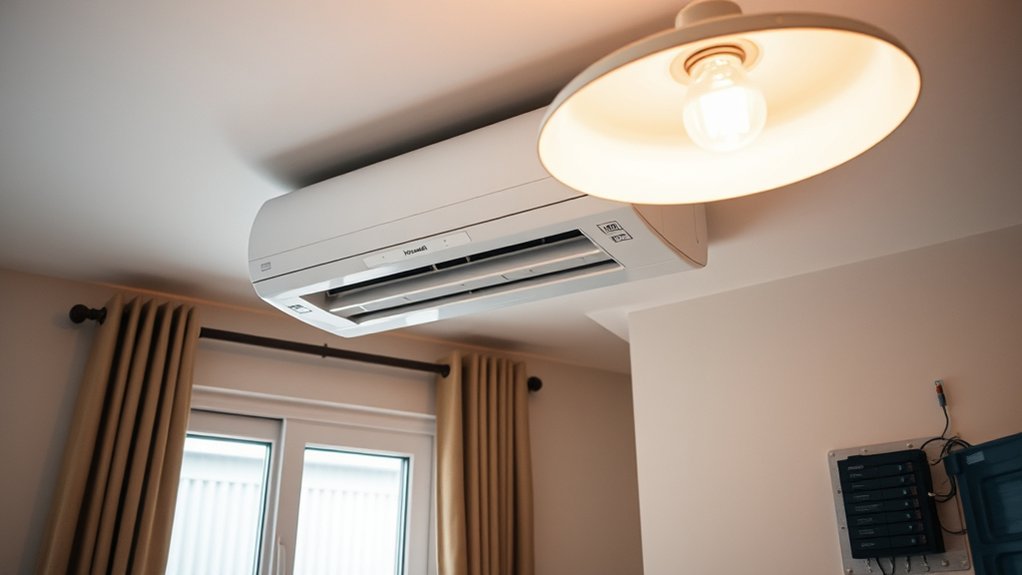
When your air conditioner starts, it draws a large inrush current that causes a brief voltage drop in your home’s electrical system. This leads to flickering lights. You’ll notice this especially in older homes with outdated electrical panels or circuits shared by multiple devices.
The sudden demand affects the electrical stability, causing the lights to flicker for just a split second. A key component influencing this is the AC capacitor. If it’s failing, the unit draws excessive startup power, making the flicker even worse.
While brief flickering is pretty normal, persistent or prolonged voltage fluctuations could mean there are electrical issues that need checking out.
To reduce flickering, make sure your AC has a dedicated circuit. This isolates its high startup current, stabilizing your home’s electrical system and improving safety.
Why Your Lights Dim When the AC Starts
When your AC compressor kicks on, it pulls a big surge of current right away. This sudden demand causes a quick drop in voltage, which is why your lights might dim for a moment.
You’ll probably notice it more if your wiring or circuit capacity isn’t quite up to date or is a bit too small for the load.
If the dimming keeps happening regularly, it could be a sign of wiring problems or a failing capacitor. In that case, it’s a good idea to have a professional take a look to make sure everything is safe and running smoothly.
Causes Of Voltage Drop
Although your air conditioner provides comfort, it demands a large inrush current at startup that temporarily lowers voltage in your electrical system. This can cause your lights to flicker or dim.
This voltage drop happens because of several factors. For example, an overloaded circuit shared with lighting and other appliances can be a problem. Also, using wires that are too thin increases resistance and causes voltage loss. Outdated or degraded wiring mightn’t handle the startup current well either.
Plus, if there’s no dedicated circuit for the air conditioner’s high electrical demand, that can cause issues too.
When these things happen, the sudden surge in current causes lights on the same circuit to flicker as voltage dips. By identifying and fixing these problems, especially by avoiding overloaded circuits and upgrading wiring, you can keep voltage stable.
That way, your lights stay steady and safe when your AC kicks on.
Impact Of Compressor Startup
Because the compressor demands a large surge of electricity at startup, you may notice your lights dimming or flickering briefly. This surge, called inrush current, strains your electrical system, especially if the AC unit shares circuits with lighting.
Older wiring or failing capacitors can make flickering lights worse by increasing the startup load. Installing a dedicated circuit for your air conditioning system isolates this load, which reduces voltage drops and improves stability.
| Factor | Effect on Flickering Lights |
|---|---|
| Inrush Current | Causes momentary voltage drop |
| Shared Circuit | Increases flickering likelihood |
| Dedicated Circuit | Minimizes flickering by isolating load |
It’s a good idea to prioritize safety by consulting a professional for proper circuit installation. That way, you can prevent electrical hazards and keep everything running smoothly.
Wiring And Circuit Effects
If your lights dim when the air conditioner starts, the cause often lies in your wiring and circuit design. The significant inrush current from the AC compressor causes a temporary voltage drop, affecting your home’s electrical system. Poor wiring or shared circuits between the AC unit and lighting make this issue worse, leading to noticeable lights dimming.
Here are some key wiring and circuit factors to consider: shared circuit loads increase voltage drop during AC startup. Undersized wiring causes higher resistance and voltage loss. Faulty capacitors in the AC system can draw excess startup current. Also, not having a dedicated circuit for the air conditioner leads to load interference.
To fix flickering, you should inspect and upgrade wiring and circuits to meet electrical load demands safely. It’s often a straightforward fix once you know what to look for.
Taking care of these issues can keep your lights steady when the AC kicks on.
How to Identify Normal vs. Problematic AC Flickering Lights
How can you tell whether your AC’s flickering lights are harmless or signal a deeper issue? Brief flickering when the AC starts is normal. It’s caused by the inrush current creating a minor voltage drop. A dimming of 3% to 5% typically isn’t a concern.
Brief flickering when your AC starts is normal due to a minor voltage drop from inrush current.
However, if you notice persistent or intense flicker, especially with significant dimming around 30% to 50%, it may indicate serious electrical problems like a failing capacitor or overloaded circuits.
Pay attention if flickering coincides with crackling sounds or tripped breakers. These signs suggest damaged wiring or an overloaded electrical panel.
Monitoring flicker frequency and intensity helps you determine if the issue is routine or requires professional inspection. It’s better to catch problems early to prevent electrical hazards.
How a Failing AC Capacitor Causes Flickering
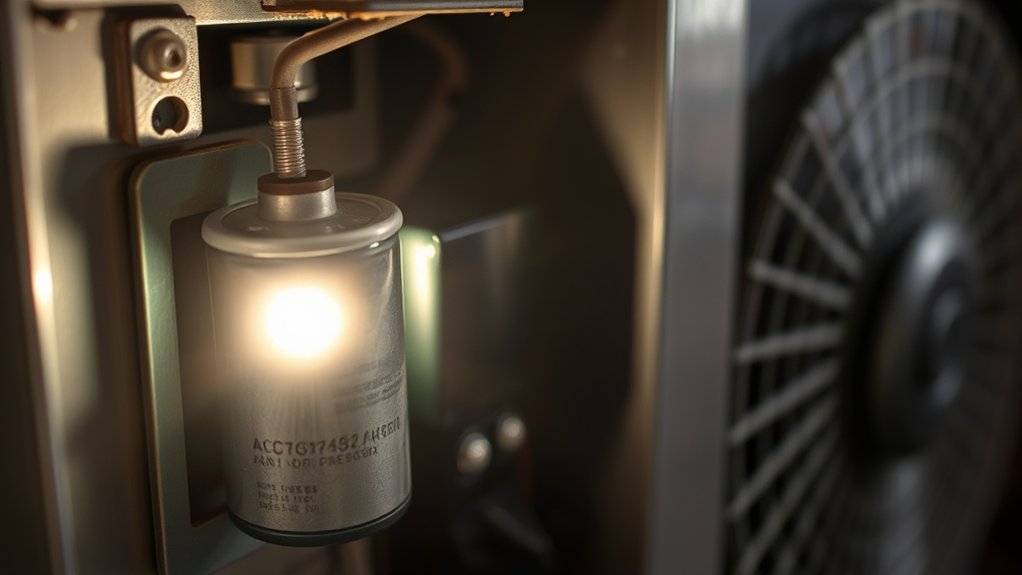
You rely on the AC capacitor to stabilize voltage by smoothing out spikes during startup. When it fails, you might start to notice flickering lights. This happens because of an increased inrush current, which can cause brightness to drop by as much as 50%.
Also, pay attention to any unusual humming or buzzing sounds coming from your AC unit. These noises are key signs that the capacitor needs immediate attention.
Capacitor Function Explained
Since the AC capacitor stores and releases electrical energy during startup, it plays an essential role in guaranteeing the compressor runs smoothly and limits the initial power surge.
Understanding capacitor function helps you pinpoint why lights dim or flicker when the AC kicks on. A failing capacitor causes increased inrush current, dropping voltage and triggering flickering lights.
Key points about capacitor function include:
- Stores energy to support compressor startup
- Limits power surge, stabilizing voltage
- Prevents excessive load causing lights dim
- Guarantees efficient, safe AC operation
If the capacitor can’t perform these tasks, you’ll notice flickering and dimming lights due to unstable voltage.
Regular inspection and timely replacement prevent these electrical disruptions, maintaining system safety and reliability.
Signs Of Capacitor Failure
A failing AC capacitor often triggers noticeable signs that indicate increased electrical strain on your system. One key sign is lights flickering when the AC starts. This happens because the capacitor draws 30-50% more power and causes voltage drops.
You might also notice longer startup times and a drop in cooling performance. Listen for unusual humming noises coming from the AC unit. It’s a good idea to inspect the capacitor for visible swelling or leakage, as both are clear signs of capacitor failure.
Capacitors typically last 5 to 10 years, so timely replacement is essential to prevent further electrical issues or damage.
Addressing these signs of capacitor failure promptly helps your AC run safely and efficiently. Plus, it minimizes flickering and electrical hazards in your home.
How Hard Start Kits Reduce AC Startup Load and Flickering
Installing a hard start kit boosts the air conditioner’s compressor power during startup, sharply reducing the inrush current that causes lights to flicker. When your AC turns on, the compressor demands a large surge of power, often causing lights to dim briefly.
A hard start kit helps by providing an extra capacitor boost. This lets the compressor reach operational speed faster and reduces startup load by up to 50%. It’s a simple way to prevent those annoying flickers without messing with your wiring.
Key benefits of a hard start kit include:
- Minimizes voltage drops that cause lights to dim
- Decreases electrical strain on your system during startup
- Compatible with various AC models for versatile application
- Enhances compressor longevity and overall efficiency
Using a hard start kit is a practical, safety-focused solution to prevent flickering without rewiring. It’s definitely worth considering if you want smoother starts and less stress on your AC system.
Why Dedicated Circuits Prevent AC Flickering and Overloads
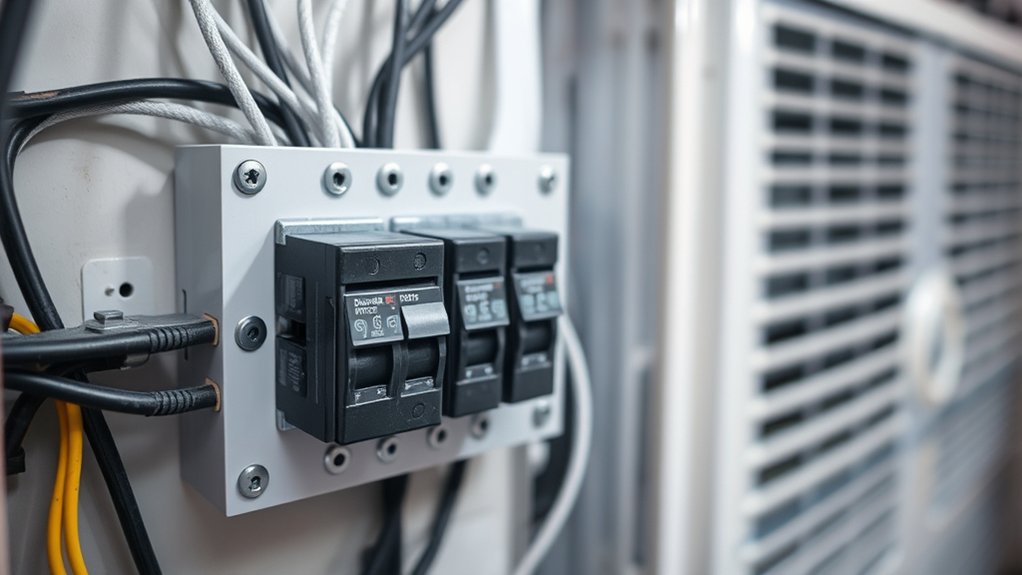
You can prevent voltage drops and reduce flickering by installing a dedicated circuit just for your air conditioner.
This way, the AC’s high power demand won’t overload shared circuits, which can be a real safety risk.
Plus, when your AC gets stable power right from the start, it helps protect your whole electrical system from unnecessary strain.
Benefits Of Dedicated Circuits
Because high-draw appliances like air conditioners demand substantial power when starting up, providing them with dedicated circuits prevents voltage drops that cause flickering lights.
When you isolate your AC on its own dedicated circuit, you reduce strain on overloaded circuits that supply other devices. This improves electrical stability and safety.
Dedicated circuits maintain consistent voltage levels, which is essential for protecting sensitive electronics and optimizing appliance performance.
Benefits include:
- Minimizing voltage drop and flicker during AC startup
- Reducing risks associated with overloaded circuits
- Enhancing energy efficiency by allowing proper appliance function
- Ensuring compliance with electrical codes to prevent hazards
Preventing Overload Risks
Dedicated circuits not only stabilize voltage but also play a key role in preventing electrical overloads that lead to flickering lights. When your AC runs on a dedicated circuit, it draws power independently, minimizing voltage drops that affect other devices.
This isolation improves load management, preventing overloads that trip breakers or cause unsafe conditions. It’s a simple way to keep your electrical system running smoothly and safely.
| Issue | Shared Circuit |
|---|---|
| Voltage drops | Frequent during AC startup |
| Overload risk | High due to combined loads |
| Flickering lights | Common |
Signs You Need to Upgrade Your Electrical Panel
Several clear signs indicate when your electrical panel needs upgrading. If your lights flicker or dim noticeably when the air conditioner turns on, your electrical panel might be overloaded.
Older panels rated below 200 amps often can’t handle modern appliance demands, signaling the need for an upgrade.
Panels under 200 amps may struggle with today’s appliances, indicating it’s time for an upgrade.
Frequent breaker trips or blown fuses with high-demand devices also point to panel inadequacies. Moreover, continuous flickering lights paired with unusual noises from the panel suggest potential safety hazards.
Consider upgrading your electrical panel if you notice:
- Persistent lights flicker during appliance startup
- Breakers trip regularly under normal loads
- Your panel is outdated or rated under 200 amps
- Strange noises or burning smells near the panel
Upgrading enhances safety and guarantees stable power distribution. It’s definitely worth considering to keep your home safe and your electricity running smoothly.
How Voltage Stabilizers Prevent Flickering During AC Startup
If your electrical panel upgrade isn’t possible right away, using a voltage stabilizer can really help manage the power fluctuations that cause lights to flicker when your AC starts up.
Voltage stabilizers keep the voltage steady by automatically adjusting those sudden drops that happen when air conditioners draw a lot of startup current. This way, your lights won’t dim or flicker, and all your devices get a stable power supply.
By buffering these voltage dips, voltage stabilizers protect sensitive equipment from damage and make your whole electrical system more reliable.
They’re especially useful in older homes where the circuits mightn’t be powerful enough, and flickering is a common issue.
Installing one reduces electrical surges and keeps the voltage stable, which helps your air conditioning and lighting run safer and more efficiently without needing an immediate major electrical upgrade.
How to Inspect and Upgrade Wiring to Stop Flickering Lights
When you notice flickering lights, start by inspecting the wiring gauge to confirm it can handle the electrical load of both your air conditioner and lighting system.
Undersized wiring increases voltage drop, causing lights to flicker when the air conditioning kicks in.
Undersized wiring leads to voltage drops, triggering light flicker when your AC starts up.
Follow these steps: verify wiring gauge meets or exceeds electrical load requirements for your AC and lighting.
Check all electrical connections at the breaker panel and AC unit for tightness and corrosion.
Upgrade to thicker wiring capable of carrying higher current loads to reduce voltage drop.
Consider installing a dedicated circuit for your air conditioning to prevent shared load issues.
Always guarantee wiring upgrades comply with local electrical codes to maintain safety and system efficiency.
Why Hire a Licensed Electrician for AC Issues
Although you might feel tempted to handle AC-related electrical issues yourself, hiring a licensed electrician guarantees all repairs meet local safety codes and reduce the risk of fire hazards.
A licensed electrician has the expertise to diagnose complex problems like overloaded or shared circuits that cause flickering lights when your air conditioner turns on. They can recommend and install dedicated circuits for your AC unit, eliminating shared circuit issues that lead to voltage drops and flickering.
Attempting DIY fixes may overlook underlying wiring faults, risking costly damage and safety concerns.
Frequently Asked Questions
Can Flickering Lights Damage My Air Conditioner?
Yes, flickering lights can damage your air conditioner. Power surges caused by unstable electrical connections put stress on the AC’s components. This increases wear and raises the risk of failure.
Circuit overloads often cause these flickers, leading to excessive current draw. That kind of strain can harm the compressor and capacitors inside your unit.
So, it’s important to address flickering as soon as you notice it. By dealing with flickering promptly, you help prevent potential damage. This keeps your air conditioner safe and running efficiently.
Maintaining stable voltage protects its electrical system from unnecessary strain.
Do LED Lights Flicker More Than Incandescent With AC Startup?
Yes, LED lights flicker more than incandescent bulbs during AC startup because of their higher efficiency and sensitivity to power surges.
When your air conditioner kicks on, the sudden electrical load causes voltage fluctuations. These fluctuations impact LED drivers more than incandescent filaments.
To keep things safe and working well, you should consider bulbs with advanced voltage regulation.
This helps reduce flicker and protects your electrical system from repeated surges. It’s a smart way to make sure your lights stay steady even when big appliances start up.
Does the Size of My Air Conditioner Affect Light Flickering?
Yes, your air conditioner capacity directly affects light flickering because it influences the electrical load on your system.
If the capacity is too high, it causes a heavy startup current, resulting in voltage drops that make lights flicker.
Similarly, an undersized unit may cycle frequently, stressing the circuit breaker and causing flickering.
So, it’s really important to make sure your air conditioner matches your home’s needs.
Also, check that wiring and breakers are properly rated.
This helps keep everything safe and stable, and prevents those annoying light flickers.
Can Solar Power Systems Cause Flickering When the AC Turns On?
Yes, solar power systems can cause flickering when the AC turns on due to inverter issues and sudden spikes in energy demand.
If your inverter isn’t sized correctly or the solar panel efficiency is low, it can’t handle the AC’s startup current, leading to voltage drops.
To prevent this, make certain your system’s capacity matches your appliance load.
Also, regularly inspect wiring for safety compliance. This helps maintain stable power delivery and avoid flickering.
Is Flickering More Common in Older Homes Than New Ones?
Yes, flickering is more common in older homes because wiring issues and outdated circuit breakers often can’t handle the increased electrical load from modern air conditioners.
You’ll notice voltage drops when large appliances start, especially if your wiring is undersized or connections are corroded.
To guarantee safety and prevent flickering, you should inspect your electrical panel and upgrade breakers or wiring if needed.
This helps maintain proper load distribution throughout your circuits and keeps everything running smoothly.
Conclusion
Think of your electrical system as a finely tuned orchestra. Each component has to play its part precisely to avoid any discord. When your AC starts, it’s like a sudden, loud drumbeat that can disrupt the harmony and cause lights to flicker.
By checking things like capacitors, wiring, and panel upgrades, you can restore that balance. It’s important not to take any risks with safety. You should hire a licensed electrician to make sure your home’s electrical system runs smoothly and safely every time.