
What Air Conditioner Size Do I Need
You need an air conditioner sized according to your room’s square footage, occupancy, insulation, and heat sources. Measure your space and multiply by 20 BTUs per square foot for a baseline, then adjust for sunlight, extra occupants, and kitchen heat.
Typically, a 1.5-ton unit cools 600 to 1,100 sq ft. Larger spaces require proportionally bigger systems.
Proper sizing guarantees efficiency, comfort, and longevity. Understanding these factors helps you select the right system for peak performance.
Why Proper AC Sizing Matters for Comfort and Efficiency
When you choose the right air conditioner size, you directly improve both comfort and energy efficiency. Proper air conditioner sizing prevents short-cycling, which can leave humidity trapped and reduce comfort levels.
Choosing the right AC size enhances comfort and efficiency by preventing short-cycling and trapped humidity.
Oversized units frequently cycle on and off, increasing energy consumption and costs. Undersized systems run continuously, struggling to maintain temperatures.
A rough guideline is 20 BTUs per square foot, but this varies with insulation, ceiling height, and sun exposure. For precise sizing, a professional Manual J calculation evaluates your home’s layout, insulation, and climate to determine exact cooling needs.
Selecting an accurately sized AC unit optimizes energy efficiency, lowers utility bills, and extends equipment lifespan. It ensures your home remains consistently comfortable without unnecessary energy waste.
How to Calculate the Right AC Size for Your Home
First, measure your room’s square footage to figure out how much cooling it needs.
Then, multiply that number by 20 to get an estimate of the BTUs required.
After that, take into account other things like the height of your ceilings, how well your space is insulated, and how much sunlight the room gets.
Doing this will help you pick an AC unit that fits your home’s unique setup perfectly, so it works just right.
Measure Room Dimensions
Accurately measuring your room’s dimensions is the first essential step to determining the correct air conditioner size. Start by measuring the length and width of each room in feet, then multiply these to calculate the square footage. This figure directly influences the BTUs needed for adequate cooling capacity.
Keep in mind, rooms with high ceilings or significant direct sunlight might require adjustments in BTUs to maintain comfort. After measuring, use these dimensions to estimate the air conditioner’s cooling capacity, ensuring it matches the room’s specific needs.
Precise measurements help you avoid under or oversizing, which can affect efficiency and performance. Once you have accurate square footage, you’re ready to move on to calculating the exact BTU requirements for your air conditioner.
It’s a straightforward process, and getting it right makes a big difference in keeping your space comfortable.
Calculate BTU Requirements
How do you determine the exact BTU capacity your air conditioner needs? Start by calculating BTUs based on your home’s square footage. Multiply the total square footage by 20 to get a baseline. For example, a 1,200 sq ft space requires about 24,000 BTUs.
Reference standard sizing charts. For instance, 1.5 tons (18,000 BTUs) cools 600-1,100 sq ft, while 3 tons (36,000 BTUs) covers 1,501-2,100 sq ft.
Add 600 BTUs for each additional occupant over two. If you need to include a kitchen, add 4,000 BTUs to account for extra heat.
This calculation helps you find the cooling capacity your air conditioner must provide to maintain comfort and efficiency. It ensures the unit’s size matches your specific square footage and cooling demands precisely.
Adjust For Environment
When calculating the right AC size for your home, you’ll need to adjust your baseline BTU estimate to account for environmental factors.
Start by multiplying your home’s square footage by 20 BTUs per square foot, then adjust for environment by factoring in insulation quality and sun exposure.
Increase BTUs by 10% for very sunny rooms or decrease by 10% for shaded areas. Add 600 BTUs for each additional occupant beyond two and 4,000 BTUs for kitchen spaces due to appliance heat.
Also, consider ceiling height because higher ceilings demand more cooling power.
If your home has poor insulation, add additional insulation or increase BTU capacity accordingly.
These adjustments guarantee your air conditioner performs efficiently throughout the cooling season, maintaining comfort while optimizing energy use.
What Square Footage Does Each AC Ton Size Cover?
Which air conditioner size fits your space best depends largely on the square footage you need to cool. For home air conditioning, a 1.5-ton unit typically covers 600 to 1,100 square feet, which is perfect for smaller spaces.
A 2-ton air conditioner efficiently cools areas between 901 and 1,400 square feet, balancing BTUs and cooling capacity.
If your space measures 1,201 to 1,650 square feet, a 2.5-ton unit is recommended to maintain ideal performance.
For larger homes, ranging from 1,501 to 2,100 square feet, a 3-ton HVAC system guarantees adequate cooling.
Selecting the correct air conditioner size based on square footage is essential because undersized or oversized units can reduce efficiency and comfort.
Getting the sizing right maximizes BTUs and the overall performance of your HVAC system.
How to Convert BTUs to Tons for Your AC Unit
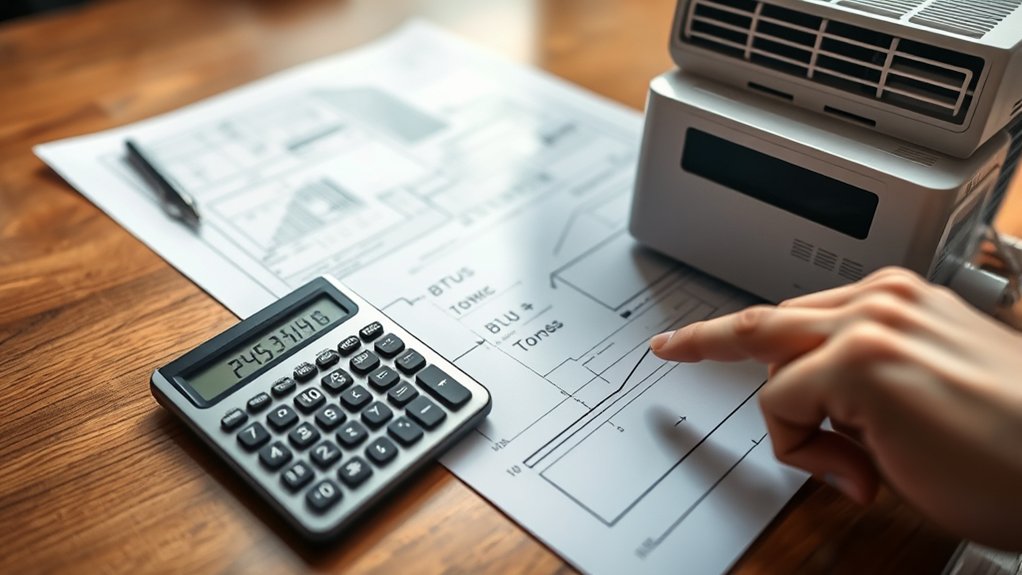
To convert BTUs to tons, just divide your unit’s BTU rating by 12,000. That’s because one ton equals 12,000 BTUs. It’s pretty straightforward!
Next, you’ll want to look for ton indicators on your AC unit to make sure it matches your cooling needs.
Doing this helps you pick the right size system.
By calculating the required tonnage, you can be confident that your AC will run efficiently and keep your space comfortable.
It’s all about getting the perfect fit for peak performance!
BTU To Ton Conversion
Understanding the conversion between BTUs and tons is crucial when selecting an air conditioner that matches your cooling needs. One ton of air conditioning capacity equals 12,000 British Thermal Units (BTUs) per hour. To perform a ton conversion, divide the BTU rating of your desired unit by 12,000.
For example, an air conditioner with a cooling capacity of 24,000 BTUs corresponds to 2 tons. Most residential HVAC systems range from 1.5 tons (18,000 BTUs) to 5 tons (60,000 BTUs).
So, knowing this conversion helps you pick the correct air conditioner size. Accurately converting BTUs to tons guarantees peak efficiency and prevents oversizing or undersizing your system. This can impact performance and energy consumption.
Keep this conversion in mind when evaluating HVAC unit specifications.
Identifying Ton Indicators
Now that you’ve grasped how to convert BTUs to tons, identifying ton indicators on your air conditioning unit becomes straightforward.
Ton indicators help you quickly determine the capacity of your air conditioner, guaranteeing it’s properly sized for efficient cooling and energy efficiency.
Here’s how to spot them:
- The first two digits in the model number often represent the BTUs; for example, “24” means 24,000 BTUs or 2 tons.
- Common ton indicators include 18 (1.5 tons), 24 (2 tons), and so on, simplifying unit size recognition.
- Divide BTUs by 12,000 to confirm tonnage. This is a key step in matching your air conditioner’s capacity to your space.
Understanding these indicators helps you choose a properly sized unit for peak performance.
It’s really all about making sure your AC works efficiently and keeps you comfortable.
Calculating Required Tonnage
When calculating the required tonnage for your air conditioner, you’ll divide the total BTUs needed by 12,000, since one ton equals 12,000 BTUs per hour.
To calculate the size properly, first determine the required BTUs through load calculations that consider your home’s square footage, insulation, and sun exposure.
For example, if your load calculations show you need 36,000 BTUs, dividing by 12,000 indicates a 3-ton air conditioner is necessary.
Most residential units range between 1.5 and 5 tons, so precise load calculations guarantee you select the proper tonnage, avoiding inefficiency or insufficient cooling.
For accuracy, a professional Manual J load calculation is recommended to tailor the required tonnage to your home’s specific conditions.
It really pays off to get this step right so your system works efficiently and keeps you comfortable.
Adjusting AC Size for Sunlight, Occupants, and Appliances

Since sunlight, occupants, and appliances directly impact a room’s heat load, you need to adjust your air conditioner’s BTU capacity accordingly.
To accurately size your AC, consider these key factors:
Increase BTUs by 10% for rooms with direct sunlight, as they absorb more heat.
Add 600 BTUs per occupant beyond two to account for additional body heat.
Include an extra 4,000 BTUs in kitchens due to heat-generating appliances like ovens and stoves.
These adjustments guarantee your air conditioner size matches the actual cooling capacity needed.
Neglecting these variables can lead to undersized units struggling to maintain comfort or oversized units wasting energy.
By factoring in sunlight, occupants, and heat-generating appliances, you optimize your system’s performance and efficiency.
It’s all about making sure your AC works just right for your space.
How Your Home’s Insulation and Construction Affect AC Size
Your home’s insulation quality plays a big role in determining the BTU capacity your AC will need. When your insulation is good, it reduces the amount of cooling required, which means your AC doesn’t have to work as hard.
Also, the materials used in your home’s construction, like brick or wood, can affect how much heat your house holds onto. This, in turn, impacts the size of the system needed to keep things comfortable.
Another thing to keep in mind is air leakage. Gaps around windows or doors let warm air in, making your AC work overtime.
Insulation Quality Impact
Although many factors influence air conditioner sizing, the quality of your home’s insulation and construction plays a critical role in determining the required BTU capacity.
Insulation quality directly affects the cooling load, impacting how efficiently your AC unit can maintain comfortable temperatures.
Well-insulated homes with higher R-value materials reduce heat transfer, lowering BTU capacity needs by 10-20%.
Conversely, poor insulation increases air leakage, forcing your system to work harder.
Consider these factors to optimize your AC sizing:
- High R-value insulation decreases cooling load and BTU capacity.
- Air leakage from gaps or insufficient insulation raises BTU requirements.
- Well-insulated homes reduce energy consumption and enhance comfort.
Construction Materials Role
When determining the right air conditioner size, understanding how construction materials affect insulation performance is crucial. Construction materials with higher R-values improve insulation quality, reducing BTU requirements by lowering cooling load calculations. For example, using double-pane windows instead of single-pane enhances energy efficiency and decreases the necessary AC size.
Your home’s orientation also influences heat gain, which affects BTU needs. Accurate assessment of these factors guarantees ideal AC sizing.
| Construction Material | Typical R-Value | Impact on BTUs |
|---|---|---|
| Fiberglass Insulation | 3.1 – 3.4 | Reduces BTUs by ~15-20% |
| Brick Walls | 0.2 – 0.8 | Moderate insulation |
| Double-Pane Windows | 2.0 – 3.0 | Improves energy efficiency |
| Single-Pane Windows | 0.9 | Increases BTUs demand |
Air Leakage Considerations
Because air leakage directly affects cooling efficiency, understanding how your home’s insulation and construction influence this factor is essential for accurate AC sizing.
Poor insulation and leaks increase your home’s cooling load, meaning you’ll need a higher AC capacity, often up to 30% more BTUs.
On the other hand, energy-efficient homes with high R-value insulation and properly sealed windows require fewer BTUs.
So, it’s worth paying attention to these details when planning your cooling system.
Consider these key points:
- Insulation quality (R-value) reduces heat flow, lowering BTU requirements.
- Air leakage through doors and windows can increase cooling load by 15% or more.
- Energy-efficient construction materials and sealing techniques optimize AC capacity.
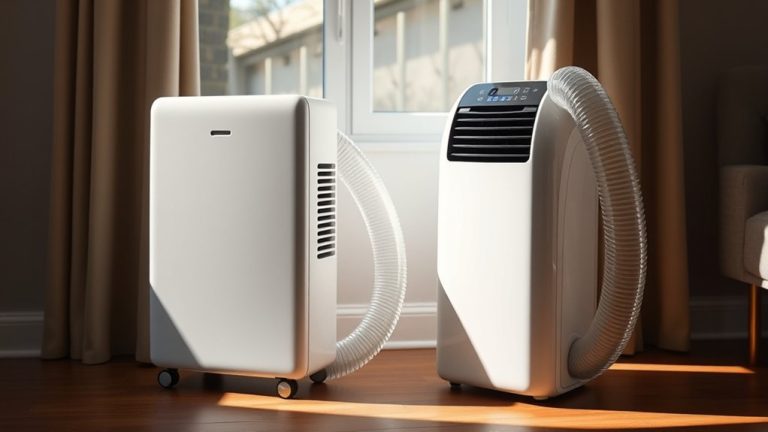
AC System Types and Their Impact on Sizing
Selecting the right air conditioning system type directly influences how accurately you can size your unit for ideal performance and efficiency.
Traditional split-systems, with separate outdoor and indoor components, demand precise air conditioner size calculations based on your home’s square footage and insulation.
Packaged units combine all parts outdoors and suit limited interior space, but they still require careful BTUs (British Thermal Units) assessment.
Ductless systems allow you to size cooling capacity per room, enhancing control but requiring individual calculations.
Avoid oversized units that cause short-cycling and humidity issues.
Undersized units fail to maintain comfort and increase energy costs.
Understanding each system’s characteristics helps you match cooling capacity to your home’s needs, optimizing efficiency and performance without guesswork.
Using Manual J for Accurate AC Sizing
Although calculating the correct air conditioner size can seem complex, using Manual J guarantees you determine the exact BTU requirements for your home’s cooling system.
Manual J is a professional load calculation that factors in your total square footage, insulation quality, and climate to specify the ideal cooling capacity. It prevents costly oversizing or undersizing, which can compromise energy efficiency and system performance.
Manual J considers heat gain from sunlight, appliances, and occupants. It also looks at ceiling height and window orientation.
Plus, it calculates the precise BTUs needed for balanced cooling.
When to Call a Professional for AC Sizing Help
If your home is larger than 2,000 square feet or you notice uneven cooling and frequent short-cycling, it’s time to call a professional for AC sizing help.
You’ll want an HVAC dealer who applies a professional load calculation using an accurate method, such as Manual J, to determine the exact BTUs (British Thermal Units) your space requires.
This calculation factors in insulation, window types, occupancy, and heat-generating appliances to guarantee the system capacity matches your home’s needs.
Improper sizing can cause inefficiencies, increased energy costs, and discomfort.
When you call us, we’ll provide a precise assessment that avoids the pitfalls of oversizing or undersizing your unit, assuring peak performance and longevity of your air conditioner.
Don’t guess. Trust a professional for the best results.
Tips for Maintaining Optimal AC Performance
Maintain your air conditioner’s efficiency and longevity by sticking to a consistent care routine. To keep your system’s efficiency rating ideal and guarantee maximum cooling, focus on some key practices.
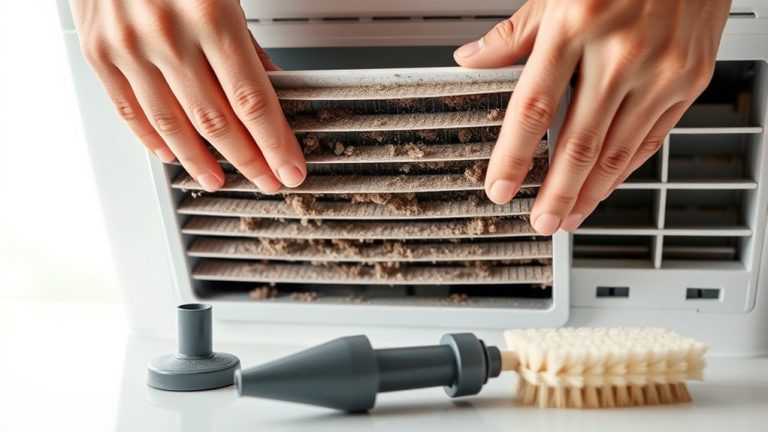
First, regularly change or clean the air filter every 1-3 months. This helps maintain airflow and reduces strain on your air conditioner.
Also, schedule annual professional maintenance to inspect components, recalibrate settings, and catch any problems early.
Make sure your windows and doors are properly insulated and sealed. This minimizes cool air loss and supports your system’s performance.
Don’t forget to keep the outdoor unit clear of debris to sustain good airflow.
And try to keep your thermostat around 75°F during peak hours—it really helps with energy use.
Following these steps will keep your air conditioner running smoothly and extend its lifespan.
Frequently Asked Questions
Can I Install an Air Conditioner Myself to Save Money?
You can install an air conditioner yourself, but be certain to follow DIY installation tips closely. Use proper air conditioner tools and avoid common mistakes like incorrect sizing or poor sealing.
Prioritize safety precautions, especially with electrical connections.
While it’s cost effective, improper installation risks efficiency and voids warranties. Focus on maintenance essentials post-installation to guarantee performance.
If unsure, consulting a pro can save hassles and expenses down the line.
It might seem tempting to do it all on your own, but sometimes a little expert help goes a long way. Just weigh your options before diving in!
How Often Should I Replace My Air Conditioner Unit?
Don’t wait until your air conditioner’s on its last leg. Replace it every 10 to 15 years since that’s the typical lifespan of an AC unit.
Keep an eye out for signs that it’s time for a new one, like frequent breakdowns or poor cooling.
Regular maintenance is key, ideally before each season, to boost energy efficiency.
Also, think about the costs involved—repair bills tend to go up as your unit ages, and energy expenses can add up too.
Replacing your air conditioner at the right time ensures it runs at peak performance.
Plus, it can save you money in the long run by avoiding inefficiencies and frequent repairs.
What Are the Best Energy-Efficient AC Brands?
You’ll find Trane, Carrier, and Lennox top energy-efficient AC brands, thanks to superior energy-saving features and high SEER ratings.
Consider Mitsubishi Electric for quiet, ductless mini-splits. Rheem and Goodman offer competitive price comparisons without sacrificing reliability.
Always check customer reviews on noise levels and warranty options to guarantee long-term satisfaction.
American Standard and York combine advanced tech with solid brand reliability, making them practical choices for efficient cooling.
Does the Color of My House Affect AC Sizing?
Your house color impact is like a magnet for sunlight exposure, pulling in heat through darker hues. This means you’ll need to size your AC larger if your building materials absorb more heat.
Consider insulation quality and window orientation, as they influence cooling demands.
Landscaping effects, like shade from trees, also help reduce heat gain. By factoring these, you guarantee your AC matches your home’s unique thermal profile for maximum efficiency.
It’s all about making sure your cooling system works just right for where you live.
How Do Different Refrigerants Impact AC Performance?
Different refrigerant types directly affect your AC’s cooling capacity and efficiency ratings.
For example, R-410A offers better heat transfer and a lower environmental impact than R-22. This means it boosts performance while cutting energy costs.
However, you’ll face cost considerations when upgrading systems because of necessary modifications.
There might also be higher maintenance needs for newer refrigerants.
Choosing the right refrigerant is all about balancing performance, sustainability, and long-term expenses.
That way, you can optimize your AC’s effectiveness without surprises down the road.
Conclusion
Choosing the right AC size is essential. Did you know that an improperly sized unit can increase your energy bills by up to 30%?
By accurately calculating your home’s cooling needs using square footage, BTUs, and factors like sunlight and occupants, you guarantee peak efficiency and comfort. Remember, tools like Manual J provide precise sizing. But don’t hesitate to call a professional for complex situations.
Proper sizing keeps your system running smoothly and saves you money long-term. It’s definitely worth the effort to get it right!