Why Is My Air Conditioner Leaking Water and How Do I Fix It?
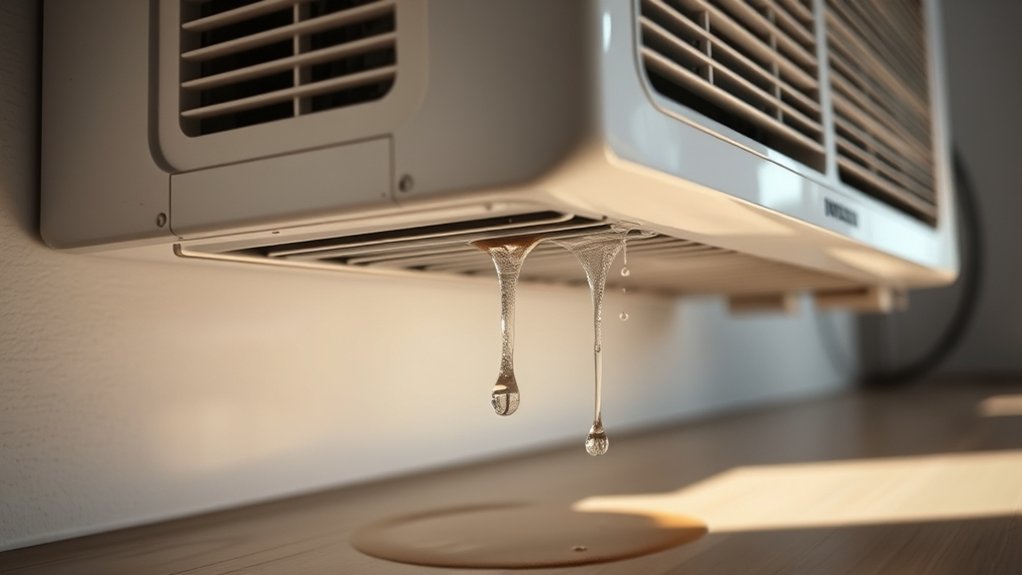
Your air conditioner is leaking water likely due to a clogged condensate drain line, frozen evaporator coils, or a damaged drain pan. You can fix it by unclogging the drain with a vacuum and vinegar, replacing dirty air filters, thawing frozen coils by turning off the unit, and inspecting the drain pan for rust or cracks.
If problems persist, checking refrigerant levels and calling a professional might be necessary. Understanding these steps will help you address leaks effectively. Just take it one step at a time, and you should be able to get your AC back to normal soon.
Common Causes of Air Conditioner Water Leaks
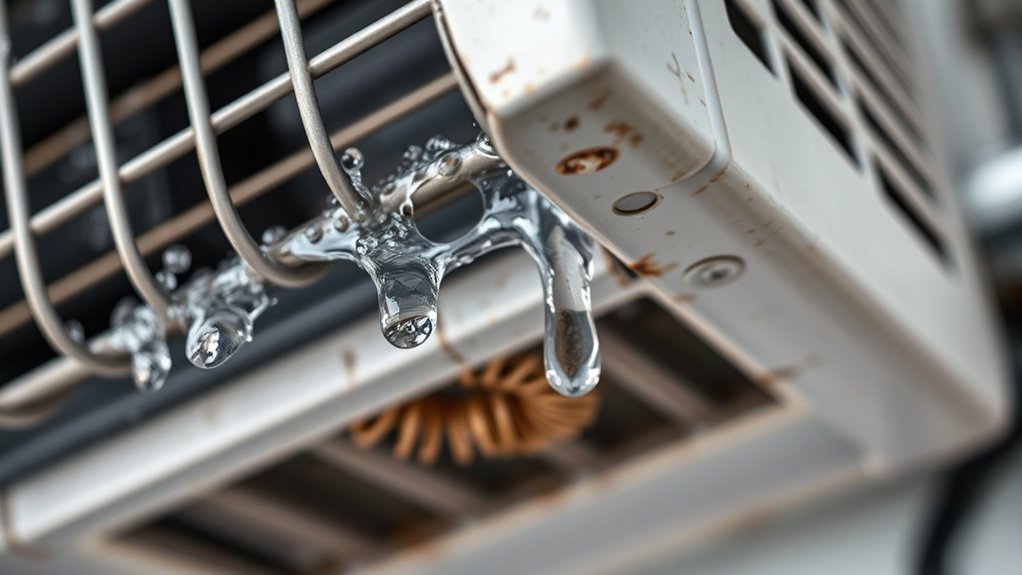
When your air conditioner starts leaking water, it’s often due to a clogged condensate drain line that blocks proper drainage and causes water to back up.
AC leaking water can also result from frozen evaporator coils, typically caused by dirty air filters or low refrigerant levels. As these coils thaw, excess water may overwhelm the drain pan.
If the drain pan is damaged or rusted, it can allow condensation to escape, making leaks worse. Low refrigerant levels reduce system pressure, which promotes coil freezing and leads to water leaks.
Dirty air filters not only impair airflow but also degrade indoor air quality, so regular maintenance is essential.
To prevent leaks, check that the condensate drain line is clear and replace any damaged drain pans.
Make sure refrigerant levels are properly maintained and keep air filters clean. This proactive approach helps keep your system running efficiently and avoids costly water damage.
Is Your AC Leak Water or Refrigerant?
Distinguishing whether your AC is leaking water or refrigerant is key to addressing the issue effectively. Water leaks usually stem from condensate buildup due to a clogged drain line, visible as pooling water.
Refrigerant leaks, however, often cause evaporator coils to freeze, and you might hear hissing sounds along with reduced cooling performance. Misdiagnosing can lead to indoor water damage or compressor failure.
So, it’s best to get a professional diagnosis to identify the exact cause safely.
| Symptom | Water Leak | Refrigerant Leak |
|---|---|---|
| Visual Signs | Pooling or dripping water | Oily residue or frost on coils |
| Sound | Silent | Hissing |
| Cause | Clogged drain line | Low refrigerant, coil freezing |
| Risks | Indoor water damage, mold growth | Cooling inefficiency, compressor damage |
Step-by-Step Fixes for Air Conditioner Water Leaks
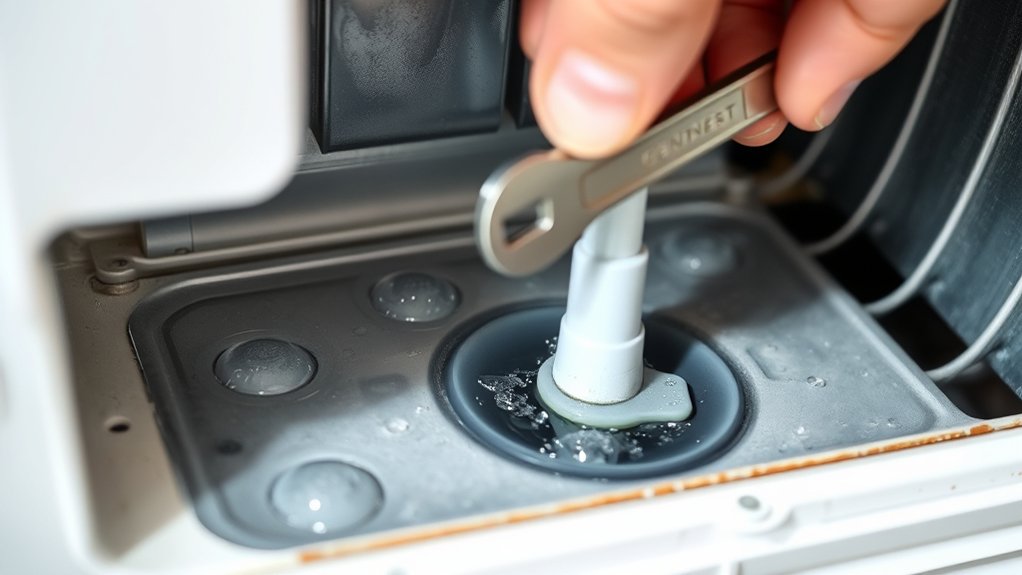
Five straightforward steps can help you fix water leaks in your air conditioner and prevent further damage.
To stop your air conditioner from leaking, start by inspecting and unclogging the drain line using a wet/dry vacuum and a vinegar-water mix.
Replace or clean the air filter regularly. A dirty air filter restricts airflow and causes the evaporator coil to freeze.
If you notice a frozen evaporator coil, turn off the unit and thaw frozen coils before restarting.
Check the drain pan for corrosion or cracks since the drain pan can corrode and cause leaks.
Addressing refrigerant levels is essential because low refrigerant can also freeze coils, contributing to water leaks.
- Unclog the drain line
- Replace or clean the air filter
- Thaw frozen coils
- Inspect and replace the drain pan
How Clogged Drain Lines Cause AC Water Leaks
You’ll often find that common blockages like algae, dirt, and mold can restrict the condensate drain line. When that happens, water starts to back up and overflow inside your home.
These clogs don’t just cause leaks—they can also lead to water damage and mold growth if you don’t address them.
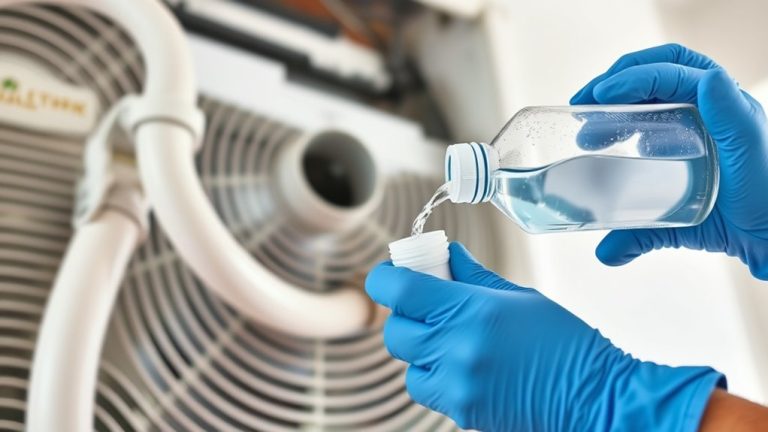
To keep things running smoothly, it’s a good idea to regularly clear the drain line. You can do this with a wet/dry vacuum or a vinegar solution.
Doing so helps water flow properly and protects your AC system’s efficiency.
Common Drain Line Blockages
When your air conditioner’s drain line gets clogged with dirt, mold, or algae, it stops moisture from draining properly and causes water to back up into the drain pan. This backup can lead to water leaking inside your home, damaging floors and walls.
Common causes of clogged drain lines include dirt and debris buildup that restricts water flow, mold and algae growth that narrows the condensate pan outlet, rust buildup inside the drain line, and minor blockages from stagnant water and humidity.
To avoid these problems, it’s important to clean the drain line regularly—every three to six months. You can use a wet/dry vacuum or a vinegar solution to clear minor blockages effectively.
If the issue keeps happening, it’s a good idea to call a professional HVAC technician. They can inspect your system and fix severe clogs, helping your air conditioner run smoothly without water leaks.
Effects Of Clogs
Although clogged drain lines may seem minor, they directly disrupt the proper flow of condensate water, causing it to back up and overflow inside your home.
When mold, dirt, algae, or rust build up in the condensate drain line, they create blockages that lead to water leaks. These blockages overwhelm the drain pan, resulting in spillage that damages surrounding areas.
To avoid this, regular maintenance is crucial. Cleaning the drain line during routine AC maintenance helps prevent clogs and minimizes the risk of leaks.
Taking these preventive steps ensures your system runs efficiently and protects your home from water damage. Timely cleaning and inspections restore proper drainage, keeping the condensate drain line clear and functional.
Clearing Drain Line Methods
Since clogged drain lines directly cause water to back up and leak, clearing these blockages promptly is essential to keep your AC working right. You can prevent water backup, damage, and mold growth by regularly cleaning out condensate drain line clogs caused by mold, dirt, algae, or rust.
To clear minor obstructions, try using a wet/dry vacuum or a vinegar solution. This helps restore proper drainage and keeps things flowing smoothly.
Here are some simple steps to follow for clearing your drain line effectively:
- Check the drain line for visible blockages every 3 to 6 months.
- Use a wet/dry vacuum to suck out any debris.
- Flush the line with a vinegar solution to dissolve buildup.
- If clogs stick around, it’s a good idea to call in a professional.
Doing these things regularly helps prevent clogs and keeps your AC running efficiently without leaks.
How Dirty Filters and Frozen Coils Lead to Leaks
If you neglect regular air filter maintenance, restricted airflow causes your evaporator coils to freeze, leading to water leakage once the ice melts.
Dirty filters limit airflow, reducing heat exchange efficiency and causing condensation on the evaporator coils to freeze. These frozen coils then thaw, producing excess water that can overwhelm the drain pan and result in leaks.
To prevent this, replace or clean air filters every 30 to 90 days. This helps ensure proper airflow and keeps your coils from freezing.
Regular maintenance not only prevents leaks but also reduces the risk of costly water damage and system inefficiencies.
Keep an eye on your filters and address frozen coils right away. Doing so is essential for maintaining peak AC performance and protecting your home from moisture-related problems.
Low Refrigerant Levels and Their Impact on AC Leaks
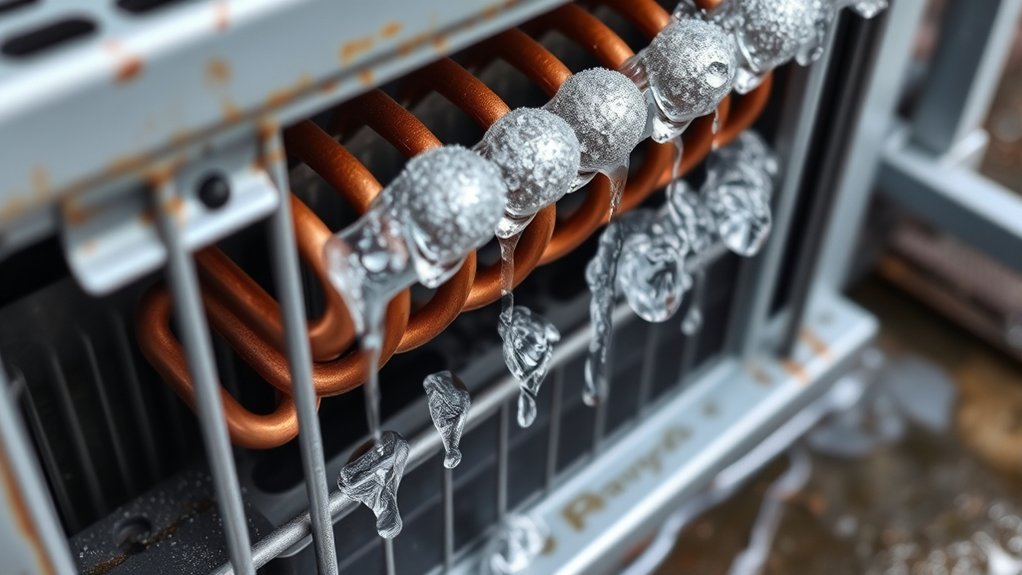
You rely on refrigerant to absorb heat and keep your AC running smoothly.
But when the levels drop too low, it throws off this whole process and causes the evaporator coil to freeze up.
Once that ice starts to melt, it can create extra water that overflows and leaks from your unit.
That’s why keeping an eye on refrigerant levels is so important.
It helps you spot leaks early on and avoid expensive damage from water buildup and worn-out parts.
Refrigerant Role In Cooling
When refrigerant levels drop below the manufacturer’s specifications, your air conditioner struggles to absorb enough heat. This causes the evaporator coil to freeze. The ice buildup eventually melts, and the excess water can overwhelm the drain pan. That leads to leaks inside your home.
Refrigerant leaks often happen because of damaged refrigerant lines. This damage can be due to wear, corrosion, or physical impact. So, keeping an eye on those lines is key.
Maintaining proper refrigerant levels is critical. It helps prevent water leaks and keeps your system running at its best.
Here are some key points to help you address the issue:
- Conduct regular HVAC maintenance to catch low refrigerant levels early
- Inspect refrigerant lines for any damage to avoid leaks
- Monitor the evaporator coil for freezing, which signals low refrigerant
- Make sure refrigerant levels are right to keep cooling efficient and prevent water damage
Leak Causes And Effects
Low refrigerant levels directly impact your air conditioner’s ability to maintain proper pressure, causing the evaporator coil to freeze. When the ice melts, it leads to water leaks that can overflow the drain pan. This leak stems from insufficient refrigerant, which reduces the coil’s temperature and impairs heat absorption.
This forces your system to overwork and increases wear on components. Low refrigerant often signals an existing leak in the system, which you shouldn’t ignore. To prevent further water damage and potential mold growth, you need a professional to diagnose and repair these refrigerant issues promptly.
Regularly checking refrigerant levels helps maintain proper evaporator coil function and prevents drain pan overflow. This way, your AC runs efficiently without causing water leaks.
It’s a simple step that can save you from bigger problems down the road.
Inspecting and Fixing a Rusted or Damaged Drain Pan
Regularly inspecting the drain pan for rust or damage is essential to prevent water leakage from your air conditioner. A rusted or damaged drain pan can develop cracks or holes. This causes water to escape rather than drain properly.
To keep your AC unit in good shape and avoid leaks, follow these key steps:
- Inspect the drain pan for corrosion, cracks, or physical damage frequently.
- Replace the drain pan immediately if you find any rust or holes because repairs often fail to stop leaks.
- Confirm the new drain pan is correctly installed and positioned to allow proper water flow.
- Consider upgrading to a drain pan with a safety switch that shuts off the AC unit during overflow.
Taking these steps can save you a lot of trouble down the line and keep your AC running smoothly.
When to Call a Pro for Air Conditioner Water Leaks
Although small leaks can sometimes be fixed with basic maintenance, you should call a professional if water continues to leak after clearing the drain line or replacing the air filter. When your AC is leaking water, a professional HVAC technician can diagnose and fix underlying issues before they escalate.
| Symptom | Common Causes | When to Call Your Local Pro |
|---|---|---|
| Ice buildup on coils | Refrigerant leak, airflow issue | Immediately for refrigerant handling |
| Persistent water leaks | Clogged drain, damaged pan | After DIY fixes fail |
| Noise with water inside | Internal component damage | Promptly for inspection |
| Water damage or mold | Pooling water, poor drainage | To prevent structural damage and hazards |
Don’t delay; water might cause serious damage or health risks. It’s better to be safe and have a pro take a look sooner rather than later.
Preventive Maintenance to Stop AC Water Leaks
You should replace your air filters every 30 to 90 days. This helps keep the airflow steady and prevents the evaporator coil from freezing, which can cause leaks.
Also, make sure to clean the condensate drain line every three to six months. This stops clogs that might cause water to back up.
On top of that, it’s a good idea to schedule annual maintenance for the coils and drain pan. Doing this keeps your system running efficiently and helps prevent leaks.
Regular Filter Replacement
Replacing your air filters every 30 to 90 days guarantees ideal airflow and prevents ice buildup on the evaporator coil, which can cause water leaks. A dirty air filter restricts airflow by up to 50%, increasing the risk of ice formation on the coil.
Regularly replacing filters keeps airflow proper, stops ice from forming, and reduces water leaks. Plus, using high-efficiency air filters improves indoor air quality. Neglecting this simple step can lead to higher energy use and costly repairs.
- Air filters block dust and debris, ensuring smooth airflow
- Dirty air filters cause evaporator coil freezing and leaks
- Regular replacement prevents costly repairs and extends unit life
- HEPA filters enhance indoor air quality and reduce clog frequency
Keeping up with filter maintenance is key to preventing water leaks and keeping your AC running efficiently.
Drain Line Cleaning
Anyone maintaining an air conditioner must prioritize cleaning the condensate drain line to prevent clogs caused by mold, dirt, and algae. To clean the condensate drain line effectively, use a wet/dry vacuum or a vinegar-water solution every few months.
It’s also important to inspect the drain line regularly for visible signs of damage or rust, as these issues can cause leaks. Proper drain line cleaning will enhance efficiency by preventing water overflow. Plus, it helps extend the lifespan of your system through regular maintenance checks by a professional technician.
| Task | Recommendation |
|---|---|
| Drain line cleaning | Use vacuum or vinegar-water |
| Prevent clogs | Clean every few months |
| Visible signs of damage | Inspect regularly |
| Extend lifespan | Schedule annual checks |
Coil Maintenance Routine
Although drain line maintenance is essential, neglecting coil upkeep can also lead to water leaks in your air conditioner. The evaporator coils must be clean and free from debris to guarantee efficient heat transfer and prevent ice buildup, which causes leaks.
Regular inspection and maintenance help you catch issues early and keep your system operating smoothly.
To maintain your coils and prevent leaks:
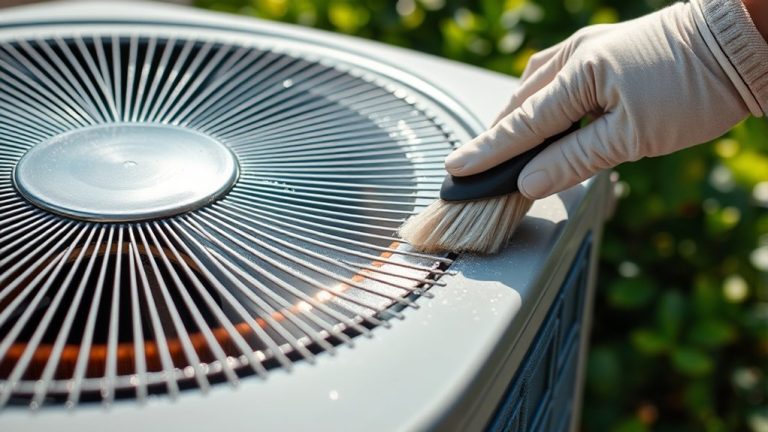
Clean evaporator coils at least once a year to avoid dirt accumulation.
Inspect coils during the cooling season for ice buildup and address airflow issues immediately.
Make sure the condensate drain line is clear and properly draining.
Use a wet/dry vacuum or cleaning solution every few months to clear drain line clogs.
Consistent coil maintenance reduces leaks and prolongs your AC’s lifespan.
It’s a simple step that pays off by keeping your system running efficiently.
Signs Your Air Conditioner Needs Immediate Attention
When you spot water pooling around your air conditioning unit, don’t ignore it. This often signals a leak that demands immediate repair to prevent structural damage and mold growth.
An air conditioner leaking water commonly stems from clogged or damaged drain lines, which you should regularly check.
Increased indoor humidity levels indicate your AC isn’t removing moisture effectively, and that’s a frequent cause of leaks. A damaged or rusted drain pan can also lead to water overflow.
Plus, unusual noises or frequent cycling could be signs of underlying issues that might cause leaks.
If you detect these signs, call an HVAC professional promptly. Taking care of these problems early helps your system run efficiently, avoids costly repairs, and keeps your indoor air quality safe.
Frequently Asked Questions
Can Weather Changes Cause My Air Conditioner to Leak Water?
Yes, weather conditions can cause your air conditioner to leak water.
Temperature fluctuations often lead to condensation issues and ice buildup on the evaporator coils. High humidity can overwhelm drainage systems, causing backups.
Seasonal factors like heavy rain increase moisture, filling condensate pans quickly.
To prevent leaks, you should perform regular maintenance routines, ensuring proper insulation and clearing drain lines.
Taking care of these things helps keep your system efficient and leak-free.
Does the Type of Air Conditioner Affect the Likelihood of Leaks?
Yes, the type of air conditioner impacts leak likelihood.
Window units and portable air conditioners often leak due to poor installation or clogged drain pans.
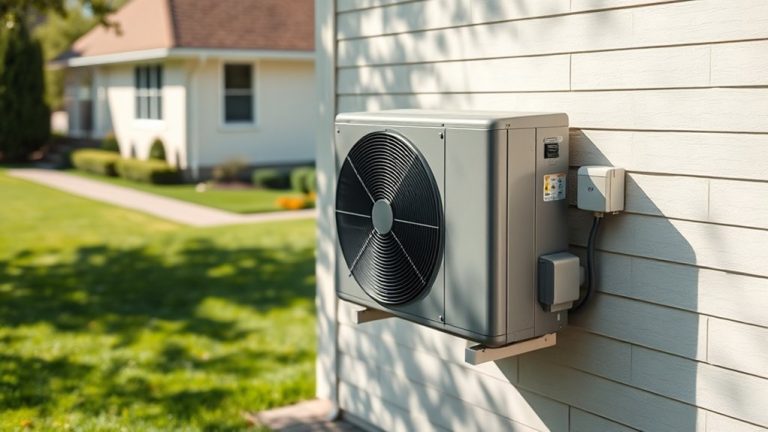
Ductless mini splits and split systems can leak if condensate drains clog or outdoor units are misaligned.
Central systems and geothermal units have robust drainage, lowering leak risks.
Regular HVAC maintenance improves energy efficiency and prevents leaks by ensuring proper drainage and clean filters across all types.
It really helps keep everything running smoothly!
How Does Humidity Inside the House Impact AC Water Leakage?
When indoor humidity levels go over 60%, you’ll notice more condensation issues that your AC just can’t keep up with. This happens because the moisture overwhelms the evaporation process inside the unit.
On top of that, things like poor insulation, leaks in the ductwork, and airflow problems make it worse by trapping even more moisture inside. If your thermostat settings aren’t right, that can also mess with how well your system works, leading to water buildup.
To fix these leaks, start by stepping up your maintenance game. Regularly clean the filters, seal any duct leaks, and make sure the drainage system is working properly.
Also, controlling humidity levels and improving ventilation around your AC will go a long way in reducing water leakage. It’s all about keeping the moisture in check so your unit can run smoothly.
Can Pets or Pests Contribute to Air Conditioner Water Leaks?
Yes, pet behaviors and pest infestations can cause drainage issues and condensation buildup in your AC.
Pet hair clogs the air filter, which restricts airflow and causes the coils to freeze. When they thaw, leaks can happen.
Pests also cause problems by damaging insulation and chewing on condensate lines, leading to leaks. They might even nest in ductwork, blocking drainage paths.
It’s a good idea to schedule regular HVAC maintenance.
That way, you can have filters inspected and cleaned, insulation repaired, and ducts cleared. This helps prevent water leaks effectively.
What Materials Are Best for Repairing a Leaking Drain Pan?
You might think all drain pan materials perform the same, but choosing corrosion-resistant plastic pans often beats metal for leak prevention.
For quick DIY solutions, high-quality repair adhesives like epoxy resin or silicone sealant effectively seal cracks. Adding foam insulation options minimizes condensation, reducing leaks further.
If damage is severe, consider replacement panels sized perfectly for your AC. While DIY fixes work, professional repairs guarantee long-term reliability and peak performance.
Conclusion
If your air conditioner leaks water, don’t ignore it. Small issues like a clogged drain line can quickly escalate. For example, a homeowner ignored a slow drip, which led to water damage and costly repairs.
By regularly inspecting drain lines, filters, and pans, you can catch problems early. You might be able to fix them yourself or call a pro before the damage gets worse. Staying proactive guarantees your AC runs efficiently and prevents expensive water damage.